

Iran said on Monday that it was holding talks with Oman on temporarily reopening the Strait of Hormuz, the critical shipping lane for about 20 percent of the world’s oil supply.
The negotiations with Oman center on creating a new temporary route through the Strait of Hormuz that would allow commercial shipping to resume, but talks with the US are not yet reviving, Tehran’s foreign ministry spokesperson said on Monday.
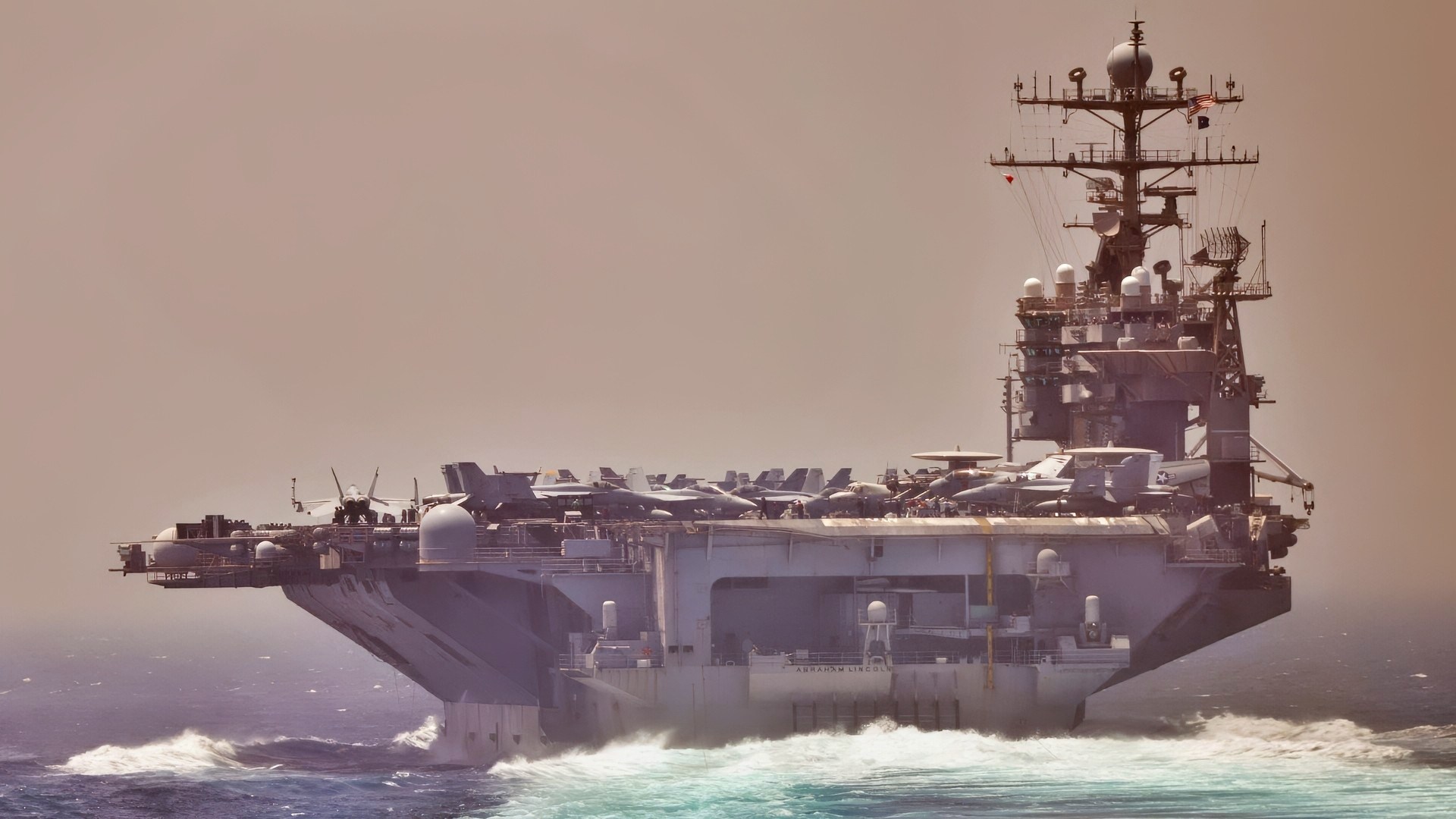
120501-N-WO496-013
STRAIT OF HORMUZ (May 1, 2012) The aircraft carrier USS Abraham Lincoln (CVN 72), left, and the guided-missile cruiser USS Cape St. George (CG 71) transit the Strait of Hormuz. Abraham Lincoln and Cape St. George are deployed to the U.S. 5th Fleet area of responsibility conducting maritime security operations, theater security cooperation efforts and support missions as part of Operation Enduring Freedom. (U.S. Navy photo by Mass Communication Specialist 3rd Class Alex R. Forster/Released)
Iran rejected a proposal by Oman last week to divide control of the Strait of Hormuz evenly and only ask for voluntary fees similar to the Strait of Malacca.
Trump Pauses Air Strikes Again Over Talks With Iran
President Trump announced that the US was again suspending air strikes, stating that he was asked by regional allies, like the Saudis, to forego air strikes to allow negotiations to proceed.
“The reason they asked is they think there’s a deal on Hormuz,” he told the media aboard Air Force One.
Esmaeil Baghaei, the Iranian foreign ministry spokesman, said at a news conference that there were no direct talks planned between Iran and the United States
Instead, he said, the talks with Oman were narrowly focused on negotiating a new route in the strait for ships to traverse.
“The focus of the negotiations with Oman will be on this issue, while the matters relating to Iran and the United States will have to be examined in later stages,” he said.
Unending Cycle Of Strikes, Negotiations, And Stalling Continues
The president once again has fallen into the same hamster wheel cycle of bombing, relenting of pressure in the promise (hope) of meaningful negotiations, followed by the Iranians attacking either US bases or shipping in the Strait.
This stopping of air strikes in hopes of negotiation has now happened a dozen times and has netted nothing of consequence.
And now, once again, the president is publicly stating that a diplomatic breakthrough could be at hand.
Iran is sure that it can outlast Washington by pressuring the region’s shipping lanes and energy infrastructure under threat of attacks that steadily raise the cost of confrontation.
Many analysts believe the goal is to convince the United States and its Gulf allies and partners that containing the crisis is more costly than accommodating Iran’s demands over the Strait of Hormuz.
And Washington keeps right on playing along, by pausing its own pressure campaign while Iran continues to stall.
“Iran, from the beginning, has tried to out-escalate the United States by stretching out its escalation options so that it always has something new to bring every week — a new geography, a new type of weapon, a new type of target,” Michael Knights of the Washington Institute told Reuters.
The Institute for the Study of War (ISW) posted in its latest intelligence assessment, dated August 2, that Iran continuously exploits the pauses in the US air strikes to rebuild its capabilities that were damaged or destroyed in air strikes.
“Artesh Spokesperson Brigadier General Mohammad Akraminia explicitly stated on August 2 that Iran “fully exploited” the MoU and ceasefire to import new equipment, repair and reconstruct damaged systems, and produce new systems.”
Qatar is heading up the next negotiations on the Strait of Hormuz between Iran, the United States, and Oman, according to inside sources.
The Qatari mediators are coordinating the talks with two other Gulf states, Saudi Arabia and the United Arab Emirates, according to the three diplomats, who spoke anonymously to discuss sensitive diplomacy.
Iran Will Not Willingly Cede Any Control Over The Strait
Iran has made it clear that it demands total control over the Strait and has been making demands regarding the routes and future management of the strait, including charging fees in return for providing ships with maritime services.
Iran’s deputy foreign minister, Kazem Gharibabadi, said Iran was demanding that ships entering the strait take the northern route close to Iran.
Iran rejected dividing traffic evenly between the two routes and also rejected the idea that a third country could begin demining the Strait.
Baghaei said, “We are now talking about a corridor that will have a round trip route, not two or three separate routes. This intermediate route is to be used temporarily until a decision is made on a fixed route.”
President Trump believes that by hitting the Iranians hard and putting pressure on their economy, he will force them to concede.
But then the US plays right into Tehran’s hand, pausing the air strikes, allowing the Iranian military to import weapons, rebuild its defenses, and get its own oil out to China, keeping the economy afloat.
About the Author: Steve Balestrieri
Steve Balestrieri is a National Security Columnist. He served as a US Army Special Forces NCO and Warrant Officer. In addition to writing on defense, he covers the NFL for PatsFans.com and is a member of the Pro Football Writers of America (PFWA). His work was regularly featured in many military publications.


