

Ukrainian President Volodymyr Zelenskyy said on October 21 that Ukraine would accept a ceasefire freezing the conflict along its current front lines.
That’s a different look for the president, who has remained diligent in holding out since the war began more than four years ago.
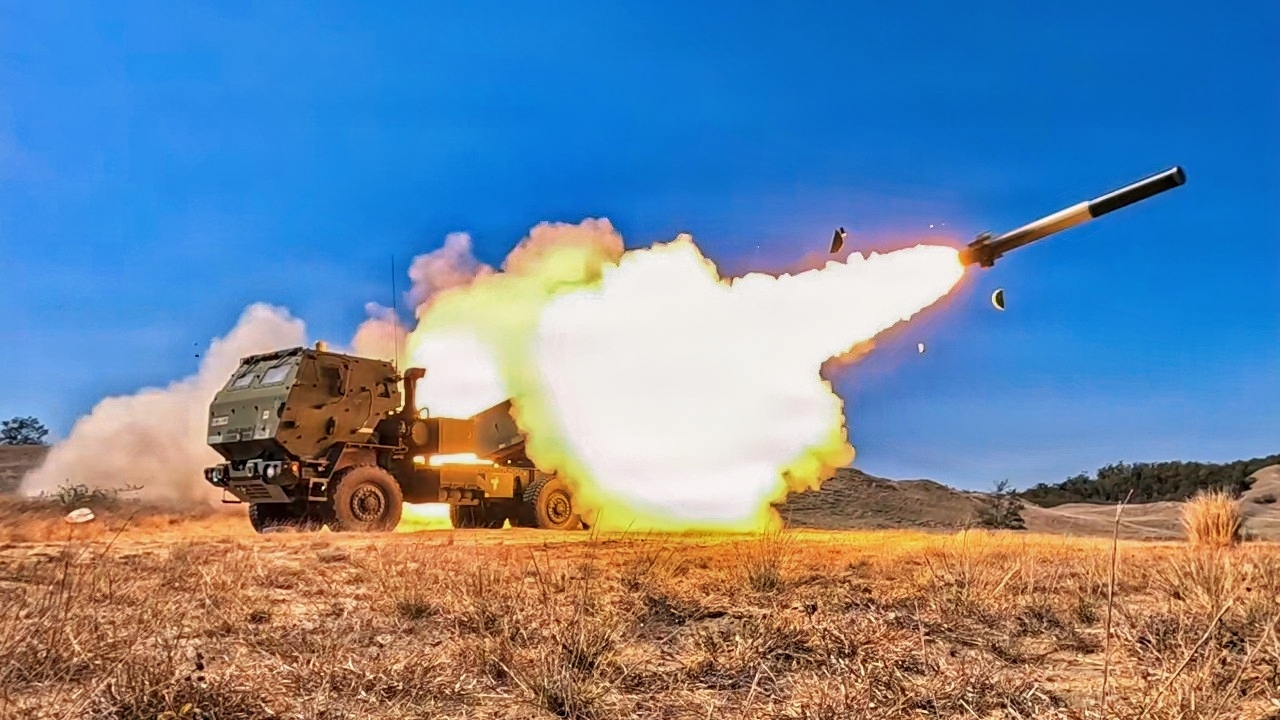
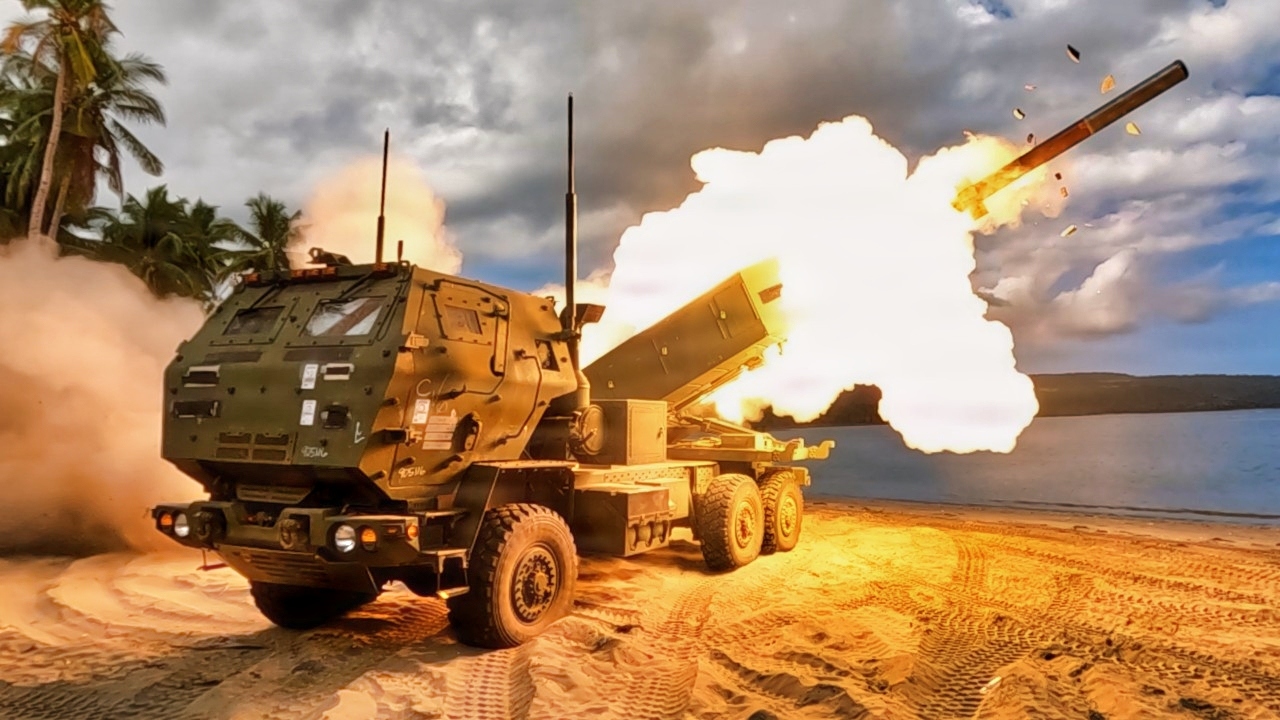
U.S. Soldiers assigned to 2-11 Long Range Fires Battalion, 25th Infantry Division Artillery, fire a High Mobility Artillery Rocket System during a counter-landing live-fire exercise as part of Exercise Balikatan 2026 at La Paz Sand Dunes, Laoag City, Philippines, May 4, 2026. Balikatan is a longstanding annual exercise between the Armed Forces of the Philippines and U.S. military that represents the strength of our alliance, improves our capable combined force, and demonstrates our commitment to regional peace and prosperity. (U.S. Army photo by Sgt. Duke Edwards). Ukraine has such missiles to fight Russia.
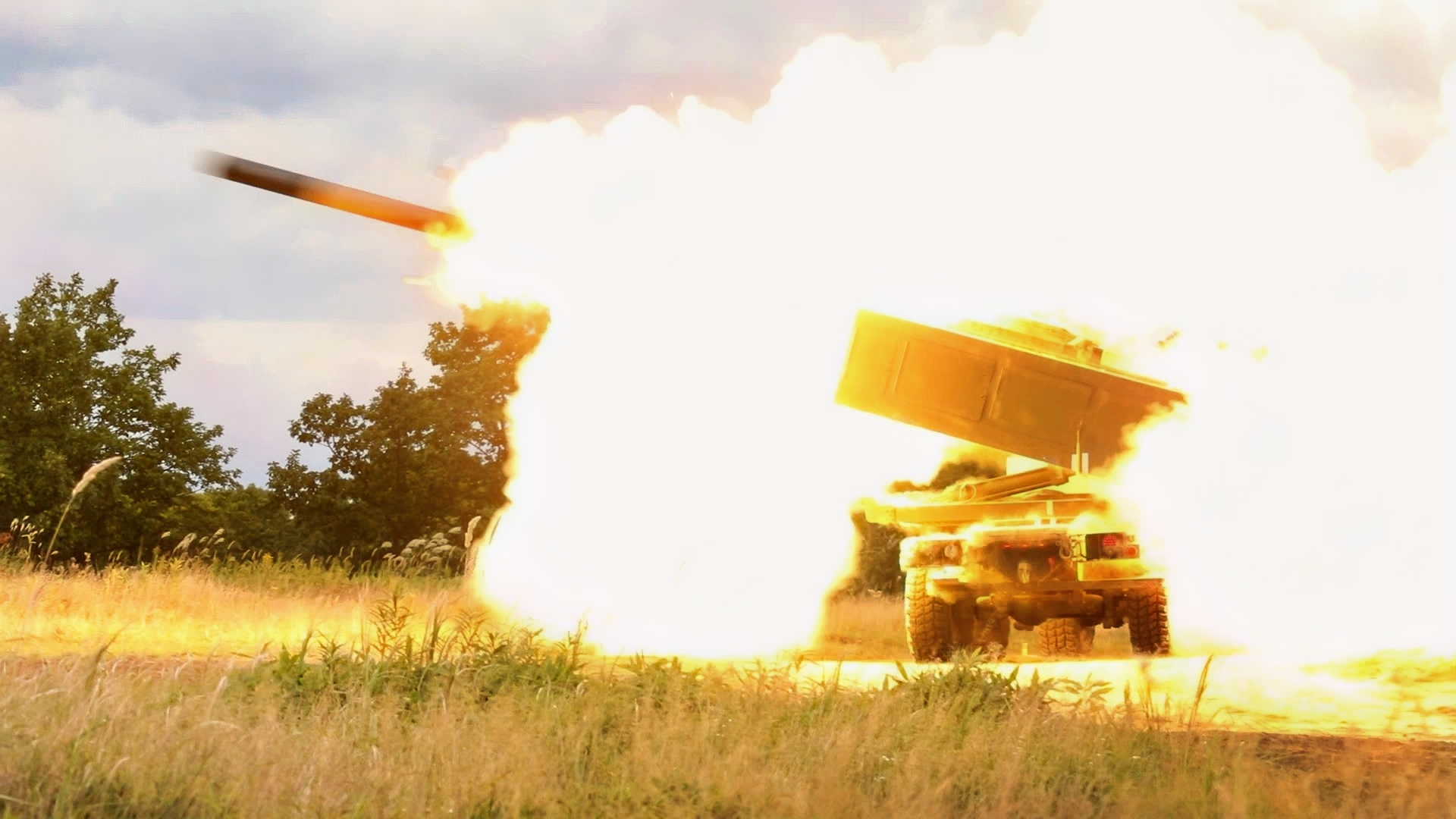
A High Mobility Artillery Rocket System (HIMARS) with the 1st Battalion, 181st Field Artillery Regiment fires toward a designated target at Yausubetsu Training Area, Hokkaido, Japan on Sept. 20, 2023. U.S. Army soldiers and Japan Ground Self-Defense Force (JGSDF) members participated in showcasing their artillery prowess in front of VIPs and dignitaries. (Photo by U.S. Army National Guard Staff Sgt. Ryan S. Gay)
Speaking with Brian Kilmeade on Fox & Friends, Zelenskyy endorsed stopping the fighting—even if it meant not recovering all Russian-occupied territory.
Hardly a coincidence, the remarks come as Washington pressures Kyiv to accept a negotiated settlement to the prolonged conflict.
Of course, the proposal does not necessarily represent Ukrainian recognition of Russian sovereignty over occupied territory.
And the larger, looming question is whether Russia would accept such an arrangement in the first place.
Freezing the Front Lines
What would freezing the front lines actually mean?
A ceasefire along existing lines would halt military operations exactly where Russian and Ukrainian forces currently stand.
Russia would retain de facto control over the Ukrainian territory it presently occupies, while Ukraine would retain control over the remainder of its internationally recognized territory.
But the ceasefire would not automatically transfer legal sovereignty over occupied areas to Russia—and this distinction is what separates a temporary military ceasefire from a permanent territorial settlement.
Yet the proposed arrangement could reduce casualties in a war that has already produced a catastrophic toll and serve as a bridge to more consequential negotiations.
But as it stands, the proposal would likely leave the underlying territorial dispute unresolved.
Ukraine would be wise to insist on mechanisms—monitoring, enforcement, and security guarantees—that would prevent Russia from using the pause to rearm and return stronger.
Change of Heart
Zelenskyy has been steadfast in his desire to continue the fight, even as Ukraine has endured more than four years of full-scale war since Russia’s initial invasion in February 2022.
Over the past four years, both countries have suffered heavy casualties and material losses.
The war has long since become a costly battle of attrition, with any territorial advance requiring significant manpower and equipment.
And Ukraine is still under barrage, as Russia continues to inflict damage through long-range missile and drone attacks that especially target Ukraine’s energy infrastructure.
So a ceasefire could offer immediate relief to long-suffering civilians and to the military, which has been taxed consistently for four years.
That’s all true.
But much of the influence for Zelenskyy’s pivot likely comes from a shifting diplomatic environment.
President Donald Trump and his administration have increasingly emphasized negotiations to end the fighting.
Ukraine’s dependence on Western military assistance gives American policymakers considerable influence over Kyiv’s strategic options.
This is speculative, however; Zelenskyy hasn’t said anything to suggest Washington pressured him into a freeze.
Putin’s Reaction
Putin will need to accept the proposal.
Will he?
Russia’s stated war aims have historically extended beyond maintaining control of currently occupied territory.
Rather, Putin has consistently demanded Ukrainian concessions concerning territory, military capabilities, and relations with Western security institutions.
With respect to territory, Moscow has demanded Ukrainian withdrawal from areas of Donetsk and other claimed regions that Russian forces do not fully control.
So Putin may be uncomfortable with a simple front-line freeze, which would leave some territory Russia claims under Ukrainian control.
On military restrictions, Russia’s negotiating positions have included limits on Ukraine’s armed forces and Western military assistance.
Putin would need a ceasefire to impose such restrictions—otherwise, Ukraine could rebuild its defenses during the pause.
On NATO and security guarantees, Moscow has been clear that Ukraine may not join NATO. Kyiv, naturally, wants credible protection against future Russian aggression, with Zelenskyy emphasizing that Ukraine would require security guarantees from the US and European partners.
It makes sense that Ukraine would want security guarantees to deter another Russian offensive.
But Moscow might find such a guarantee unacceptable, as it has long opposed NATO’s eastward expansion.
So as Washington accelerates diplomatic efforts to end the conflict, it will face difficult compromises.
About the Author: Harrison Kass
Harrison Kass is a writer and attorney focused on national security, technology, and political culture. His work has appeared in Tablet, City Journal, The Hill, The Spectator, and The Cipher Brief. He holds a JD from the University of Oregon and a master’s in Global & Joint Program Studies from NY—more at harrisonkass.com.


