
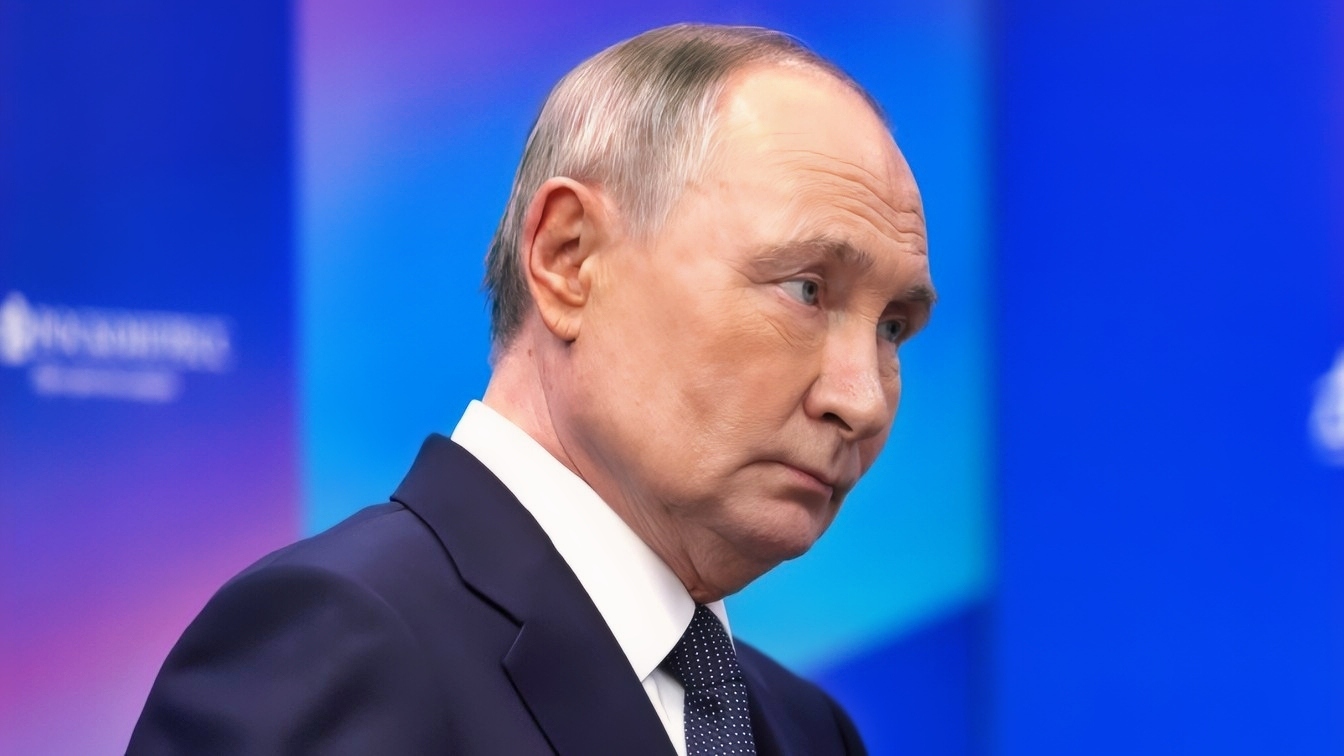
Well, Putin never saw this coming: Moscow is becoming increasingly confident that Western support for Ukraine is on the verge of collapse amid waning U.S. support for Kyiv.
Russia’s full-scale invasion, which is now well over halfway through its fifth year, has been a strategic stalemate on the battlefield for much of the conflict.

Putin with a Rifle. Image Credit: Russian State Media.

President of Russia Vladimir Putin at the at the BRICS+ meeting (via videoconference). Image Credit: Creative Commons.
The frontlines have largely remained the same since Ukraine retook Kharkiv in a September 2022 counteroffensive, with Russia making incremental gains in the country’s east ever since.
However, over the past fortnight, shifts in the political landscape have reshaped perceptions of the conflict, with Ukraine’s strongest ally pursuing a closer relationship with Moscow.
A Fractured Fortnight
While the relationship between U.S. President Donald Trump and Ukrainian President Volodymyr Zelensky has always been strained, it soured earlier this month when the former announced a deal to secure Russian diesel.
He later called for President Zelensky to stand down shortly afterward.
Last week, confusion reigned when the SpaceX-owned Starshield systems were restricted in Ukraine, leaving Ukrainian air defenses effectively redundant against a major Russian ballistic missile attack.
Trump, who announced the suspension of fresh Russian sanctions on Friday, 16th October, once again lashed out at his Ukrainian counterpart in a Truth Social post, arguing that the Ukrainian leader “doesn’t care” about the impact of the strikes on global diesel supply while accusing him of not wanting to end the war amid ongoing financial support for Kyiv.
In the face of ongoing pressure from Washington to accept a compromise peace agreement with Russia, Ukrainian officials have claimed that intelligence sharing has been restricted over the past week.
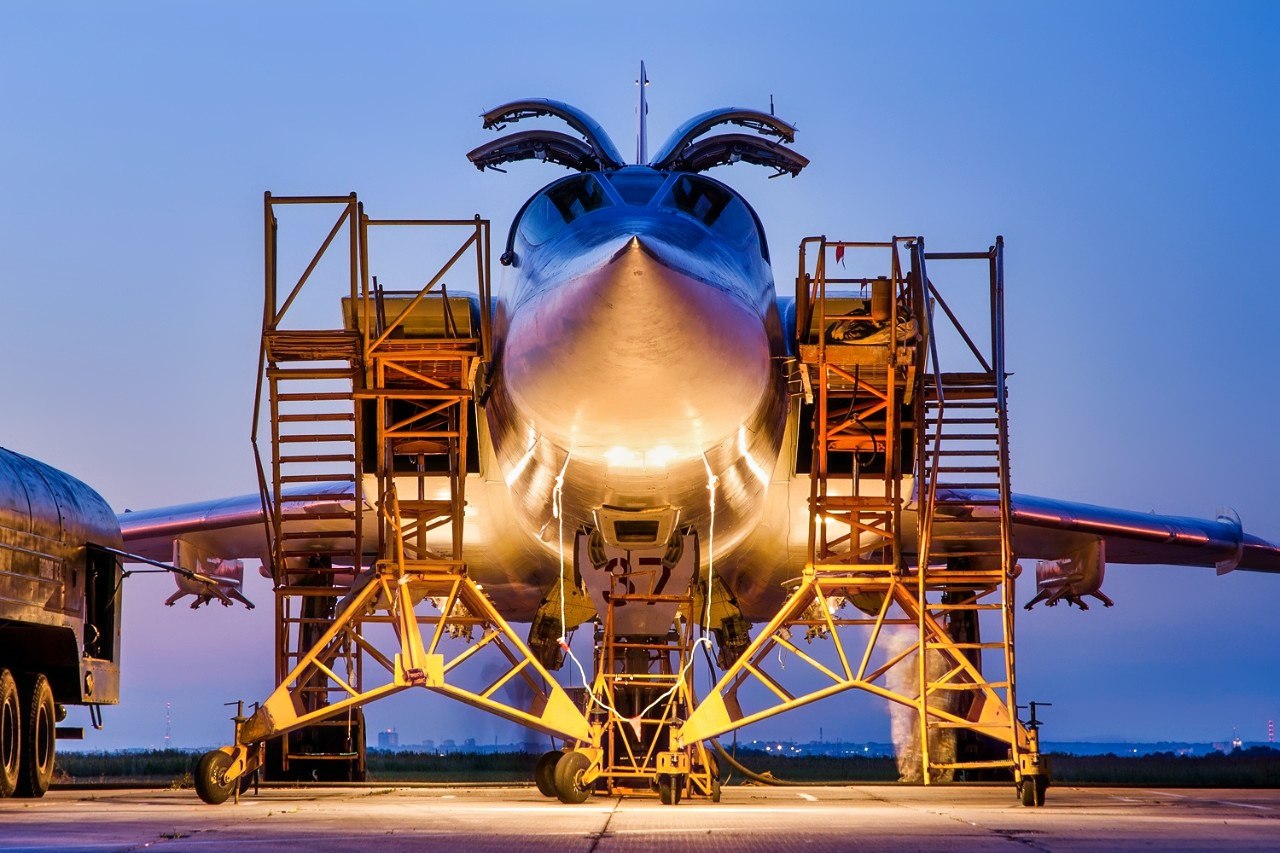
Tu-22M Bomber from Russia. Image Credit: Creative Commons.
Previously, Ukraine’s armed forces were advised of a forthcoming missile attack by Russia, allowing air defenses to prepare accordingly and providing civilians with more notice to take shelter.
A Testing Week
The dismay at the breakdown in relations is more evident from the Ukrainian side. “If the United States will support [Russian President Vladimir] Putin… it’s unbelievable, it’s a tragedy,” President Zelensky said in an interview with NBC News’ “Meet the Press” on Sunday. “If these two countries will be together, of course we will not prevail. And we will not be able to stand.”
Less than 24 hours later, Trump reiterated his frustration with Zelensky, saying it was “time for somebody else to negotiate on behalf of Ukraine.”
The President’s special envoy, Steve Witkoff, is on another multi-city tour this week, first meeting Zelensky and the leaders of Norway and Finland in Oslo on Tuesday, then flying to Moscow the following day. Norwegian Prime Minister Jonas Gahr Støre said the aim was “to put diplomatic efforts on a more constructive path” ahead of the summit.
Russian Joy
The Kremlin has done little to hide its joy at the breakdown in amicable relations between Zelensky and Trump. Kremlin spokesman Dimitry Peskov, who said Witkoff was expected to brief President Putin on the Oslo talks, said the Ukrainian President’s tenure was nearing an end.
“Some final signs of agony are being observed,” Peskov said on Tuesday. “The Kyiv regime is resisting. But this cannot change the course of events.”
Another Kremlin official, special envoy Kirill Dmitriev, simply posted “checkmate” on social media. Last week, Dmitriev announced that a “range of economic and investment projects” were being discussed with Washington, including Arctic energy projects.
It reflects the Russian mood: a conflict that has seen little tangible progress for much of its lifespan is finally experiencing the seismic shift, namely a cooling of U.S. support for Ukraine, needed to move past the current stalemate.
Political Victories
In a Washington Post piece, Russian figures and analysts explained the ramifications of Washington’s pursuit of closer ties with Moscow.
“Russia’s leaders have achieved a certain political victory,” one academic close to senior Russian diplomats told the publication, noting that much of the shift occurred after a telephone call between Putin and Trump.
Notably, events over the past fortnight have occurred so close to the midterm elections, where America, if the polls are to be believed, is set to elect a Democratic Congress because of the rising cost of living.
Much of the rise in energy costs has come from the war with Iran, but Kyiv’s persistent strikes of Russian oil refineries have provided a scapegoat for the Trump administration.
“The simplest explanation is that Trump was simply interested in having a talking point for the midterms on diesel, that he has a deal to lower it,” said Daniel Fried, former assistant secretary of state for Europe under George W. Bush. “I think it’s just Trump lashing out because he’s feeling cornered and unhappy with the midterms, and Zelensky stood in his way.”
About the Author: Shay Bottomley
Shay Bottomley is a British journalist. He has written for the Western Standard, Business Insider, Maidenhead Advertiser, Slough Express, Windsor Express, Berkshire Live and Southend Echo.