

Key Points and Summary – The October 8 Gaza deal envisioned phased progress: hostages returned, stabilization, and an international force.
-But momentum is stalling.
-Jordan’s King Abdullah warns that a “peace-enforcing” mission is a non-starter; nations might train Palestinian police, yet few will deploy into firefights.

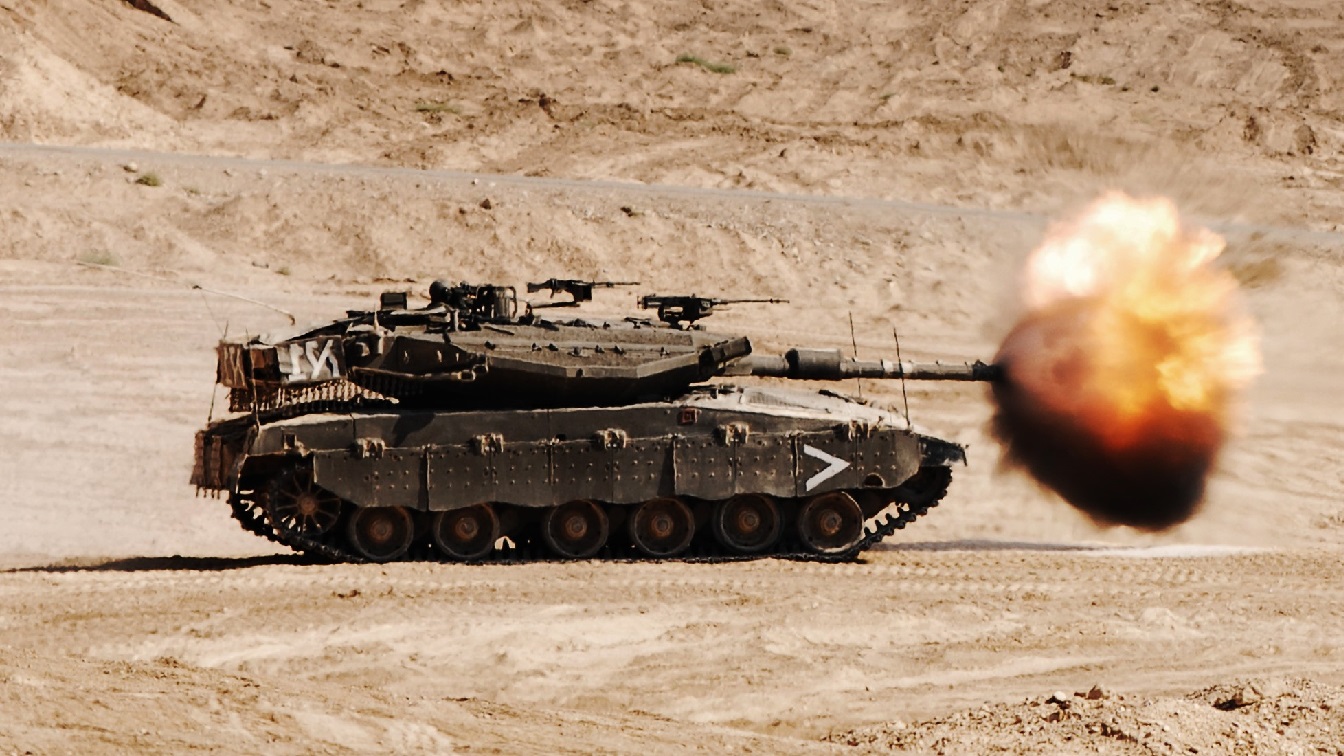
Merkava Tank Israel. Image Credit: Creative Commons.
-The U.S. has opened a Civil-Military Coordination Center in Israel to synchronize aid and security support—but won’t send troops into Gaza, and partners are hesitant.
-Meanwhile, Israel holds roughly half the Strip behind a “Yellow Line,” while Hamas reasserts control elsewhere.
-The longer deployment lags, the more facts on the ground harden—jeopardizing stabilization, governance, and the chance to rebuild daily life.
The Gaza Deal Is Stuck on Step One—Here’s Why
The agreed-upon Gaza deal, set on October 8, is facing several challenges. This has occurred around twenty days after the cease-fire helped end the fighting in Gaza. The agreement is supposed to proceed in phases. Hamas must return all the hostages.
Additionally, the goal is to stabilize the Gaza Strip. A key to that process is the deployment of an international stabilization force.
Personnel from Other Nations Wanted
However, as recent comments by the King of Jordan suggest, it will be difficult to get countries actually to agree to send personnel into Gaza. Many countries have expressed interest in the US-backed plan for Gaza.
However, many of them also seem to want to either pass the buck to someone else or see who will be the first to act. In essence, this means that until one country is willing to jump in, most will wait and see.
This creates a complex process in the future.
King Abdullah of Jordan spelled out the reason for the problem in comments to the BBC. “What is the mandate of security forces inside of Gaza? And we hope that it is peacekeeping, because if it’s peace enforcing, nobody will want to touch that,” the monarch said to BBC Panorama.
“Peacekeeping is that you’re sitting there supporting the local police force, the Palestinians, which Jordan and Egypt are willing to train in large numbers, but that takes time. If we’re running around Gaza on patrol with weapons, that’s not a situation that any country would like to get involved in.”
Outsiders Policing Gaza
The image of countries forced to police Gaza without an existing local force to support them means that many will be reticent to move forward.
This is because they don’t want to see casualties in Gaza in clashes with Hamas or other terrorist and armed groups. They also understand that getting involved in any long-term enforcement in Gaza might not be popular at home.
The US is trying to keep the Gaza ball moving in the right direction. US Central Command opened a Civil-Military Coordination Center (CMCC) in Israel on October 17. This facility is supposed to create a coordination hub for Gaza assistance, CENTCOM said.
“The CMCC is designed to support stabilization efforts. US military personnel will not deploy into Gaza but will instead help facilitate the flow of humanitarian, logistical, and security assistance from international counterparts into Gaza,” CENTCOM noted.
However, the fact that US personnel won’t deploy to Gaza illustrates one of the many hurdles to getting to the next phase in Gaza. Other personnel involved with the CMCC may not be deploying into Gaza.
For instance, a British contingent is also involved with the CMCC. This means that countries such as Egypt, or others that have shown interest in Gaza, will need to decide whether they can move forward with deployment. It also remains to be seen if a Palestinian security force can be deployed.
The longer that time goes by, the more the current situation in Gaza is cemented. Currently, half of the area remains under the control of the Israel Defense Forces. They have demarcated their area by what is called the Yellow Line.
Hamas appears to have regained control of the rest. The longer that time goes by, the more Hamas may be cemented back in charge.
Voices in the Arab world understand the importance of moving forward in Gaza. Hani Hazaimeh, a senior editor based in Amman, wrote on October 28 at Arab News that “as the dust begins to settle over the ruins of Gaza, the world faces a moral reckoning.
It is no longer enough to deliver sacks of flour, medical supplies, or tents to the survivors.” He notes that the children of Gaza deserve an education and other support. For them to receive an education and have everyday lives in the future, countries are going to need to do more than talk about coordinating stability in Gaza.
About the Author: Seth Frantzman
Seth Frantzman is the author of The October 7 War: Israel’s Battle for Security in Gaza (2024) and an adjunct fellow at The Foundation for Defense of Democracies. He is a Senior Middle East Analyst for The Jerusalem Post. Seth is now a National Security Journal Contributing Editor.
More Military
‘Long Way from Production’: China’s J-36 Might Be ‘Paper Tiger’ Stealth Fighter
‘Mach 2’ JAS 39 Gripen Is a Rocket Fighter Plane
New ‘Ferrari’ F-35 Stealth Fighter Is Aimed Right at Russia and China
Putin’s Poseidon Nuclear “Doomsday” Torpedo Looks Like a Bluff
The Air Force’s B-21 Raider Stealth Bomber Plan Doesn’t Make Any Sense


