

PUBLISHED on August 6, 2025, 19:55 EST – Key Points and Summary – A B-2 Spirit stealth bomber was severely damaged in a 2022 crash landing at Whiteman Air Force Base, an accident that ultimately reduced the operational fleet to just 19 aircraft.
-An investigation revealed the failure of a single hydraulic fitting on the right landing gear caused the crash.

A B-2A Spirit bomber assigned to the 509th Bomb Wing conduct aerial operations in support of Bomber Task Force Europe 20-2 over the North Sea March 12, 2020. Bomber missions enable aircrews to maintain a high state of readiness and proficiency, and validate U.S. global strike capability. (U.S. Air Force photo/ Master Sgt. Matthew Plew)
-This triggered a chain of events where a misleading safety indication led to the collapse of the left landing gear upon touchdown, causing a fire.
-The incident resulted in over $300 million in damage, and the Air Force later decided the bomber was too expensive to repair.
The B-2 Spirit Even Can Have Mechanical Problems
The B-2 Spirit is often regarded as one of the most technologically advanced bombers in service worldwide.
Its stealth technology and advanced avionics make it a formidable presence in the skies, enabling it to slip through enemy airspace and deliver precision strikes.
Despite its advanced technology, the B-2 is occasionally prone to mechanical failure.
In one instance, a hydraulic fitting failure on a B-2 caused the aircraft to crash-land, an accident that cost the Air Force millions of dollars.
The B-2 Has a Crash Landing
The B-2 has a long combat history, having flown in Europe and the Middle East.
However, its only casualties have been due to mechanical problems, not enemy fire.
On December 10, 2022, a B-2A Spirit bomber was severely damaged during a landing attempt at Whiteman Air Force Base.
The aircraft involved, tail number 90-0041 and callsign DEATH 12, had launched earlier that day as an airborne spare for a long-range mission. After the primary aircraft continued its mission, DEATH 12 returned to base.

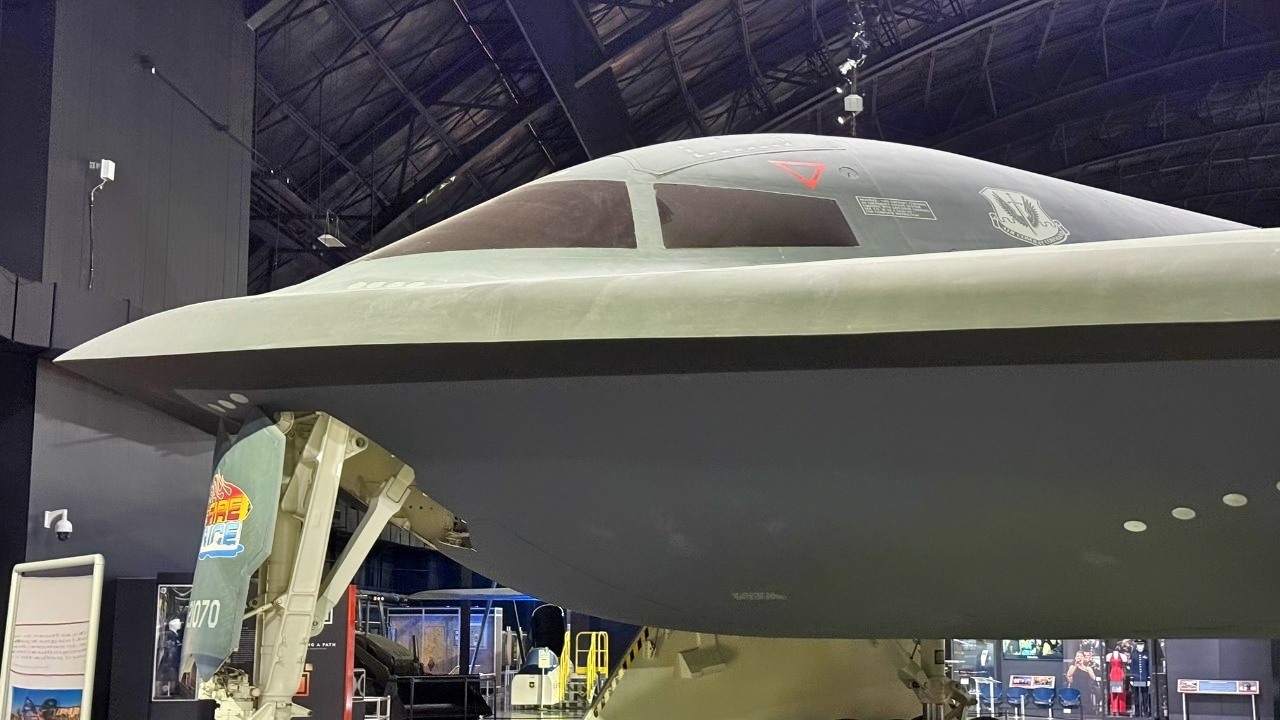
B-2 Spirit Stealth Bomber At USAF Museum. Image Credit: Harry J. Kazianis/National Security Journal.
As the aircraft approached Runway 01 for landing, the crew initiated the landing gear deployment sequence at approximately 200 knots. Almost immediately, the aircraft issued master caution alerts and hydraulic system warnings, indicating a leak.
While the left main and nose landing gear extended successfully, the right main gear failed to deploy. The crew executed an emergency gear extension procedure, which resulted in all three gear indicators showing “down and locked.”
However, this indication turned out to be misleading.
Upon touchdown at 2:29 p.m. local time, the left main landing gear collapsed. The aircraft’s left wing struck the runway and dragged for several thousand feet, rupturing the left surge fuel tank and igniting a fire. The fire quickly spread to the left outboard fuel tank, which exploded shortly after the initial blaze. The aircraft came to a stop with its left wingtip ablaze in the grass infield. Fortunately, the crew was able to safely exit the aircraft without injury.
After Incident Investigation
An investigation conducted by the Air Force Global Strike Command’s Accident Investigation Board (AIB) revealed that the mishap was caused by a failure of a hydraulic CryoFit coupling in the truck position sequence valve associated with the right main gear.
This failure led to a hydraulic fluid leak from both the primary and backup systems, which in turn prevented the right gear from unlocking during standard extension. Although the emergency extension procedure resolved the gear deployment issue, it introduced vulnerabilities in the left central gear system.
Specifically, the hydraulic pressure that usually keeps the lock link assembly in an over-center (locked) position dropped significantly. Upon landing, a brief pressure pulse displaced the lock link, causing the left gear to collapse.

B-2 Bomber at USAF Museum National Security Journal Image. All Rights Reserved.
Firefighting teams responded promptly to the scene. Initially, water was used to combat the fire, but Aqueous Film Forming Foam (AFFF) was authorized approximately three and a half minutes into the response.
While external flames were subdued, heat continued to build inside the wing, leading to explosions in both the surge and outboard fuel tanks. The fire was fully extinguished about an hour after it began.
Multi-Million Dollar Disaster
The damage to the aircraft was extensive. The left wing suffered significant structural damage, including destruction of control surfaces and gear doors.
The total estimated damage exceeded $300 million. Additionally, the airfield sustained approximately $27,500 in damage. Following the incident, the Air Force grounded the entire B-2 fleet for safety inspections and engineering reviews.
Whiteman Air Force Base’s only runway was closed for 11 days, and B-2 operations were suspended for nearly five months. Flight operations resumed on May 22, 2023.
In May 2024, the Air Force confirmed that the damaged B-2 would not be repaired due to the high cost and complexity of restoration. This decision reduced the operational fleet from 20 to 19 aircraft.
The B-2 fleet had already been reduced once before, in 2008, when another B-2 was destroyed in a crash at Andersen Air Force Base in Guam.
The retirement of this aircraft underscores the fragility and high maintenance demands of the B-2 fleet. It also highlights the importance of the upcoming B-21 Raider, which is expected to replace both the B-2 and B-1B Lancer in the coming years.
The Air Force plans to acquire at least 100 B-21s, which are currently undergoing flight testing.
The AIB report emphasized several key takeaways from the incident. One of the most critical lessons was that system indications can be misleading. Although all gear indicators showed “down and locked,” the left main gear lacked the hydraulic margin necessary for a safe landing.
The behavior of the landing gear system under emergency hydraulic conditions exposed design vulnerabilities that contributed to the collapse. Additionally, the report highlighted the need for clearer guidance and training for firefighting teams dealing with stealth aircraft.
Delays in applying AFFF allowed the fire to spread, increasing external damage. While no maintenance errors were found, the incident prompted a review of CryoFit fittings and hydraulic system integrity across the fleet.
About the Author: Isaac Seitz
Isaac Seitz, a Defense Columnist, graduated from Patrick Henry College’s Strategic Intelligence and National Security program. He has also studied Russian at Middlebury Language Schools and has worked as an intelligence Analyst in the private sector.
More Military
America Almost Had to Invade Japan


