


President Donald Trump says oil is flowing through the Strait of Hormuz at almost prewar levels. The reality is rather more complicated.
Only seven commodity vessels passed through Hormuz on Wednesday, September 9, according to preliminary ship-tracking data reported by Reuters on Thursday.
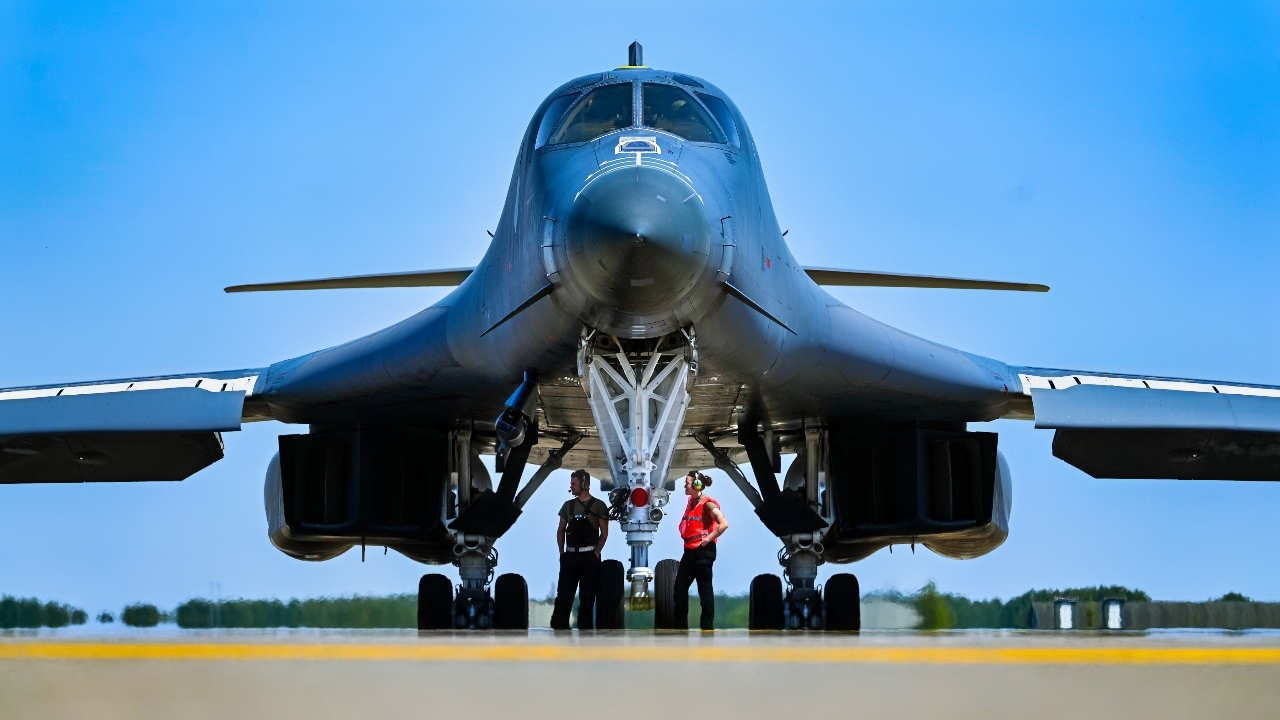
U.S. Air Force Senior Airman Colby Delia, 9th Expeditionary Bomb Squadron crew chief, and Airman 1st Class Olivia Ward, 9th Expeditionary Bomb Squadron crew chief, prepare for a B-1B Lancer to take off for a mission at Misawa Air Base, May 9, 2025. BTF missions provide opportunities to train and work with our allies and partners in joint and combined operations and exercises. (U.S. Air Force photo by Airman 1st Class Mattison Cole)
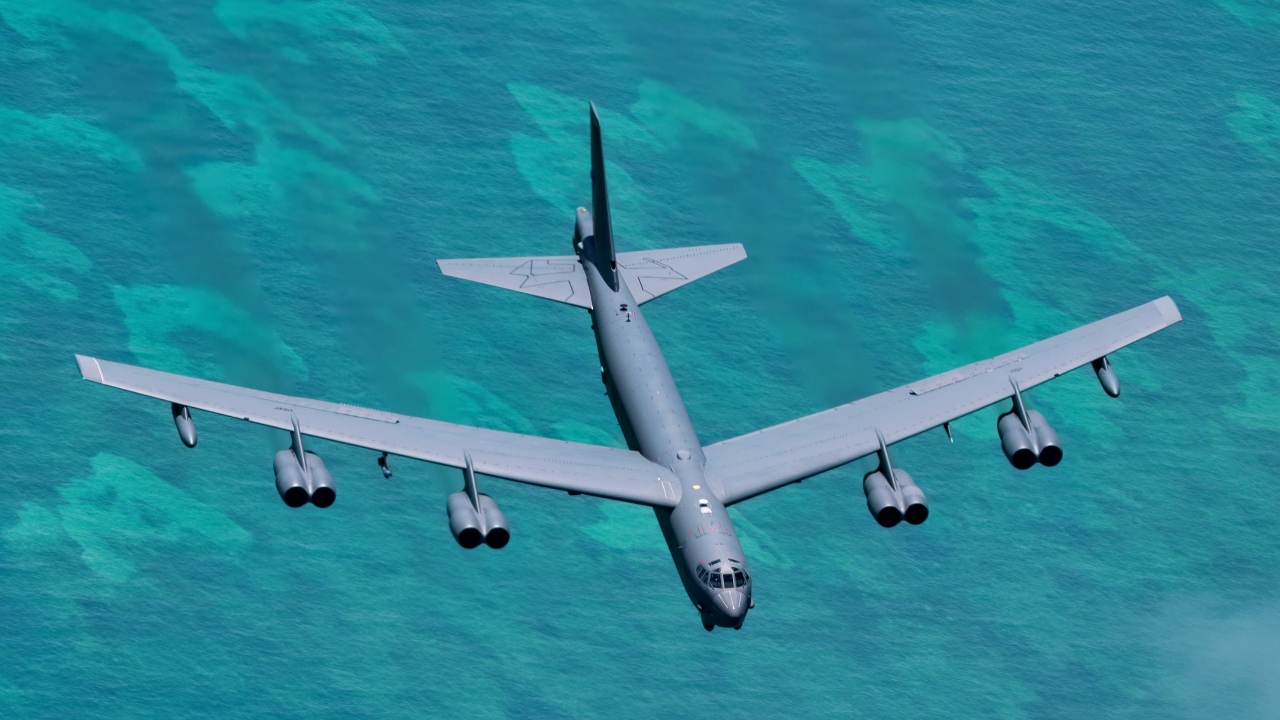
A U.S. Air Force B-52H Stratofortress aircraft flies in a seven-ship formation during the Hyundai Air and Sea Show at Miami Beach, Florida, May 24, 2025. The flyover represented the Air Force’s total force, integrating active duty, guard, and reserve pilots flying the B-1B Lancer, B-2 Spirit, F-22 Raptor, A-10 Thunderbolt II, B-52H Stratofortress, F-16C Fighting Falcon, and F-15C Eagle aircraft. (U.S. Air Force photo by Staff Sgt. Bailee A. Darbasie)
That was down from 12 a day earlier and half the recent 10-day average of 14 vessels.
Four ships left the Persian Gulf and three entered. Of the four outbound vessels, only one was a very large crude carrier: the Finland Prosperity, carrying nearly 2 million barrels of oil. Two others were dry-bulk carriers, and the fourth was a short-range product tanker.
Not a single LNG tanker exited through the Strait of Hormuz.
Trump: Hormuz is BACK
Donald Trump wrote to his Truth Social platform last week that “Hormuz Oil Volumes are BACK.” The U.S. President shared a graphic contrasting the roughly 20 million barrels a day before this conflict with 18 million barrels last week.
The day before the post, U.S. officials said American forces escorted some 40 commercial vessels carrying approximately 18 million barrels of oil via the strait.
Vice President JD Vance then told a White House press briefing that Iranian control over the strategic waterway was “effectively gone.” Vance claimed flows were “almost back to where it was before the conflict even started.”
He also boasted that the U.S. military was responsible for the flows, noting on September 3: “Last night, 15 million barrels came out of the Strait of Hormuz.”
Traffic Remains Low
Thursday’s data showed that traffic still remains much lower than before Israel and the U.S. began joint strikes on Iran in February.
“There are approximately anywhere between about 10 to 15 transits both ways,” Rishi Nyati, managing director of Emarat Maritime, told an industry conference in Singapore on Thursday. “There is oil moving.”
Nyati was referring to commodity vessels using the Omani corridor on the southern side of the strait.
At Fujairah, another important Gulf shipping and refueling center, bunker activity has recovered to only about 40% of prewar levels, according to Repsol’s Max Tay.
It is not difficult to guess why shipping companies remain wary of the waterway’s risks.
Iran said Wednesday that it had attacked 10 vessels near Hormuz after U.S. forces struck five Iranian oil tankers.
One vessel carrying 2 million barrels of Iraqi fuel oil caught fire after a drone attack, while Tehran’s Islamic Revolutionary Guard Corps threatened a larger maritime exclusion zone and further retaliation.
Mines, Mines, Mines
Mines are still a major concern in the region. Earlier this week, the Financial Times revealed that U.S. Navy personnel had spent around four months secretly clearing the strait of Iranian mines.
SEALs, uncrewed boats and underwater vehicles were all involved in this bold mission.
“That is usually followed up by a navy diver who’s got to get in the water,” retired U.S. Navy Capt. Bill Hamblet told the FT, describing how they distroy discovered mines.
Trump has announced the clearing of the mines, but shipping firms are still nervous of the risk to their cargoes and crews. Iran could lay more mines, not to mention the issue of missiles and drone fire.
Iran’s Rivals Have a Plan B
Gulf producers are increasingly using back-up routes to reduce the impact of the disruption.
Saudi crude and condensate loadings at Yanbu on the Red Sea — which allows oil to travel without passing through the Strait of Hormuz — have rebounded sharply in September.
Vortexa estimates loadings at 3.7 million barrels per day in September, up from 3.2 million in August.
Kpler puts the uptick at 2.9 million barrels per day, up from 1.5 million.
Official tallies obviously fail to account for ships traveling with their Automatic Identification System (AIS) transponders turned off in so-called “dark crossings” that are harder for hostile actors to detect.
The Wall Street Journal has cited Kpler data showing that no newly loaded Iranian crude tankers had managed to transit past the strict U.S. blockade reinstated on July 14.
Last month, Iran loaded some 255,000 barrels in the Gulf. This marks a whopping 85% dip from the previous averages in the February-to-April period.
Oil traders appear equally averse to optimism over the crisis. Brent crude jumped about 4% Thursday to $105.26 a barrel, while West Texas Intermediate climbed above $100 for the first time since May.
“The conflict will last longer than anticipated even a month ago,” PVM analyst John Evans told Reuters.
About the Author: Georgia Gilholy
Georgia Gilholy is a journalist based in the United Kingdom who has been published in Newsweek, The Times of Israel, and the Spectator. Gilholy writes about international politics, culture, and education.


