


The ongoing war with Iran has had serious ripple effects on the global economy, on maritime trade, and, according to a new scientific report, on the marine ecosystem as well.
The long-term closure of the Strait of Hormuz could have serious repercussions for marine ecosystems worldwide.
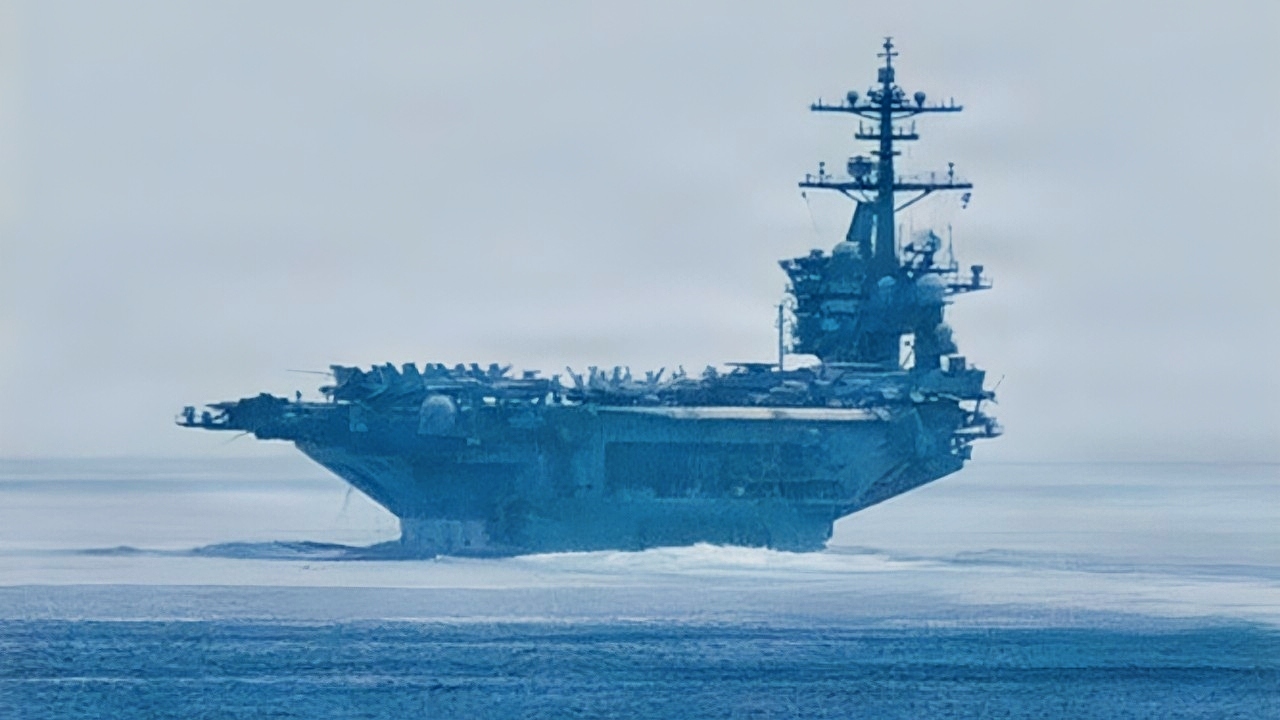
Nimitz-class aircraft carrier USS George Washington (CVN 73). Creative Commons Image.
Cargo and oil tankers, which have been waiting outside the strait for several months, could unleash invasive marine species into other fragile environments once trade through the vital waterway resumes.
The war has forced more than 1,500 vessels to halt near the strait since the end of February, as the U.S. and Iran duke it out for control of Hormuz.
Environmental Concerns in the Strait of Hormuz
According to the study, published by an international coalition of marine scientists, the war with Iran has the potential to bring about significant environmental damage as tankers with foreign organisms remain docked near the Gulf of Oman.
As the tankers wait outside the strait, more invasive marine organisms continue to grow on ship hulls, which could pose a threat to certain ecosystems when travel finally continues through the Strait. “If you had to sort of design a worst-case scenario, it would look a lot like this,” said Mario Tamburri, a professor at the University of Maryland Center for Environmental Science and the study’s lead author. “It’s a perfect storm.”
Whenever a ship remains stationary, its submerged parts accumulate microbes, algae, and a whole host of other marine life.
These invasive organisms, when introduced into other ecosystems, can cause environmental problems, such as competing with native species, damaging port infrastructure, or introducing pathogens that harm local marine life or, in some cases, humans.
A U.S. Air National Guard F-15 Eagle from the 159th Fighter Wing, Louisiana Air National Guard, takes off during exercise Sentry Aloha 26-1 at Joint Base Pearl Harbor-Hickam, Hawaii, Jan. 27, 2026. The training demonstrates the 154th Wing’s capability to lead large-force employment exercises, reinforcing the Guard’s position as a vital component of the nation’s operational force. (U.S. Air National Guard photo by Senior Master Sgt. Mysti Bicoy)
According to scientists, most marine organisms achieve their rapid growth phase after about 10 days.
However, many of the ships waiting outside the Strait of Hormuz have been stuck there for months.
Worse yet, the paper notes that the ships have been stalled since Spring, which is the ideal season for marine organisms to grow and reproduce due to warming water temperatures.
These conditions, along with the sheer volume of ships waiting near Homruz, have created what scientists call an immense international biosecurity threat.
Biofouling and its Economic Consequences
So, there’s a good deal of algae and barnacles growing on the hulls of cargo ships. Most readers would be forgiving of thinking that this does not sound like that big of a deal.
However, the accumulation of marine life on naval vessels, often referred to as “biofouling,” causes a wide range of problems for both the environment and global maritime trade.
Firstly, excessive growth on commercial ships increases their weight, thereby increasing their drag and forcing them to use more fuel.
According to the International Maritime Organization, approximately 10% of all fuel used by shipping fleets worldwide is wasted due to biofouling.
While it may seem like a small issue at first glance, biofouling is responsible for billions of dollars wasted on excess fuel and additional billions spent to counteract the problem.
Invasive marine species have, on many occasions, caused problems for human life. In one example, commercial ships from the Indo-Pacific introduced the rope grass hydroid, Garveia fransiscana, to the Chesapeake Bay several hundred years ago.
The invasive species caused major problems for industrial infrastructure and clogged up the cooling systems on certain power plants. “We’ve been working with a nuclear power plant locally to control and manage that fouling,” he said. “It’s costing millions of dollars per year to keep those cooling systems clear – and there are lots of incidents like that.” Biofouling also affects local marine life, including fish and shellfish that fishermen and local consumers rely on.
In some cases, local wildlife has been infected by diseases spread via biofouling, which then introduces those diseases into the human population.
Who is Most at Risk?
According to researchers, the areas at most risk are areas near the Strait of Hormuz with similar environmental conditions.
The Persian Gulf experiences extreme seasonal changes.
Consequently, marine life in the region is highly resilient and adaptable to changes.
Areas with similar conditions, such as Southeast Asia and India, are at greater risk due to their higher temperatures and salinity.
North America is at lower risk due to its greater distance and lower salinity; however, the risk is not zero.
Likewise, Gulf coasts are another area of concern due to their similar climates and closer proximity.
Obviously, the war and its immediate impacts will always be the top priority. Most government officials are more worried about the rising human and economic costs of the war, which is completely natural and understandable.
However, increased biofouling remains a concern that needs to be addressed, given its potential impacts on seaside infrastructure.
The paper, therefore, calls for governments and the maritime industry to strengthen their biofouling management in preparation for the massive volume of ships expected to pass through the Strait of Hormuz once the present war ends.
If overlooked, the massive spread of foreign marine organisms could, at worst, cause disease and wreak havoc on seaside infrastructure worldwide.
About the Author: Isaac Seitz
Isaac Seitz, a Defense Columnist, graduated from Patrick Henry College’s Strategic Intelligence and National Security program. He has also studied Russian at Middlebury Language Schools and has worked as an intelligence Analyst in the private sector.


