


No Good Options for Trump on Iran: President Donald J. Trump, following the realization that the sustained airstrike campaign against military targets inside the Islamic Republic of Iran was not working as planned, the forty-seventh president, who campaigned on “no new wars,” must now decide if he de-escalates the Iran War or expands it.
The White House has paused its airstrikes for a third night. Washington insists that it is a strategic pause to give negotiations a chance. Yet, the Pentagon says it is ready to resume hostilities if this diplomatic window fails.
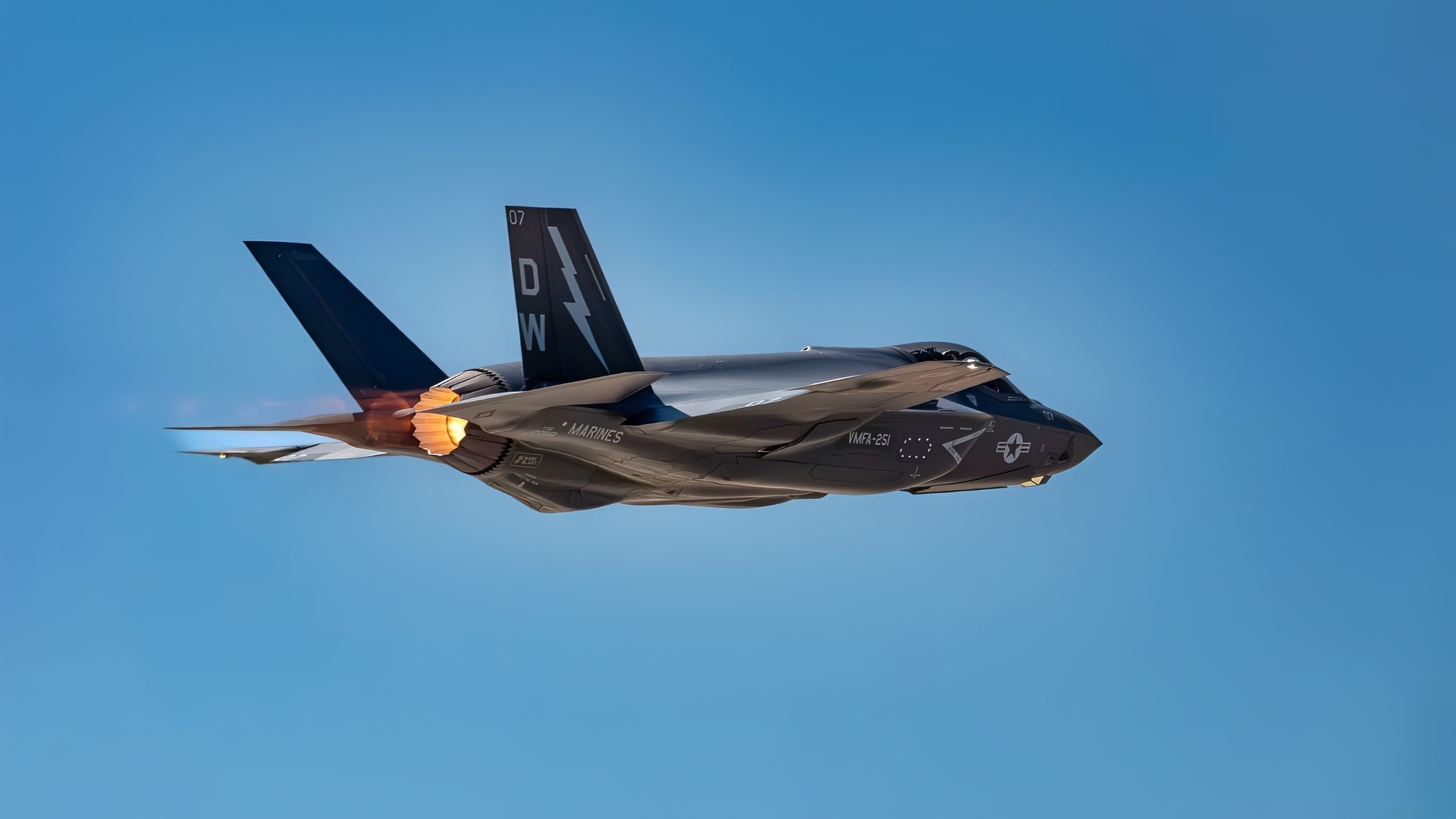
A U.S. Marine Corps F-35C Lightning II assigned to Marine Fighter Attack Squadron 251 (VMFA-251), Marine Corps Air Station Cherry Point, North Carolina, takes off for a mission in support of Red Flag-Nellis Marine Fighter Attack Squadron 251 (VMFA-251), 2nd Marine Aircraft Wing, Marine Corps Air Station Cherry Point, North Carolina 25-3 from Nellis Air Force Base, Nevada, July 22, 2025. Red Flag, strengthens join-force readiness through integration in realistic combat scenarios, enhancing interoperability and rapid-response capabilities. (U.S. Air Force photo by William R. Lewis)
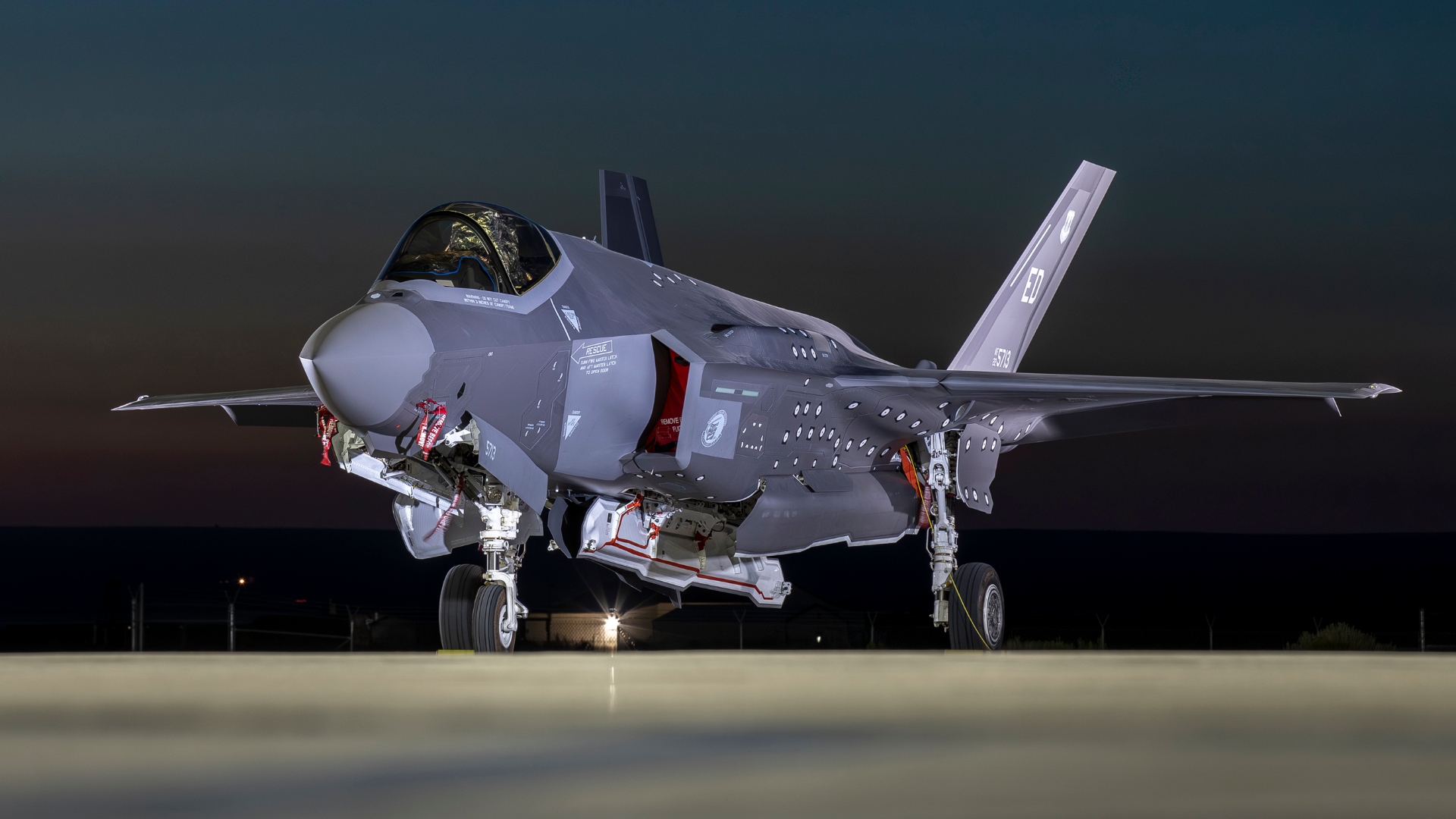
The 461st FLTS, F-35 Integrated Test Force, at Edwards Air Force Base in California received a newly instrumented F-35A aircraft. The unique airframe will boost flight and mission sciences testing for the warfighter at a critical time during developmental test. “This new aircraft arrives at a crucial time, supporting intensive testing of TR-3 software upgrades and next-generation weapons integration.” says Lt. Col. Daniel Prudhomme, F-35 ITF director. “As the world’s only F-35A capable of evaluating both mission systems and flight sciences, this new asset is key for rapidly fielding advanced capabilities to the warfighter.” (Courtesy photo)
Diplomatic Openings Remain Very Limited
Some diplomatic contacts have resumed between the two warring sides, though there is little evidence showing that Tehran has altered its central negotiating position.
Iranian officials confirmed that deputy foreign ministers recently met with Omani mediators, continuing Muscat’s longstanding role as an intermediary between Washington and Tehran. Iranian leaders, though, insist that any future agreement must recognize Tehran’s authority over shipping through the Strait of Hormuz (SoH), the narrow waterway through which roughly one-fifth of globally traded oil normally passes.
Since the war, hardly any of the world’s vital oil and liquefied natural gas (LNG) has passed through the Strait, causing all manner of economic disruptions globally.
Iran’s demand for control over the SoH remains utterly unacceptable to Washington, and the ongoing dispute over Hormuz threatens to disrupt global energy markets and exacerbate economic instability worldwide.
Military Pressure Has Not Worked
Since the war started, the Trump administration has relied disproportionately on military strikes that it believed would weaken Iranian military infrastructure and force concessions at the negotiating table. Despite extensive bombings, however, US intelligence assesses that the strikes have not fundamentally changed Tehran’s negotiating position or their overall strategy.
A recent report from CNN confirmed that both the CIA and the Defense Intelligence Agency (DIA) demonstrated to the president that the bombing campaign has essentially failed or, as the article states, is “unlikely to shift the Iranian negotiating position”. All this has occurred as the US arsenal has drastically depleted.
Both Vice President JD Vance and the Chairman of the Joint Chiefs of Staff, US Air Force Dan Caine, have expressed concern to the president about what the war is doing to America’s already strained strategic stockpile of key weapons.
To many in Washington’s surprise, perceived US military supremacy has not translated into political leverage.
Is Escalation Possible?
One theoretical option would involve expanding military operations beyond airpower by introducing American ground forces, which could escalate the conflict and increase US casualties, raising questions about the long-term strategic costs and risks involved.
Engaging in such an action has as much chance of dramatically increasing US casualties as it does of pressuring the Iranian regime to desist from its actions. What’s more, it could turn this war into a protracted Middle East ground war, something that no one really wants.
Still, one other possibility includes broadening the target list inside Iran to include additional transportation networks, energy infrastructure, and power generation facilities. In other words, soft targets. It would mean hitting targets that are described as “dual use,” meaning that they serve both the civilian population of Iran and its military. So, destroying these targets would necessitate a severe reprisal against similar targets in neighboring Gulf Arab states by Iran’s Armed Forces.
Plus, at least part of the rationale for the US intervention in February was to help the Iranian people whom their own government was purportedly annihilating. Since the war began, though, there is evidence suggesting that the US strikes on Iran have rallied popular support around the Islamic Republic. Another round of bombings of the kind being discussed here would only harden popular support for the regime.
What About Economic Pressure?
Iran is already one of the most sanctioned nations in the world. The Trump administration could intensify the already high economic pressure on Iran by expanding the naval blockade and sanctions enforcement against Iranian shipping and ports. The idea would be to reduce government revenues while limiting funding available for the Islamic Revolutionary Guards Corps (IRGC).
This option, however, takes too long. And as the world waited to see if the move had its desired impact on Iran, Tehran would be attacking each day.
And now that the Houthis of Yemen have partially blocked the Strait of Bab el-Mandeb and the Red Sea to Saudi-flagged shipping, the economy is about to become even more unstable.
Political Pressure Builds at Home
On the home front, as the United States enters what will be a contentious Midterm election cycle already, public polling indicates many Americans remain uncertain about the objectives and progress of the war. A recent CBS News/YouGov survey highlights how only one-third of respondents said they clearly understood developments surrounding the Strait of Hormuz. Most respondents believed the conflict had proven harder than the administration initially assumed.
Higher fuel prices remain another major political concern as Republicans prepare for the Midterms. Some lawmakers have even suggested alternative approaches. Republican Sen. Bill Cassidy recently argued that the Trump administration should consult Congress and the American public on whether a different strategy could better achieve US objectives.
All these pressures will intensify as the November Midterm elections approach, making the US domestic political landscape more relevant to the audience’s understanding of the conflict’s impact.
No Way Out?
So, as the conflict approaches its fifth month, the Trump administration finds itself confronting a hard strategic reality. Military escalation carries substantial risks, economic pressure requires too much time, and diplomacy remains constrained by fundamental disagreements over the future of the SoH.
For now, Washington appears to be searching for an alternative that can produce meaningful results without expanding an increasingly costly conflict, but no clear solution has yet emerged.
About the Author: Brandon J. Weichert
Brandon J. Weichert is Senior National Security Editor. He also manages The Weichert Brief on Substack. Weichert also hosts “National Security Talk” on Rumble. He is the author of four bestselling national security books, the most recent of which is A Disaster of Our Own Making: How the West Lost Ukraine (Encounter Books). Follow him via Twitter/X @WeTheBrandon.


