

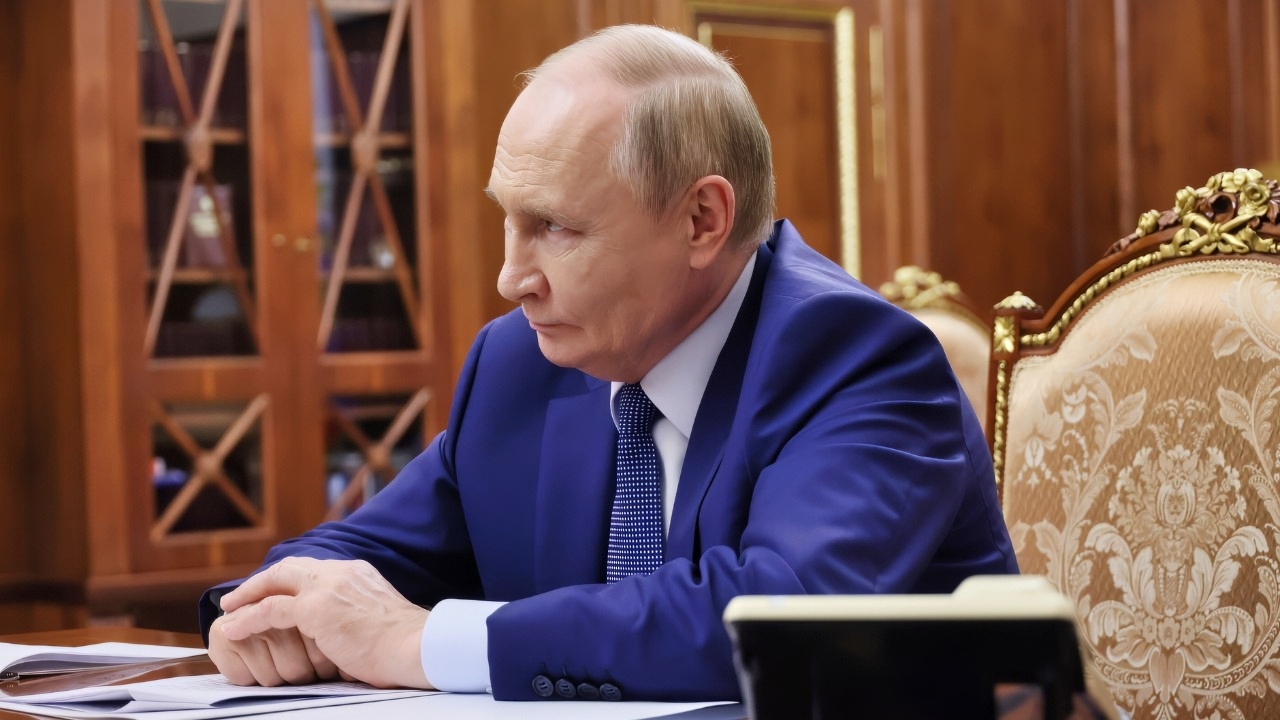
Key Points and Summary – Vladimir Putin’s high-profile visit to India comes as Donald Trump’s tariffs and tilt toward Pakistan sour U.S.–India ties.
-Narendra Modi is deepening energy and defense deals with Moscow and posturing as “neutral” on Ukraine.
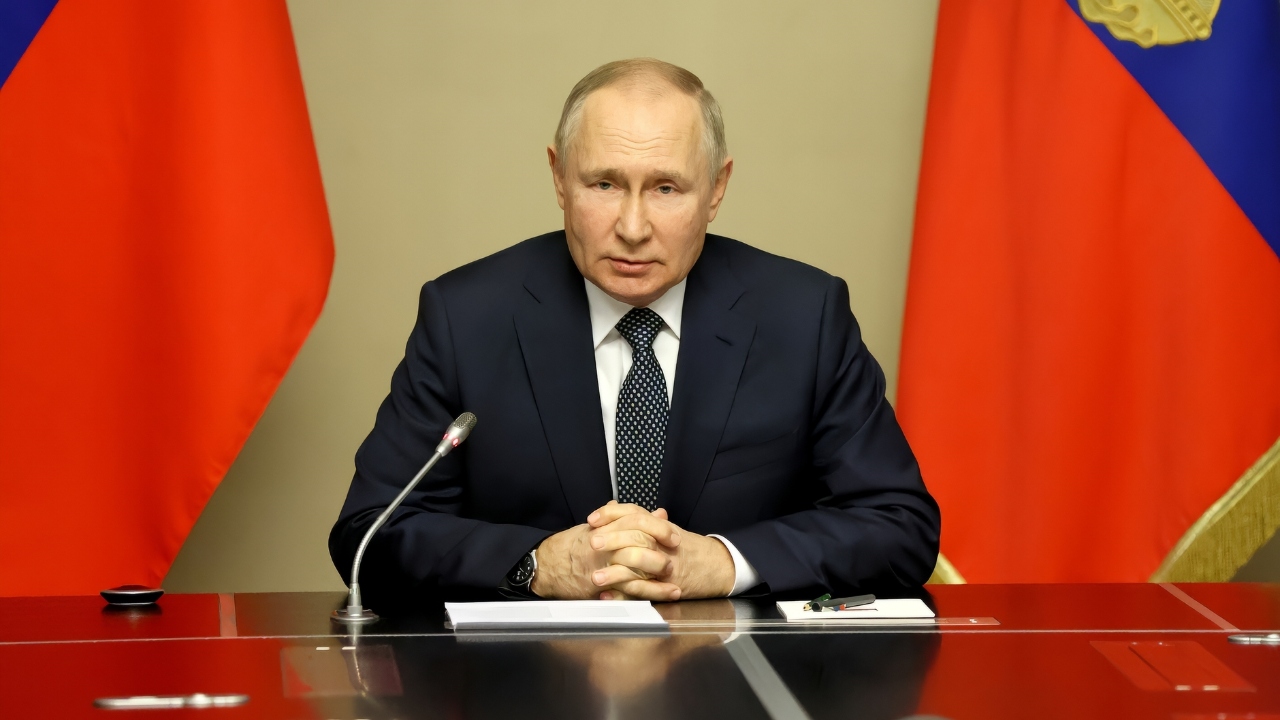
Putin November 2022. Image Credit: Creative Commons.
-Dr. Michael Rubin argues this is dangerously short-sighted. By tacitly accepting Russia’s seizure of Ukrainian territory, India risks endorsing a precedent China or Pakistan could later cite over Kashmir or Arunachal Pradesh.
-Modi’s pivot also undermines the India–Middle East Economic Corridor and worries partners such as Greece, Cyprus, and Israel.
-Trump is temporary; Putin’s trajectory and Russia’s decline are not. Tying India’s future to Moscow, Rubin warns, could prove self-defeating.
India’s Embrace of Russia Could Be Self-Defeating
President Vladimir Putin continues a triumphant state visit to India, a quarter-century after his first visit.
Against the backdrop of anger toward President Donald Trump’s 50 percent tariffs, Putin and Indian Prime Minister Narendra Modi have signed several deals ranging from the provision of Russian nuclear fuel for India’s nuclear plant to Russian gas—the reason for Trump’s punitive tariffs—to military supplies. While New Delhi already chalks up the Putin visit as a success, Trump and the United States remain the elephant in the room.
Both Modi and Putin gleefully stick fingers in Trump’s eye, reviving a relationship that had thrived for decades throughout the Cold War and shortly after, until President George W. Bush began a pivot toward India that all his successors embraced, until second-term Trump.
Whereas just a year ago, it appeared the United States and India might partner to define 21st-century security in the Indian and Pacific Ocean basins, today Trump’s ego and pivot to Pakistan have allowed India and Russia to repair a relationship that foresees a very different future.
Still, Modi sought to be a consummate diplomat when he refused to take sides on Ukraine, instead offering pabulum about simply being on the “side of peace.” How peace comes, however, matters.
India might be neutral in the Russia-Ukraine conflict, but that does not mean there is moral equivalency between Moscow and Kyiv.
Russia invaded Ukraine and violated both the 1991 Almaty Declaration, in which it recognized the existing borders of the Soviet legacy states, and the 1994 Budapest Memorandum, in which Russia, the United States, and the United Kingdom guaranteed Ukrainian sovereignty in exchange for its forfeiture of legacy Soviet nuclear weapons.
If out of pique with Washington, New Delhi legitimizes, let alone recognizes, Russia’s conquest of Crimea and the Donbas, then India’s own adversaries could one day cite the precedent to support Pakistani and Chinese aggression in Kashmir or Chinese encroachment in Arunachal Pradesh.
To Indians, such comparisons appear ridiculous, but India’s enemies and not only its bureaucrats will interpret history.
Once India affirms a precedent of territorial change in Ukraine, it opens the path for China to continue its salami-slicing against India’s northern frontier.
Nor is the United States the only country that could suffer from an Indian overreaction to Trump’s provocation. It has only been two years and three months since Modi unveiled the so-called India-Middle East Economic Corridor (IMEEC) at the G20 Summit in New Delhi.
The concept of IMEEC was simple: A ship, rail, and truck route that would take Indian goods across the northern Arabian Sea to the United Arab Emirates, ship them across Saudi Arabia and Jordan to Israel, and then channel them onward into Europe, likely through Greece and Cyprus; goods would, of course, also flow the opposite direction.
The strategic logic was as simple: Give India an outlet and allow Europe to bypass dependence on Iran or the so-called “Northern Route” to Russia.
Modi’s embrace of Putin raises questions about IMEEC’s future. Has Modi, in a fit of pique, switched India’s trade orientation toward Russia?
If so, does this mean he is throwing allies like Greece, Cyprus, and Israel under the bus?
That would be a real tragedy, especially if they are little more than innocent bystanders in a drive-by shooting meant for Trump and the United States.
India has much reason to be angry. Trump affirms Pakistan as a Major Non-NATO Ally whereas by any objective standard, it should be a designated state-sponsor of terrorism.
Rather than entertain Pakistan’s Army Chief Asim Munir at CENTCOM or the White House, the United States should treat him as a new Manuel Noriega, taking him in shackles to a high-security prison.
If Modi pushes the United States away, much like India’s founding Prime Minister Jawaharlal Nehru did under President Harry S. Truman, the result will be a self-fulfilling prophecy with the United States forced more permanently into an alliance with Pakistan, a relationship that otherwise likely would not survive Trump.
When Trump leaves office, the United States will survive. When Putin dies, it is unclear what might come next. Embracing Putin is to ties India’s future to a sinking ship.
The latest polls show Trump enjoys the support of little more than one-third of Americans. At most, he will serve another three years, but given questions about his health and mental acuity, that time could be shorter.
The question for Modi, then, is whether anger at a year of Trump should mean reorienting India toward Russia for decades to come, thereby endangering India’s long-term security.
About the Author: Dr. Michael Rubin
Michael Rubin is a senior fellow at the American Enterprise Institute and director of policy analysis at the Middle East Forum. The opinions and views expressed are his own. A former Pentagon official, Dr. Rubin has lived in post-revolution Iran, Yemen, and both pre- and postwar Iraq. He also spent time with the Taliban before 9/11. For more than a decade, he taught classes at sea on the Horn of Africa and the Middle East, covering conflicts, culture, and terrorism to deployed US Navy and Marine units. The views expressed are the author’s own.


