


Key Points and Summary – Does Vladimir Putin actually want a war with NATO? Dr. Andrew Latham says no.
-Russia is bloodied, exhausted, and constrained, using tough talk as bargaining leverage ahead of potential Ukraine peace talks.

T-14 Armata. Image Credit: Creative Commons.
-The Kremlin hasn’t mobilized for a real clash with NATO—no mass redeployments, no crisis-level nuclear posture, no logistics for a continental campaign.
-Instead, Putin is trying to look strong while negotiating from weakness, nudging Europeans to doubt long-term support for Kyiv.
-The real danger is Western overreaction: mistaking posturing for intent and stumbling into escalation, rather than practicing calm, disciplined restraint.
-Putin’s “ready for war with Europe” line is bluff and leverage, not a battle plan—and that NATO’s real risk is overreacting, not invasion.
Does Putin Want a War with NATO?
Putin’s assertion that Russia is “ready for war with Europe,” tossed out on the eve of the latest round of Ukraine peace talks, has predictably rattled Western capitals.
Commentators hastened to present it as part of the start of a broader confrontation, a strategic drumroll before a coming clash between Moscow and NATO. But such a reading misjudges the situation and the man. Putin is not gearing up to charge the West; he is gearing up for the bargaining table.
This big-man posturing is classic, designed for maximum negotiating leverage at a moment when diplomatic talks are delicately poised, and both sides are trying to shape the narrative of who is on top and who has the upper hand. It is an act of intimidation, not a declaration of intention.
A Rhetoric of Strength—Precisely Because Russia Is Tired
Putin’s threat sounds like strength because it attempts to mask exhaustion. Russia is a diminished power that is carrying on in many ways out of necessity. After nearly four years of grinding conflict, its economy has adapted, but barely.
Its military has adapted, but at significant cost. Its society has adapted, but only because dissent has been effectively criminalized out of existence.
The message that Russia is “ready for war with Europe” plays a very different role than actual preparation for a continent-wide war.
It is meant to change the Russian public and global narratives around this war, reframing Russia from a great power reluctantly pulled into conflict by battlefield pressure and domestic constraints into a great power acting voluntarily and by choice.
This is what states resort to when they need to negotiate from a position of weakness that they cannot actually sustain.
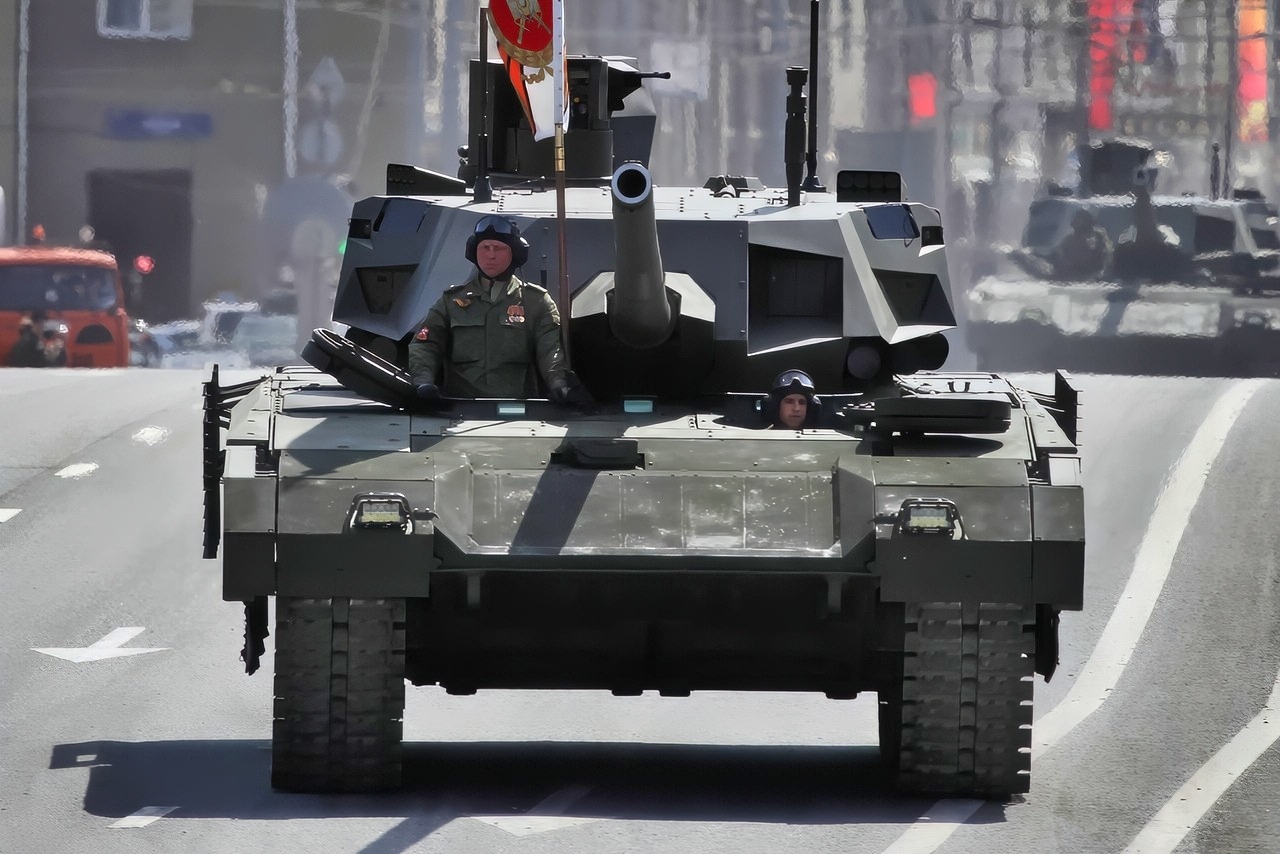
T-14 Armata Tank from Russia. Image Credit: Creative Commons.
Put bluntly, if Russia wanted a war with NATO, it would not be telegraphing it. It would be building quietly, systematically, and with strategic surprise toward it—none of which is visible today.
A Strategic Bluff, Not a Mobilization
Russia has upped the ante on nuclear signaling and is now redoubling its joint drills with Belarus.
But this is not the kind of mobilization that would be expected before an actual attack on NATO. Moscow has not raised the nuclear alert to crisis level. It has not done the kinds of overt signaling one might expect before an imminent attack. Nor, critically, has it redeployed the massed troop formations or reorganized the logistics networks needed to sustain a campaign on this scale.
Instead, Moscow is continuing to prioritize the Ukraine front over expansion. What we are seeing is the choreography of coercive diplomacy. Putin wants to convey at the peace table that NATO should tread carefully. He wants Europeans to question their long-term support for Ukraine. He wants Washington to recalibrate the size and shape of future assistance. And he wants to signal to global audiences that Russia still claims a veto over the geopolitical fate of its near abroad.
Restraint, Not Panic, Is the Proper Lens
A restraint-centered lens is needed precisely because it guards against the two impulses that so often distort Western analysis: alarmism and triumphalism. Alarmism views every Russian word as a threat of aggression, while triumphalism sees every Russian setback as proof that Moscow is about to collapse.
Both are wrong about escalation dynamics, and both misread the limits of power.
Restraint begins with clarity. Russia is dangerous, but dangerous is not the same as threatening. Russia is unpredictable, but strategic unpredictability is not the same as strategic insanity. Russia wants influence, not annihilation. Russia wants a negotiated end to the war on terms that validate its sacrifices, not an open-ended, possibly escalatory confrontation with a nuclear alliance that dwarfs it militarily, economically, and technologically. Taking Putin’s rhetoric at face value would be to turn posturing into prophecy. Panic is a form of strategic self-harm.
The Negotiation Backdrop Matters
Putin’s timing makes his motive even clearer. He issued his warning just as multiple formal, informal, and third-party diplomatic channels are converging to seek out a possible political settlement to the Ukraine war. Russia will enter these talks with a position of leverage, but also a position of limits. It controls territory but cannot easily advance.
It has survived sanctions, but the cumulative economic pressure has been corrosive. It has sustained the war politically, but only by repressing dissent rather than rallying national enthusiasm.
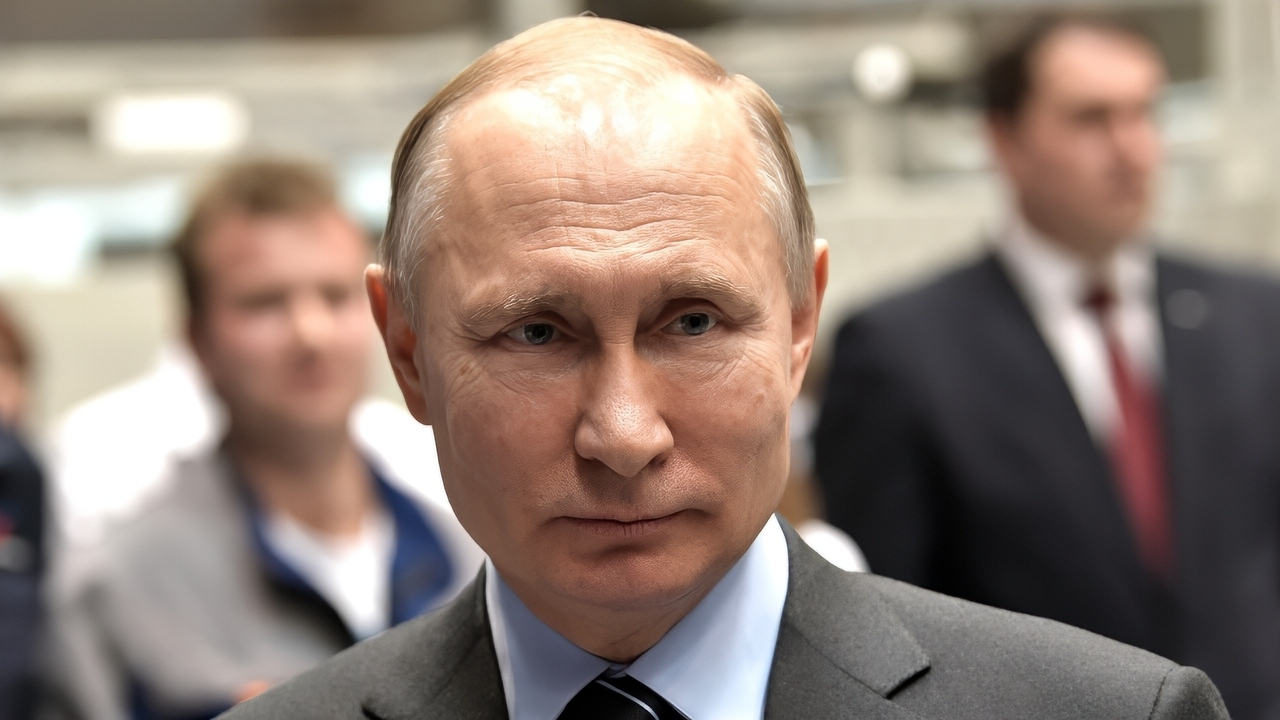
Putin March 2019. Image Credit: Creative Commons.
In that context, Putin’s “ready for war” remarks operate as hedging. They suggest that Russia can walk away from a deal it finds unfavorable and help project an image of implacability that conceals very real vulnerabilities. They remind all parties that while Russia wants a negotiated off-ramp, it does not want to be seen as the weaker stakeholder that is seeking a way out. This is the theater of diplomacy, not the drumbeat of war.
NATO Should Avoid the Trap
The danger comes not from Russia, but from how NATO might react to it.
If NATO interprets this moment as actual preparation for escalation, it might then over-mobilize, over-signal, or over-promise. Such steps would trap NATO into commitments that do not align with its strategic interests. Europe has defense priorities, but they do not require Moscow to prepare for its survival.
The smart course is to reinforce existing deterrence efforts, continue supporting Ukraine within bounds, and keep open channels to whatever political settlement is eventually feasible. Restraint is not a sign of weakness; it is an understanding of limits—our own as well as Russia’s—informed prudence.
Putin’s Words Are a Mirror, Not a Window
What Putin said is less a window into what Russia intends to do than a mirror of what it fears: strategic isolation, military exhaustion, and a negotiated settlement that falls short of the objectives that justified this war.
Putin and the Russian leadership’s rhetoric that Russia is “ready for war with Europe” is meant to hide these anxieties, not express new ambitions.
The distinction matters. Misreading big-man posturing for big-man intent is how great powers stumble into conflicts none of them want. This moment requires sobriety, not theatrics, and a political imagination disciplined by restraint rather than runaway speculation.
Putin is not preparing to go to war with NATO. He is preparing for peace talks—and trying to ensure they take place on terms advantageous to him.
Reading him through that lens is the only way to keep diplomacy anchored in reality rather than fear.
About the Author: Dr. Andrew Latham
Andrew Latham is a non-resident fellow at Defense Priorities and a professor of international relations and political theory at Macalester College in Saint Paul, MN. You can follow him on X: @aakatham. He writes a daily column for the National Security Journal.
More Military


Jim
December 3, 2025 at 3:50 pm
It’s exactly as Putin put it: Russia doesn’t want war with Europe (NATO), but if necessary, Russia is preparing and capable for war against the West.
Since the start of the Special Military Operation Russia has had a two-track plan, carry out the SMO and quietly prepare for the possibility of a broader general war without full mobilization, restricting preparation to partial mobilization (non-disruptive to Russia’s civilian economy).
Putin stated Russia’s position in a calm, matter of fact manner as a response to a reporter’s question.
Russia does want negotiations, but from a position of strength which they are achieving on the battlefield.
And, as reports suggest, Putin told Steve Witkoff and Jared Kushner during their meeting in Moscow, Russia will gain their geopolitical objectives militarily or diplomatically, preferably via diplomacy.
And the war will continue until such time.