

Denmark’s military intelligence service has warned that Russia could make a limited military attack on one of NATO’s members within months, even as its war with Ukraine continues.
Limited Attack Looms: NATO Worried?
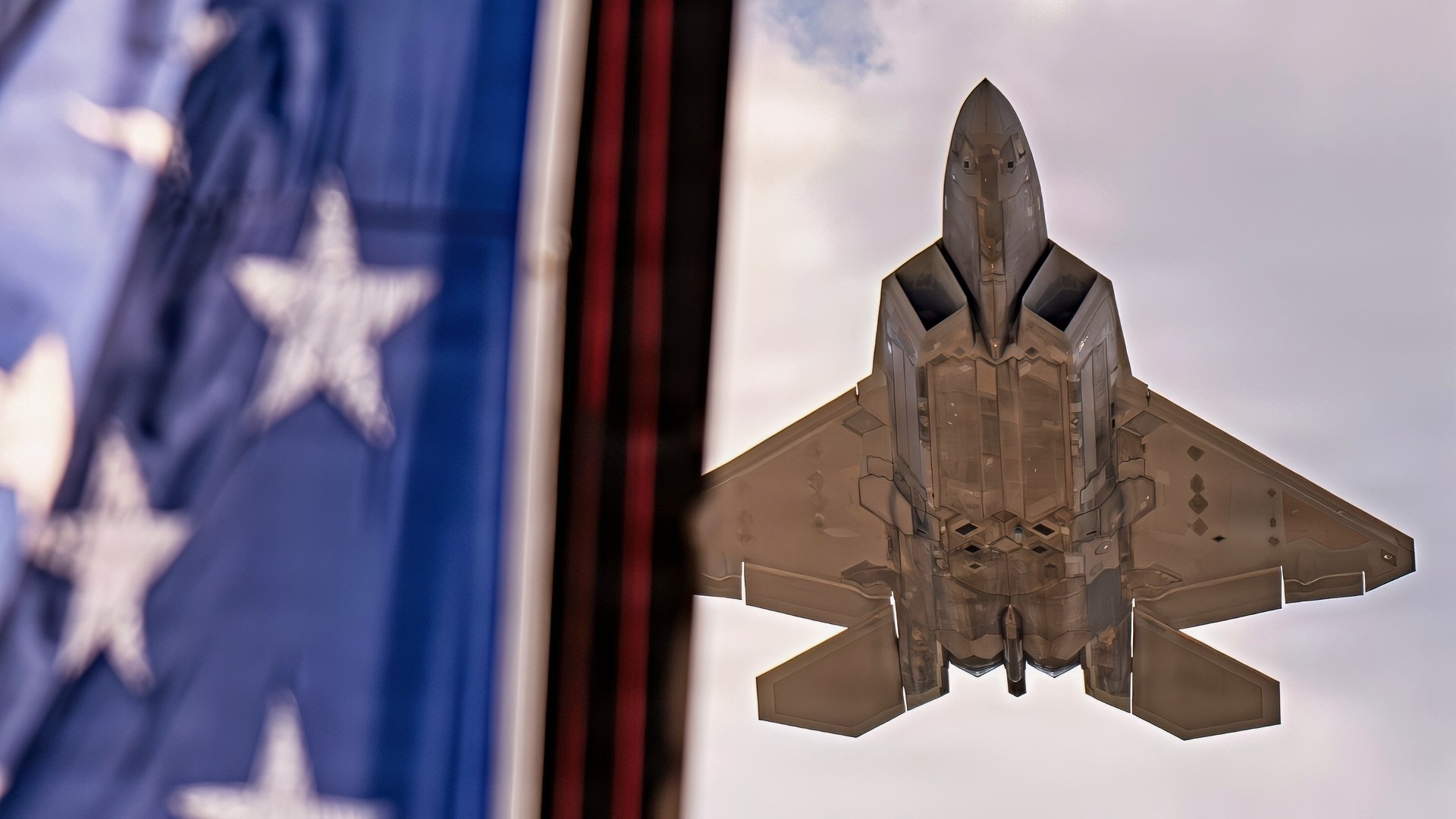
U.S. Air Force Capt. Nick “Laz” Le Tourneau, pilot and commander of the F-22 Raptor Aerial Demonstration Team, performs an aerial demonstration during the 52nd Annual SUN ‘n FUN Aerospace Expo in Lakeland, Florida, April 18, 2026. Capt. Le Tourneau showcased the unmatched capabilities of the F-22 to the SUN ‘n FUN crowds by performing multiple series of combat maneuvers. (U.S. Air Force photo by Staff Sgt. Mary Bowers)

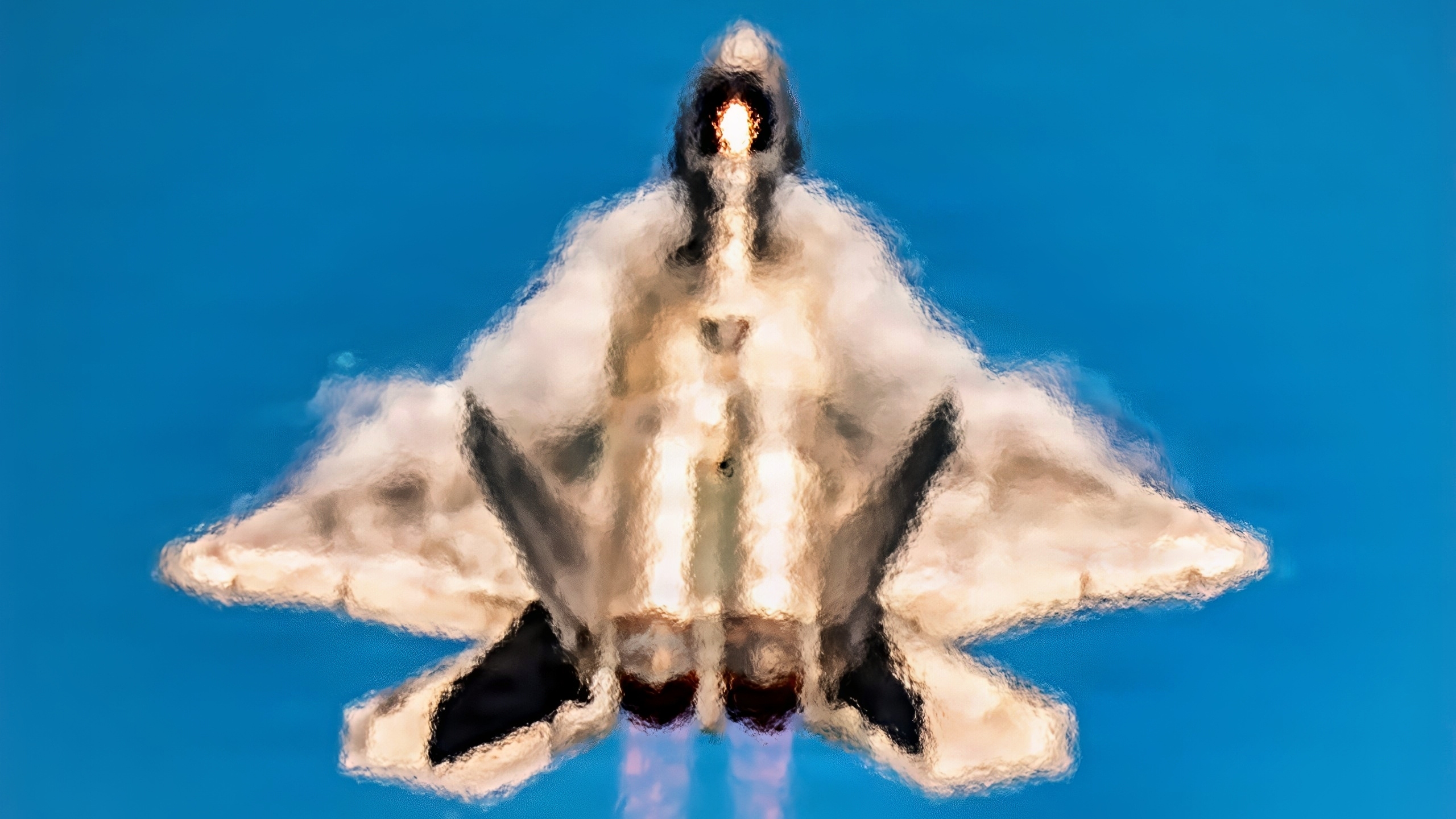
F-22 Raptor Flying in the Dark Clouds. Image Credit: Creative Commons.
In an unclassified assessment published September 24, the Danish Defence Intelligence Service (DDIS) said there is a “low but growing risk” of an attack on one or more NATO states bordering Russia.
It stressed that a full-scale invasion is unlikely and said it sees no signs that Moscow is currently preparing one.
The warning is narrower than that of a conventional Russian invasion. DDIS said a limited attack “could potentially take place in the coming months” and said it could include long-range strikes against infrastructure supporting Ukraine, a false-flag attack using Ukrainian-made drones or a limited deployment of Russian troops, potentially without national insignia.
Thomas Ahrenkiel, director of DDIS, said the aim of such an operation would not necessarily be to conquer the country.
Russia Wants to Divide NATO
“The aim is not to take over the country, but to divide NATO,” Ahrenkiel told reporters.
The assessment says that Russia is becoming more willing to accept risk as it faces pressure in the form of Ukrainian long-range strikes, battlefield losses and growing economic problems. DDIS said there is “no prospect” of Russia making a major breakthrough in Ukraine in the coming months.
Meanwhile, Danish intelligence expects that Moscow’s operations below the level of conventional warfare will become more dangerous.
DDIS said that Russia will launch more attacks against NATO and the West, potentially including destructive cyberattacks against critical functions and sabotage carrying a high risk of casualties.
This week, Secretary General Mark Rutte said “Russia has grown increasingly reckless,” pointing to airspace violations and malign activity against allied territory. Speaking earlier this month, he said Moscow knows NATO “will defend every inch of Allied territory.”
NATO’s Supreme Allied Commander Europe, U.S. Air Force Gen. Alexus Grynkewich, offered a similar assessment after the Danish report.
“It’s concerning,” Grynkewich told Reuters of recent incidents; however, he stressed that the military alliance ought to be “calm and confident” regarding threat preparedness.
When quizzed over whether Russian President Vladimir Putin could attempt an attack during Grynkewich’s leadership, he replied: “Absolutely not. He better not try it on my watch.”
Suspicious Fire at Polish Starlink Station
Polish Deputy Prime Minister Krzysztof Gawkowski labeled the fire at one of Starlink’s stations an “act of sabotage” designed to disrupt internet access.
The Starlink network routes significant levels of internet traffic and provides coverage to Ukraine.
Gawkowski has stressed, however, that although responsibility for the attack had yet to be established, there were “many indications” that it fit Russia’s typical style.
European Commission President Ursula von der Leyen has previously warned that the line between hybrid activity and outright aggression is becoming murkier.
“Hybrid threats facing Europe are less and less hybrid and less and less threats,” she told the European Parliament earlier this month.
She even advised Europe to develop a “counter-hybrid playbook” that sets out how to handle such incidents.
The ‘Gray Zone’
Moscow is already engaged in extensive “gray zone” warfare against NATO members.
Craig Watt, a senior threat intelligence specialist at Quorum Cyber, recently told the British radio station LBC that cyber operations, espionage and sabotage by states like Russia, Iran and China ranked “among the most serious security threats facing the UK today” because they target “the foundations of our national resilience, economic stability and public trust”.
Russia Planning Attacks on Defense Firms?
Earlier this month, Danish intelligence, PET (Politiets Efterretningstjeneste) counterespionage chief Emil Gresholm said, “Russia is both planning and carrying out acts of sabotage against defense companies and the defense industry in Europe.”
Similar warnings have emerged elsewhere on NATO’s eastern flank.
Latvian intelligence said in June, “We see indications that Russia is preparing military provocations against the Baltic countries or Poland.” Polish Prime Minister Donald Tusk complained that the geopolitical climate remained “very unstable.”
Nevertheless, DDIS has stressed that an all-out war and an operation are not the same thing.
An invasion, it outlined, would need at least six months of preparation.
Russia does not seem to be making such intensive preparations, akin to the ones prior to its invasion of Ukraine, at this time.
Still, any major flare-up with Moscow could damage NATO, especially if it suggested the alliance was unwilling to defend all of its members.
About the Author: Georgia Gilholy
Georgia Gilholy is a journalist based in the United Kingdom who has been published in Newsweek, The Times of Israel, and the Spectator. Gilholy writes about international politics, culture, and education. You can follow her on X: @llggeorgia.


