


Is Iran Still Menacing the Strait of Hormuz? – Two things are true in the Strait of Hormuz right now. More oil is moving through it than at any point since this current conflict began. And Iran is still shooting at the ships carrying it.
That’s the bottom line of a New York Times report published Friday by Pranav Baskar, Eric Schmitt, and Shirin Hakim. Citing a Western security official, the Times reports Iran has been launching roughly 30 drone attacks and 10 anti-ship missile attacks per week since early August.
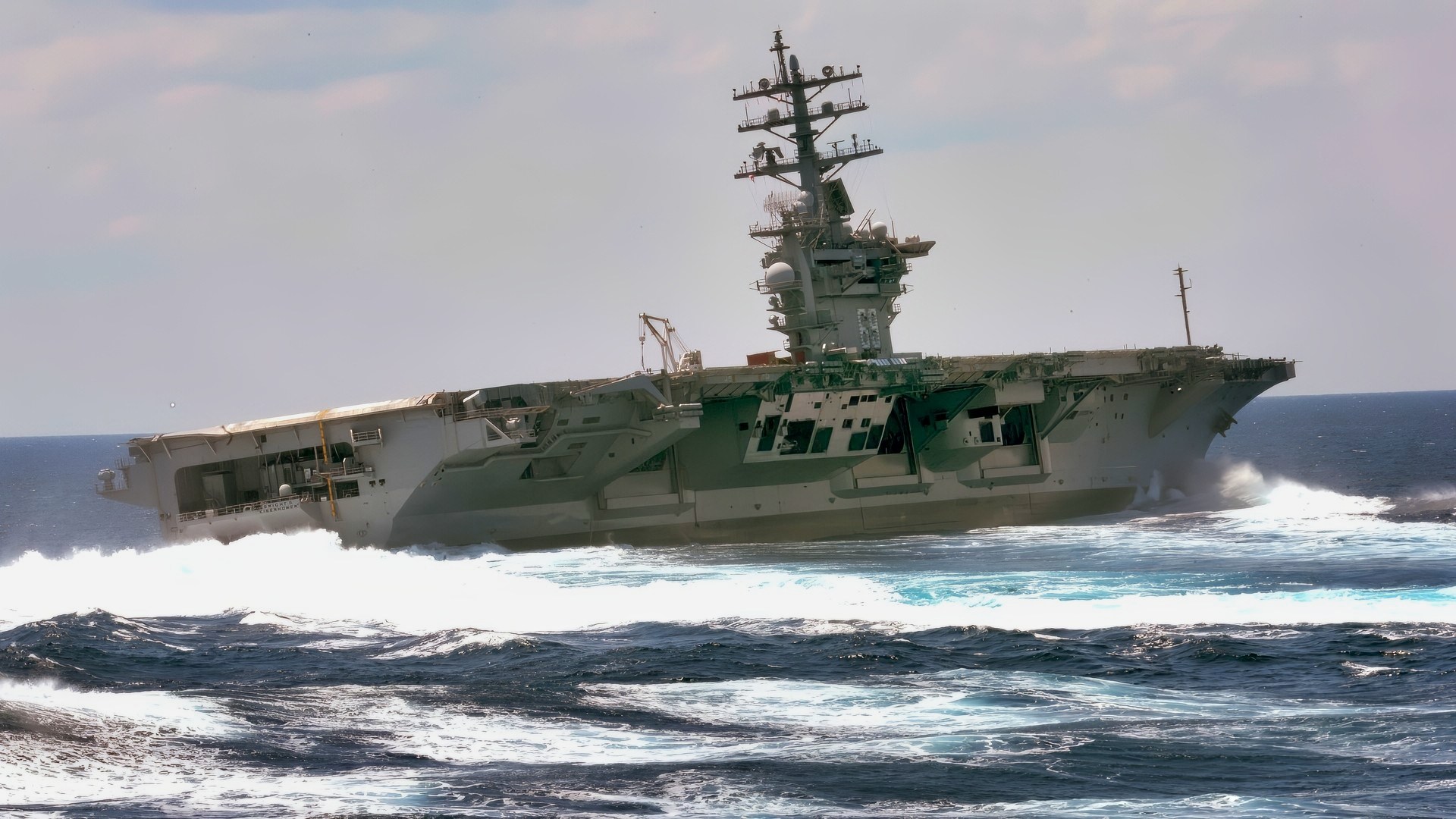
The Nimitz-class aircraft carrier USS Dwight D. Eisenhower conducts rudder turns during sea trials.
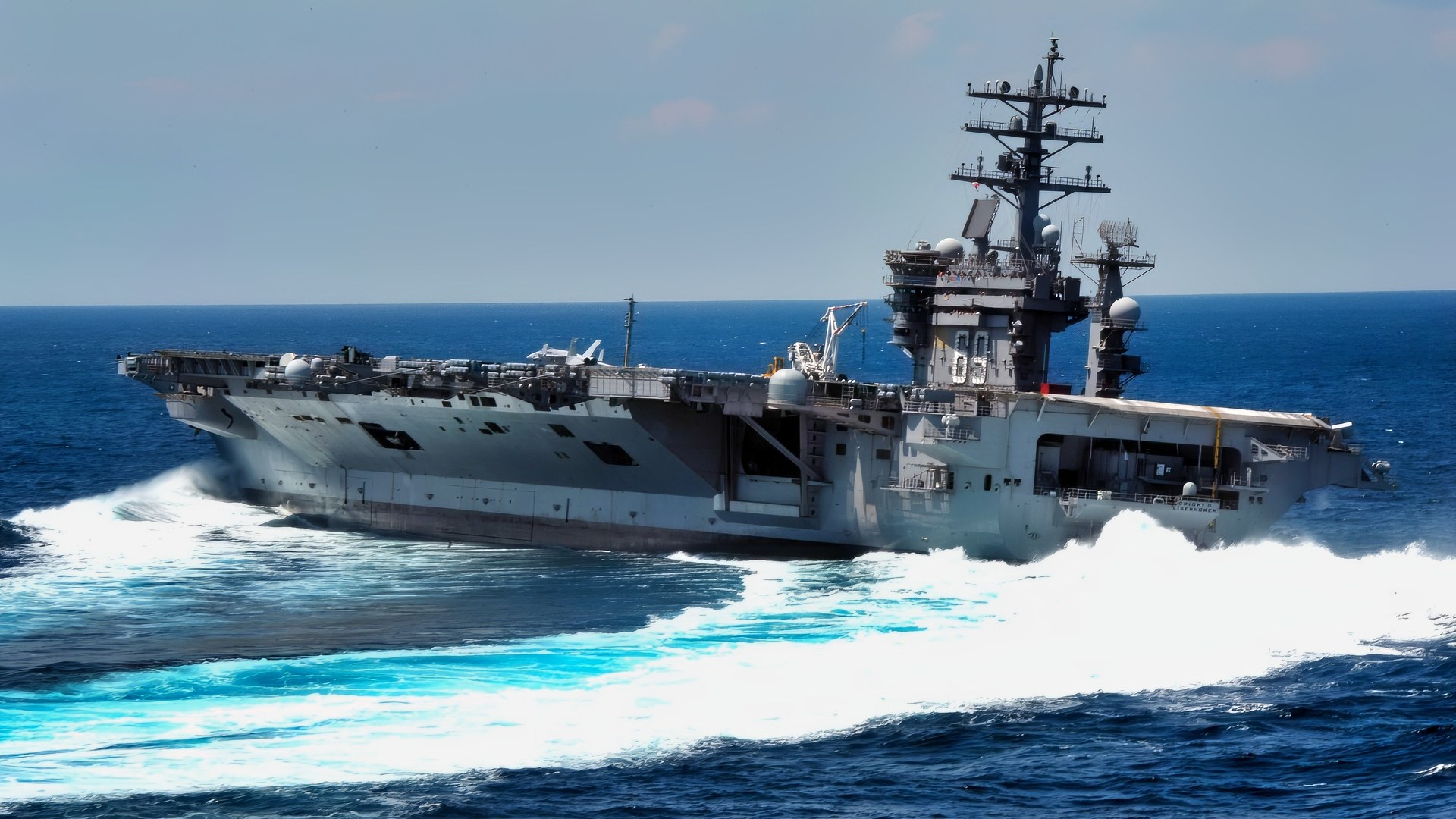
The Nimitz-class aircraft carrier USS Dwight D. Eisenhower conducts rudder turns during sea trials. Dwight D. Eisenhower completed a nine-month planned incremental availability at Norfolk Naval Ship Yard on June 10, 2011.
At least four commercial ships were hit in the past 10 days alone. British naval monitors count at least 13 ships, mostly oil tankers, struck by projectiles or debris since September 10.
So is Iran really still menacing the strait? Yes. The more interesting question, however, is whether that menace still works.
The Traffic Increase In The Strait Is Real
The rebound is not a White House talking point. Kpler data shows Middle East crude exports hit 16.3 million barrels per day in September, according to Euronews.
That’s within shouting distance of the 19.5 million barrels per day the region shipped in February, before the first bombs fell. Saudi Arabia alone more than doubled its exports, from about 2.45 million barrels per day in August to roughly 5.4 million in September.
Ship counts are climbing, too. The Maritime Executive reports 17 vessels transited Hormuz on September 29 and 16 the day before. Even LNG carriers, which all but vanished in the spring, are starting to make the run again.
Windward analyst Zane Amundsen summed it up: “Iran is less able to constrain southern-corridor traffic than it was in mid-summer.”
The reason is the route. Ships are hugging Oman’s territorial waters along a path the US Navy guides and protects, with fighter jets and attack helicopters overhead, per the Times.
Some captains switch off their transponders and go dark for the transit. It’s working well enough that tanker owners are willing to roll the dice.
The Menace Is Real, Too
None of that means the IRGC has gone home. On September 29, the ADNOC-operated supertanker Mersin Prosperity and the crude tanker Sinbad were struck, and a third vessel, possibly an LNG carrier, remains unconfirmed.
Iran’s Fars News Agency said warning shots were fired at ships violating “Strait procedures,” and an IRGC spokesman warned that ships would either “be targeted or will hit a mine.”
The Revolutionary Guard told the Times it is conducting strikes every 24 hours. “We prevent them from passing, but for some time now, America has not responded,” a spokesman said.
This isn’t just harassment of merchant ships. On September 14, an Iranian anti-ship cruise missile struck a vessel in the strait, leaving eight US Marines with smoke inhalation and possible traumatic brain injuries, Al Jazeera reported.
Supreme Leader Mojtaba Khamenei is now claiming US warships have pulled back because of “the painful blows they have suffered.”
That claim is propaganda. But the drones and missiles behind it aren’t.
Rising Traffic Is Not The Same As Normal
Here’s where the headlines get ahead of the facts. Seventeen ships a day is a big improvement over the dead calm of the spring. Before the war, roughly 100 ships a day moved through Hormuz. Do the math. Traffic is still running at a fraction of normal.
And a good chunk of that regional export number never reaches the strait. Saudi crude flows west through the East-West Pipeline to the Red Sea, and the Emiratis push oil out through Fujairah.
Barrons reported that, “Despite ongoing disruptions tied to the Iran war, Persian Gulf oil exports are currently up to 23.3 million barrels a day, in line with their 2025 average, according to a research note from Goldman Sachs analysts released late Tuesday. They had previously fallen below 10 million barrels a day in the first weeks of the war in March.”
Kpler’s Ana Subasic told the Times, “Just because more ships and oil are moving than seen earlier in the war doesn’t mean we’re seeing a normalization of flows.”
The Alternative Nature Of The Oil Flow Is Keeping Gas Prices High
Many consumers read the news and ask, “If the oil flowing from the Middle East is nearly what it was prior to this current conflict, then why are gas prices still so high?” And that is a legitimate question.
The answer lies in the cost of keeping that Omani corridor open. Escorts, combat air patrols, and helicopters overhead every single day. That’s a lot of ships, aircraft, and crews tied to one stretch of water, and analysts quoted by the Times question how long the US can sustain it. But those are US military costs and don’t affect the market.
Even though crude oil volume leaving the Persian Gulf is climbing, gasoline and fuel prices remain high because alternative shipping routes are expensive, global inventories are depleted, and refining constraints keep product supply tighter than before.
Freight and insurance rates have risen dramatically since February. Refiners pass the steep shipping surcharges directly on to refined fuels like gasoline and diesel, leaving consumers to foot the bill.
Eurasia Group’s Gregory Brew called it what it is. “Negotiations aren’t going anywhere. Neither side is really budging. So it’s a standoff.”
Given the situation in the Strait, that is exactly right. Iran can’t close the strait anymore. The US can’t make it completely safe yet. Safer? Yes, but tanker crews are threading the needle between those two facts every night.
So, are the Iranians really still menacing Hormuz? Absolutely. Is it working the way Tehran hoped? Not even close. Two things are true in the Strait. Only one of them works in Iran’s favor.
About the Author: Steve Balestrieri
Steve Balestrieri is a National Security Columnist. He served as a US Army Special Forces NCO and Warrant Officer. In addition to writing on defense, he covers the NFL for PatsFans.com and is a member of the Pro Football Writers of America (PFWA). His work was regularly featured in many military publications


