

The Strait of Hormuz could become “redundant” within five years as Gulf states develop alternative export routes, HSBC Chief Executive Georges Elhedery suggested on Tuesday.
“Of course, we do wish and hope to see a resolution to the conflict… But Hormuz, probably in five years, may become redundant,” he told the HSBC Future Forum in Dubai, Reuters quoted him as saying.

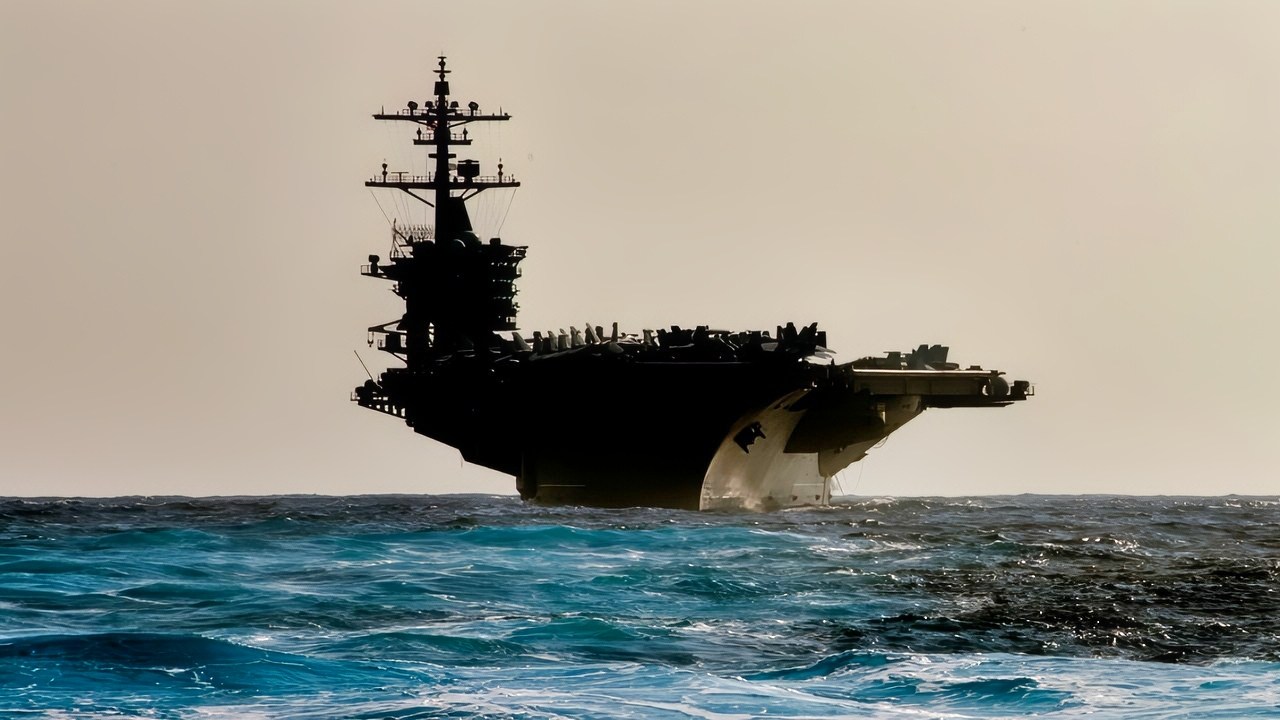
A Sailor directs an F/A-18E Super Hornet from the “Kestrels” of Strike Fighter Squadron (VFA) 137 on the flight deck of the aircraft carrier USS Nimitz (CVN 68) in the South China Sea, May 12, 2025. Nimitz is underway in the U.S. 7th Fleet area of operations on a scheduled deployment, demonstrating the U.S. Navy’s unwavering commitment to a free and open Indo-Pacific. (U.S. Navy Photo by Mass Communication Specialist Seaman Apprentice Franklyn M. Guage)
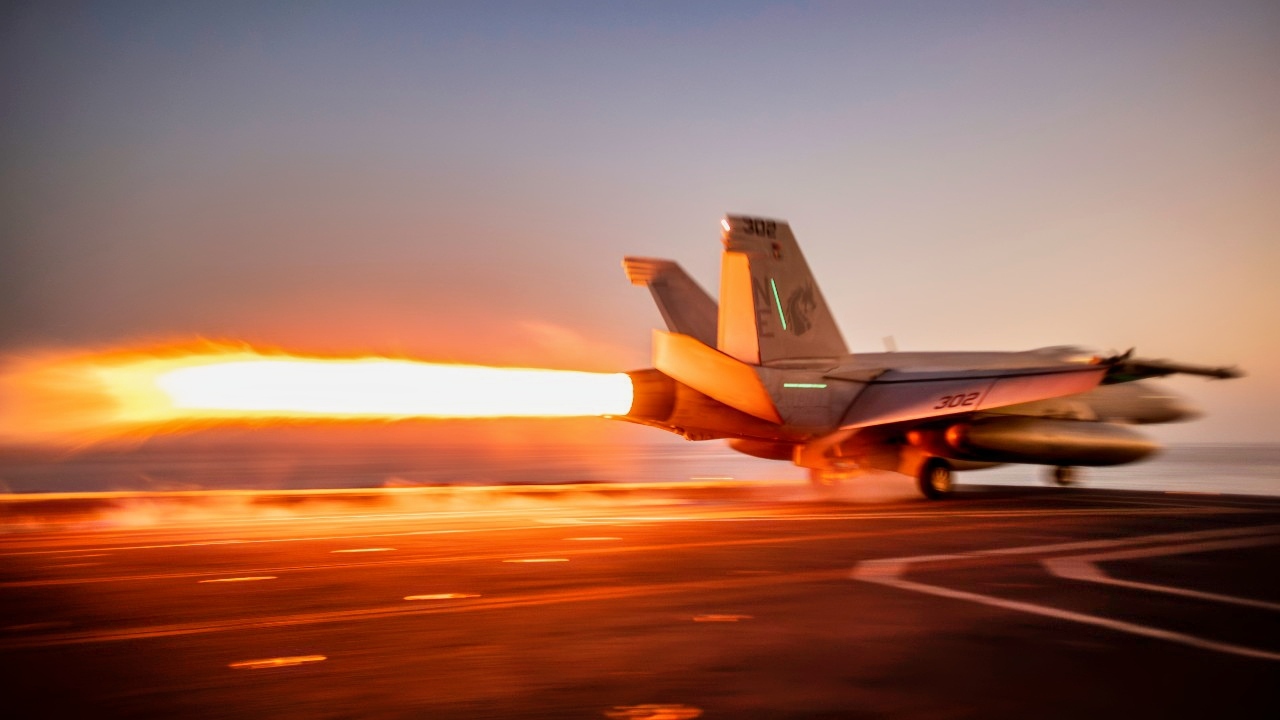
250429-N-FS097-1154 U.S. CENTRAL COMMAND AREA OF RESPONSIBILITY (April 28, 2025) An F/A-18E Super Hornet, attached to Strike Fighter Squadron (VFA) 192, launches from the flight deck of the Nimitz-class aircraft carrier USS Carl Vinson (CVN 70) in the U.S. Central Command area of responsibility. (Official U.S. Navy photo)
The five-year timeframe aligns with a major investment in alternative ways to get Gulf exports to market.
Investment in the Forecast
“We do see this region being able to recover and then continue growing. It will mean a lot of investment,” Elhedery said.
HSBC has identified $872 billion in project packages across the Middle East, North Africa and Turkey, within a broader $1.4 trillion in planned “pipeline” projects.
The total includes projects across the markets HSBC serves.
The UAE has already made diversifying its exports a strategic priority.
“We’re moving toward having zero Hormuz dependency, and that’s regardless of whether it’s open or not,” Foreign Trade Minister Thani Al Zeyoudi told Bloomberg in June.
Pipelines Are Coming
ADNOC expects its second pipeline to Fujairah on the Gulf of Oman to start operations in 2027 and double the emirate’s export capacity via that port.
“Right now, too much of the world’s energy still moves through too few chokepoints,” ADNOC CEO Sultan Al Jaber said in May.
He added that ADNOC was “accelerating delivery toward 2027.”
Heavy reliance on the Strait of Hormuz “is no longer a prudent long-term strategy,” Kpler analyst Victoria Grabenwöger told the Associated Press.
The short time frame for accelerating construction “has only become feasible against the backdrop of the Strait of Hormuz blockade,” she noted.
The AP noted that Goldman Sachs estimates the new projects to bypass the Strait will add 7.3 million barrels per day to exports by the end of 2028, enabling 60 percent of Gulf oil exports that existed before the war to avoid the strait.
Saudi Arabia is also seeking to expand its pipeline capacity to export 10 million barrels per day of crude oil, Energy Minister Prince Abdulaziz bin Salman said on October 12.
His plan includes tapping temporarily into a domestic gas pipeline to supplement exports and upgrading the East-West pipeline.
Reuters noted that proposals to switch the gas pipeline to oil “could add up to 1.2 million barrels per day of crude export capacity within seven to eight weeks… and further upgrades to the pipeline could increase capacity by more than 1 million barrels per day after two to three years.” The temporary switch would end in May 2027, and the line would be cleaned to resume gas production.
Qatar’s LNG Cannot Go That Way
Pipelines can transfer oil or petroleum products, but not liquefied natural gas.
So, Qatar’s energy minister Saad Al-Kaabi explained on September 21 that his country has no option but to keep using the Strait of Hormuz for now.
In 2025, the International Energy Agency said some 93 percent of Qatar’s LNG exports and 96 percent of the UAE’s went through the Strait of Hormuz.
“There are no alternative routes to bring these volumes to market,” the IEA noted. “Most LNG from Qatar and the UAE is destined for Asia.”
The UAE’s official position appears more nuanced than its predecessor’s, with adviser Mohammed Al Dhaheri telling The National in September that the Strait of Hormuz will remain important.
Other Routes Remain Vulnerable
The Saudi Arabian East-West pipeline already delivers oil to Yanbu on the Red Sea. Attacks last month also temporarily blocked this alternative to the Hormuz route, according to the U.S. Energy Information Administration, which reported this month.
The EIA warned of “continued volatility in crude oil flows both through the Strait of Hormuz and through alternative routes.”
The IMF expects the Middle East, North Africa and Pakistan to contract by 1.3 percent this year.
Its October 15 outlook assumes that trade and shipping will return to normal in the first quarter of 2027.
“The outlook depends critically on how quickly energy production and trade normalize,” IMF regional director Jihad Azour said last week.
Azour noted that diversification into alternative routes and inventory drawdowns have cushioned the impact of the closure of the Strait of Hormuz, but “these buffers bought time, but they are finite,” he warned.
About the Author: Georgia Gilholy
Georgia Gilholy is a journalist based in the United Kingdom who has been published in Newsweek, The Times of Israel, and the Spectator. Gilholy writes about international politics, culture, and education.


