

Nobody on the Arabian Peninsula is talking about peace anymore. According to The Washington Post, the fight between Saudi Arabia and Yemen’s Houthis has become the most volatile front in the regional war that started when the U.S. and Israel hit Iran in February.
Both sides now see more fighting as the only way forward.
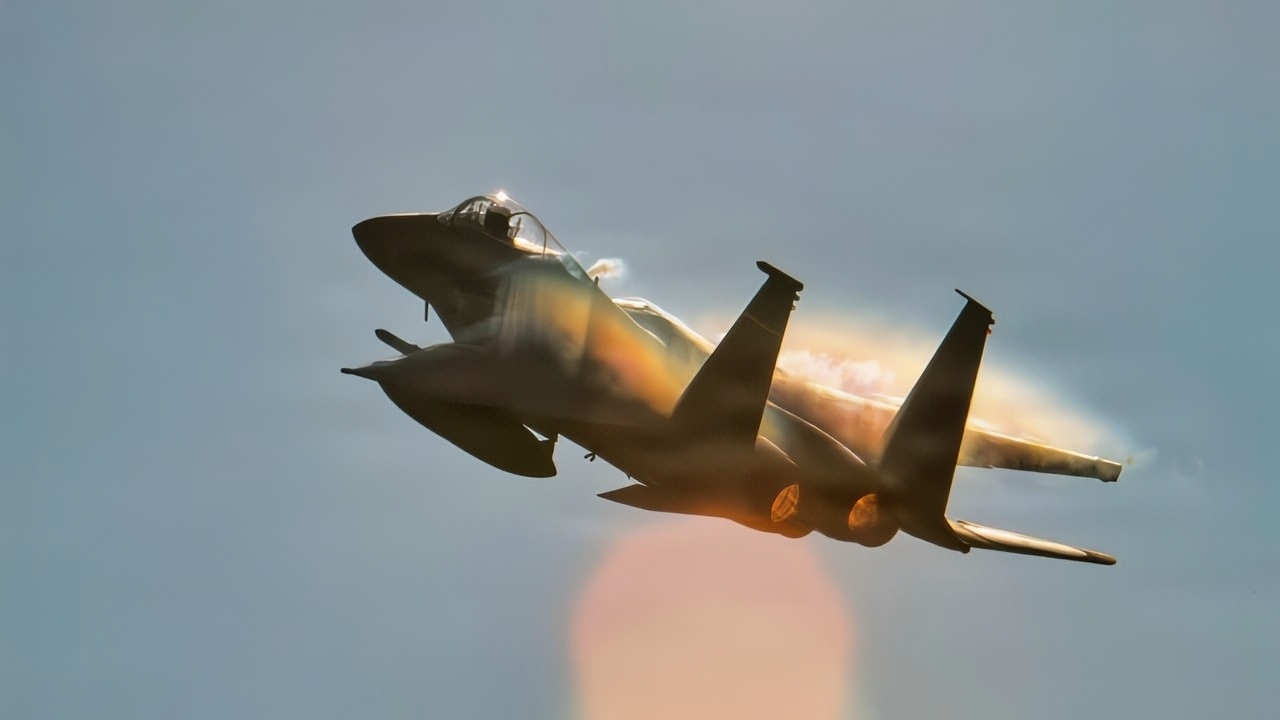
A U.S. Air National Guard F-15 Eagle from the 159th Fighter Wing, Louisiana Air National Guard, takes off during exercise Sentry Aloha 26-1 at Joint Base Pearl Harbor-Hickam, Hawaii, Jan. 27, 2026. The training demonstrates the 154th Wing’s capability to lead large-force employment exercises, reinforcing the Guard’s position as a vital component of the nation’s operational force. (U.S. Air National Guard photo by Senior Master Sgt. Mysti Bicoy)
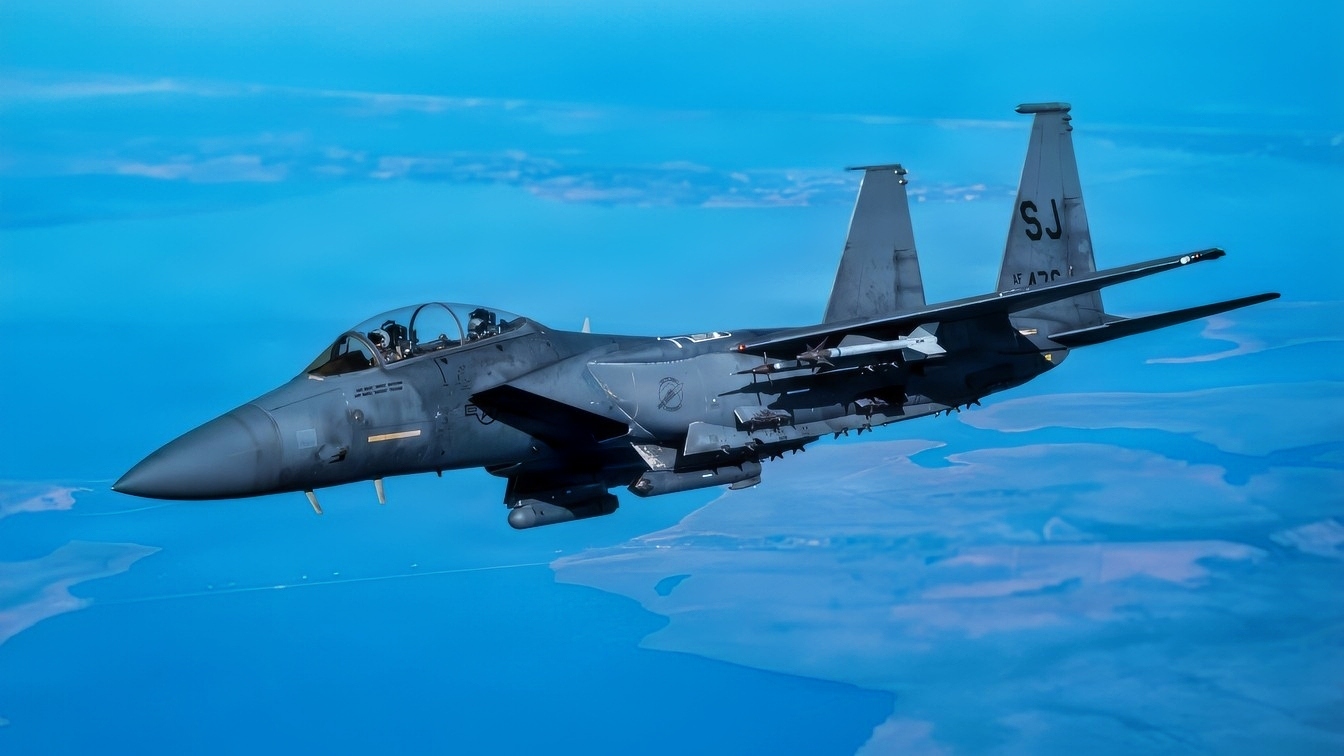
An F-15E Strike Eagle with the 4th Fighter Wing approaches a KC-135 Stratotanker from the 121st Air Refueling Wing to be refueled over the skies of North Carolina, Jan. 21, 2026. The F-15E is a versatile fighter jet built to handle both air-to-air and air-to-ground missions, equipped with advanced avionics and electronics that enable it to operate effectively at low altitudes, day or night, and in any weather. (U.S. Air National Guard photo by Airman Samir Harris)
The Post notes that since the deadly attack on Riyadh’s airport, the Houthis have hit Aramco and the presidential palace of Yemen’s Saudi-backed government.
There is no clear way out. That’s the polite version. The blunter one is that both sides have decided the other only understands force.
Riyadh’s Airport Became the Front Line
The turning point came on October 10. A Houthi missile hit the passenger terminal at King Khalid International Airport, killing 13 people and wounding more than 300.
Another projectile hit the next day, killing one more person.
NPR reported that the airport had been struck four times in five days and that it was the deadliest attack on a Gulf Arab nation since the Iran war began.
The airlines got the message.
Lufthansa canceled Riyadh flights until October 16, and Air France-KLM pushed its suspension to the end of the month.
By the Saudi-led coalition’s own count, the Houthis launched 20 attacks on the Riyadh airport this month alone, killing 17 and wounding 333.
For a kingdom that has bet its future on tourism, investment and Vision 2030, an airport you can’t fly into is a strategic wound.
Tit for Tat, With Evacuation Orders
Riyadh promised a decisive response, and it delivered.
The coalition issued evacuation orders and struck an oil facility outside Sanaa.
The Houthis answered within hours, warning civilians to clear out of Aramco’s Dhahran headquarters, the Riyadh airport and a refinery, calling them a “legitimate target.” They then hit an Aramco administrative building in Dhahran.
They then targeted the Yemeni government itself. On Thursday, the Houthis fired five missiles at the al-Maashiq presidential palace in Aden, killing five and wounding 16. It was the first strike on the palace in this round of fighting. Meanwhile, the Houthis are tightening a siege around Taiz, Yemen’s third-largest city.
Both sides are now announcing their targets in advance, a sign that each believes the other can’t stop what’s coming.
Why Riyadh Thinks It Has No Choice
The Saudi calculation is simple. Abdulaziz Sager of the Gulf Research Center told Reuters that Saudi leaders now see military pressure as their only viable option.
The 2023 Saudi-backed roadmap, which offered the Houthis political legitimacy and reconstruction money, has unraveled as the group moved deeper into Iran’s camp.
However, the Saudis have a geography problem.
The kingdom is roughly three times the size of Texas, with a border with Yemen that runs more than 800 miles through rugged desert.
Its oil, civilian, and military targets are spread across the country.
Regional officials say Riyadh is running low on interceptors and has asked allies for help.
The Houthis have Iranian weapons that can reach well over 1,000 miles.
Every Patriot the Saudis fire costs millions.
Every drone the Houthis launch costs a fraction of that.
That math doesn’t favor the defender.
Why the Houthis Won’t Quit
The Houthis have their own logic, being a proxy for Tehran. Reuters’ analysis noted the group has a direct interest in easing the U.S. naval blockade on Iran, its main patron.
The Saudis believe that Iran is “encouraging” the Houthis to ramp up attacks on the Saudis.
With Iran unable to hit Washington directly, it is hitting Saudi Arabia’s oil facilities and its national airport instead, exploiting the kingdom’s economic vulnerability and its craving for stability.
History is on their side.
As the AP pointed out, over the past decade Saudi Arabia, the UAE, the U.S., Britain and Israel have all carried out punishing air raids on the Houthis, only to watch them come back again and again.
While airpower can punish an insurgency dug into mountains.
It can’t defeat one.
Thomas Juneau of the University of Ottawa put it well, telling the Jerusalem Post that Saudi military superiority doesn’t translate into strategic leverage.
The Houthis don’t need to beat the Saudi army.
They just need to make the kingdom bleed.
And that’s what Tehran wants.
“It is clear that in the years when there was supposed to be peace, the Houthis and their allies in Iran were preparing for war,” said a Yemeni official, who spoke on the condition of anonymity to discuss security issues. “And this is not a war that will affect just Saudi Arabia and Yemen, but the entire world.”
“Negotiation is not an option right now — no one is talking about it,” the Yemeni official said.
Washington And Tehran Are Watching the Calendar
President Trump has said he’s weighing whether to join the campaign against the Houthis and suggested they’re acting at Iran’s direction.
He also made clear he won’t move before the November 3 midterms, posting that he’ll be there after the elections and that he will never forget.
That leaves Riyadh holding the line alone for at least two more weeks, with dwindling interceptors and an airport that keeps getting hit.
Both sides have looked at the off-ramps and decided none will happen.
Nobody in Riyadh or Sanaa is even looking for an exit anymore.
Maybe because they already know there isn’t one, as long as Tehran pulls the strings in Sanaa.
About the Author: Steve Balestrieri
Steve Balestrieri is a National Security Columnist. He served as a US Army Special Forces NCO and Warrant Officer. In addition to writing on defense, he covers the NFL for PatsFans.com and is a member of the Pro Football Writers of America (PFWA). His work was regularly featured in many military publications.


