

Iran’s floating piggy bank, its shadow fleet of oil tankers, is empty.
For much of this conflict, the Iranian regime had a cushion that never showed up on a balance sheet. Dozens of tankers sat in Asian waters holding millions of barrels of crude, and the regime sold that oil to Chinese refineries one tanker at a time.

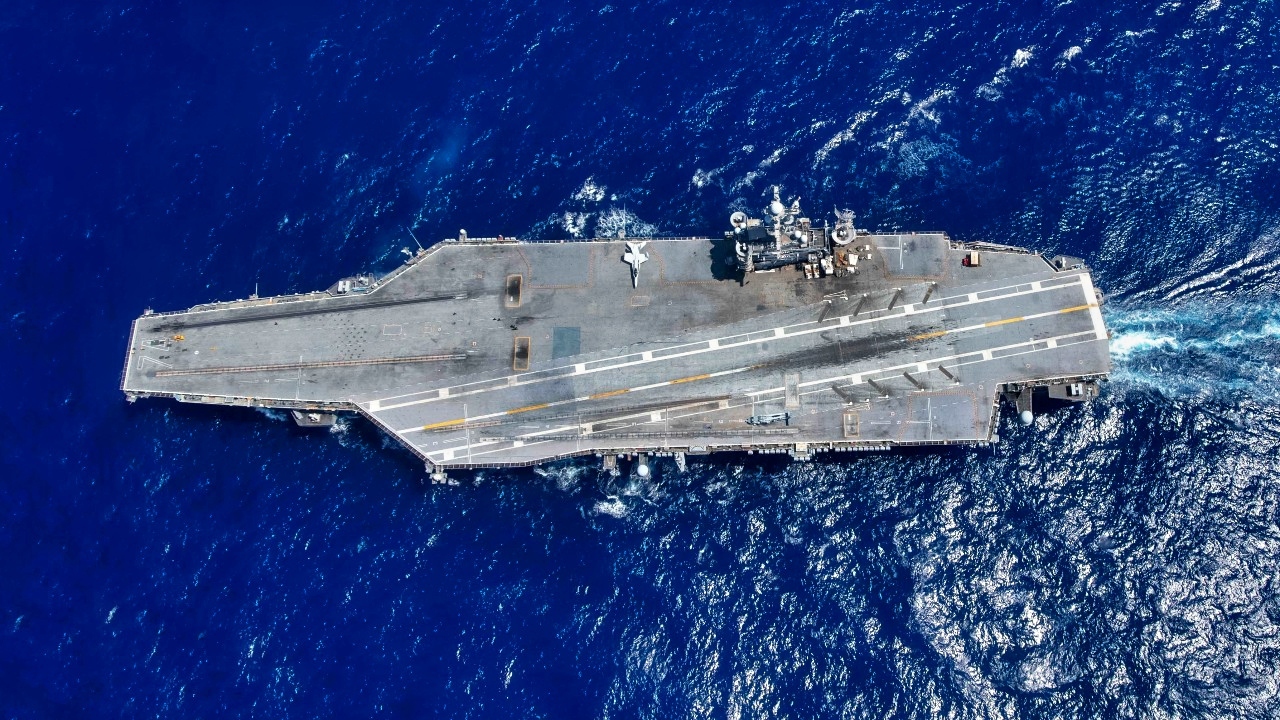
USS John C. Stennis Aircraft Carrier. Image Credit: Creative Commons.
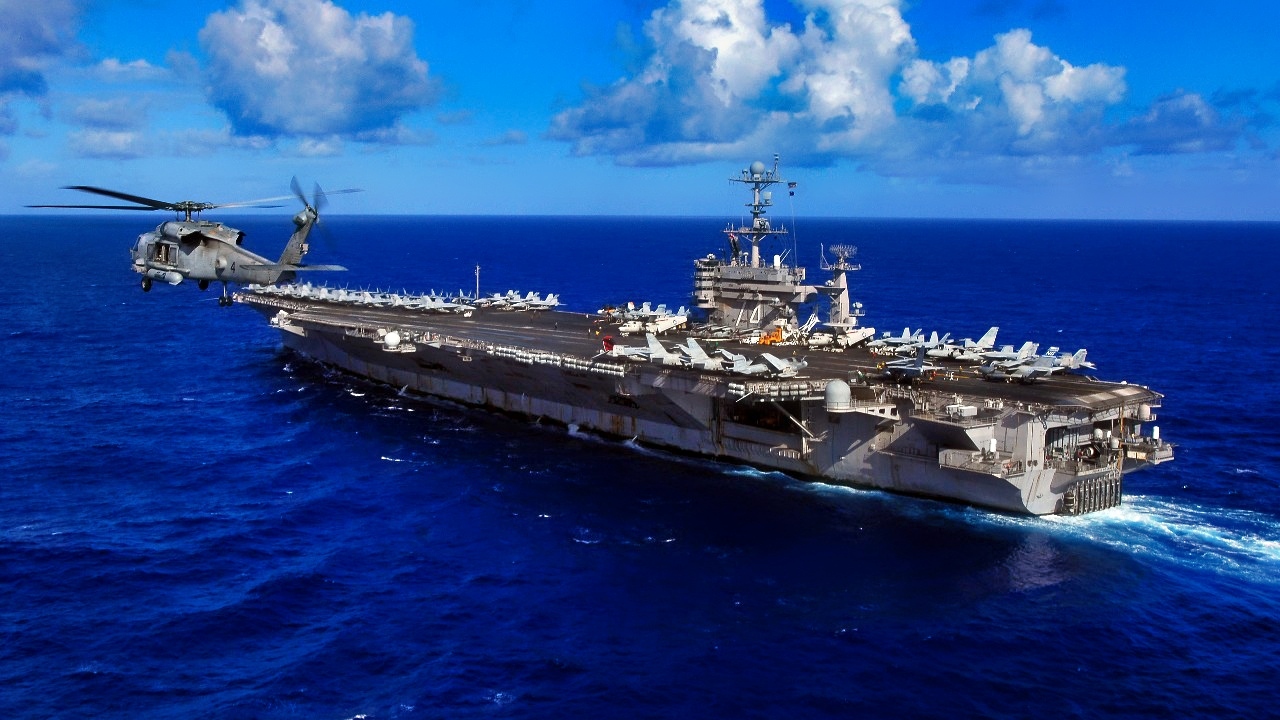
An HH-60H Seahawk, from the “Eightballers” of Helicopter Anti-Submarine Squadron (HS) 8, flies past Nimitz-class aircraft carrier USS John C. Stennis (CVN 74) during flight operations. Stennis is on a scheduled deployment to promote peace, regional cooperation and stability.
That steady oil revenue brought in billions of dollars for a government that sorely needed it.
Now the cushion is gone.
As The Wall Street Journal reported, data from energy-tracking firm Kpler show Iran’s floating oil reserves in Asian waters (such as off Malaysia, Singapore, and China) dropped from roughly 90 million barrels to zero by mid-October.
The U.S. naval blockade kept Tehran from replacing the crude it was selling, so the tanks drained and stayed dry.
Homayoun Falakshahi, Kpler’s head of crude oil analysis, told the Journal exactly where things stand: “There’s no more oil to discharge to China anymore.”
The IRGC can threaten tankers and shipping in the Strait of Hormuz, but oil is still getting through, albeit less than before the fighting began.
But this is now more significant than any airstrike that the US has conducted thus far.
The Numbers Clearly Show The Blockade Has Worked
Tanker trackers have pointed in this direction for weeks.
According to Vortexa, Iran’s seaborne crude exports fell to zero in the second week of September, down from a 14-day average of 230,000 barrels per day at the start of that month.
They stayed at zero into October. Roughly 83 million barrels of Iranian crude remain on the water, and 43 million of those barrels are trapped west of the Strait of Hormuz.
That’s oil Iran owns and can’t move to a buyer.
Liquefied petroleum gas exports dropped 48 percent month-on-month, the lowest level since at least January 2023.
Oil sales typically account for 30 to 40 percent of the Iranian government’s budget.
With the blockade drying up cash flow, the Iranian rial has depreciated significantly.
The Iranian rial has plummeted to historic lows, trading at over 2.68 to 2.72 million rials per U.S. dollar.
Vortexa’s Claire Jungman summed up Iran’s dilemma: “The blockade is doing what years of sanctions never managed.” The difference between pressure on paper and pressure backed by a fleet of warships.
Sanctions can be and have been bypassed.
A blockade is physical.
U.S. Central Command has put a dollar figure on it.
Adm. Brad Cooper said in a recorded address that the blockade has kept Iran from exporting at least $25 billion worth of crude.
Admiral Cooper also tied the pressure to frozen cryptocurrency holdings of more than $350 million and payroll problems inside the IRGC.
Humanitarian cargo remains the only exception to the restrictions.
Not only is the regime unable to pay its own forces, but the lack of funds also cuts into its ability to fund terrorist groups and their proxy militias in the region.
“As a point of emphasis, with the exception of the humanitarian assistance we’ve allowed in, Iran has no exports and no imports by sea,” he added.
Twenty Empty Tankers Sit Off Sri Lanka
The shadow fleet was built to work in the dark. These aging tankers sail under flags of convenience, switch off their identification systems, and conduct ship-to-ship transfers near Malaysia before the oil ends up in Chinese ports.
Iranian billionaires with ties to the IRGC own most of these tankers.
It’s a smuggling operation with a very large footprint.
However, none of those tricks matter when the holds are empty.
Twenty tankers that sailed beyond the Strait when the blockade took hold have already discharged their cargoes and now sit empty off Sri Lanka, with no way to get home and reload.
Their crews are running low on food, fuel, and fresh water.
According to Sri Lankan government documents cited by the Journal, the U.S. embassy in Colombo warned local companies that supplying those ships with provisions or repairs could bring secondary sanctions.
Sri Lanka says the vessels are roughly twelve nautical miles out, beyond its territorial waters, and not its problem.
That’s the story of the shadow fleet in one picture.
Empty holds, empty food pantries, and nowhere to go.
Washington’s Pressure Campaign Has Worked
The US Treasury Department continues to ramp up the pressure on the regime.
On October 8, it sanctioned 17 more vessels and associated companies tied to what’s left of Iran’s shadow fleet.
On Wednesday, it sanctioned a law firm, shipping operators, and logistics companies accused of helping Tehran dodge restrictions, including Amigoz Singapore and Dubai-based Whales Shipping Line.
The U.S. also blocked two Whales vessels. Since the start of the year, Washington has sanctioned more than 100 ships linked to the fleet.
An early round of sanctions this year targeted tankers flying the flags of Barbados, Mozambique, Vanuatu, and the Marshall Islands, while their owners and managers were registered in China, Hong Kong, and elsewhere.
Secretary Scott Bessent launched this campaign in August, pledging to “sever every economic lifeline” sustaining Tehran.
Secretary of State Marco Rubio claimed this week that Iran is now the only country on earth that can’t push a barrel of oil through Hormuz. Kpler and Vortexa’s numbers back up those claims.
What Does The End-Game Entail?
The economic pain isn’t finished.
Revenue from oil Iran already shipped could hit zero by mid-December, and the IMF expects Iran’s economy to contract 7.6 percent this year.
That comes on top of runaway inflation and widespread shortages the regime was already struggling to manage.
Iran’s central bank governor told an IMF gathering in Bangkok that talk of economic collapse is an illusion. Oil money pays for missiles, proxies, and the IRGC’s payroll, and right now that money isn’t coming in.
No one should expect the regime to fold overnight, but the long-term outlook is bleak.
It survived four decades of sanctions, an eight-year war with Iraq, and this year’s air strikes.
It still has the means to make trouble in the Gulf.
The Iranians have even threatened ground incursions on their Gulf neighbors, but that talk is just typical Iranian bluster.
However, the shadow fleet was its insurance policy, keeping cash moving no matter how tight the sanctions got. That insurance policy has lapsed.
Iran’s cash reserves are running as empty as its oil tankers’ holds, and they won’t get any better in the short term.
About the Author: Steve Balestrieri
Steve Balestrieri is a National Security Columnist. He served as a US Army Special Forces NCO and Warrant Officer. In addition to writing on defense, he covers the NFL for PatsFans.com and is a member of the Pro Football Writers of America (PFWA). His work was regularly featured in many military publications.


