
Iran has launched an intensified campaign of attacks on commercial shipping in the Strait of Hormuz, right as Washington was celebrating a meaningful increase in daily traffic.
The attacks are again driving up oil prices.
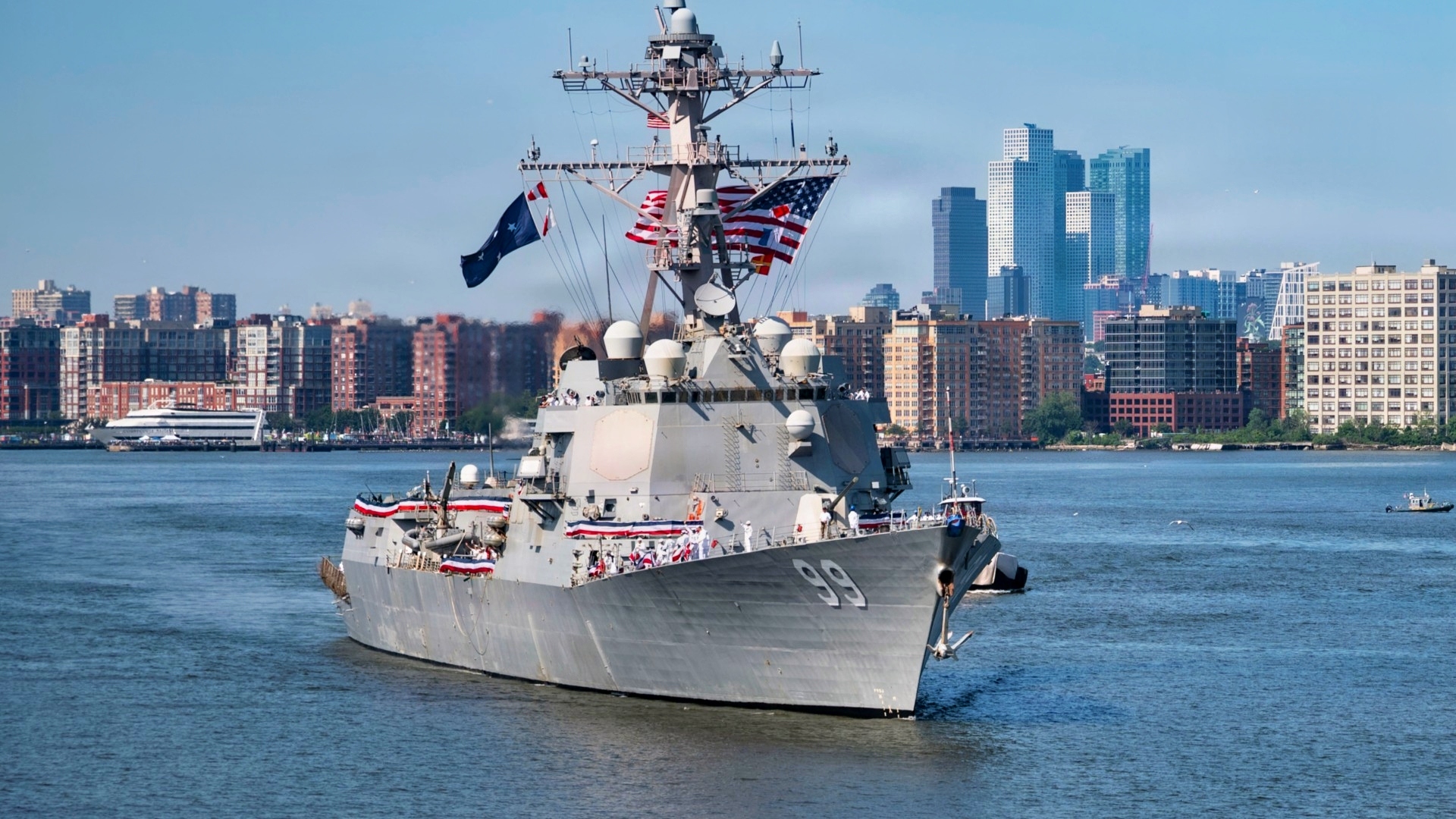
Arleigh Burke-class guided-missile destroyer USS Farragut (DDG 99) arrives at Pier 88 during the International Naval Review (INR) 250 Parade of Sail in New York, July 4, 2026. The Parade of Sail marks the opening of INR 250, a multinational maritime celebration commemorating the 250th anniversaries of the U.S. Navy, Marine Corps, and the nation, honoring the sea services’ enduring commitment to defending the United States and strengthening partnerships with allied and partner nations. For 250 years, our Navy and Marine Corps stood the watch—constant, unabated in mission, faithfully preventing crisis and resolute in defending America’s independence. INR 250 honors the Navy, Marine Corps, and Coast Guard’s enduring role on, under, and above the seas. (U.S. Navy photo by Mass Communication Specialist 2nd Class Janiel Adames)
They are further damaging President Donald Trump’s chances in the November 3 midterm elections, putting Republican candidates on the back foot all over the country.
The new campaign appears to be having a substantial impact, too, with Reuters reporting on Monday, October 19, that Gulf crude oil shipments have fallen from more than 20 million barrels per day to approximately 8.5 million barrels per day in the space of a week.
Kpler data confirms the drop in traffic, following at least 10 confirmed incidents involving commercial vessels in the last week alone.
And a new Washington Post investigation published on October 19 details how Iranian officials view the last two weeks before the election as an opportunity to inflict as much economic and political pain on the president as possible.
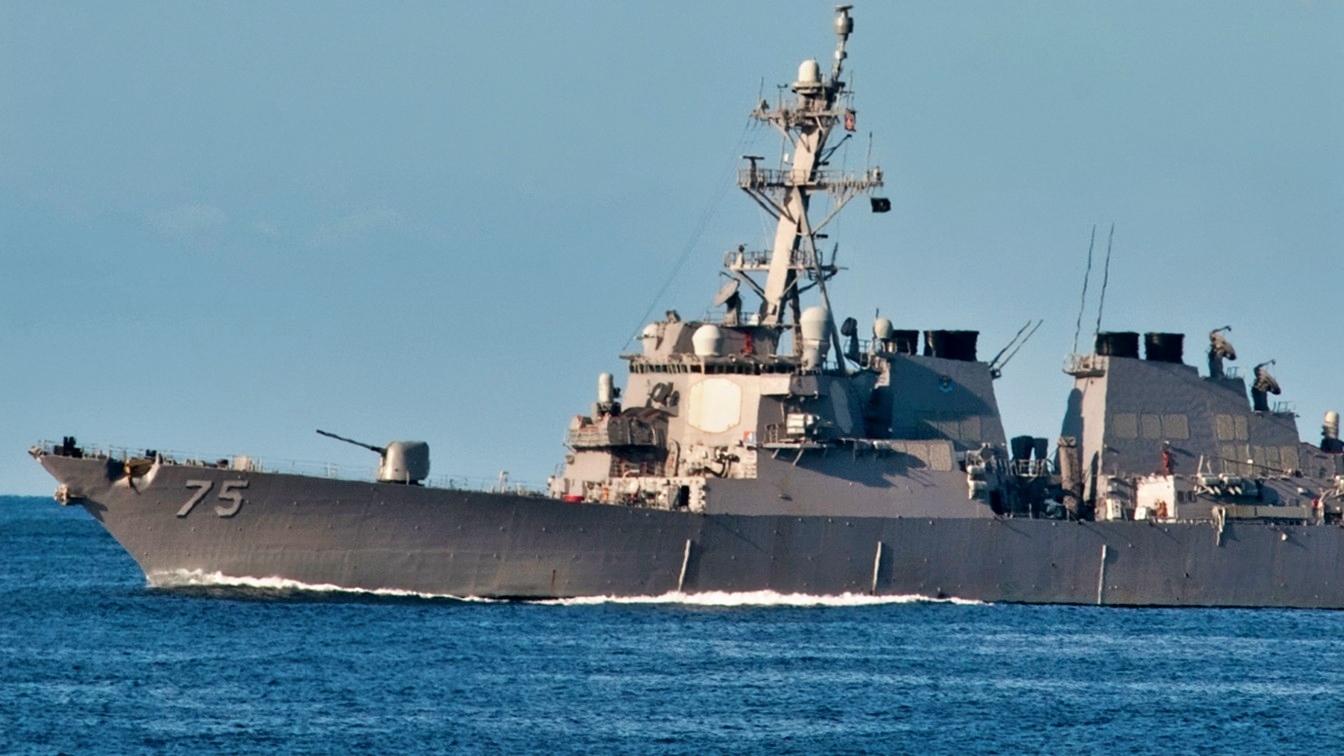
Arleigh Burke Class guided-missile destroyer USS Donald Cook is underway for a scheduled deployment in the U.S. Navy’s 5th and 6th fleet areas of responsibility. Donald Cook departed Naval Station Norfolk Monday, September 19th. (U.S. Navy photo by Petty Officer 3rd Class Scott Pittman)
The report says Iranian leaders believe the president will be less concerned about rising energy prices after the elections, when Republicans are likely to lose control of Congress.
And despite months of U.S. naval operations intended to protect commercial shipping, and recent successes, Iranian forces are now successfully attacking vessels at a rapid rate, even without the monitoring and communications infrastructure on which it used to depend, and which has been destroyed in successive waves of U.S. strikes.
Iran Wants Republicans to Lose
According to The Washington Post’s new report, two Iranian officials confirmed that Tehran is closely following the American midterm election campaign and considers the period before November 3 to be particularly important.
An Arab diplomat and a Western diplomat who are familiar with the internal thinking of the Iranian regime said that some officials are hoping to deliver an enormous defeat comparable to that inflicted on President Jimmy Carter during the 1979-1981 Iran hostage crisis.
The Arab diplomat described Iranian officials as “obsessed,” and suggested that they genuinely think they can bring down the president.
The report also described how Iranian television networks are monitoring the Republicans’ polling figures and discussing whether a Democratic victory could restrict President Trump’s ability to continue military operations against Iran.
On October 14, Reuters reported that two Iranian officials confirmed a shift in the military’s approach to targeting commercial vessels, with one saying the changes began around October 4 and have increased both the frequency and variety of attacks.
The officials also said Iran’s senior leadership approved the strategy.
Oil Shipments Collapse Suddenly
The latest shipping figures prove that Iranian forces are doing something right. After oil shipments through the Strait of Hormuz rose sharply in September, the figures are now falling back to levels not seen since the early days of the war.
According to Kpler, crude flows averaged approximately 8.5 million barrels per day during the last seven-day period, compared with more than 20 million barrels per day the week before.
That’s a decline of almost 60%, as Gulf producers grow more confident in alternative shipping arrangements, such as tanker-to-tanker transfers and U.S.-protected convoy routes.
Brent crude futures traded above $108 per barrel on Monday, October 19, after closing at their highest level since May 19.
Iran Attacks Drive Up Costs for Americans
Those attacks are affecting Americans’ everyday lives. As Reuters noted on October 15, the cost of shipping two million barrels of crude oil from the United States to Japan on the supertanker Esteem Explorer has now cost $81 million, up from an average of $9.1 million last year.
This is an enormous increase and just one of several ways moving oil has become more expensive, and those price increases are being passed on to consumers.
On October 19, reporting found that residential heating oil prices have increased by more than 70% over the last year, now exceeding $6 per gallon.
Those increases are becoming a particular problem in parts of the country that get especially cold in the winter and where households largely depend on heating oil, including Maine and New Hampshire.
It is quickly becoming a campaigning issue for Democrats looking to unseat Republicans in November.
Democratic New Hampshire Senate candidate Chris Pappas, for example, is calling for annual federal energy assistance funding to increase from $4 billion to $7 billion, and Republican candidates are following suit with alternative measures to help households this winter.
It all points to one obvious likelihood: Iran is unlikely to make any concessions, even under extreme economic and financial pressure, until at least after the midterm elections.
What are another two weeks of pain, at this point?
About the Author: Jack Buckby
Jack Buckby is a British researcher and analyst specializing in defense and national security, based in New York. His work focuses on military capability, procurement, and strategic competition, and he produces and edits analysis for policy and defense audiences. He brings extensive editorial experience, with a career output spanning over 1,000 articles at 19FortyFive and National Security Journal, and has previously authored books and papers on extremism and deradicalization.


