

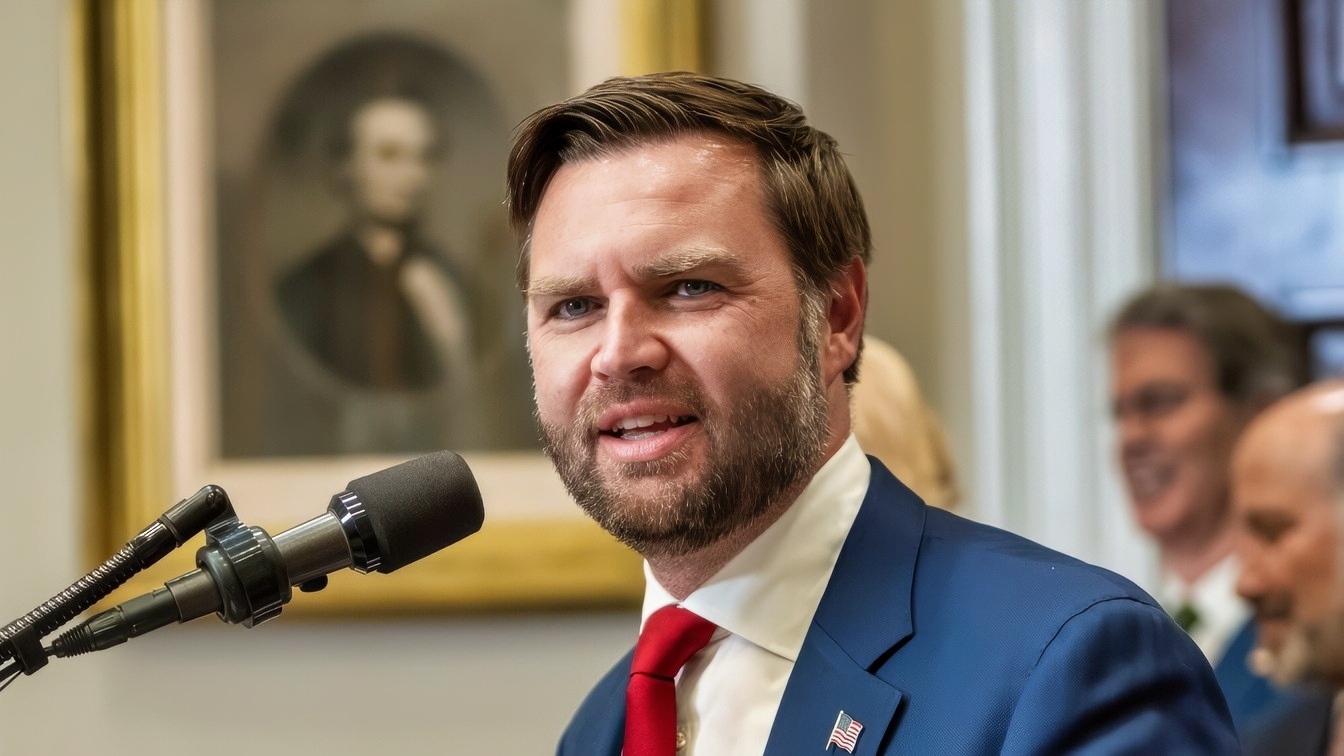
Vice President JD Vance faced criticism after a tense exchange with the husband of an American soldier killed during the war with Iran.
During a CBS town hall, Joey Amor questioned whether American military leadership had adequately protected US personnel: Amor’s wife, Master Sgt. Nicole Amor, was among six American service members killed in an Iranian drone strike in Kuwait on March 1.
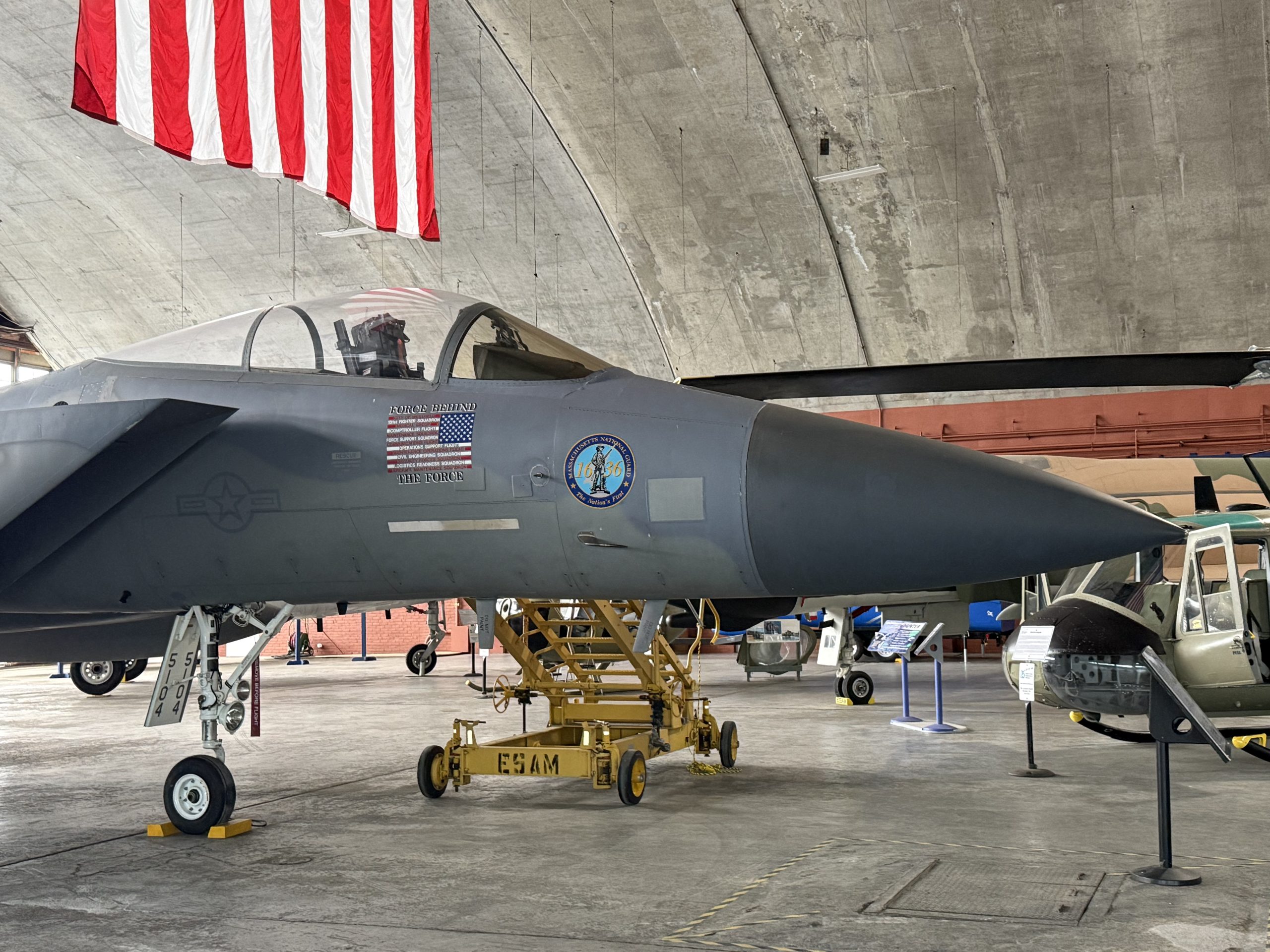
F-15 in museum. National Security Journal Photo.
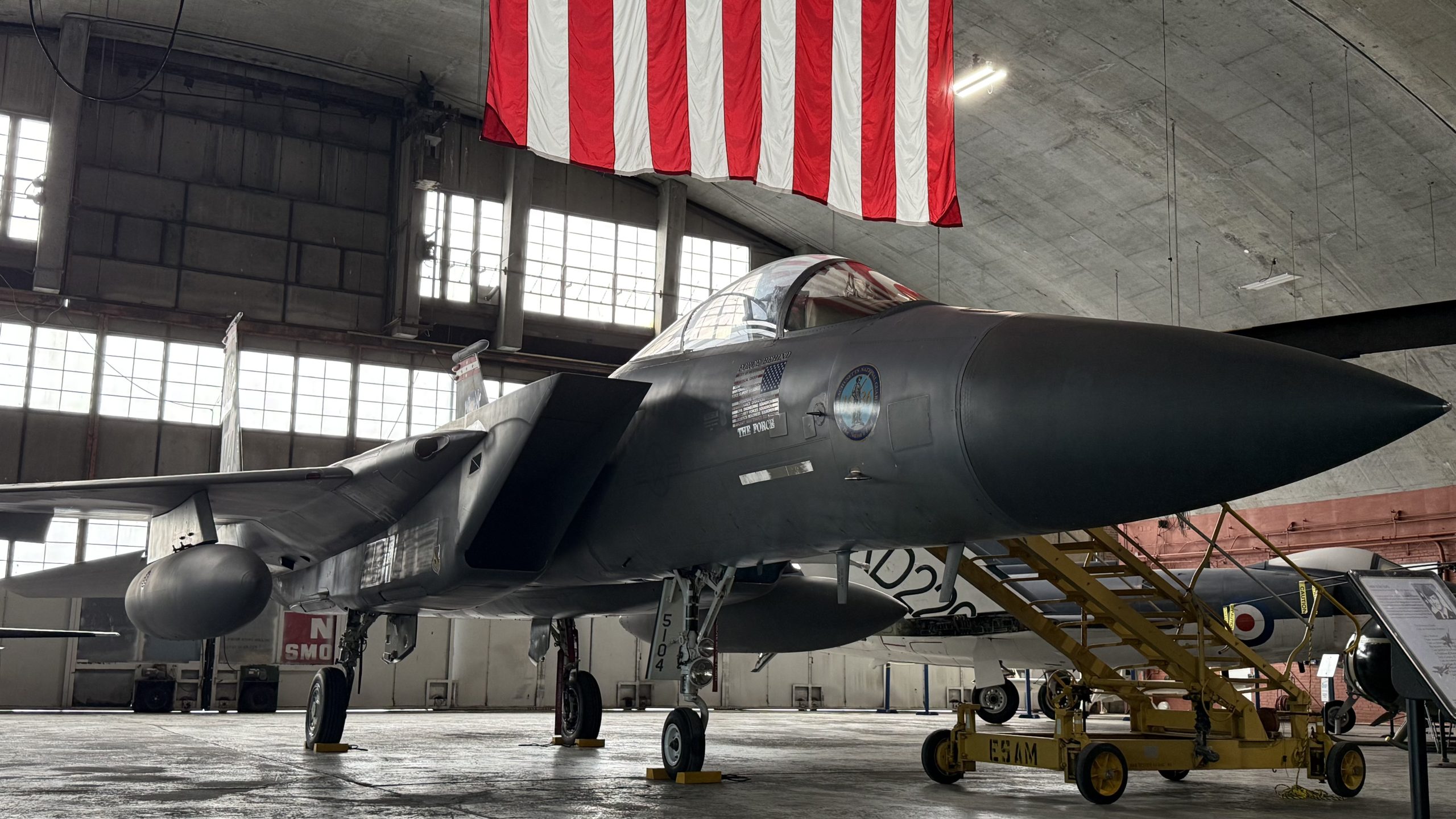
F-15 fighter at Museum. National Security Journal Photo.
Vance expressed sympathy toward Amor but acknowledged that he was unfamiliar with the alleged failures surrounding the drone strike.
Vance’s explanation drew criticism and renewed questions about accountability in US military operations.
The Drone Strike
The attack in question occurred on March 1, 2026, just one day after the US launched Operation Epic Fury against Iran, when Iranian forces struck an American military installation at Port Shuaiba, Kuwait, with a drone.
Six American service members were killed, including Nicole Amor, an Army Reserve master sergeant from Minnesota.
Others were injured.
The deaths and injuries occurred during the opening phase, while Iran was retaliating against American bases and personnel.
According to Military.com, the installation where Amor was stationed could not shoot down incoming drones.
Another report suggested that the Army had ignored a request for increased medical support in the area.
To clarify: these are reported allegations of a failure to prepare properly—not independently verified findings.
Confronting the Vice President
Vance participated in a “Things That Matter” town hall, moderated by CBS Evening News anchor Tony Dokoupil. During the town hall, Joey Amor confronted the vice president about the circumstances surrounding his wife’s death, arguing that the Iranian drone was not the only factor responsible.
Amor said: “Though the Iranian drone was the weapon that killed my wife, there were a lot of mistakes and a lot of fundamental failures that led up to that.” Amor accused military leadership of failing service members and asked how the administration would hold those responsible for the failures accountable.
Vance Responds
Vance expressed his sympathy and gratitude for Amor’s service, calling her a “precious human being who served her country honorably.”
While Vance acknowledged that failures may have occurred, he said this was the first time he had heard about the alleged shortcomings.
He added that, as Vice President, “you live in a bit of a bubble” and “sometimes information doesn’t filter up to me.” Vance offered to continue the conversation offline, however, and investigate the circumstances surrounding the deaths.
He said the administration would “figure out what exactly happened and what exactly we can do better.” Vance also acknowledged that troop positioning was an area where the military could improve, though he did not name specific commanders or explain why the concerns had not reached him.
This response raised a degree of controversy, with critics questioning how the vice president could remain unaware of such serious allegations involving American fatalities, many months after the alleged failures occurred.
Of course, the vice president does not personally supervise every tactical decision or military investigation, and it makes sense that he would not be familiar with every detail of every fatality from Operation Epic Fury.
Bigger Questions
The political backlash is mostly hot air.
But the exchange raises broader questions about military preparedness and casualties, such as whether the American military can defend fixed installations against relatively inexpensive drones.
Drone warfare has become a central feature of modern conflict, as Ukraine and Iran demonstrate.
Even militaries like the US, with advanced fighter aircraft and missile-defense systems, can struggle to protect dispersed personnel from small unmanned threats.
Vance said the military had improved since the early stages of Operation Epic Fury, citing changes to drone manufacturing and battlefield tactics, while also acknowledging potential shortcomings in troop placement.
The broader issue, of course, extends beyond the March 1 strike—it’s about whether the US properly protects service members and determines responsibility (and implements adequate changes) when precautions fail.
Vance pledged to examine the circumstances surrounding Nicole Amor’s death.
It remains unclear whether those assurances lead to an actual investigation or accountability.
About the Author: Harrison Kass
Harrison Kass is a writer and attorney focused on national security, technology, and political culture. His work has appeared in Tablet, City Journal, The Hill, The Spectator, and The Cipher Brief. He holds a JD from the University of Oregon and a master’s in Global & Joint Program Studies from NYU—more at harrisonkass.com.


