

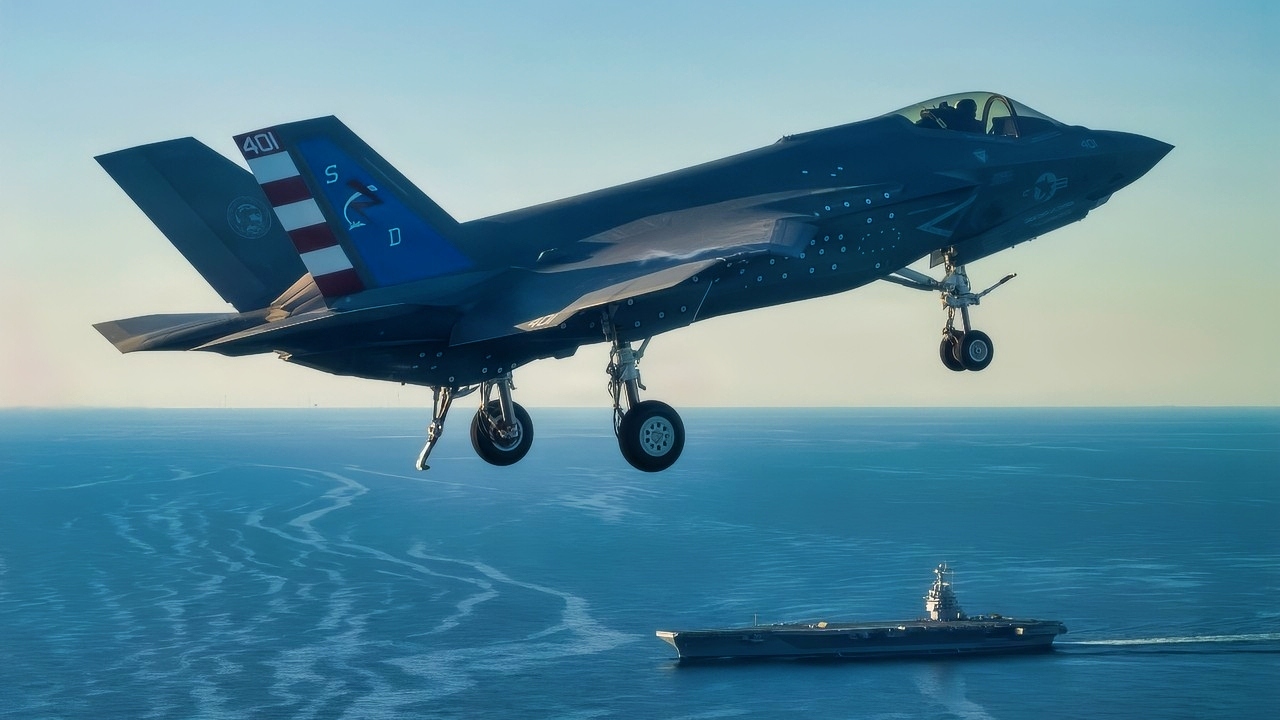
Iran Wants to Make the Strait of Hormuz a Warzone: Tanker captains are being offered salaries of up to $100,000 a month and bonuses of $50,000 for crossing the Strait of Hormuz, as Gulf exporters pay extraordinary sums to keep oil moving under the threat of Iranian missiles and drones.
Despite the attacks, the International Energy Agency reported Wednesday that Gulf crude exports reached 13.9 million barrels per day in September, more than 75 percent of prewar levels.
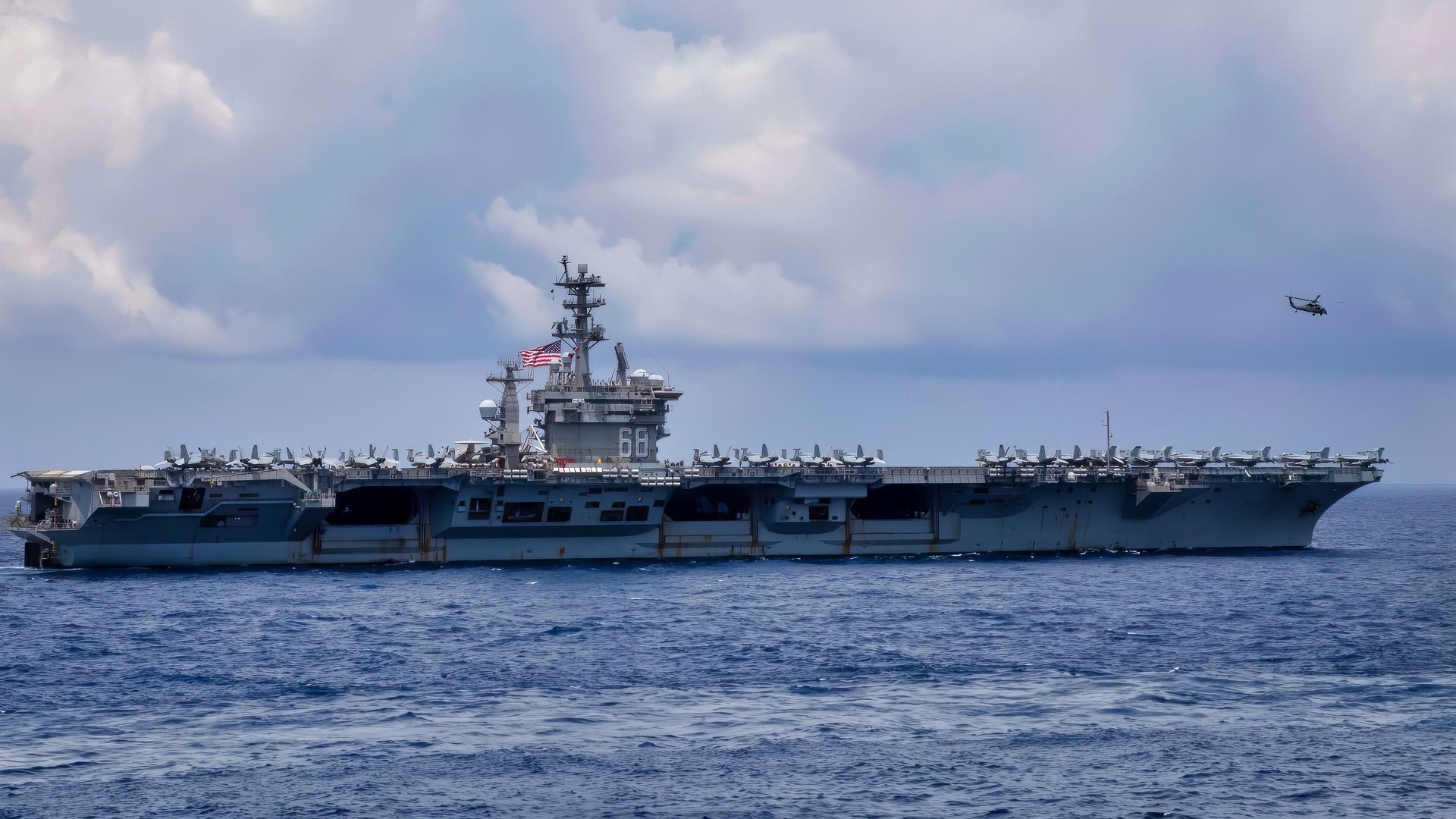
(Feb. 15, 2023) U.S. Navy aircraft carrier USS Nimitz (CVN 68) flies the battle ensign during expeditionary strike force operations with the Nimitz Carrier Strike Group including the Arleigh Burke-class guided-missile destroyer USS Decatur (DDG 73). Nimitz Carrier Strike Group (NIMCSG) and Makin Island Amphibious Ready Group (MKI ARG) with embarked 13th Marine Expeditionary Unit (MEU) are conducting combined ESF operations, demonstrating unique high-end war fighting capability, maritime superiority, power projection and readiness. Operations include integrated training designed to advance interoperability between the two groups while simultaneously demonstrating the U.S. commitment to our alliances and partnerships in the Indo-Pacific region. (U.S. Navy photo by Mass Communication Specialist 2nd Class David Negron)

USS Harry S. Truman Aircraft Carrier U.S. Navy Image.
Writing for The Telegraph on Wednesday, maritime historian Sal Mercogliano claimed, “In effect, capitalism has forced the Strait open despite all the Iranians can do.” The fresh escalation has raised questions about whether the recovery is truly sustainable.
Crews Offered Five Times Normal Pay
Amid the heightened chaos, tanker crews are being offered double or triple wages, with captains even commanding monthly salaries of up to six figures.
Indian marine engineer Harshal Singh noted that such captains were “getting paid crazy” amounts.
At least 24 seafarers have died in attacks since the war began on February 28, according to figures cited by ABC from the International Maritime Organization.
Tanker Shuttles Revive Gulf Oil Exports
Shipping companies have also changed how they transport crude. Some tankers now make relatively short journeys through Hormuz, often under American military protection, before transferring their cargoes to other vessels in the Gulf of Oman.
The system, pioneered by Abu Dhabi National Oil Company and later adopted by Saudi Aramco, was reportedly expected to handle about 2.5 million barrels per day in September, up from 1.4 million in August.
The IEA estimates that shipments through Hormuz itself rose by 3.7 million barrels per day to 10.9 million in September.
Other exports used workarounds, including pipelines and maritime routes that avoided the Strait of Hormuz.
Such measures are not cheap.
Charter rates cited by Mercogliano reached $1.4 million a day for a very large crude carrier.
Keshav Lokhiya, CEO of HiLo Analytics, called the situation “one of the biggest wealth transfers from oil producers to tanker owners.”
U.S. Secretary of State Marco Rubio said last week that Iran had “lost complete control” of the waterway. But the latest attacks suggest Tehran retains considerable power to disrupt traffic.
Iran Changes Its Shipping Attacks
Two senior Iranian officials recently confirmed a new strategy targeting vessels Tehran considers in breach of its restrictions.
One official said the objective was to “frustrate efforts by the United States and its allies” to lower global oil prices.
The second declared, “This is a game of chess.” Another warning was more explicit: “It will be complete closure soon.”
One U.S. official said Iranian forces were placing observers on small boats for the purpose of identifying targets, demonstrating just how U.S. strikes damaged its radar network.
Waters close to Qatar and the United Arab Emirates (UAE) have also faced attacks.
The U.S. Navy-led Joint Maritime Information Center continues to classify the threat as “severe.” In an earlier advisory, it said Iran sought to “maintain pressure on transiting vessels” through attacks, surveillance and harassment.
The Financial Times reported that oil shipments through Hormuz fell to just 2.9 million barrels per day on October 11, far below September’s peak of 15.5 million. Daily tracking figures often fluctuate.
Energy Crisis Ongoing
Vortexa data showed Iranian seaborne crude exports at zero as of October 5.
Claire Jungman, Vortexa’s director of maritime risk and intelligence, said the blockade “has physically stopped Iranian crude from leaving the Gulf.”
Yet higher crude shipments have not ended the refined-fuel shortage. The IEA said Middle Eastern refined-product and liquefied petroleum gas exports remained below half their prewar levels in September.
Global observed oil inventories were also 509 million barrels below end-February levels.
The agency characterized diesel markets as “under extreme pressure” and said that shortages could continue well into next year.
Amid the ongoing crisis, Brent futures climbed to approximately $106.60 a barrel on Wednesday.
Back in June, International Maritime Organization Secretary-General Arsenio Dominguez warned that “No commercial or operational consideration can justify exposing seafarers to such levels of danger.”
The tanker industry has indeed found ways to move oil through an active war zone. Whether those arrangements can withstand another sustained escalation remains uncertain.
About the Author: Georgia Gilholy
Georgia Gilholy is a journalist based in the United Kingdom who has been published in Newsweek, The Times of Israel, and the Spectator. Gilholy writes about international politics, culture, and education.


