

Whether the Iran War will restart indefinitely has dogged international relations experts, military leaders, news media personalities, and investors worldwide.
President Donald Trump has indicated his willingness to return to hostilities with Iran following the Midterm elections in the United States.
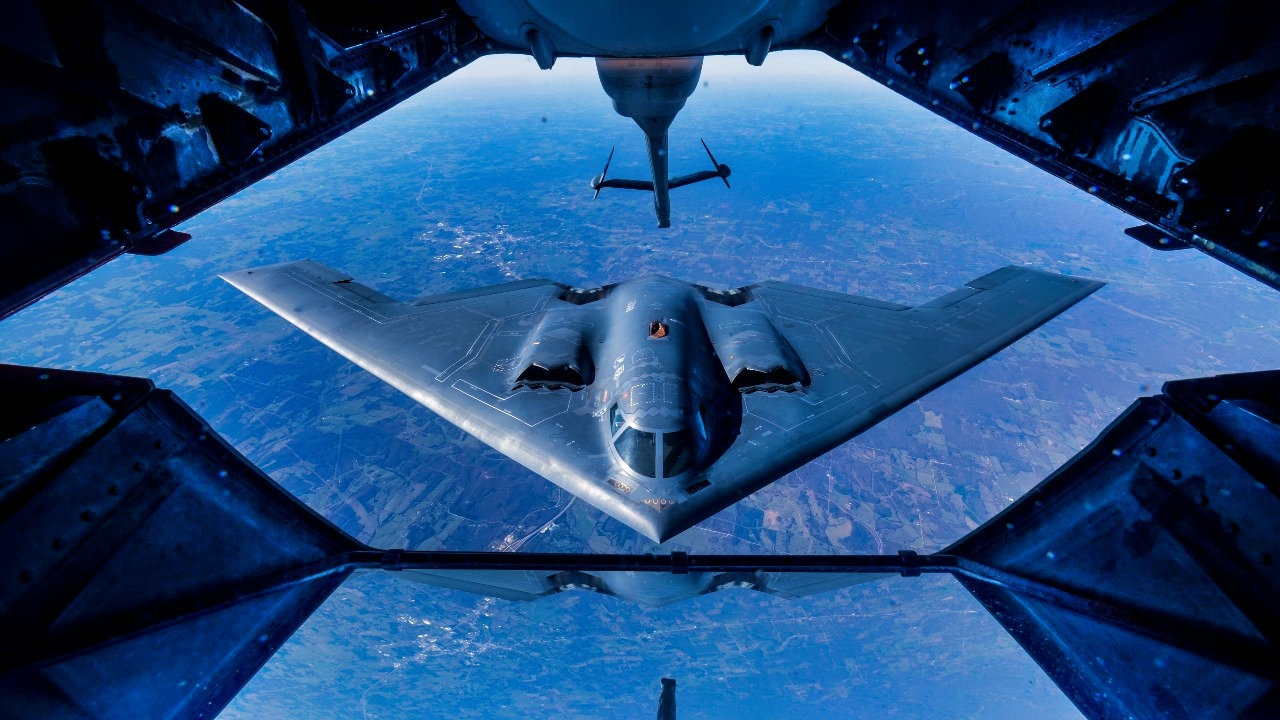
A 2nd Air Refueling Squadron KC-10 Extender from Joint Base McGuire-Dix-Lakehurst, N.J., prepares to refuel a B-2 Spirit, during a training exercise near Kansas, Nov. 10, 2016. The KC-10 Extender is an Air Mobility Command advanced tanker and cargo aircraft designed to provide increased global mobility for U.S. armed forces. Although the KC-l0’s primary mission is aerial refueling, it can combine the tasks of a tanker and cargo aircraft by refueling fighters and simultaneously carry the fighter support personnel and equipment on overseas deployments. (U.S. Air Force photo by Senior Airman Keith James/Released)

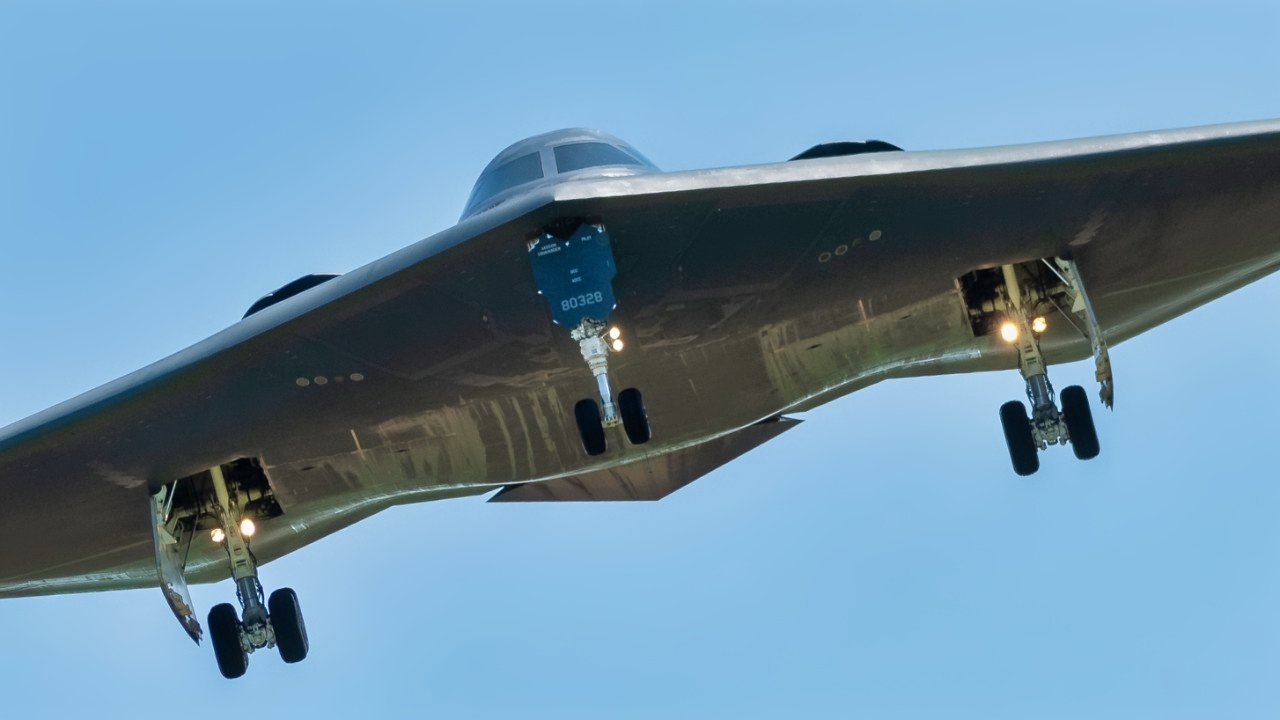
A B-2 Spirit assigned to the 509th Bomb Wing flies overhead at RAF Fairford, England, Aug. 25, 2021. The B-2 flyover was part of a Bomber Task Force mission in which aircraft conduct theater and flight training across Europe and Africa. The BTF missions, which have been occurring since 2018, provide theater familiarization for aircrew members and opportunities for U.S. integration with NATO allies and regional partners. The bomber missions enhance readiness and provide the training necessary to respond to any potential crisis or challenge across the globe. (U.S. Air Force photo by Senior Airman Eugene Oliver)
Others have worried over the prospects that Israel’s Prime Minister Benjamin Netanyahu might order airstrikes on Iran right before the Israeli elections occur at the end of the month.
Where is this all going?
An Impasse
Now, some news might give a bit of hope to all these interested parties (though it should be taken with a grain of salt).
Tehran has said its leadership is still reviewing Washington’s response to a recent proposal to reopen the Strait of Hormuz (SoH).
Iranian Foreign Minister spokesman Esmaeil Baghaei informed reporters that Tehran would respond to the United States through its intermediaries once the Iranian government had completed its review.
According to a recent Reuters report, both Qatar and Pakistan have been acting as intermediaries in negotiations between the United States and Iran.
This latest exchange is one of many that have followed nearly eight months of unsuccessful diplomacy (the war began while the two sides were still engaged in diplomacy).
The longer the war rages, the more intractable the two sides become, and the greater the damage to global energy and transportation.
The Strait of Hormuz (SoH) has been heavily disrupted by the war since March, and the Houthis of Yemen have disrupted the Strait of Bab el-Mandeb in recent weeks.
These moves have not only destabilized the Middle East’s geopolitical situation, but they’ve also caused a real economic decline.
An extremely temporary ceasefire was enacted in June.
However, it collapsed less than a month later. Iran then submitted another ceasefire proposal in mid-September. Per this proposal, Iran would reopen the SoH and resume negotiations with Washington.
The Americans did respond to that offer.
Mohsen Razaei, Iran’s head of the Supreme National Security Council, however, described the American response as “inadequate,” insisting the geopolitical situation in the region would not simply reset to how it was before February 28.
Rezaei complained that the Americans were being far too ambiguous in their responses to the proposal. Tehran’s demands include an end to hostilities across the region, not just between the US and Iran.
Iran wants the US to lift the naval blockade.
Tehran’s leaders also want frozen Iranian assets unfrozen and handed back to the Islamic Republic.
The Iranian proposal from mid-September would allow normal maritime traffic to resume through the Strait of Hormuz (SoH) only if the Americans agree to the seven points.
But the two sides still disagree.
Notably, the American side wants Iran’s purported nuclear weapons program addressed from the beginning of any diplomatic settlement.
Tehran argues that initial discussions should focus on the SoH and maritime security, while setting aside thornier issues like nuclear weapons.
What Does Iran Want?
Iran wants sanctions relief and security guarantees, but the Americans call for restrictions on Iranian uranium enrichment first.
Interestingly, Vice President JD Vance made some conciliatory comments about letting Iran enrich some of their uranium.
However, that statement was never followed up by greater explanation, nor have other members of the Trump administration commented similarly.
In fact, earlier American proposals included suspension of uranium enrichment and provisions for addressing Iran’s stockpile of highly enriched uranium.
And the negotiations in the Spring failed to overcome the differences between Washington and Tehran over Iran’s nuclear weapons program.
While the Trump administration fixates on a nuclear weapons program that they insist they “obliterated” last year, the Iranians continue blockading the SoH.
Before the war, 20 percent of the world’s crude oil and another 20 percent of the world’s liquefied natural gas (LNG) passed through the SoH.
Some exports still made it out, thanks to US Navy escorts and Iran’s apparent lack of interest in hitting every ship passing through (rumors about why; none of them good for the US side).
More Damage
Yet, the amount never consistently reached prewar flows, and the costs involved, because of the increased risks from Iran, meant the US and the rest of the world paid higher premiums for those goods, making the flow unsustainable.
That’s not of mention the massive damage Qatari energy production infrastructure sustained during the war. Or the damage that Saudi Arabia’s energy production and transportation networks have endured since Riyadh initiated the war with the Houthis in neighboring Yemen.
Iran publicly claims it is willing to support a negotiated settlement, too, between the Kingdom of Saudi Arabia and the Houthis.
But Washington is fixated on the Iran War.
They require a narrow deal that allows for unrestricted commercial navigation while addressing Iran’s nuclear activities. This impasse has prevented a breakthrough.
The longer the impasse continues, the greater the war’s damage.
About the Author: Brandon J. Weichert
Brandon J. Weichert is the Senior National Security Editor. He also manages The Weichert Brief on Substack. Weichert also hosts “National Security Talk” on Rumble. He is the author of four bestselling national security books, most recently A Disaster of Our Own Making: How the West Lost Ukraine (Encounter Books). Follow him via Twitter/X @WeTheBrandon.


