
The nine months and counting of US-led strikes targeting Iran’s weapons depots have not hindered the regime’s ability to produce higher-tech lethal arms. While the peak of the ongoing Iranian-American War may have appeared to be waning after a sharp uptick in escalation this summer, continued kinetic action on both sides paints a different picture.
In fact, a US official recently commented that the regime has now got its hands on anti-ship cruise missiles, which are notably more lethal than the one-way attack drones it more commonly deploys in strikes.
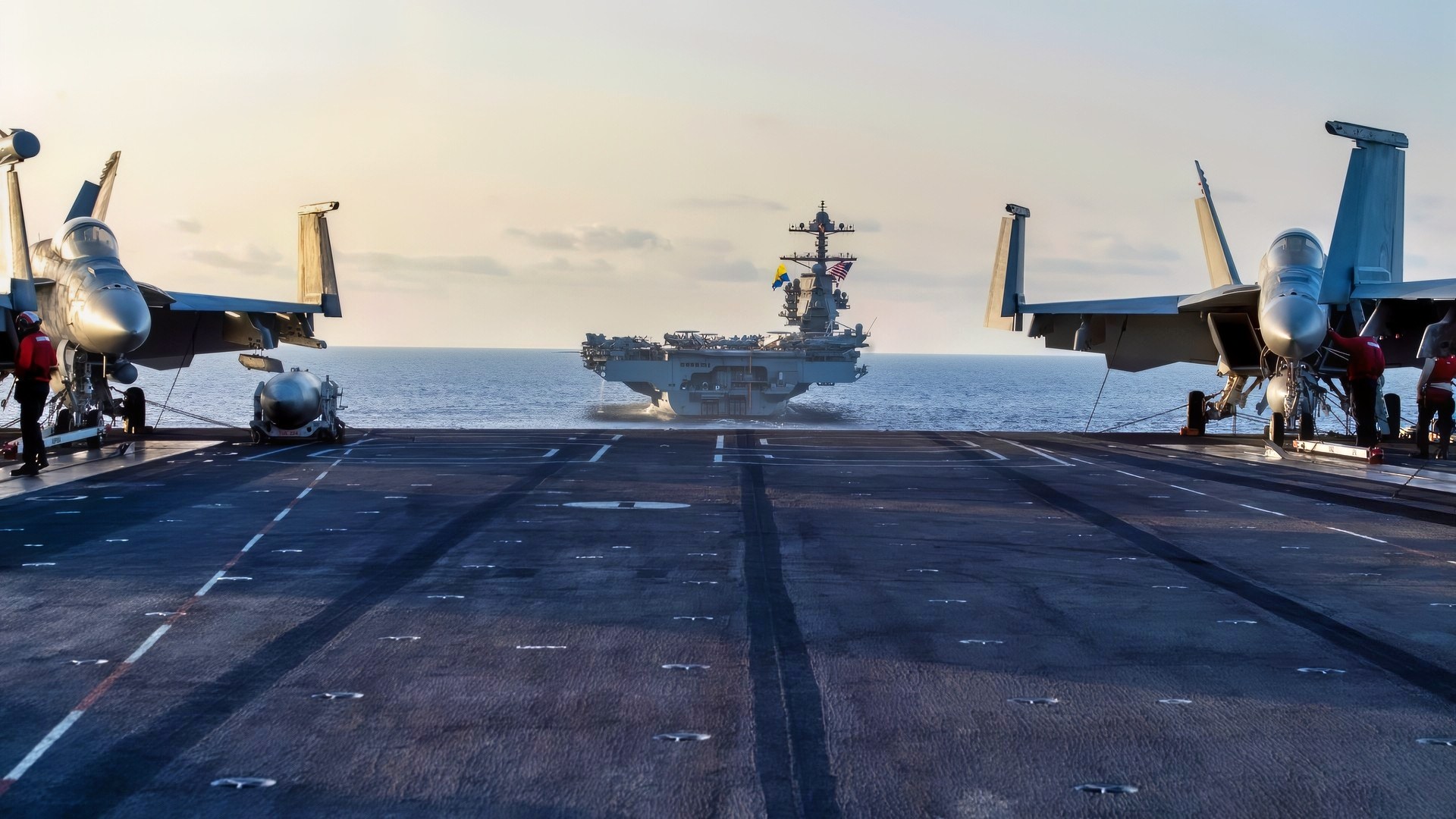
USS Eisenhower Aircraft Carrier. Image Credit: U.S. Navy.
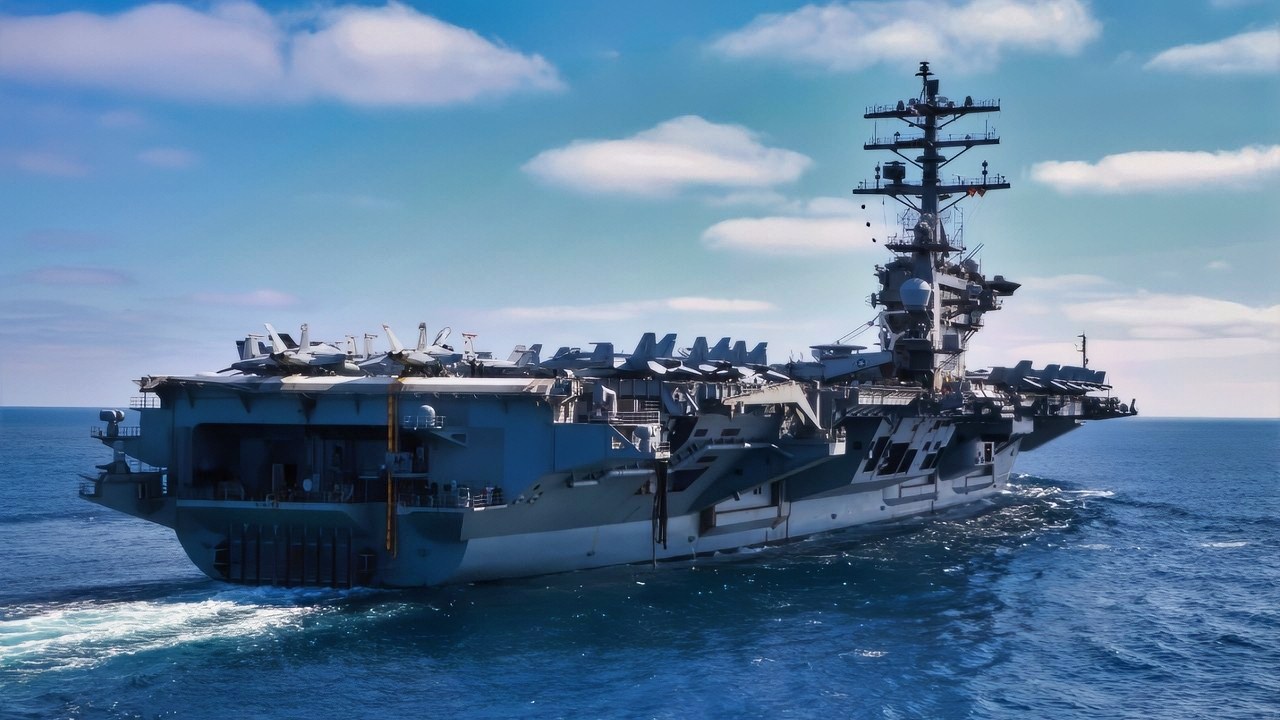
PACIFIC OCEAN (Oct. 8, 2022) The aircraft carrier USS Nimitz (CVN 68) prepares for a fueling at sea (FAS) with the Arleigh Burke-class guided missile destroyer USS Paul Hamilton (DDG 60). Paul Hamilton is currently operating with the Nimitz Carrier Strike Group in preparation for an upcoming deployment. (U.S. Navy photo by Ensign Connor Doherty)
Iran’s ability to pursue its weapons development programs while under fire should be of top concern to the US and its Gulf allies.
Back in September, spokesperson for the Islamic Revolutionary Guard Corps (IRGC) paramilitary Hossein Mohebbi indicated the growth of the nation’s arms arsenal was ongoing. “If a new aggression takes place, we will definitely change the weapons and geography of the war,” the official promised.
Earlier in the month, Tehran reportedly deployed its upgraded Qassem Basir ballistic missile in a launch targeting US warships in the Strait of Hormuz.
The regime initially unveiled this deadly weapon in 2025, which allegedly possesses a 745-mile range and a half-ton warhead.
Iran’s Push to Deploy Anti-ship Cruise Missiles is Concerning
Fast forward to November, Reuters reported that anti-ship cruise missiles were launched from Iran’s southern coastal city of Kong.
Since Tehran has largely relied on its versatile and hefty arsenal of unmanned aerial vehicles (UAVs) in its attacks and counter-attacks throughout the war, this shift to more lethal weaponry is noteworthy.
Anti-ship cruise missiles are faster, deadlier, and harder to jam than drones, making them more valuable by comparison.
Tehran’s ability to deploy its stockpile of anti-ship cruise missiles suggests that ongoing production of additional arms is perhaps occurring at a faster pace than imagined.
How Iran’s Stockpiles Could Be Growing
The Wall Street Journal first reported that Tehran was able to keep up with its ballistic missile production by using underground facilities and relying on stockpiled components not destroyed by US-led air strikes.
In fact, Iran has been able to assemble both liquid- and solid-propellant missiles, despite the damage inflicted to the IRGC’s weapons and industrial facilities.
In addition to its domestic capabilities, Russia has also been lending a hand in Iran’s supersonic cruise missile program.
These dangerous weapons feature warhead-carrying tips that fly the missile at hypersonic speed while allowing the weapon to alter its trajectory throughout flight.
While there is no evidence that Iran currently possesses Moscow’s Kh-47M2 Kinzhal hypersonic missile, it may have the Russian Kh-31 supersonic air-to-surface technology. Notably, two Iranian nationals were apprehended back in 2018 for attempting to smuggle Kh-31 technology out of Ukraine.
Underground Arms Factories and Advanced Weapons
While the apparent growth of Iran’s underground arms facilities in weapons development is concerning, the regime is unlikely to rebuild up to its pre-war levels based on the damage inflicted by US strikes throughout the war.
As explained by global security analyst for the Middle East and North Africa at RANE, Freddy Khoueiry, “Iran needs numerous components whose production sites or supply chains were damaged or disrupted. Stockpiled components allow Tehran to bridge that gap, but they are finite, particularly with the U.S. blockade in place.”
Some of the regime’s most advanced weaponry includes the Fattah 2, the Sekkil, and the Haj Qasem missiles. The Fattah is allegedly capable of evading even top-tier air defense systems with a range of approximately 900 miles. The Sekkil medium-range ballistic missile can reportedly travel even farther, up to 1,550 miles. The Qasem is designed for rapid launch, making it the historic top choice for Iran’s regional proxy groups, which carry out more frequent barrages.
Iran’s apparent use of more sophisticated anti-ship missiles comes as the war experiences its sharpest uptick in violence in months. Earlier today, the United Kingdom Maritime Trade Operations (UKMTO) reported that yet another commercial vessel sailing through the Strait of Hormuz was struck. UKMTO later reported another incident involving a tanker hit in its engine room by a projectile roughly 17 miles east of Khasab.
The Strait of Hormuz, a critical waterway through which roughly a quarter of the world’s oil economy passes annually, has remained a flashpoint of violence during the war.
As tit-for-tat exchanges continue, Iran may start complementing its drone barrages with deadlier weapons more often.
About the Author: Maya Carlin
Maya Carlin is an analyst with the Center for Security Policy and a former Anna Sobol Levy Fellow at IDC Herzliya in Israel. She has over 1,000 articles published over the last several years on various defense issues. Carlin has bylines in many publications, including The National Interest, Jerusalem Post, and Times of Israel. You can follow her on Twitter: @MayaCarlin.