

Trump Threatens New Iran Strikes As Tehran Offers Peace – President Donald Trump is threatening a new round of strikes against Iran after the two countries exchanged fire again after more than a month of relative calm. U.S. forces struck two Iranian launchers on Larak Island in the Strait of Hormuz on Sunday, August 30, with U.S. Central Command claiming that Iranian Revolutionary Guard Corps forces were preparing to launch rockets carrying naval mines into the waterway. The attacks were described as being “limited,” and intended only to stop an imminent threat.
Iran then responded by launching ballistic missiles at U.S. military bases in Jordan, with Tehran also claiming to have attacked American positions in the United Arab Emirates. The UAE, however, says that it intercepted an Iranian drone and disputed claims that the Al Minhad airbase had been successfully attacked.
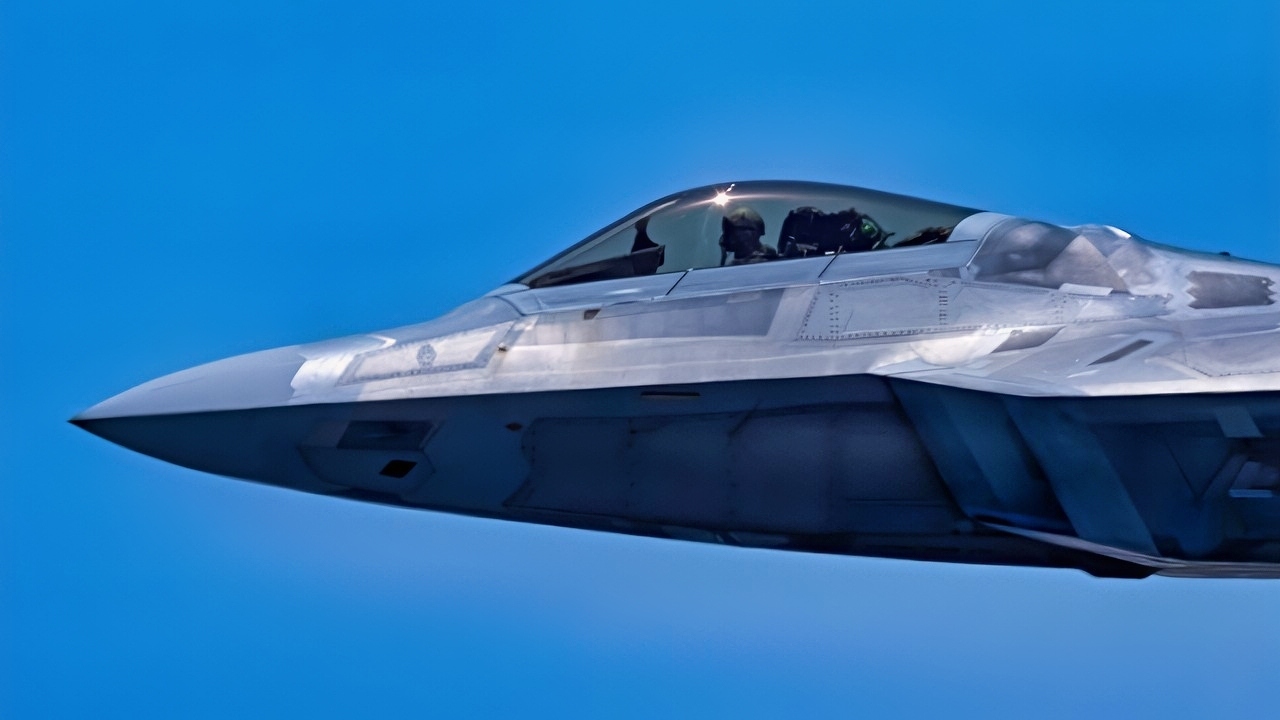
Air Force Chief of Staff Gen. Ken Wilsbach takes off in an F-22 Raptor from Joint Base Pearl Harbor-Hickam, Hawaii, May 13, 2026. Wilsbach flew an F-22 sortie, experiencing the total force integration among active-duty Airman and Hawaii Air National Guard counterparts. (U.S. Air Force photo Senior Airman Aden Brown)
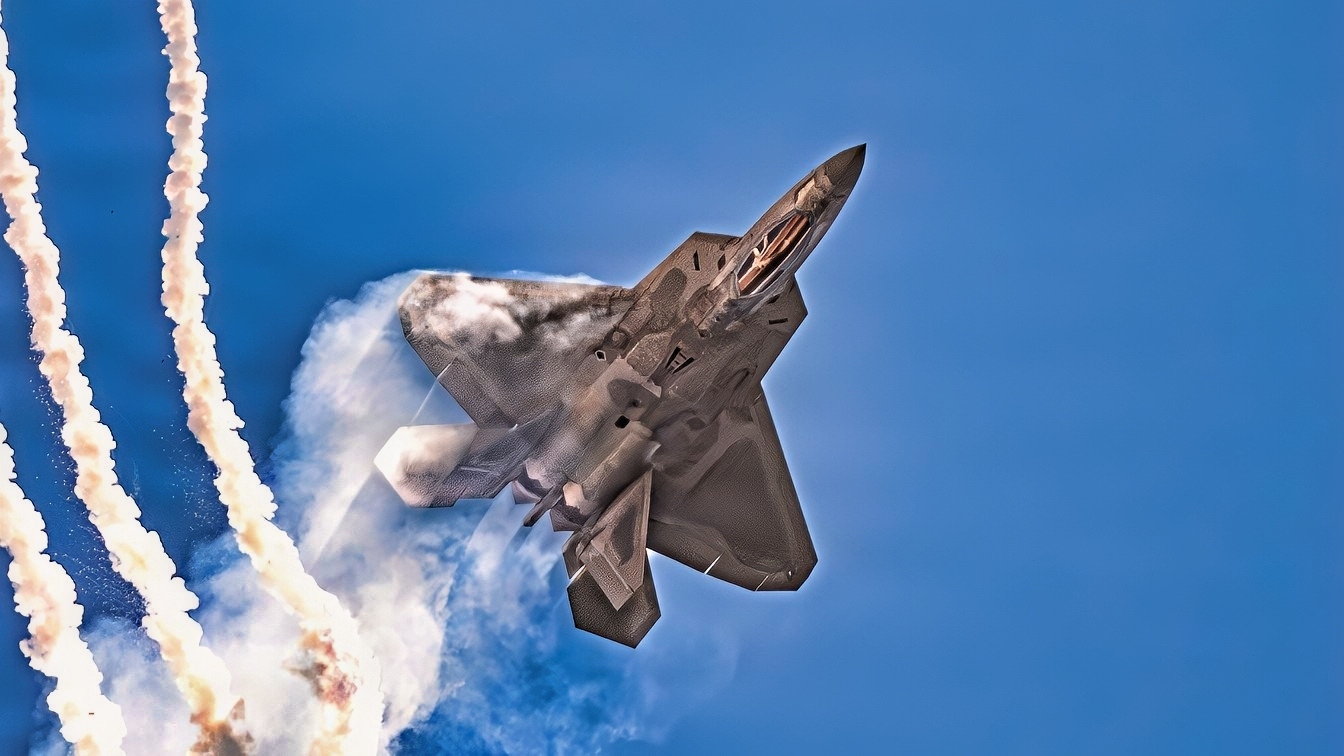
U.S. Air Force Capt. Nick “Laz” Le Tourneau, pilot and commander of the F-22 Raptor Aerial Demonstration Team, performs an aerial demonstration at Air Dot Show Tour Fort Lauderdale, Florida, May 9, 2026. Capt. Le Tourneau showcased the unmatched capabilities of the F-22 by performing a series of combat maneuvers. (U.S. Air Force photo by Staff Sgt. Mary Bowers)
And now, Trump is warning that despite the well-documented U.S. shortage of interceptors and precision-guided missiles, he is considering a fresh assault on Iran – just as Iran offers to return to the conditions of the failed June peace deal.
Trump Says He Will Hit Iran “Hard”
Speaking to Fox News on Monday, August 31, Trump said that the U.S. is going to hit Iran “hard” and that “there will be a response.”
The president did, however, appear to temper expectations of a return to full-scale fighting, telling reporters that any new round of military action would not necessarily mean a return to full-scale bombing of Iranian infrastructure.
Iran, the president argued, has already been “defeated militarily” – a reference to the U.S. and Israeli forces taking out much of Iran’s conventional military assets. He also described Iran as a “failed nation” whose political leadership and economy have been severely weakened during six months of conflict.
Per Reuters, a senior Iranian source described the most recent exchange of fire as being a “limited and contained confrontation,” which suggests Tehran is also seeking to avoid immediately returning to the sustained, weeks-long exchanges seen early in the conflict.
That same source, however, warned that further U.S. attacks would trigger a more serious response from the Iranian side. The Iranian military also warned that facilities in neighboring countries used to support American attacks would be considered legitimate targets.
Pentagon Considers Regular Strikes Around Hormuz
The Larak Island operation may be the beginning of a new series of strikes, according to reports, once again focused on sites surrounding the Strait of Hormuz and supporting Iran’s efforts to disrupt traffic through the waterway.
Israeli broadcaster Channel 12 cited senior U.S. officials in a report claiming that President Trump and senior administration officials reviewed a plan last week to begin the new strikes. According to the broadcaster, the proposal was developed by U.S. Central Command and is backed by Defense Secretary Pete Hegseth, but had not been approved by the president before the most recent exchange of fire.
CENTCOM also reportedly warned both Hegseth and Trump in recent days that Iran is rebuilding its military capabilities around the strait, including its missile systems and radar installations that were previously targeted by U.S. strikes.
One official described the proposed strategy as a temporary solution, however, comparing it to “mowing the lawn,” whereby U.S. forces periodically strike Iranian capabilities before they can again pose a threat to commercial tankers or U.S. Navy vessels and aircraft.
The White House has reportedly been reluctant to approve the proposal over concerns it could trigger another sustained exchange with Tehran — one that Washington cannot afford.
Failure to act, however, would lead Iran to rebuild its capabilities around the strait and exert greater control over the waterway.
Two Oil Tankers Attacked
Iran is already showing that when its capabilities are restored, it is willing to use them. Bloomberg reported on Tuesday, September 1, that two oil supertankers were hit by unidentified projectiles while leaving the Persian Gulf late on Monday.
The Saudi-flagged Sidr, operated by Saudi shipping firm Bahri, was struck while transiting northeast of Khasab, Oman. Shortly afterward, the Liberian-flagged Senegal Prosperity, operated by Sinokor of South Korea, was struck by three projectiles. The vessel was east of Khasab. Both ships were traveling out of the Persian Gulf.
The United Kingdom Maritime Trade Operations also confirmed receiving a report that a tanker was struck by three projectiles 17 nautical miles east of Khasab, and confirmed that there were no reported casualties or environmental damage.
A Big Clue: Iran Offers to Return to Peace Deal
On September 1, Tehran offered Washington a path to peace — or, at least, a temporary ceasefire — following the tanker strikes. Speaking at the Shanghai Cooperation Organization summit in Bishkek, Iranian President Masoud Pezeshkian said Iran would immediately return to its commitments under the June memorandum if the United States did the same.
“If the U.S. returns to its commitments in the memorandum of understanding, the Islamic Republic of Iran will immediately reciprocate,” Pezeshkian, who has recently been calling to bring the war to an end quickly despite ongoing threats from Iranian hardliners, said.
About the Author: Jack Buckby
Jack Buckby is a British researcher and analyst specializing in defense and national security, based in New York. His work focuses on military capability, procurement, and strategic competition, producing and editing analysis for policy and defense audiences. He brings extensive editorial experience, with a career output spanning over 1,000 articles at 19FortyFive and National Security Journal, and has previously authored books and papers on extremism and deradicalization.


