


At least 40 people are dead and dozens of others unaccounted for after a Russian bombing attack on an aid center in southeast Ukraine, local authorities said on Wednesday.
Search teams were working through their third day at the site of the devastating explosion at a former school and basement shelter in the town of Komyshuvakha, in the Zaporizhzhia region close to the front line.

Putin in Meeting In January 2023 Creative Commons Photo
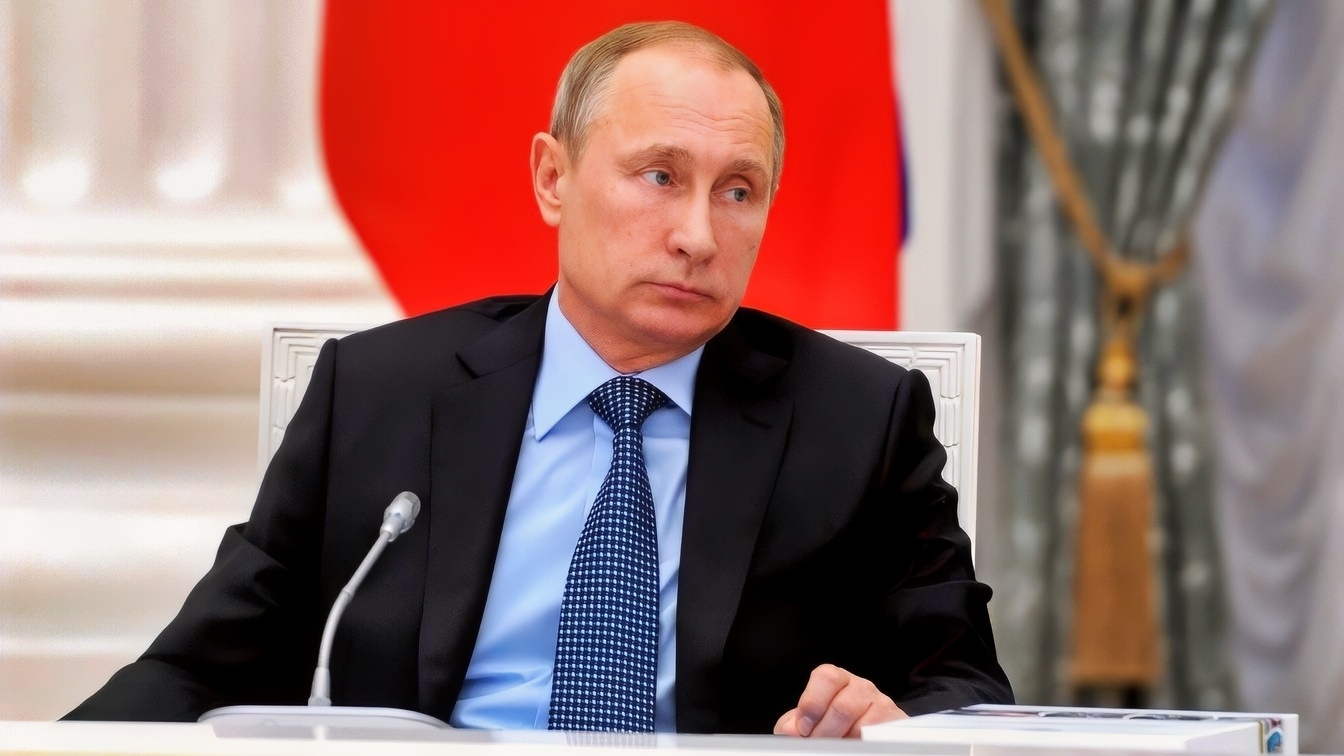
Putin Back in 2025 Creative Commons Photo
Yevhenii Tokariev, a top regional policing official, said on Wednesday: “We are gathering information on exactly how many people may have been inside the building and analyzing the available data. Relatives are calling to report loved ones they have lost contact with. We continue our work.”
Police Forced to Identify Victims With DNA
Police said some of those still unaccounted for may have been among the deceased, adding that over 30 people may still be beneath the rubble. It is unknown how many might still be alive. President Volodymyr Zelenskyy said on Tuesday that 33 people had died and five had been rescued from the site.
Some of the bodies could not be identified by sight. Police from the regional missing persons unit have been taking DNA samples from family members. Police said they were supporting families to identify the bodies.
Search dogs and rescue experts are assisting with searches, acting regional military administrator Mykhailo Semikin said.
Police also said the search had been hampered by Russian drone attacks that continued after the initial wave of strikes.
Thick smoke also meant crews couldn’t enter the building safely.
The Associated Press reported that drone attacks had forced crews to stop searching, with soldiers firing shots.
Baptist pastor Vladyslav Makhovskyi told the Associated Press that the shelter, which has internet access and was a “trusted” location, was sometimes used as a place to sleep by local residents.
First Responders Killed in Second Attack
Classes stopped in February, but residents continued to visit the site on Mondays to collect supplies. Local officials had promoted the aid drop on November 2, asking people to visit between 10 a.m. and noon. Local authorities said nine aerial bombs struck the town in two waves.
The first wave hit the school building, and a later strike hit the shelter.
Four police officers and two rescue workers were later killed when the shelter was hit, local authorities said. U.N. monitors said two waves of attacks hit the town.
A direct hit from a FAB-3000 aerial bomb weighing approximately three metric tons caused the concrete shelter to collapse, Semikin said. Glide bombs, which have wings attached, can travel up to approximately 62 miles, U.N. monitors said.
Raisa said she had been outside to throw out garbage and was trapped for two hours. Rescue workers used a jack to lift the slabs.
Three patients were in stable condition after surgery, while one woman with severe burns was on a ventilator.
Doctors are doing everything they can to save her, Serhii Bodnar, the acting medical director of the hospital, told Suspilne, Ukraine’s national public broadcaster.
U.N. Monitors Probe Bombing
Danielle Bell, head of the U.N. human rights monitoring mission in Ukraine, said the aid drop had been publicly advertised.
The mission looked at pictures of the wreckage and saw damage consistent with powerful aerial bombs. She said that Moscow’s attack “seems to have violated the most fundamental principles of international humanitarian law.” Russia’s Defense Ministry said its forces had attacked Ukrainian military units near Komyshuvakha and two other settlements, Reuters reported.
Four Civilians Injured in June Drone Attack
The U.N. mission investigated a previous attack on aid workers in Komyshuvakha on June 15. Four civilians were injured by a short-range drone.
Aid delivery was temporarily halted after the attack because of heightened security concerns.
“The possibility of being killed while seeking essential assistance or shelter is horrifying,” said Matthias Schmale, the U.N. humanitarian coordinator for Ukraine.
Latvian Foreign Minister Baiba Braže said her country, which holds the council presidency this month, had asked for an extraordinary meeting of the U.N. Security Council.
The Zaporizhzhia region declared three days of mourning through Thursday.
Semikin said regional authorities would cover funeral costs and compensate those injured.
About 200 people still live in Komyshuvakha, and police have evacuated 166 this year. Semikin urged residents to leave and said officials could help them find somewhere to stay.
About the Author: Georgia Gilholy
Georgia Gilholy is a journalist based in the United Kingdom who has been published in Newsweek, The Times of Israel, and the Spectator. Gilholy writes about international politics, culture, and education.


