
Ever since the conflict between the United States and Israel with Iran began back in February, Iran has utilized a chokehold on the Strait of Hormuz to disrupt oil exports from neighbors in the Persian Gulf.
The move has driven up global oil prices, fueling cost-of-living rises worldwide and limiting foreign support for Operation Epic Fury.
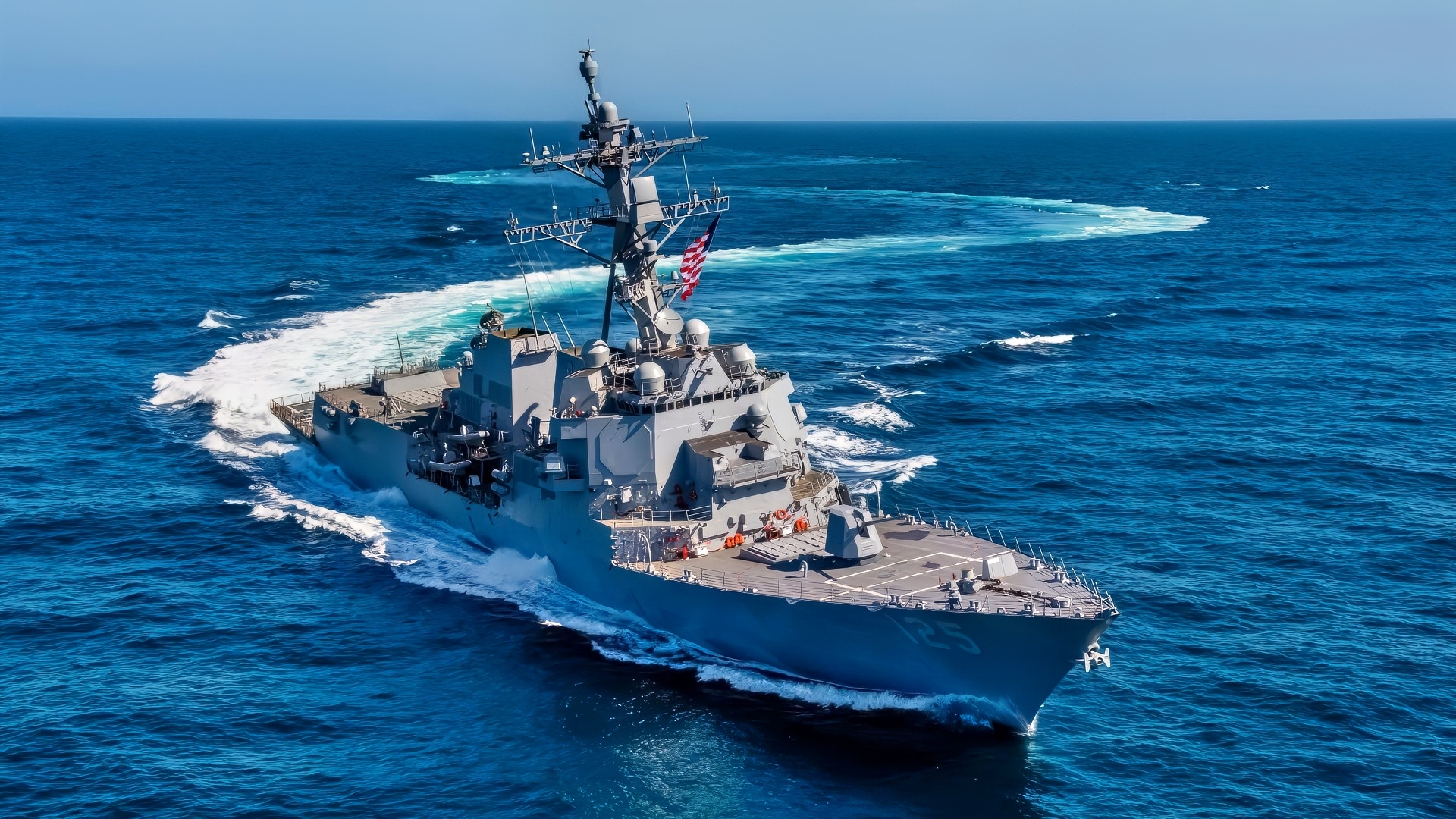
Pascagoula, MS – The future USS Jack H. Lucas (DDG 125) completed acceptance trials, May 18. DDG 125 is the first Arleigh Burke-class guided-missile destroyer built in the Flight III configuration. Photo courtesy of Huntington Ingalls Industries’ Ingalls Shipbuilding division
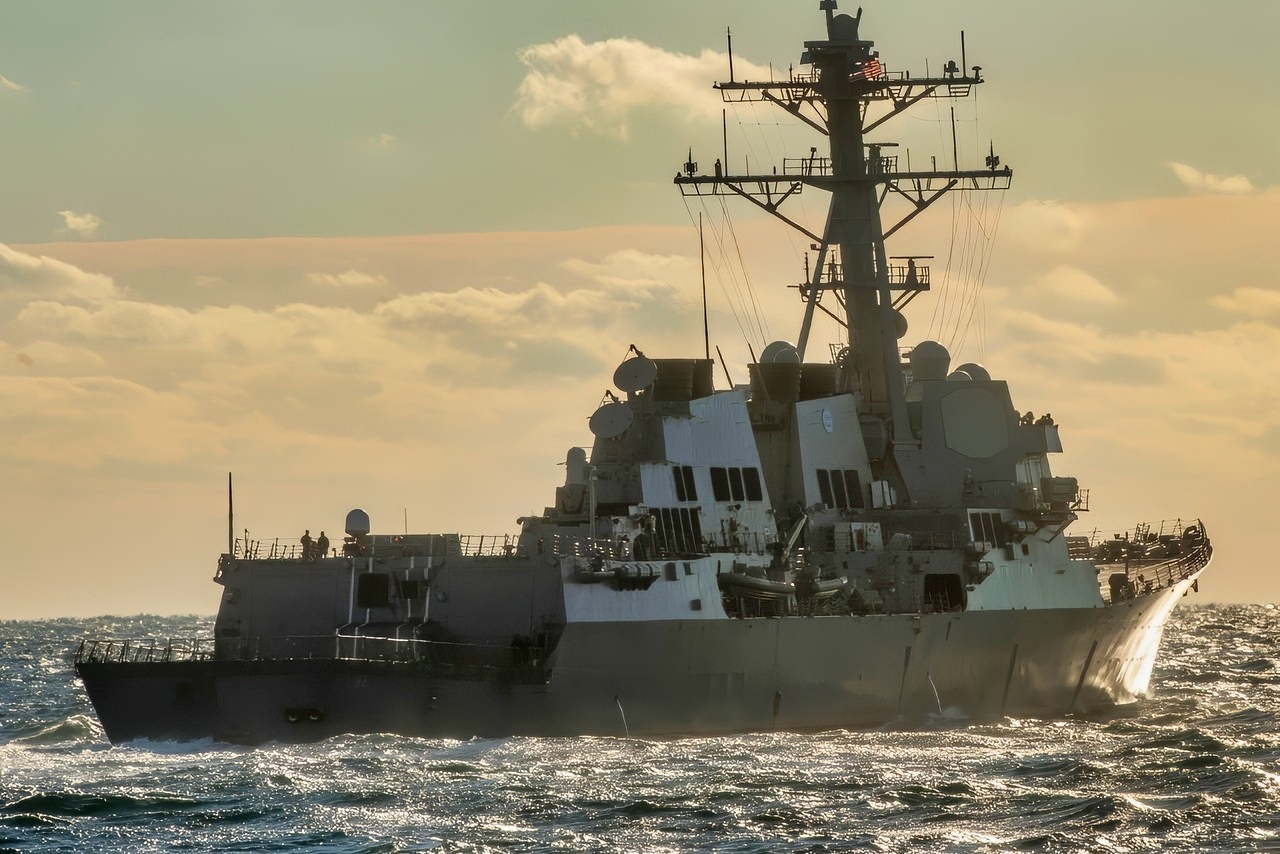
The Arleigh Burke-class guided-missile destroyer USS Lassen (DDG 82) moves into position for an underway exercise with the British Royal Navy aircraft carrier HMS Queen Elizabeth (R08) and Pre-Commissioning Unit (PCU) Michael Monsoor (DDG 1001). The future USS Michael Monsoor is the second ship in the Zumwalt-class of guided-missile destroyers. (Photo by Mass Communication Specialist 1st Class John Philip Wagner, Jr./Released)
The U.S. hasn’t escaped the price hikes either, with diesel prices surpassing previous records and growing frustration among Americans who were promised an end to foreign intervention during Donald Trump’s presidential campaign.
The strait has been Iran’s key leverage during the conflict.
However, as suppliers explore alternative routes to export oil, Tehran’s chokehold may be slipping.
Context of the Strait
Ever since the conflict began at the end of February, the Strait of Hormuz has been a key talking point of the war.
The waterway is vital for Middle East oil exports, with Gulf states such as Qatar, Kuwait and Bahrain reliant on its openness.
Since U.S. and Israeli bombs rained down on Iran, Tehran has used its chokehold on the strait – which is only 24 miles wide at its narrowest point – to limit the flow of commercial shipping traffic through the body of water.
As a result, oil prices have risen. Brent crude, the global benchmark for oil prices, has regularly surpassed $100 per barrel since February.
By comparison, Brent crude peaked at $74 per barrel in the 12 months before the war began.
Iran has used its leverage to dictate what can (and mostly, what cannot) pass through the Strait of Hormuz, raising costs worldwide and thus limiting support for continued U.S.-Israeli military action in the Middle East. Given its importance, the strait has been a central focus of mediation efforts led by Qatar and Oman.
Regional Adaption
Recognizing that the conflict’s conclusion, and subsequently the reopening of the Strait of Hormuz, remains a distant prospect, Middle Eastern nations have been adapting their oil export routes.
Saudi Arabia, for example, has resumed shipping through its East-West oil pipeline.
Built in the 1980s amid fears of conflict between Iraq and Iran, the Saudi Kingdom can bypass the Strait of Hormuz entirely by exporting through the Red Sea.
The United Arab Emirates enjoys a similar luxury, able to reroute oil to its Fujairah export terminal just outside the Strait of Hormuz.
It is also building a new pipeline expected to be completed next year.
Another tool at its disposal is the ability to conduct ship-to-ship transfers in the safety of open waters.
In short, ship-to-ship transfers allow a larger tanker, which is easier for Iran to target, to transfer oil to a smaller vessel.
Trackers are turned off to maintain secrecy before the smaller vessel brings the oil through the Strait of Hormuz. This effectively lets exporters move oil through the strait with reduced risk of Iranian attack.
So crucial to continuing exports have ship-to-ship transfers been that Saudi Aramco is considering a $9 per barrel discount, effectively paying buyers to tolerate the higher freight and logistical costs of avoiding normal Gulf loading patterns?
Prices Remain High
For Tehran, hope remains that its leverage over the Strait of Hormuz is strong. Traffic through the waterway remains well below pre-war levels, and oil prices, while falling, remain high.
Saudi Arabia’s pipeline bypass also has its flaws.
The pipeline has only just reopened after a drone attack by Iranian-backed militias in Iraq forced it to close for three weeks.
Moreover, the Iranian-linked Houthi rebels in Yemen have advanced towards the Bab Al-Mandeb Strait in a renewed offensive, further threatening commercial shipping from the Kingdom.
Chokehold Slipping
Iran maintains control of the Strait of Hormuz, and the waterway remains a regular point of discussion in third-party-mediated negotiations.
For as long as exporters are required to seek alternative solutions, Iran will always have an element of leverage over the strait.
However, the regime’s chokehold is slipping.
Oil exporters are continually exploring alternatives that reduce reliance on the strait, with growing incentives to ensure harder-to-detect vessels can keep sailing through.
This raises a major concern for Tehran.
The control it once enjoyed at the start of the conflict is diminishing, and a point will soon come when Iran’s main leverage is obsolete.
It is perhaps no wonder why Iran’s leaders have shown a greater willingness to negotiate in recent weeks, even presenting a proposal to Washington to end hostilities.
The lower its leverage, the more Iran will have to concede, and that’s a dangerous prospect for an already fragile regime.
About the Author: Shay Bottomley
Shay Bottomley is a British journalist. He has written for the Western Standard, Business Insider, Maidenhead Advertiser, Slough Express, Windsor Express, Berkshire Live and Southend Echo.