

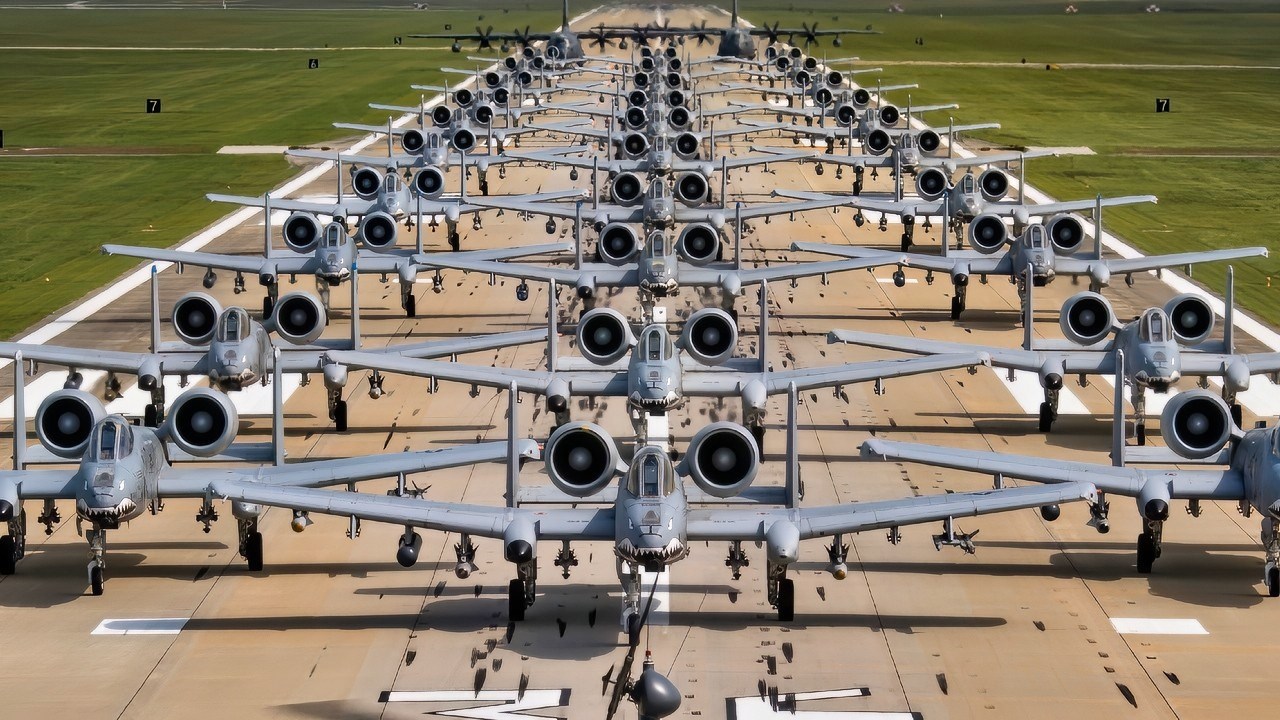
The U.S. Air Force just made a stunning reversal on the A-10 Warthog—the legendary close-air-support aircraft that was supposed to be retired by 2028 will now remain in service until at least 2030. Secretary of the Air Force Troy Meink announced the four-year extension after the Warthog proved its worth in the war with Iran, where it has been used extensively to strafe fast-attack boats in the Strait of Hormuz.
The A-10 Warthog Is Winning a War Against Father Time
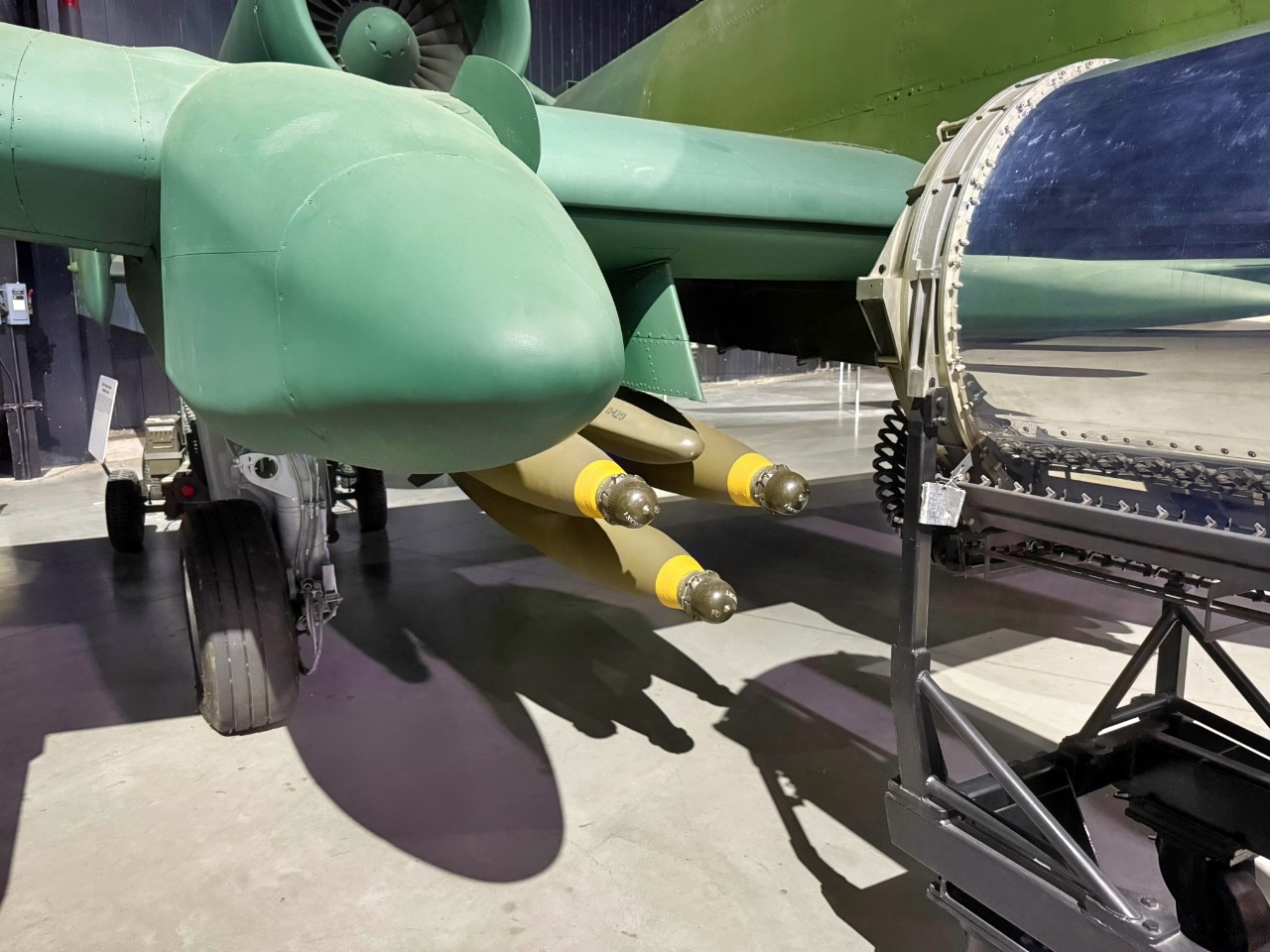
A-10 Warthog Bombs. Image Credit: National Security Journal.

A-10 Warthog NSJ Photos. Image taken on 7/20/2025.

A-10 Warthog National Security Journal Photo Essay Picture.
The A-10 Thunderbolt II, or A-10 Warthog as it is more commonly known, is an iconic late Cold War aircraft that captured the public’s imagination thanks to its insanely powerful 30 mm Gatling gun. Because of its iconic status, the Warthog is highly beloved by both its pilots and the public alike.
However, originally designed and manufactured in the 70s, the aircraft is extremely old. Not only are the airframes aging, but many argue that the A-10 was designed and built for an era of warfare that no longer exists.
Naturally, this has led to a debate that never seems to end: Should the A-10 Warthog finally be retired?
The Great A-10 Debate
The A-10 debate has been raging within the USAF for many years now. In 2007, the original plan was to keep the Warthog around until 2028, when it would be replaced by the F-35. It was thought that the F-35 or the MQ-9 Reaper UAV could perform close air support (CAS) missions as effectively as the A-10. In 2015, the Air Force again seriously considered retiring the aircraft and gutting its support infrastructure.
However, with the GWOT still in full swing and amid immense congressional pushback, the USAF tabled any plans to prematurely retire it. In 2023 and 2024, the first A-10s were finally retired under the National Defense Authorization Act. Further efforts to retire were blocked by Congress.
In 2026, however, the USAF officially delayed the A-10’s retirement. The announcement was made by Secretary of the Air Force Troy Meink on social media, who stated that the Warthog would remain in service until 2030.
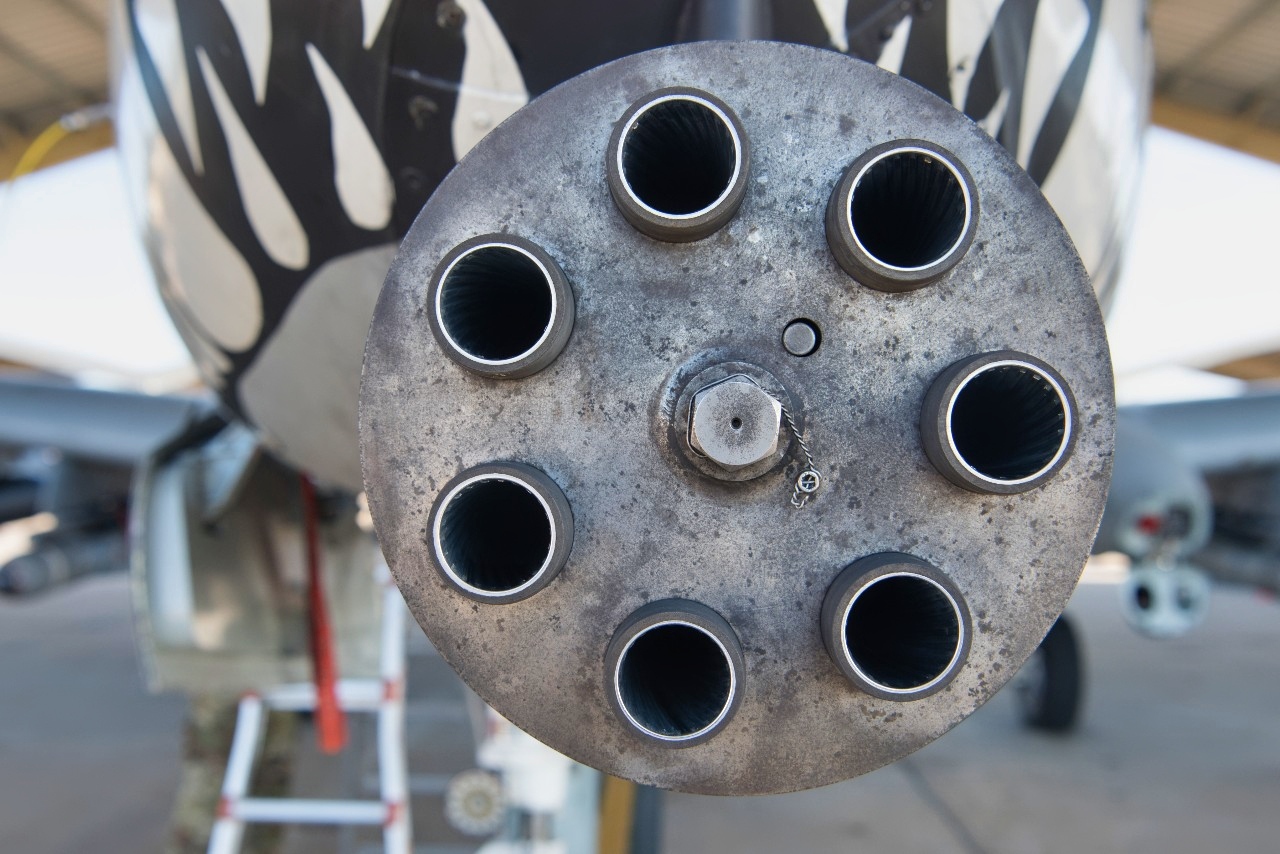
A GAU-8 Avenger 30mm cannon in the nose of an A-10 Thunderbolt II, assigned to the 442d Fighter Wing, at Whiteman Air Force Base, Missouri, April 9, 2021. The GAU-8 is a hydraulically-driven rotary autocannon capable of firing 3,900 rounds per minute with a variety of ammunition types for close air support missions. (U.S. Air Force photo by Senior Airman Parker J. McCauley)
Prior to this announcement, it was assumed that the A-10 would retire around 2028 as originally planned, if not earlier. Now the venerable aircraft is officially here to stay for at least four more years. The reason for this, of course, is the war in Iran. We will evaluate its performance later, but the aircraft has been used extensively in Operation Epic Fury.
The Strengths and Weaknesses of the Warthog
Let us now return to the original question: should the A-10 be retired? The USAF seems to believe the answer to this question is no, but let’s examine the aircraft in a bit more detail. The Warthog has many qualities in its favor. No other aircraft can perform CAS missions as well as it can. The aircraft is built to be resilient against enemy fire and can carry a wide range of air-to-ground munitions. While the aircraft is built around the 30 mm GAU-8 Avenger cannon, its main gun is just one of its many weapons. The USAF itself was forced to admit that the F-35 was too expensive to operate on low-end missions where the Warthog excels.
At the same time, there are legitimate arguments in favor of the aircraft’s retirement. While the A-10 is resilient, it is not invincible. It is especially weak against modern air defenses. Furthermore, the aircraft is incredibly slow and is outpaced by its slower Soviet counterpart, the Su-25 Frogfoot.

U.S. Air Force Major Lindsay “MAD” Johnson, A-10C Thunderbolt II Demonstration Team commander and pilot, flies during the National Cherry Festival Air Show in Traverse City, Mich., June 29, 2024. It took a team of highly skilled individuals to keep the A-10 flying and make Johson’s demonstrations possible. (U.S. Air Force photo by Senior Airman Devlin Bishop)
Operation Epic Fury is the first time the Warthog has had to deal with any measure of sophisticated air defenses since the Gulf War.
Thankfully, only one A-10 has been shot down by Iran so far, but against enemies with more layered and integrated defense structures, casualties would almost certainly be higher.
The A-10 in Iran
In Iran, the A-10 has been used primarily to strafe fast-attack watercraft in the Straits of Hormuz. Only during the operation to recover the downed F-15’s WSO did the Warthog approach Iranian air defenses, resulting in its first and only shoot-down of the operation.
Besides that, the aircraft has been performing well in the Middle East, and many commentators consider this evidence enough that it should be retained for longer. The biggest argument in favor of the aircraft, in the Author’s view, is that there really is no other aircraft like it.
The A-10 is much cheaper to operate than aircraft like the F-35, F-15E, or F-16. Furthermore, the aircraft is uniquely situated for CAS missions, while the F-35 lacks the endurance and firepower of the Warthog.
Overall, the A-10 thrives in smaller-scale missions where enemy air defenses are thin. It is ideal for counterterrorism/counterinsurgency missions and is much cheaper to operate. In larger-scale conflicts, however, the Warthog is much more vulnerable.
In a fight against China or Russia, the A-10 would have to operate in a completely different operational environment than it is used to. It would likely be used similarly to how the Ukrainians and Russians use the Su-25; it would fly in, deliver its payload, whatever that may be, and fly away as quickly as possible. It would not be able to loiter on the battlefield as it did during the GWOT or Epic Fury.

Airman Brandon Kempf, 757th Aircraft Maintenance Squadron assistant dedicated A-10 Thunderbolt II crew chief, watches as an aircraft taxis into position after landing May 9, 2013 at Nellis Air Force Base, Nev. Upon landing, the A-10 Thunderbolt receives numerous post-flight checks and maintenance including strut servicing and ammunition downloads. (U.S. Air Force photo by Airman 1st Class Joshua Kleinholz)
The Warthog Should Remain in Service… For Now
Does the Warthog deserve to remain in service? It is the present author’s opinion that, yes, the A-10 should remain in service for the time being. The aircraft fills a valuable niche in the USAF that neither the F-35, F-16, nor the F-15 can fill.
There will always be a need for close air support, and the Warthog is specifically designed to fill that need.
That said, the aircraft has its limitations. It is slow and relatively weak against modern AD systems. However, in this case, the benefits outweigh the downsides, and the A-10 will likely remain in the Air Force until another aircraft takes its place.
About the Author: Isaac Seitz
Isaac Seitz, a Defense Columnist, graduated from Patrick Henry College’s Strategic Intelligence and National Security program. He has also studied Russian at Middlebury Language Schools and has worked as an intelligence Analyst in the private sector.


