
Key Points – Israel’s overwhelming success during its “Operation Rising Lion” air assault on Iran on June 12-13 can be largely attributed to the severe vulnerabilities of Iran’s aging air force and fragmented air defenses.
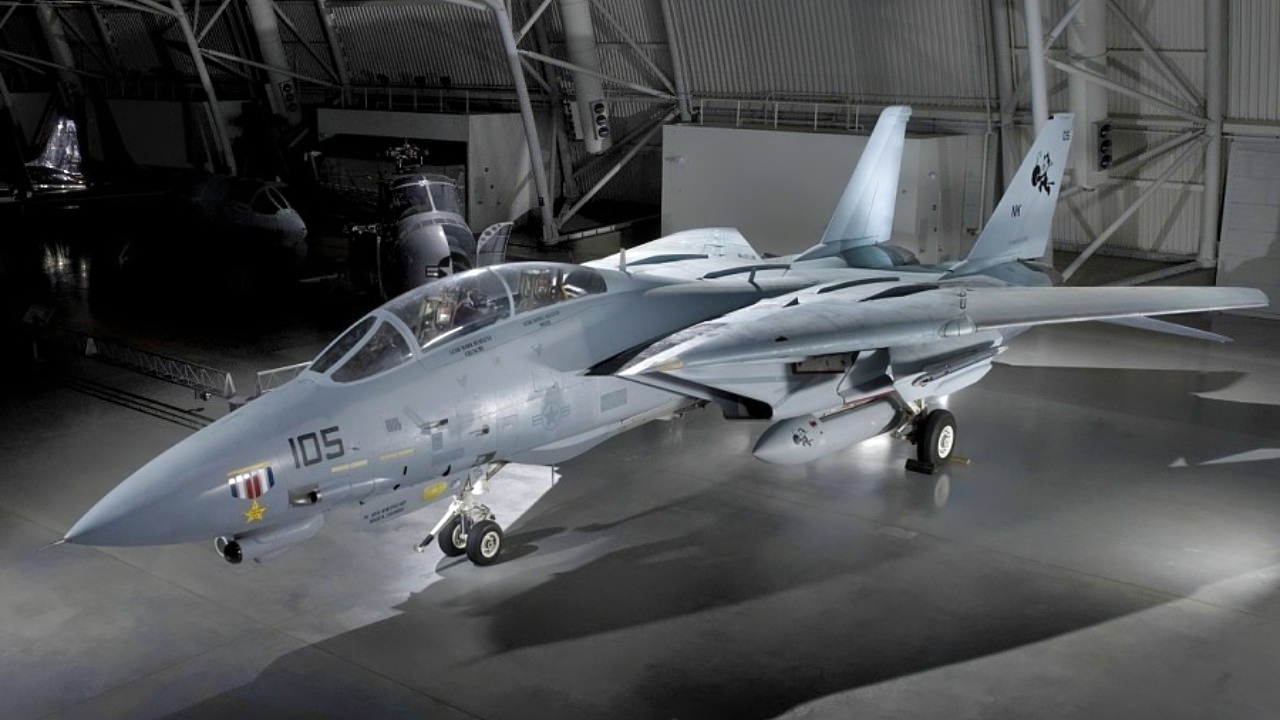
-The backbone of Iran’s air fleet consists of outdated American-made F-14s, F-4s, and F-5s from the 1970s, supplemented by older Soviet and Chinese models, which lack the capability to counter modern stealth aircraft like the F-35I Adir.
-Furthermore, Iran’s ground-based air defenses, even at key nuclear sites like Natanz, have been described by analysts as “siloed and fragmented,” relying on a patchwork of Soviet-era systems unable to form a cohesive network against a sophisticated, coordinated attack.
Iran’s Aging Air Force Left It Vulnerable
Israel’s ability to take control of Iranian airspace during Operation Rising Lion on June 12-13, 2025, was a product of meticulous planning, technological superiority, and the vulnerabilities of Iran’s aging air force.
More than 200 Israeli aircraft, including F-35I Adirs, F-15Is, and F-16s, carried out five coordinated strikes at dawn. More than 330 precision munitions rained down on approximately 100 targets across Iran, including military and nuclear sites in Tehran, Natanz, and Tabriz.
Many of the aircraft were kitted out with Joint Direct Attack Munitions (JDAMs) and SPICE-guided bombs, allowing for deep, accurate strikes without the need for cruise missile support. JDAMs are GPS-guided kits that convert unguided bombs into precision weapons, while SPICE (Smart, Precise Impact, Cost-Effective) systems use electro-optical guidance and autonomous target recognition technology to strike with greater accuracy in environments where GPS cannot be used.
These technologies enabled Israeli pilots to bypass many traditional limitations, like range and visibility, hitting heavily defended sites quickly and with precision.
Iran’s Air Force Is Ancient
But Israeli planning alone doesn’t fully explain the overwhelming success of this operation. Iran’s air force is a relic of a different era, with decades of international sanctions having left the Islamic Republic unable to replenish or upgrade its air fleet. According to the International Institute for Strategic Studies (IISS), while Iran nominally maintains a force of around 37,000 air personnel and hundreds of aircraft, only a fraction of those jets are combat ready.
Much of Iran’s air inventory dates back to before the 1979 Islamic Revolution. The backbone of its fleet consists largely of American-made fighters that were acquired under the Shah, including Grumman F-14 Tomcats, McDonnell Douglas F-4 Phantom IIs, and Northrop F-5 Tiger IIs, all aircraft designed in the 1950s and ‘60s. Though maintained and occasionally upgraded, these jets are decades past their prime.
But that’s not all Iran has. Supplementing these aging craft are a number of Soviet-era and Chinese-built aircraft, including the MiG-29, Su-24, and J-7/F-7 planes, many of which were inherited from Iraq following the Gulf War.
In total, Iran is believed to have an inventory of 343 military aircraft, with 183 identified as fighter jets.
Modern air forces rely heavily on fast, well-equipped fighter jets to detect, intercept, and deter incoming airstrikes. Iran’s outdated jets lack the advanced electronic warfare capabilities to effectively counter, engage, or track Israeli jets like the F-35I. Most of Iran’s jets were designed for Cold War-era dogfighting, and not intercepting fifth-generation stealth aircraft equipped with precision-guided bombs.
Iran’s air defense systems are sorely lacking, too. Analysts note that Iran still heavily relies on older and less capable systems, which contributed to Israel’s success last week.
According to research from the James Martin Center for Nonproliferation Studies, which obtained an insight into Iranian radar information around Natanz as a result of an operation security error, Iran used Soviet-era technology to protect its Natanz nuclear site. Using video footage and open-source imagery, researchers suggested that the nuclear facility was protected by four Iranian Najm 804 radar systems, a Russian Tor SAM (surface-to-air missile) system, and two versions of the Soviet P-12 Spoon Rest A radars.
Researchers concluded that the air defense systems were not only old and inadequate, but that they were likely not able to function as a cohesive system.
Martin Center researcher Sam Lair told Breaking Defense in May, 2025, that the crucial air defense system was “siloed and fragmented,” adding that he had expected “a little more sophistication for such an area of importance.”
The success of Israel’s strikes reflects not only its own advanced capabilities, but the extent to which Iran’s aging air force and fragmented air defenses have left the country exposed.
About the Author:
Jack Buckby is a British author, counter-extremism researcher, and journalist based in New York. Reporting on the U.K., Europe, and the U.S., he works to analyze and understand left-wing and right-wing radicalization, and reports on Western governments’ approaches to the pressing issues of today. His books and research papers explore these themes and propose pragmatic solutions to our increasingly polarized society. His latest book is The Truth Teller: RFK Jr. and the Case for a Post-Partisan Presidency.
The Best Tanks on Earth
AbramsX: The Tank the US Army Wants


