

Iran is clear: An Oman deal would not reopen the Strait of Hormuz – For the last week, Iran and Oman have been in talks to reach a new understanding of how shipping traffic will operate in the Strait of Hormuz. But as Iran has now made clear through multiple public statements, even a deal resulting from those talks would not represent an “opening” of the Strait of Hormuz.
According to the New York Times, Esmail Baghaei, spokesman for the Iranian Foreign Ministry, made Iran’s position clear in a Monday news conference: The talks with Oman are focused “on reaching an understanding over a route for the safe passage of shipping.” According to multiple reports, the deal framework, which is not yet final, would leave Iran in control of incoming shipping traffic in the Strait, while Oman would control outgoing traffic, with each having a separate lane.
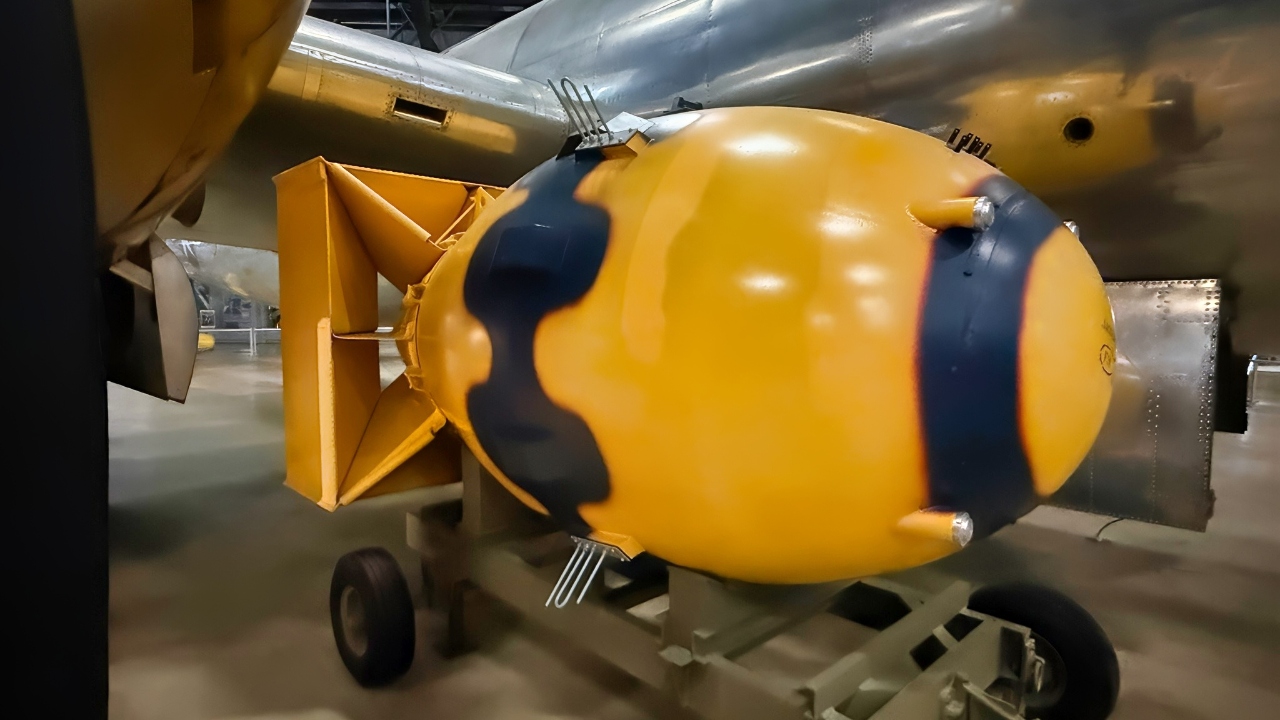
Fat Boy Near B-29 At USAF Museum. National Security Journal Photo.
That would represent something different from a complete closure of the Strait, but also something fairly different from the pre-war status quo.
Baghaei made that clear in the Monday statement.
“This issue is separate from the discussion of reopening the Strait of Hormuz,” the Foreign Ministry spokesman said, according to the Times.
Such a reopening, Baghaei said, was “contingent upon the removal of the conditions that have been imposed on the Islamic Republic of Iran.”
In recent days, various Iranian officials have said similar things, with Foreign Minister Abbas Araghchi also stating over the weekend that a full reopening of the waterway was “contingent on other conditions.”
What are those conditions?
Mohammad Bagher Zolghadr, the secretary of Iran’s Supreme National Security Council, listed a series of conditions for the Strait to be opened, many of which Iran has previously demanded. These included the end of the U.S. Naval blockade and sanctions on Iran, as well as war reparations and an end to any attacks on Iran’s various allies.

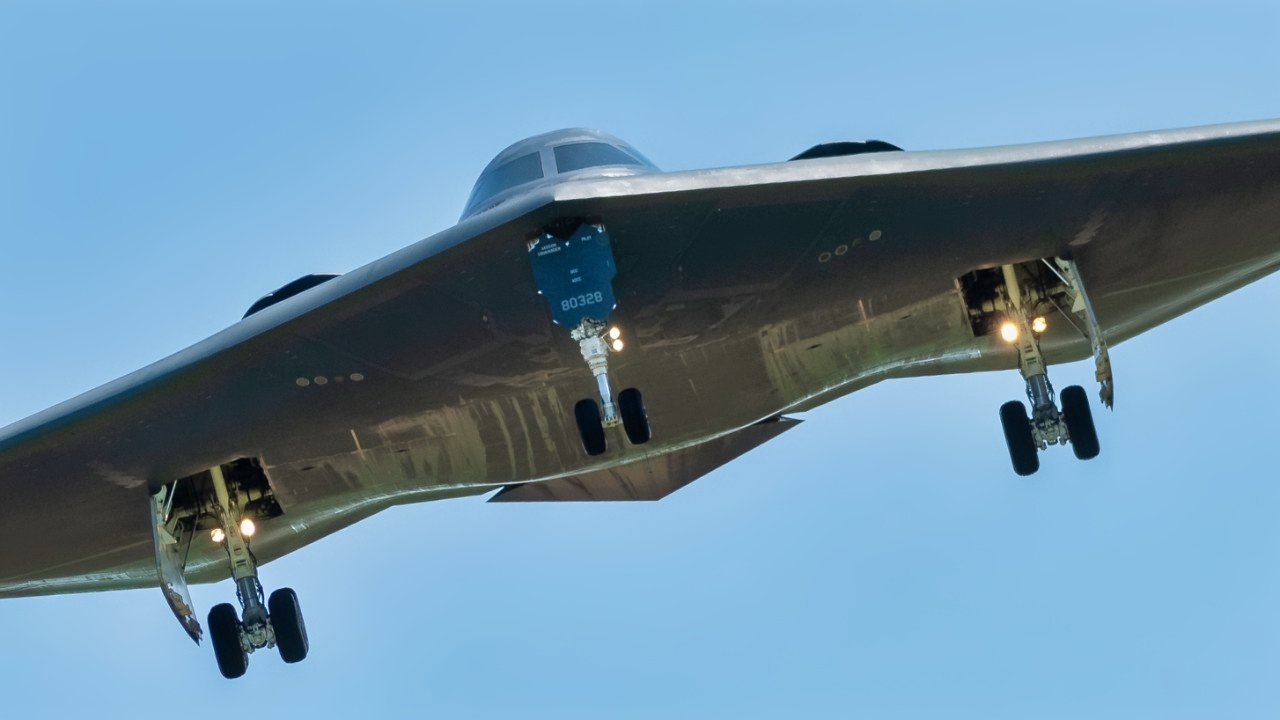
A U.S. Air Force B-2 Spirit, assigned to the 509th Bomb Wing, Whiteman Air Force Base, Mo., is flanked by two U.S. Air Force F-22 Raptors, assigned to the 1st Fighter Wing, Joint Base Langley-Eustis, Va., while conducting a flyover over the White House in Washington, D.C., July 4, 2025. The B-2 provides penetrating flexibility and effectiveness inherent in manned bombers. (U.S. Air Force photo by Airman 1st Class Geneva Nguyen)

B-2 Bomber from U.S. Air Force Display. Image Credit: Harry J. Kazianis/National Security Journal.
On Sunday, Iran announced that Zolghadr had stepped down from his position and that Mohsen Rezaei, a former head of the Iranian Revolutionary Guard and a former high-ranking Iranian government official, had been named his replacement.
It’s not clear if this represents any kind of shift in Iran’s approach to demands, although Zolghadr and Rezaei are both seen as hardliners. Rezaei, per the Times of Israel, had declared last month that Iranian control of the Strait of Hormuz was “more important than dozens of atomic bombs.”
A Middle East Forum analysis noted that Zolghadr and President Masoud Pezeshkian had “been at odds for some time,” although Zolghadr will now serve as an adviser to the president.
What’s the Status of the Talks?
For nearly a week, Iran and Oman have reportedly been close to a deal on the status of the Strait of Hormuz, though no final agreement has been reported. Whether the United States is directly involved in these talks is likely a matter of semantics, as Secretary of State Marco Rubio said last week that the talks are being “conducted with American input.”
In an interview with Axios on Sunday, President Donald Trump indicated that the U.S. is changing its approach to Iran, after several weeks of going back and forth between threatening new attacks and pulling back in favor of diplomacy.
Trump told the outlet that he is now “low-keying it” when it comes to dealing with Iran, and hoping that economic pain from the continuing U.S. blockade will push Iran into concessions, in a way that the threat of large-scale military action has not.
“We are only semi-negotiating with them,” Trump told Axios. “We are just watching Iran with its huge inflation and the fact they have no money.”
The interview came just eight days after Trump, late on the night of August 1, had declared that Middle East allies of the U.S. had reached what he called the “perimeters” of a deal that would “include the Immediate, Complete, and Total OPENING OF THE HORMUZ STRAIT, and an end to Iran’s nuclear threat.”
This proved something of an exaggeration, as there had indeed been a breakthrough in talks between Iran and a U.S. ally; whatever had been agreed to, either then or now, fell far short of either a full opening of the Strait or a resolution to Iran’s nuclear ambitions.
About the Author: Stephen Silver
Stephen Silver is an award-winning journalist, essayist, and film critic, and contributor to the Philadelphia Inquirer, the Jewish Telegraphic Agency, Broad Street Review, and Splice Today. The co-founder of the Philadelphia Film Critics Circle, Stephen, lives in suburban Philadelphia with his wife and two sons. For over a decade, Stephen has authored thousands of articles that focus on politics, national security, technology, and the economy. Follow him on X (formerly Twitter) at @StephenSilver, and subscribe to his Substack newsletter.


