

Locked in a seeming stalemate, Iran and America would both like a favorable deal to end the ongoing war and to open the Strait of Hormuz. But the goals of both sides are separated by a vast divide that seems irreconcilable. The United States and Israel would like to ensure that Iran is unable to build a nuclear weapon, but Iran’s leadership sees a potential pledge that excludes the ability to manufacture such weaponry as detrimental to the regime’s survival. In the meantime, Iran’s economic prognosis is dire, with businesses that depend on internet connectivity most acutely affected.
Iran’s Economy Squeezed

An F-16 Fighting Falcon aircraft assigned to the 113th Wing hooks onto the BAK-12 aircraft arresting system at Joint Base Andrews, Md., Aug. 13, 2024. The 316th Civil Engineer Squadron tested the overhauled arresting aircraft system to validate the stability of the emergency brake system. (U.S. Air Force photo by Senior Airman Bridgitte Taylor)
The ongoing blockade of Iranian ports has exerted acute pressure on companies across Iran and resulted in the loss of a substantial number of jobs. In comments to Tasnim, a semi-official news agency closely associated with the Islamic Revolutionary Guard Corps, Gholamhossein Mohammadi, an official in the Iranian government, explained that the war has resulted in “the direct and indirect unemployment of two million people” and the loss of a million jobs.
Despite the strength shown by Iran’s digital private sector before the war, the economy has been crippled by a government-mandated internet shutdown. Some of Iran’s leading internet technology and e-commerce companies have already started laying off employees as part of broader cost-cutting measures across the sector. Though internet access has been turned on again, the 88-day blackout that began during a government crackdown on protesters was incredibly damaging to the Iranian economy.
Protests in Iran, primarily over a rapidly devaluing currency, sparked demonstrations across Iran in December and resulted in a bloody, violent repression.
By some estimates, the Iranian theocracy killed over 36,000 Iranians, many of whom appear to have been indiscriminately murdered.

A U.S. Air Force F-16 Fighting Falcon connects with a U.S. Air Force KC-10 Extender over Iraq, Nov. 5, 2021. The F-16 is a compact, multi-role fighter aircraft that delivers war-winning airpower to the U.S. Central Command area of responsibilty. (U.S. Air Force photo by Staff Sgt. Jerreht Harris)
Ceasefire Broken
Earlier this week, an American Apache helicopter was apparently struck and downed by an Iranian drone. It was not immediately clear if the incident was an accident or if the drone had been launched at the helicopter on purpose. Both pilots were recovered with only minor injuries.
But in response, the United States launched several waves of strikes at targets across Iran. In a post on X, formerly Twitter, United States Central Command explained that American forces “struck Iranian air defense, ground control stations, and surveillance radar sites near the Strait of Hormuz with precision munitions from U.S. Air Force and Navy fighter jets,” adding that “the operation was a proportional response to recent attacks on U.S. forces and international commercial ships transiting regional waters.”
In an operational first, the two downed pilots were rescued by an unmanned boat, a 24-foot Saronic Corsair, which ferried the Apache pilots to a safe location while covered from the air by drones and manned fighters.
In retaliation for the American strikes, the Islamic Revolutionary Guard Corps launched its own strikes at United States bases throughout the region, though the strikes appeared to have been intercepted.
Iran and Israel’s Tit-for-tat
On Monday, Israel halted the series of strikes it launched into Lebanon against Hezbollah infrastructure in Beirut, the capital, as well as a petrochemical facility in Iran, air defense systems, the launch sites for Iranian missiles, and other locations. It was the first time the two sides had exchanged fire since an American-secured ceasefire went into effect in April.
Unclear Future
Other aspects of a potential deal, aside from the nuclear question, are sure to include several thorny issues.
The American blockade of Iran’s ports would likely be on the table, as would Iran’s attacks on commercial shipping through the Strait of Hormuz, a natural maritime chokepoint.
The unfreezing of Iranian assets, as well as the paring back of some sanctions, are thought to be some of the bargaining chips held by the United States.
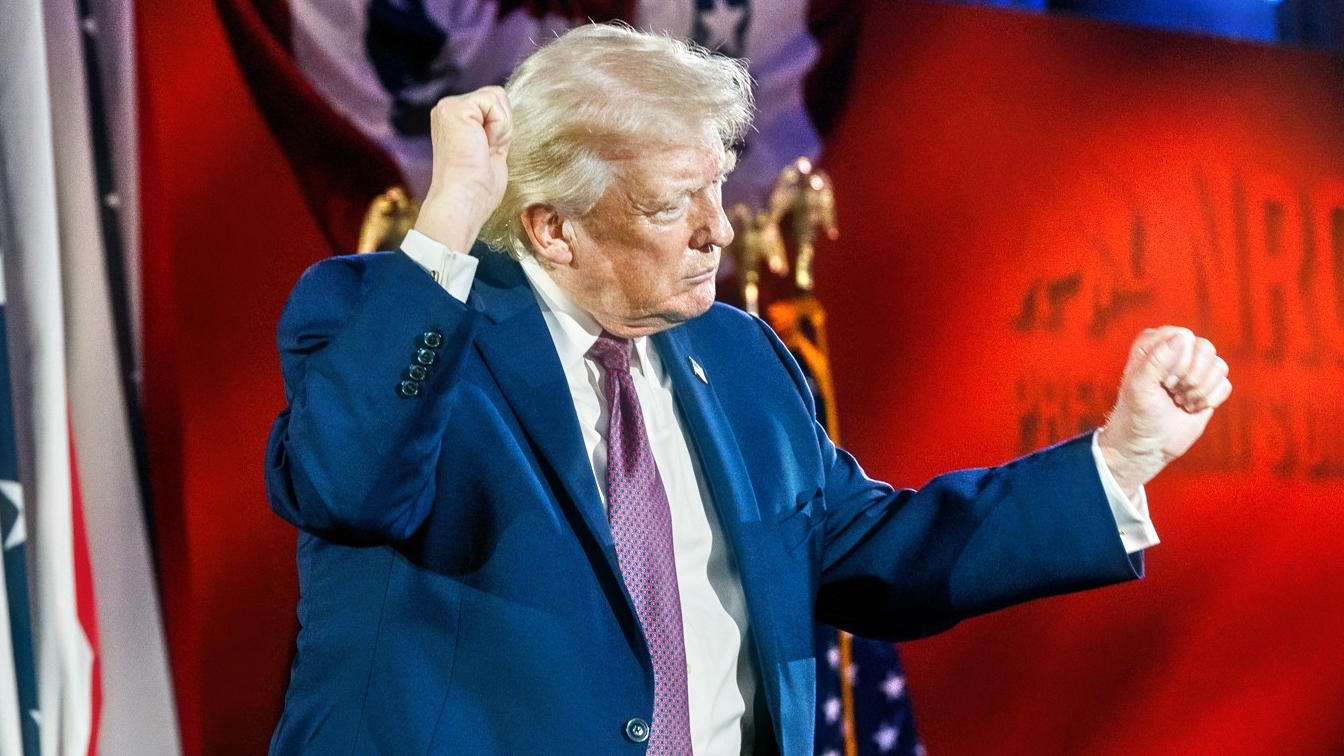
Speaking to a group of reporters earlier last month about the economic situation in Iran, PresidentTrump did not mince his words. When asked about the future prospects of Iran’s economy, the president was blunt, saying, “I hope it fails.”
“You know why?” the president added. “Because I want to win.”
About the Author: Caleb Larson
Caleb Larson is an American multiformat journalist based in Berlin, Germany. His work covers the intersection of conflict and society, focusing on American foreign policy and European security. He has reported from Germany, Russia, and the United States. Most recently, he covered the war in Ukraine, reporting extensively on the war’s shifting battle lines from Donbas and writing on the war’s civilian and humanitarian toll. Previously, he worked as a Defense Reporter for POLITICO Europe. You can follow his latest work on X.


