


Most commentary from Washington this month treats the Lebanon problem as a matter of persuasion. Lean on Israel hard enough, dangle a broad enough bargain, and the strikes stop, and the diplomats finish their work.
That reading isn’t crazy. But it rests on an assumption the past two months have demolished — that Jerusalem and Washington are fighting the same war and disagree only on when to stop.

F-16I Fighter from Israel. Image Credit: Creative Commons.
They aren’t, and they don’t.
Three Ceasefires in Two Months Should Have Settled the Question
Look at what happened. A truce took hold on April 16, was extended on the 23rd, and again on May 15, and on June 1 produced a narrower understanding under which Israel would spare Beirut’s southern suburbs, and Hezbollah would hold its fire.
Every one of those pauses frayed, and Israel kept striking through all of them. After a fourth round of American-mediated talks in early June, the parties agreed only to reconvene the week of June 22 “with a view toward reaching a comprehensive agreement” — and within hours, fresh fire crossed the border and Hezbollah’s leader, Naim Qassem, rejected the terms outright, calling the demand that his fighters pull back while under attack a surrender.
A government seeking a clean exit had four chances and declined each. That is not a state that needs to be talked into peace. It is a state that has decided that fighting is something that talking cannot do.
Jerusalem Isn’t Looking at Lebanon. It’s Looking at Tehran.
Here is where the two capitals come apart. Washington sees a border crisis that risks spreading. Many Israeli decision-makers see the surviving architecture of an Iranian regional system built over decades — the one that nearly killed them on October 7, after they had convinced themselves it could be managed.
The current round didn’t even start on the northern border. Hezbollah reentered the war on March 2 to back Iran, and Lebanon became one front in a roughly five-week war with Tehran — the conflict reportedly cost Iran its supreme leader, though the details are still coming into focus. To Jerusalem’s planners, that sequence is the whole argument in miniature. The missiles, the command links to Iran, the foreign minister shuttling from Tehran to Beirut to coordinate with Qassem — these are not separate files. They are in one file.
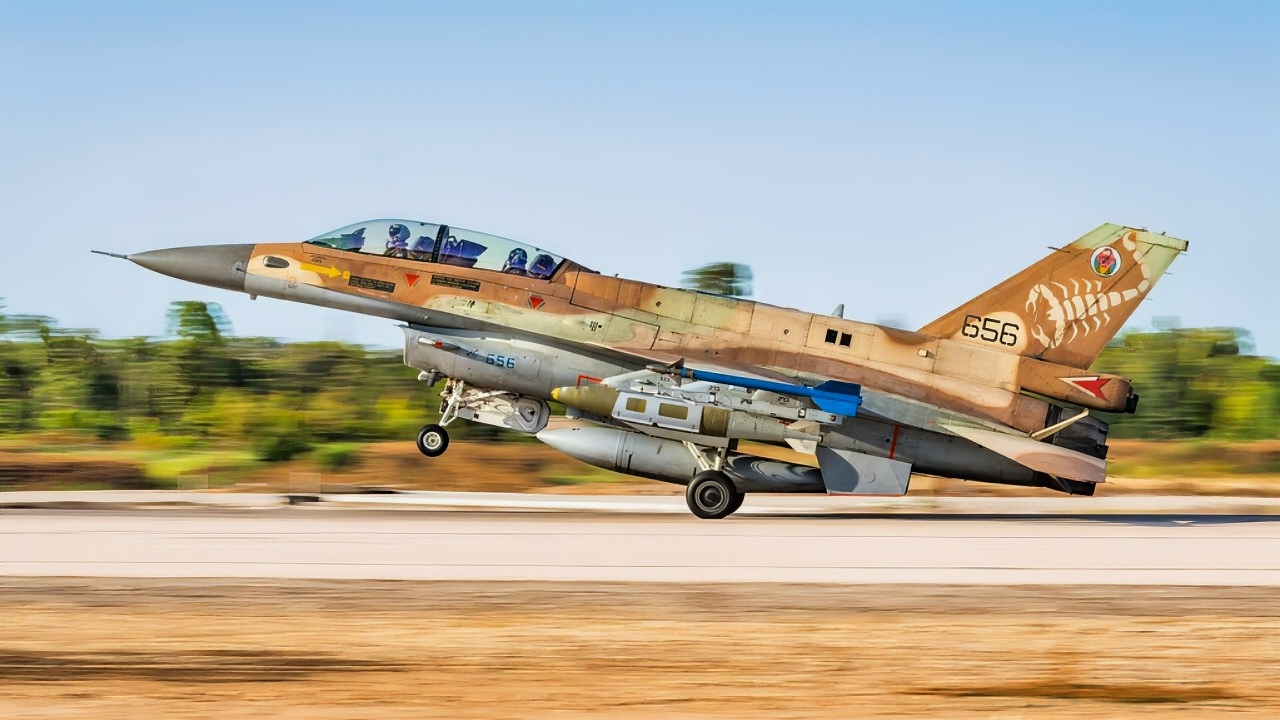
Israeli F-16 Taking Off. Image Credit: IDF/Creative Commons.
And when Iran’s foreign minister, Abbas Araghchi, insists any settlement leave Hezbollah intact as “part of Lebanon’s reality” and offers to help rebuild it, he is describing the outcome Israel believes it is fighting to prevent.
That is why many Israeli leaders have increasingly reduced the problem to a single point: disarm Hezbollah and dismantle its infrastructure across Lebanon, not shove it north of the Litani and wait for the next round. Whether that is achievable or wise is a fair question. But it is what Jerusalem means when it says it will not simply stop.
Leverage Isn’t Something You Keep in a Warehouse
Washington talks about its leverage over Israel as though it were a tool on a shelf, waiting to be picked up. The aid is real, the diplomatic cover is real, and none of it has ever amounted to control. The history of alliances is mostly a record of stronger partners discovering exactly that.
Menachem Begin once told an American official that Israel was not a banana republic and not a client state. The line became folklore, but the sentiment wasn’t his alone — it’s what governments say when a core security interest is on the line. Washington has done the same whenever the shoe was on the other foot, brushing aside allied objections during the Cuban missile crisis and Europe’s worries about Iraq in 2003. Smaller states reach the same place when the stakes look existential.
There’s a strain of thinking that runs deep in the history of war — the conviction that one more campaign will produce the settlement that diplomacy alone couldn’t deliver. It has been wrong plenty of times, and occasionally right, which is what keeps it alive. Israeli leaders seem to have made their peace with it. Defense Minister Israel Katz has said flatly that operations in the south will continue while the talks proceed, and Netanyahu has paired the moves from the start — strike Hezbollah, send the diplomats. On this logic, military pressure isn’t the alternative to a deal. It’s what’s supposed to make one hold.

An Israeli F-15I Ra’am assigned to the 69th Squadron launches for a sortie in support of exercise Juniper Falcon May 7, at Uvda Air Base, Israel. Juniper Falcon 17 represents the combination of several bi-lateral component/ Israeli Defense Force exercises that have been executed annually since 2011. These exercises were combined to increase joint training opportunities and capitalize on transportation and cost efficiencies gained by aggregating forces. (U.S. Air Force photo/ Tech. Sgt. Matthew Plew)
The Part Nobody in Washington Wants to Say Out Loud on Israel and Lebanon
Southern Lebanon is why that logic has takers. The 2006 war ended with guarantees and a quieter border, and Hezbollah used the calm to rebuild its arsenal. The November 2024 ceasefire was meant to be permanent; it lasted fifteen months before each side was accusing the other of hundreds of violations and Hezbollah was moving men and weapons back toward the line. Israeli officers spent years arguing that these arrangements postponed the war rather than ending it. Their critics disputed that then and dispute it now. It would be remarkable if Jerusalem had forgotten how it went.
So the calls for restraint are aimed at the wrong target. No serious Israeli official needs convincing that war is expensive — the bill, in lives and money and more than a million displaced Lebanese, sits right in front of them.
What Washington would have to prove is that stopping now buys a safer border than fighting on, and that means selling something far harder than a pause: real disarmament, enforcement stronger than the mechanisms that failed twice, and understandings that reach past Lebanon into the confrontation with Iran itself.
Maybe that deal can be struck; the negotiators are due back the week of June 22. But the disagreement underneath the talks isn’t about timing, and pressure won’t touch it, because the two governments no longer agree on what the war is even about.
When allies argue over tactics, the alliance holds. When they stop agreeing on the nature of the fight, the next call from Washington sounds, in Jerusalem, like a foreign government narrating a war it isn’t in.
About the Author: Dr. Andrew Latham
Andrew Latham is a professor of international relations and political theory at Macalester College in Saint Paul, MN. You can follow him on X: @aakatham.


Fred Adams
June 10, 2026 at 12:25 pm
The idea that a “deal” can be made that will settle Iran/Hezbollah devotion to the eradication of Israel is untenable. The only outcome of negotiation with them will be a stronger, more entrenched Hezbollah and more Israeli deaths down the line. Only two paths to peace in Lebanon exist, the eradication of Hezbollah or the eradication of Israel.
If the present Iran government is killed, then Hezbollah’s resurgence is unlikely.
Oliver Clozoff
June 10, 2026 at 12:29 pm
Stop This War Walk Away, and Get Shot in the back.
Hoepper
June 10, 2026 at 3:22 pm
As long as the Palestinian question is not solved, there will be no peace. Israel will need to find an accommodation for them, be it in a separate state or as equal citizens in a secular non-ethnic Israel. As long as that isn’t solved, the killing will continue. And the West’s interest? They have been trying to rid themselves of the unassimilable minority for over a thousand years and are happy to have found a solution in Israel. They don’t want them back!
ZCKS
June 10, 2026 at 5:28 pm
Greater Israel Project, the details of it leaked back in the 90s and it has been correct about everything that has happened in the countries surrounding Israel for the last 28 years along with what the US government would do in those countries.
(in those documents both Mossad and the CIA talked about what they wanted to do, but acknowledged they needed excuses to do it or the rest of the world including a portion of their own people would never accept it being done).
This is why Israel will never stop.
If you don’t believe me feel free to look it up along with recent polls from the last few years that showed the majority of Israel’s population was completely fine with the idea of completely ethnically cleansing all the surrounding countries (including getting rid of all the Coptic Christian populations)
RLABruce
June 11, 2026 at 10:20 am
The apparent assumption is that “a deal with Iran” is something Iran will honor. They will NEVER honor any agreement, especially one that requires them to give up their pursuit of nukes. Their religion REQUIRES a nuclear holocaust–because only that will bring them the return of their 12th Imam–their equivalent of the Christians’ Coming of Christ. You can’t have an agreement with a religion whose holy book, the Q’ran, states not only that a holocaust must come that will bring their 12th Imam, but they are supposed to lie, cheat, steal, and do ANYTHING to Infidels that will further the cause of Islam. My solution is to let Iran HAVE their nuclear holocaust–and let their 12th Imam return to an uninhabitable glass parking lot.