


Key Points and Summary – The USS Gerald R. Ford was meant to revolutionize U.S. carrier aviation, but its path to sea was defined by delay and spiraling costs.
-Ford packed in too many “firsts” at once—EMALS catapults, Advanced Arresting Gear, new reactors, and electromagnetic weapons elevators—all while the Navy was still finalizing the design.

The aircraft carrier USS Gerald R. Ford (CVN 78) completes the first scheduled explosive event of Full Ship Shock Trials while underway in the Atlantic Ocean, June 18, 2021. The U.S. Navy conducts shock trials of new ship designs using live explosives to confirm that our warships can continue to meet demanding mission requirements under harsh conditions they might encounter in battle. (U.S. Navy photo by Mass Communication Specialist 3rd Class Riley B. McDowell)
-Building and inventing at the same time drove redesigns, rework, and reliability failures across a single overstretched shipyard.
-The result was a late, over-budget supercarrier that became a warning about concurrency, immature tech, and wishful thinking—lessons now shaping John F. Kennedy, Enterprise, and future Ford-class ships.
Why Did The USS Gerald Ford Aircraft Carrier Take So Long To Build?
The US Navy’s newest generation of supercarriers, the Gerald R. Ford (CVN-78) class, was intended to vault the United States far ahead in carrier aviation by building a massive new carrier bristling with advanced technology.
However, the program was years behind schedule and billions over budget. The new class of aircraft carrier, which was supposed to be more capable, efficient, and lethal, has struggled with reliability.
The first Ford-class carrier, the USS Gerald R. Ford, took so long to build because of a combination of ambitious new technologies (such as EMALS catapults and advanced weapons elevators) that were still under development.
Also, the decision to begin building the carrier while significant design changes abounded mid-build and first-of-class “teething problems” with complex systems led to cascading delays and rework at a single shipyard. Not to mention, all of this costs taxpayers billions of dollars in wasteful cost overruns.
And the issues aren’t done with the Ford-class construction.
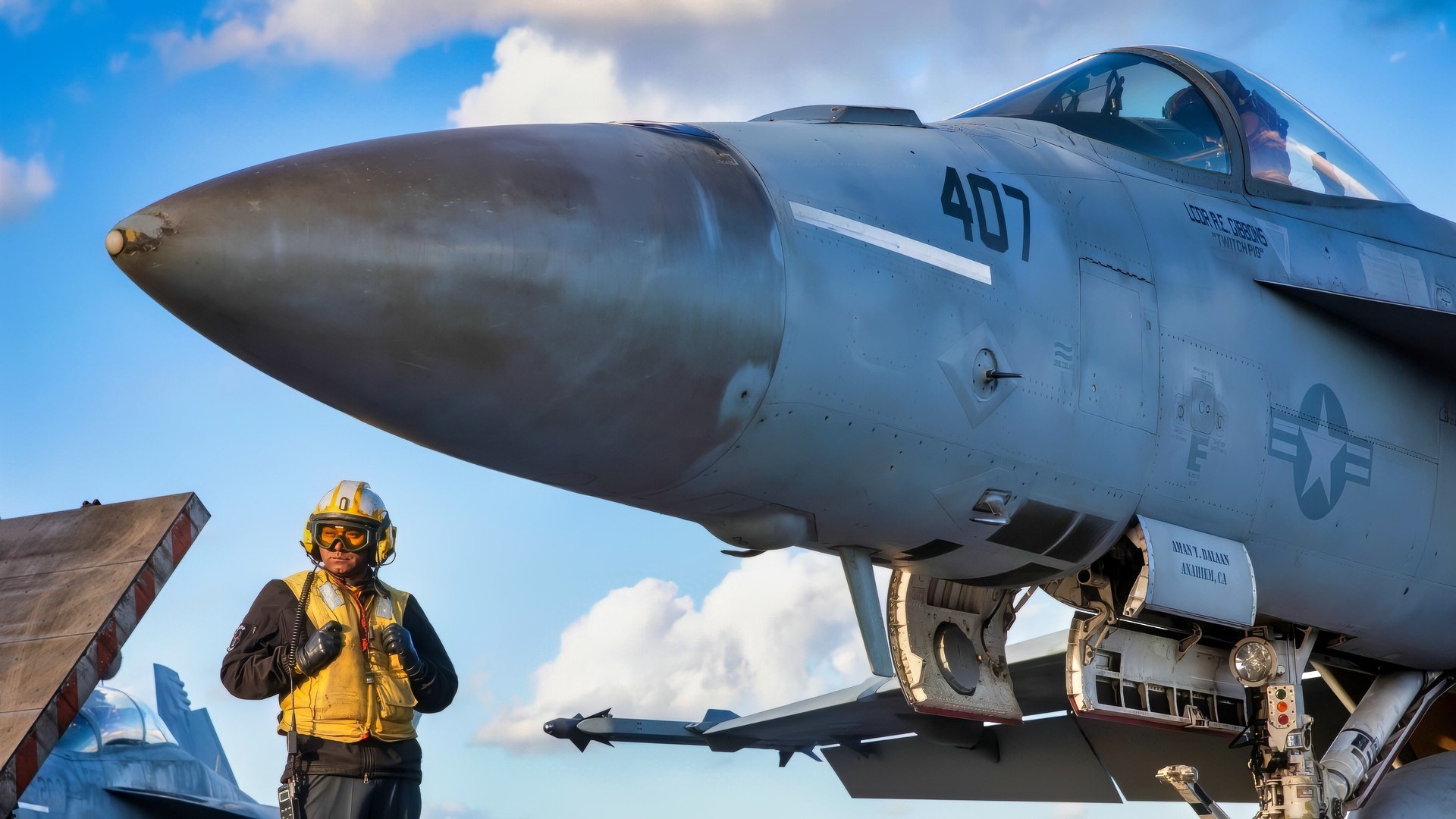
Aviation Boatswain’s Mate (Aircraft Handling) 1st Class Jose Mejiacastro, assigned to Air Department aboard the world’s largest aircraft carrier, USS Gerald R. Ford (CVN 78), prepares to signal to a Carrier Air Wing 8 F/A-18E Super Hornet attached to Strike Fighter Squadron 87 on the flight deck, Sept. 26, 2025. Gerald R. Ford, a first-in-class aircraft carrier and deployed flagship of Carrier Strike Group Twelve, is on a scheduled deployment in the U.S. 6th Fleet area of operations to support the warfighting effectiveness, lethality and readiness of U.S. Naval Forces Europe-Africa, and defend U.S., Allied and partner interests in the region. (U.S. Navy photo by Mass Communication Specialist 2nd Class Mariano Lopez)
The USS John F. Kennedy is Delayed Two Years
The next Ford-class aircraft carrier is facing a two-year delay, leaving the Navy with only 10 carriers for about a year. It should be noted, however, that only about six carriers operate at sea at any time.
The impending retirement of America’s oldest aircraft carrier, the USS Nimitz (CVN-68), in May 2026, will leave the Navy shorthanded and spread even thinner.
The USS John F. Kennedy (CVN-79) will now be delivered in March 2027, according to the Navy’s Fiscal Year 2026 budget justification documents. The carrier was supposed to be delivered in July, according to last year’s budget plans.
“The Navy is exploring opportunities for preliminary acceptance of the vessel prior to formal delivery and is coordinating closely with stakeholders to ensure the fastest possible transition to fleet operations and a combat-capable carrier,” a Navy spokesperson said to USNI News in a released statement.
What Were The Issues With the USS Gerald Ford Aircraft Carrier?
The Ford-class carriers were supposed to transform carrier aviation and stay well ahead of Chinese naval advancements.
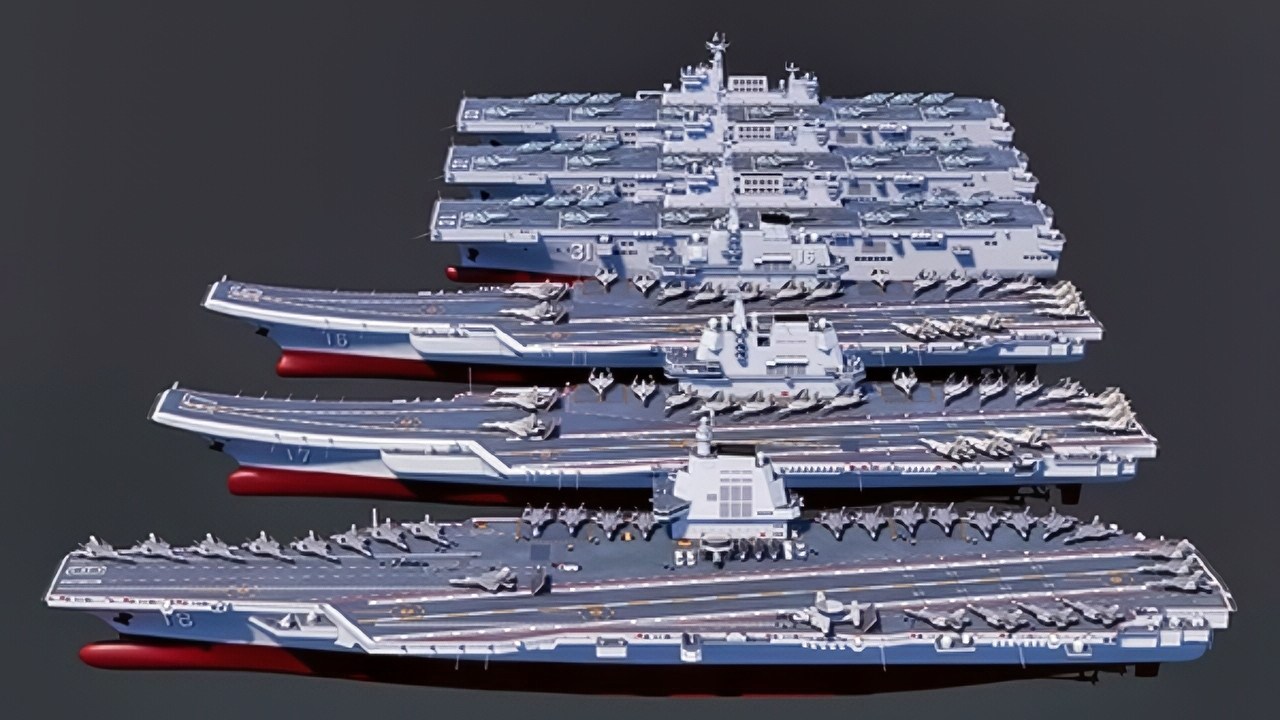
China Aircraft Carriers In Focus. Image Credit: X Screenshot.
The Ford-class design was slated for several significant advances, including a higher sortie generation rate, which would enable the carrier strike group to launch and recover more aircraft per day.
The Ford class will deploy with a smaller crew, thanks to increased automation. The carriers feature new systems, including the Electromagnetic Aircraft Launch System (EMALS), Advanced Arresting Gear (AAG), and advanced weapons elevators.
The new carrier design, with EMALS and other features, requires far more electricity than Nimitz-class ships to achieve nearly unlimited range and power new tech like advanced arresting gear. The structure features larger superlifts for easier construction and a redesigned island. It aims for 50 percent less reactor manning and 25 percent more power than previous carriers, supporting future upgrades and faster flight ops.
These needs are met by a new power structure comprising two advanced A1B nuclear reactors (Bechtel design) for propulsion and massive electrical power.
The A1B reactor is the advanced, smaller, more powerful pressurized water reactor system for the U.S. Navy’s Gerald R. Ford-class aircraft carriers, developed by Bechtel Marine Propulsion Corp. (BMPC) to replace the older A4W reactors, providing significantly more electrical power (over 3x) for modern needs like electromagnetic catapults, requiring less crew and maintenance, and offering greater operational availability.
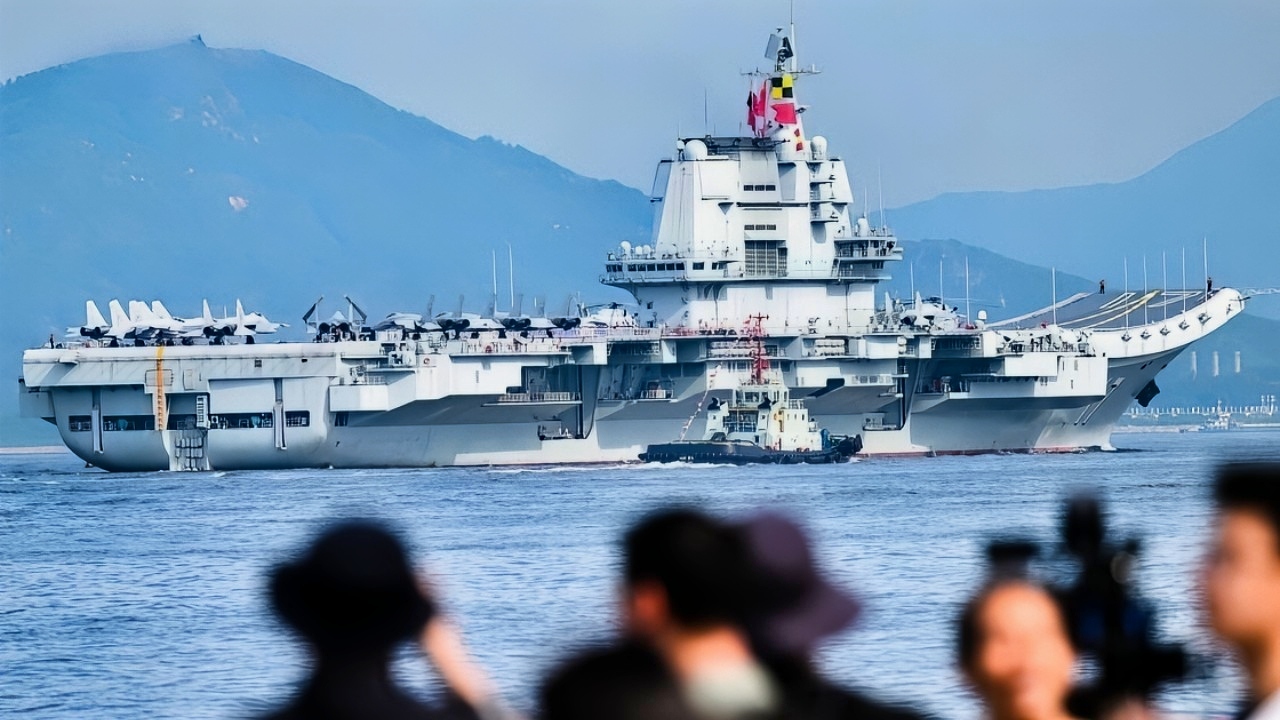
China Aircraft Carrier in Port. Image Credit: Chinese Navy.
The Troublesome EMALS Feature
Ford-class carriers were designed to offer significant advancements over Nimitz-class carriers, including an all-electric power system and electromagnetic aircraft launch systems (EMALS) for more efficient flight operations, a more automated design that reduces crew size and maintenance needs, and advanced defensive systems such as radar and the ability to integrate future technologies.
The Electromagnetic Aircraft Launch System (EMALS) is supposed to be more efficient, smaller, lighter, more powerful, and easier to control.
Increased control means that EMALS will be able to launch both heavier and lighter aircraft than the traditional steam catapult. The requirement for a higher sortie rate of 160 per day, with surges up to 220 during times of crisis and intense air warfare, led to changes to the flight deck design.
However, the Ford-class carriers have faced significant issues with EMALS, including reliability failures, complex maintenance (needing specialized skills), and difficulties meeting sortie generation goals, leading to operational delays and high costs.

PHILIPPINE SEA (Feb. 5, 2024) The Nimitz-class aircraft carrier USS Theodore Roosevelt (CVN 71) transits the Philippine Sea, Feb. 5, 2024. Theodore Roosevelt, flagship of Carrier Strike Group Nine, is underway conducting routine operations in the U.S. 7th Fleet area of operations. An integral part of U.S. Pacific Fleet, U.S. 7th Fleet operates naval forces in the Indo-Pacific and provides the realistic, relevant training necessary to execute the U.S. Navy’s role across the full spectrum of military operations – from combat operations to humanitarian assistance and disaster relief. U.S. 7th Fleet works together with our allies and partners to advance freedom of navigation, the rule of law, and other principles that underpin security for the Indo-Pacific region. (U.S. Navy photo by Mass Communication Specialist 2nd Class Andrew Benvie)
Although the Navy is working on fixes and reports show improvements, there are persistent concerns about immature technology integration and demanding upkeep. China has featured EMALS on its new Fujian aircraft carrier. State-run Chinese media claim that the EMALS on the Fujian shows high reliability.
Issues With The New Advanced Arresting Gear
The AAG is a modular, integrated system consisting of energy absorbers, power conditioning equipment, and digital controls, designed as the follow-on to the Mark-7 (Mk-7) arresting gear. The Navy is currently utilizing the Mk-7 Mod 3 and Mk-7 Mod 4 designs on all Nimitz-class aircraft carriers.
The AAG architecture, Health Monitoring Assessment and Prognostics technology, and digital control system provide built-in test and diagnosis, resulting in the system requiring less maintenance and manpower to operate than the Mk-7.
This is designed to provide higher reliability and safety margins, while allowing sailors to focus on other areas of need. The system is also designed to enable potential arrestment of a broader range of aircraft, from the lightest unmanned aerial vehicles to the heaviest manned fighters.
The AAG was developed to replace the “legacy hydraulic arresting systems with an electromagnetic turbo-electric engine designed to recover a wider range of aircraft weights.” That includes lighter unmanned aerial systems (UAS). It also aims to reduce the stress loads on the aircraft’s airframes during launch.

(July 11, 2014) – The aircraft carrier USS Ronald Reagan (CVN 76) is underway during Rim of the Pacific (RIMPAC) 2014. Twenty-two nations, more than 40 ships and submarines, more than 200 aircraft and 25,000 personnel are participating in RIMPAC exercise from June 26 to Aug. 1, in and around the Hawaiian Islands. The world’s largest international maritime exercise, RIMPAC provides a unique training opportunity that helps participants foster and sustain the cooperative relationships that are critical to ensuring the safety of sea lanes and security on the world’s oceans. RIMPAC 2014 is the 24th exercise in the series that began in 1971. (U.S. Navy photo by Mass Communication Specialist 2nd Class Jacob Estes/Released)
The current Mk-7 Mod 3 arresting gear is a hydraulic system on U.S. aircraft carriers that quickly stops aircraft by using a tail hook to engage a series of cables stretched across the deck. This system can bring a 50,000-pound plane to a stop in under 350 feet. The AAG will replace it.
However, the Advanced Arresting Gear (AAG) problems center on significant reliability issues, software glitches, and hardware flaws, particularly with the “water twister” shock absorbers, leading to frequent breakdowns, underperformance with lighter aircraft (like drones), complex troubleshooting, and significant cost overruns, delaying full operational capability and requiring costly fixes despite AAG’s promise for gentler, more efficient landings.
The Advanced Weapons Elevator
Advanced Weapons Elevators (AWEs) are electromagnetic systems used on the USS Gerald R. Ford (CVN 78) to move ordnance from weapons magazines to the flight deck.
They are faster, have more than twice the capacity of older hydraulic systems, and operate more smoothly with fewer crew members thanks to their advanced electronic and electromagnetic propulsion.
The issues with the AWEs (it’s Groundhog Day) primarily complex integration problems, software glitches, and installation errors with the new electromagnetic (maglev) system, leading to delays, cost overruns, and reduced operational readiness on the first carrier, USS Gerald R. Ford, though efforts focused on fixing these for the first ship and applying lessons to subsequent carriers like CVN-79, intending to increase sortie rates.
Huntington Ingalls Industries (HII) spokesman Todd Corillo said that lessons learned from building the carrier will make it easier to build future Ford-class carriers.
“Specifically, John F. Kennedy’s (CVN 79) construction was fairly advanced when many Ford lessons were realized, precluding timely implementation of lessons learned for Kennedy,” Corillo said in a statement. “In contrast, Enterprise (CVN 80) and Doris Miller (CVN 81) have been able to incorporate, leverage, and capitalize on Ford lessons learned earlier in the construction process.”
The decision to concurrently build the supercarriers while still designing them, intended to save time and money, was, like so many defense-related decisions, a poor one, having the opposite effect.
All too frequent design changes during construction also compounded the problem, forcing schedule resets and hardware retrofits halfway through the build. This resulted in billions of dollars of cost overruns.
Having only one shipyard capable of building the supercarriers has compounded the issues.
About the Author: Steve Balestrieri
Steve Balestrieri is a National Security Columnist. He served as a US Army Special Forces NCO and Warrant Officer. In addition to writing on defense, he covers the NFL for PatsFans.com and is a member of the Pro Football Writers of America (PFWA). His work was regularly featured in many military publications.


