


Los Angeles-Class: The Best Attack Submarine Ever—and the Fleet It Made Possible
Key Points & Summary – The claim: Many submariners will tell you the Los Angeles-class is the best attack-submarine class ever built—because it did the two hardest things at once: scale and staying power.
Why it existed: Born to outrun and out-hunt the Soviet fleet, the 688s gave carrier groups a fast, quiet escort and the Navy a global undersea scout.
What it did: From Cold War shadowing to the first submarine Tomahawk strikes and beyond, the class became the workhorse of modern undersea warfare.
How it evolved: The Improved Los Angeles (688i) variant added quieting, better sensors, bow planes for under-ice work, and the vertical-launch punch that made land attack routine.
Legacy: The Seawolf-Class pushed the edge of performance; the Virginia-Class turned that pedigree into a modular, multi-mission fleet—both standing on the 688’s shoulders.
“Best Ever”? The Case for a Champion
Call it bravado or earned respect, but “best ever” is not a crazy label for the Los Angeles-class.
Over two decades, American yards built sixty-two of them—an industrial run that made the boat a language, a training pipeline, and a doctrine.
Quantity wasn’t just a brag; it was strategy. A big, standardized fleet let the Navy keep submarines on station all over the map, day after day, while still spinning crews through training and maintenance.

APRA HARBOR, Guam (Jan. 17, 2023) – The Los Angeles-class fast-attack submarine USS Key West (SSN 722) departs Apra Harbor, Guam, Jan. 17. Key West is one of five submarines assigned to Commander, Submarine Squadron 15. Commander, Submarine Squadron 15 is responsible for providing training, material and personnel readiness support to multiple Los Angeles-class fast attack submarines and is located at Polaris Point, Naval Base Guam. (U.S. Navy photo by Lt. Eric Uhden)

PERSIAN GULF (March 20, 2009) The Los Angeles-class attack submarine USS Hartford (SSN 768) is underway in the Persian Gulf after a collision with the amphibious transport dock ship USS New Orleans (LPD 18). Hartford sustained damage to her sail, but the propulsion plant of the nuclear-powered submarine was unaffected by this collision. (U.S. Navy photo/Released)

Los Angeles-Class. Image Credit: Creative Commons.
And the design grew with the moment: from Cold War knife-fighting to Tomahawk strikes, the 688s kept adapting—quietly becoming the backbone of how America fights from under the sea.
Origin Story: Built for Speed, Silence, and the Soviet Union
In the late 1960s, the Soviets were fielding faster, tougher subs that could shadow carrier groups and threaten the sea lanes.
The U.S. answer was not a boutique prototype but a fast, quiet, nuclear-powered hunter that could run with the carriers and stalk Soviet boats from forward waters.
The Los Angeles-class—named for cities instead of fish, a Rickover flourish—was shaped around three truths of that era: speed buys position, silence buys survival, and endurance buys options. Big reactors drove high sustained speeds; new hull treatments and machinery isolation cut noise; a modern sonar suite and combat system let crews exploit that stealth.
The mission list was ruthless and straightforward: hunt submarines, kill surface combatants, protect carrier groups, and scout ahead.
The first production boats carried heavyweight torpedoes and anti-ship missiles, and, crucially, the sensor range to use them effectively.
It was a fleet boat for a blue-water chess match—born to live forward, listen hard, and strike first.
From Cat-and-Mouse to Combat: The Battle Record
For most of the Cold War, the Los Angeles-class did its fighting in the “silent service” sense—tracking, trailing, and out-maneuvering Soviet subs while staying unseen.
The public proof came after the wall fell. In 1991, during the opening nights over Iraq, Los Angeles-class boats fired the first submarine-launched Tomahawks in combat, demonstrating that a fast-attack sub could reach deep inland without warning.
Through the 1990s and 2000s, 688s turned land-attack into muscle memory, lofting salvos in Kosovo, Afghanistan, and Iraq while still doing the unglamorous but decisive daily jobs: ISR, trailing, and undersea escort.
That rhythm—shadowing enemies on Tuesday, firing precision land-attack missiles on Friday, then slipping back to sea-denial on Sunday—made the class the template for modern SSNs. The 688s proved that an attack submarine didn’t need a new nameplate to change a theater; it needed reliable stealth, a deep magazine, and crews that could execute on short notice.
The Upgrade Path: How the 688 Grew Teeth
Big classes live long because they evolve. After the first three dozen or so boats, the Navy added vertical-launch cells for Tomahawk missiles, which simplified salvos and allowed torpedo tubes to remain reserved for torpedoes. Then came the Improved Los Angeles—what sailors call the 688i. The changes weren’t cosmetic.
Quieter and smarter. New quieting measures and upgraded combat systems squeezed more performance from the sonar arrays and the towed-array picture—vital in crowded waters where “who heard first” decides the engagement.
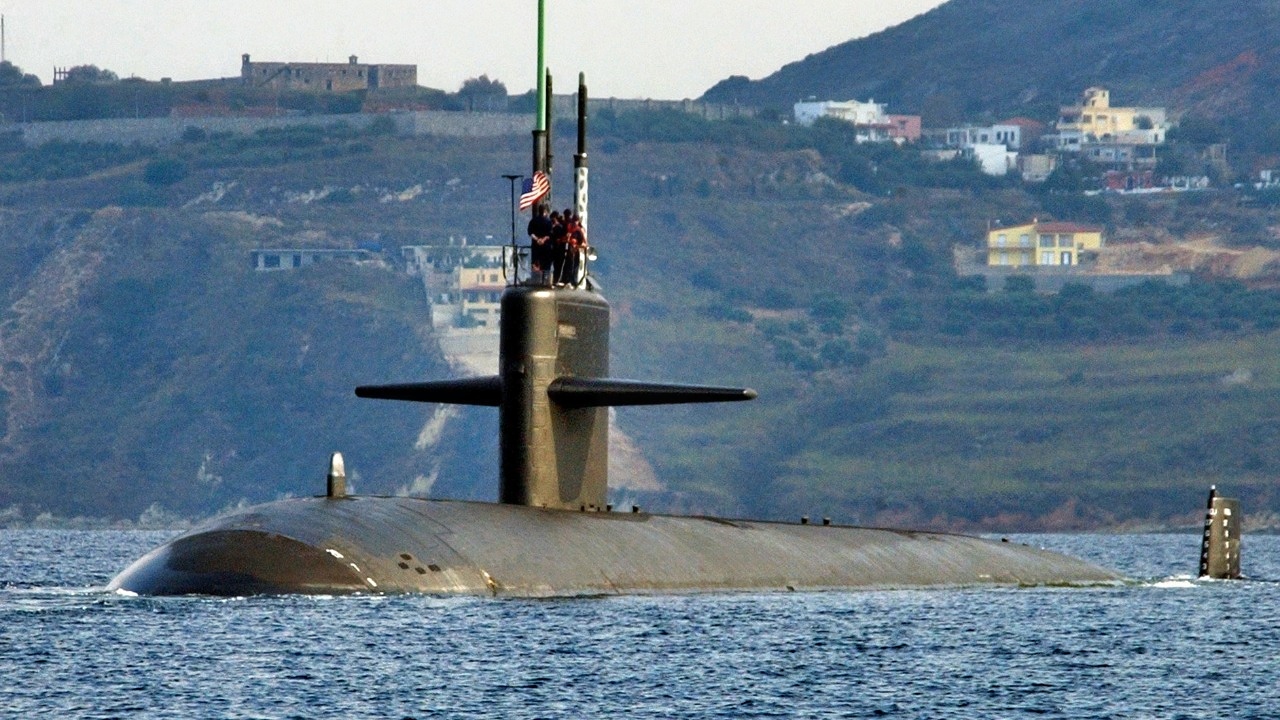
Port bow view showing US Navy (USN) Sailors manning a topside watch aboard the Los Angeles Class Attack Submarine USS NEWPORT NEWS (SSN 750), as the ship departs the harbor at Souda Bay, Crete, Greece following a port visit.
Under-ice capable. Bow planes and a strengthened sail made under-ice operations practical, expanding where and how the boat could hunt.
Better punch, better flow. Vertical launchers and mature Tomahawk integration turned land attack from a novelty into a routine tasking.
On paper, each tweak looks modest. In practice, the combination mattered: the boat became harder to find, easier to fight, and more flexible in its movement.
A Day in the Life: Why It Worked
Picture a 688i on a long forward patrol. She’s running quiet with a towed array spread out like a fishing line, sipping speed to let the ocean tell its stories. A faint narrowband trace emerges—elsewhere, a surface radar blinks on, and a satellite pass fills in the picture. Within hours, what began as a whisper becomes a woven track: speed, course, likely class.
If the tasking is intelligence, the crew trails and reports. If it’s denial, the crew maneuvers for position, confident that sensors and quieting give them the first shot. If the war turns on a land target, the salvo is planned, the vertical-launch cells open, and the missiles leave silently. That’s the 688 in practice: a multi-night, multi-mission worker that doesn’t need applause to change outcomes.
Desert Proving Grounds: Tomahawk Becomes Routine
Desert Storm forced the question: could submarines deliver early, precise strikes while staying off the television screens and away from defenses? The answer was yes. A Los Angeles-class boat launched the first submarine-fired TLAMs of the war, and the class repeated the performance in later operations from the Balkans to the Middle East.
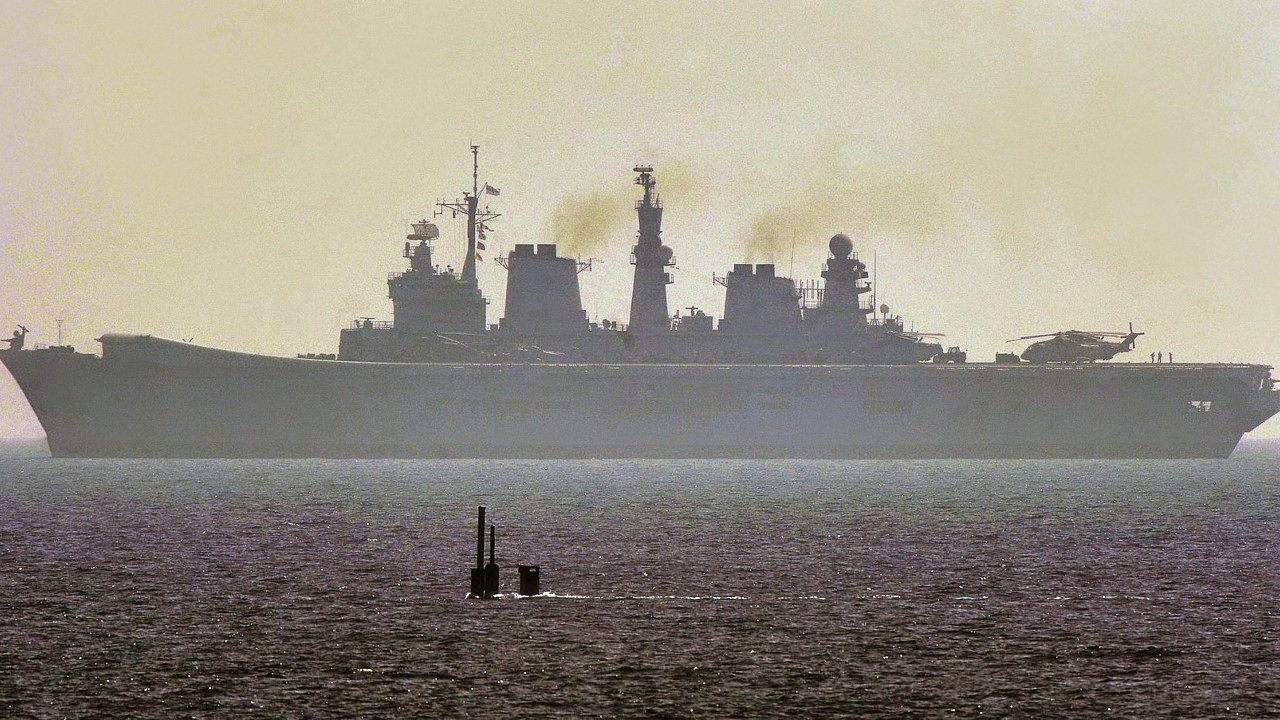
The Los Angeles-class submarine USS Dallas is hiding. Image Credit: Creative Commons.
In operational terms, the 688 became a stealthy door-opener: hit command nodes, radars, power nodes, and airfields in the first wave, then shift back to undersea tasks. No speeches, no flyover—just a dull thud on a target list and a silent exfiltration to the next station.
The 688i: A Better Boat for a Harder Ocean
By the 1990s, the U.S. submarine force wasn’t just playing tag with Soviet SSNs; it was preparing to operate under ice, inside chokepoints, and around increasingly sophisticated sensors. The 688i answered that environment. Moving the planes to the bow let the boat break through ice and maneuver in cold, cluttered water.
Enhanced combat systems fused more data and presented a faster picture to the fire control party; deeper quieting wrung the last dB from machinery and flow noise. If the early 688s gave the fleet speed and reach, the 688i gave it range, stealth, and flexibility in the most complex parts of the map.
Industrial Strength: Why Sixty-Two Matters
There’s an unromantic reason the Los Angeles-class feels legendary: the Navy built a lot of them, and then kept them healthy for decades.
A fleet that big creates its own momentum—experienced chiefs, seasoned COs, spare parts, schoolhouses, and shipyard reps who have seen the problem before and know the fix.
Training becomes a “conveyor belt” instead of a bespoke art project, as one retired Los Angeles-class skipper told me a few years back. Doctrine can iterate because crews rotate through the same platform at different stages of their careers. You don’t have to love bean-counting to admit the truth: mass makes mastery possible.
The Seawolf-Class: Pushing to the Edge
If the Los Angeles-class is the well-rounded athlete, the Seawolf-class is the powerlifter—the fastest, quietest, most heavily armed U.S. attack submarine of its generation.
Bigger hull, more torpedo tubes, deeper diving steel, and a combat system built for acoustic overmatch in blue water. It was meant to be the 688’s successor, not just an upgrade. History intervened. The Cold War ended, budgets fell, and the Navy bought three.
But Seawolf wasn’t a dead end; it was a technology pathfinder. Everything it proved—pump-jet propulsion, wide-aperture arrays, extreme quieting—poured back into how the Navy thought about the next fleet boat.
The Virginia-Pivot: Turning Pedigree into a Fleet
Enter the Virginia-Class. Where Seawolf chased the absolute edge, Virginia turned the 688 playbook into a modular, multi-mission design you can buy and upgrade in blocks. The hull is quieter; the sensors are smarter; the construction is more modular to keep costs and schedules sane.
The Virginia Payload Module restores strategic magazine depth as the cruise-missile Ohio-class SSGNs conversions leave service.
And day to day, a Virginia does what a Los Angeles did: ISR, sea denial, strike, special operations—but with more growth margin and better human-system integration.
It is not an accident that Virginia replaced the 688s so smoothly. The Navy had three decades of experience teaching and fighting the Los Angeles class; Virginia is that experience, modernized.
What the Los Angeles-Class 688 Taught Everyone
-Speed still matters—but silence wins. The class married sprint capability to quieting in a way that let crews choose the fight.
-Standardization is combat power. A big, common fleet is easier to train, fix, and surge than a small zoo of one-offs.
-Land attack belongs to SSNs. Once Tomahawk moved from “special event” to “routine task,” every ops plan changed.
-Under-ice is a core skill. Bow planes and strengthened sails weren’t vanity—polar routes changed where U.S. boats could appear and how fast.
-Doctrine and industry matter as much as metal. The class worked because people and yards could scale it.
A Short Wargame: Strangle a War Quietly
Imagine a crisis in the Western Pacific. In the first 96 hours, a mixed pack of Virginia and remaining 688i boats goes to work. One slips through a strait at night and sinks a logistics ship that was the lynchpin for a forward island outpost. Another parks outside a naval base and listens, building a pattern of life that lets air and cyber planners time a larger strike.
A third, cued by national sensors, lines up on a high-value surface combatant and ends its patrol with a pair of heavyweight torpedoes. No headlines, no photos—just denied water space and a rival command wondering why things keep going wrong. That quiet competence is the 688’s signature, inherited by its heirs.
“Best Ever” Revisited—With Clear Eyes
Was the Los Angeles class perfect? No.
Early hulls lacked the vertical-launch cells that became central to land attack, and later boats were retired early rather than spend big money on midlife refueling.
But judged by what a class is supposed to be—a tool that shows up everywhere, adapts to new missions, and keeps winning over decades—the 688 stands alone. It bridged the Cold War and the unipolar moment, then handed a living playbook to Seawolf and Virginia. If you want to know why America still owns the undersea, start with the Los Angeles class.
Verdict on the Los Angeles-Class
The Los Angeles-class wasn’t just a successful submarine; it was a successful idea: build many, keep them quiet, teach thousands of sailors to fight them well, and keep upgrading as the world changes.
The 688i sealed the deal—adding under-ice reach, better ears, and vertical-launch punch at the moment land attack and Arctic routes became central.
The Seawolf-class showed the ceiling; Virginia-class scaled the lessons. If you’re looking for the best attack-submarine class ever, the case for the Los Angeles-Class isn’t nostalgia. It’s the scoreboard.
About the Author: Harry J. Kazianis
Harry J. Kazianis (@Grecianformula) is Editor-In-Chief and President of National Security Journal. He was the former Senior Director of National Security Affairs at the Center for the National Interest (CFTNI), a foreign policy think tank founded by Richard Nixon based in Washington, DC. Harry has over a decade of experience in think tanks and national security publishing. His ideas have been published in the NY Times, The Washington Post, The Wall Street Journal, CNN, and many other outlets worldwide. He has held positions at CSIS, the Heritage Foundation, the University of Nottingham, and several other institutions related to national security research and studies. He is the former Executive Editor of the National Interest and the Diplomat. He holds a Master’s degree focusing on international affairs from Harvard University.
More Military
The B-21 Raider Is Headed for Problem Land
Russia’s Su-34 Fullback Is a Punisher Bomber


