

Summary and Key Points: Defense Analyst Jack Buckby breaks down how Russia is touting its MiG-41 (PAK-DP) as a revolutionary sixth-generation interceptor capable of exceeding Mach 4 and operating in near-space to down hypersonic missiles.
-While officials claim the design is finalized and a prototype is imminent, significant skepticism remains. The aircraft follows a long tradition of high-speed interceptors like the MiG-31, yet the technical demands of Mach-4 flight are immense.

MiG-41 Artist Drawings Compilation. Image Credit: Creative Commons.

MiG-41 Artist Rendering. Image Credit: Creative Commons.
-Russia’s aerospace industry faces severe constraints due to sanctions, supply-chain disruptions, and the ongoing war in Ukraine.
-Consequently, the MiG-41 may remain a theoretical “signaling effort” rather than a deployable reality for the foreseeable future.
The MiG-41 Mystery: Why Russia’s Next-Gen Space Interceptor Faces a Grim Reality
For more than a decade, Russia has periodically hinted that it is developing a revolutionary next-generation interceptor known as the MiG-41, also referred to as the PAK-DP (Prospective Aviation Complex for Long-Range Interception).
The aircraft has been described by Russian officials and media as a future platform capable of extreme speeds, near-space operations, and intercepting advanced threats, such as hypersonic missiles.
The program hit the news again in October 2025 when reports cited comments by retired Russian Air Force Major General Vladimir Popov, who said the MiG-41’s external design had been finalized and that a prototype flight could occur in the next few years.
The announcement prompted speculation about the aircraft’s future, as despite the positive claims, the MiG-41 remains largely theoretical. No prototype has appeared publicly, no confirmed test program has been disclosed as of yet, and much of the aircraft’s supposed capability remains based on projections rather than verified progress by engineers.
The gap between the big claims made in the press and the platform’s visible development has, unsurprisingly, prompted analysts worldwide to wonder whether the MiG-41 is really on track to become Russia’s next interceptor.
Russia’s Long Tradition of High-Speed Interceptors
To understand the MiG-41 concept, it helps to consider Russia’s long history of building extremely fast interceptors to defend its vast territory. During the Cold War, the Soviet Union produced aircraft such as the MiG-25 Foxbat and later the MiG-31 Foxhound, both optimized for high-speed interception of bombers and reconnaissance aircraft.
The MiG-41 is intended to continue that lineage. Russian aerospace officials have long discussed replacing the MiG-31 with a far more advanced aircraft capable of operating at extreme speeds and altitudes.

MiG-41 Fighter. Image Credit: Artist Rendition/Creative Commons.
In 2017, for example, Ilya Tarasenko, then director general of the MiG aircraft corporation, said the company was developing a concept for a long-range interceptor known as PAK-DP, which would eventually replace the MiG-31 fleet. Russian sources have since promoted the aircraft as a platform capable of speeds exceeding Mach 4, potentially reaching Mach 4.3 or higher. Russian test pilot Anatoliy Kvochur has also supported the performance claims.
In theory, an aircraft like this could intercept high-speed threats such as hypersonic missiles or reconnaissance aircraft operating at extreme altitudes – something the Russians have been doing for some time with long-range interceptor aircraft.
The MiG-41’s Long Trail of Announcements
The MiG-41 hasn’t been seen yet, but there have been many announcements. The aircraft has spent years appearing mostly in official statements and media reports. And, the idea of a MiG-31 replacement has circulated since at least the mid-2010s. At various points, Russian officials suggested development would begin before the end of the decade and that the aircraft might enter service in the 2020s. But those timelines have repeatedly slipped.
One of the most recent waves of attention came in September 2025, when Vladimir Poppov, a retired Russian Air Force commander who now appears frequently as a television commentator, said the MiG-41 had completed its external design phase and was moving toward prototype development. Popov claimed that the aircraft would eventually be able to counter stealth fighters such as the F-35 and intercept hypersonic weapons while operating at high altitudes.
Publicly available information, however, still indicates that the aircraft is in early development or research phases, with specifications based on its projected performance rather than any confirmed engineering progress.
Grim Industrial Realities May Mean It Never Happens
Even if Russia wants the MiG-41 to become operational, and of course it does, the country’s aerospace industry faced significant constraints that could delay or derail the project entirely. Developing a Mach-4 interceptor would require advanced propulsion systems and materials capable of withstanding the extreme heat generated by flying an aircraft at those speeds.
And even if those things are technically possible, it would also require extensive flight-testing programs. These are difficult things to achieve under normal circumstances, but they are particularly difficult for a country facing industrial problems, sanctions, and an ongoing war.
Russia’s aviation industry is under extreme pressure due to those problems and supply-chain disruptions, with its military and aerospace-industrial resources being directed towards maintaining existing fleets and fighting a war in Ukraine that was only expected to last a few weeks.
That reality raises doubts not just about whether Russia can leap from producing small numbers of fifth-generation fighters to developing a more complex sixth-generation interceptor in the coming years, but whether it might happen at all.
Given how long it could take Russia to recover from the damage caused by the war in Ukraine, whenever that war ultimately ends, it could be decades more before a project like this becomes a true reality for the country. For that reason, some have even suggested that the project is really more of a signalling effort than a real program.
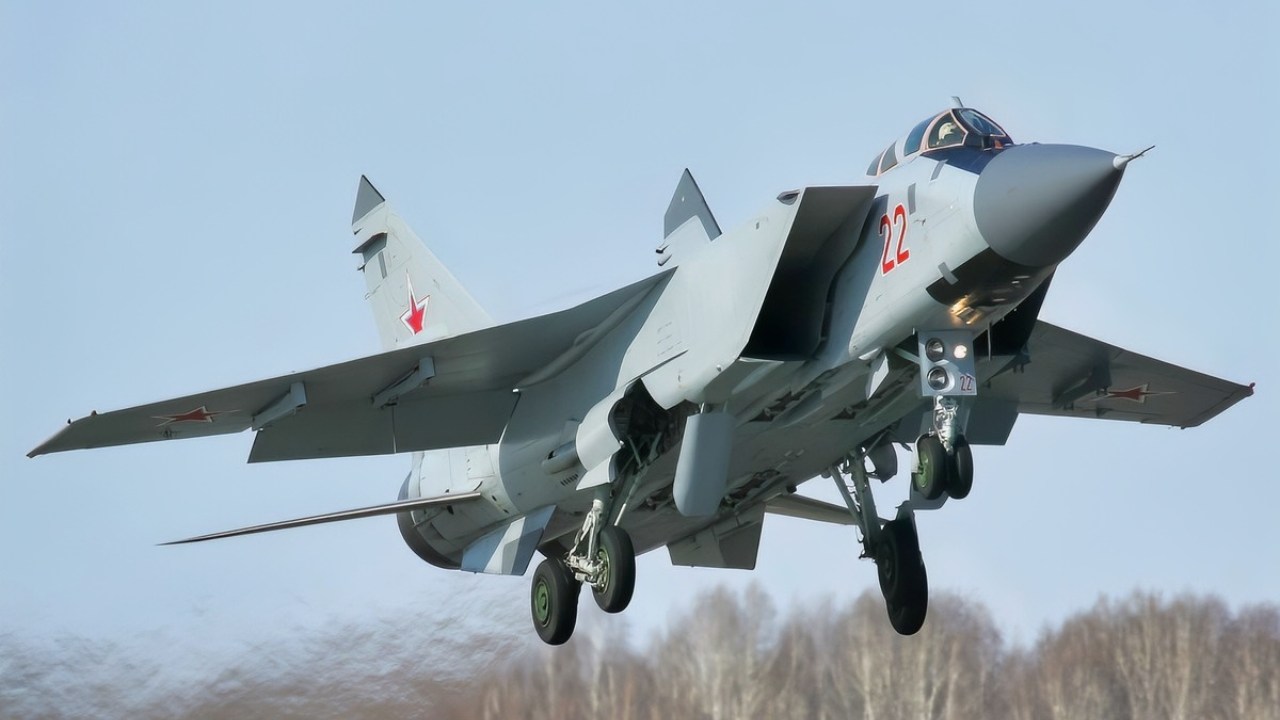
Russia’s MiG-31 Fighter. Image Credit: Creative Commons.

MiG-31 Russian Air Force. Image Credit: Creative Commons.

MiG-31 Flying High Russian Air Force. Image Credit: Creative Commons.
Russia may still want a sixth-generation interceptor, but unless the country’s aerospace sector recovers dramatically, Moscow could find itself relying on upgraded fifth-generation fighters and modernised MiG-31s for years to come – much the same way its long-range strike force still depends on updated Tu-95 Bear and Tu-160 Blackjack bombers while the promised PAK-DA stealth bomber remains stuck on the drawing board.
About the Author: Jack Buckby
Jack Buckby is a British researcher and analyst specialising in defence and national security, based in New York. His work focuses on military capability, procurement, and strategic competition, producing and editing analysis for policy and defence audiences. He brings extensive editorial experience, with a career output spanning over 1,000 articles at 19FortyFive and National Security Journal, and has previously authored books and papers on extremism and deradicalisation.


