


Summary and Key Points: Defense expert Brent M. Eastwood, PhD, evaluates the persistent threat of Iranian mobile missile launchers and unmanned aerial vehicles (UAVs) despite the 15,000 strikes conducted during Operation Epic Fury.
-While CENTCOM and the IDF have achieved air dominance and suppressed 95% of launches, Iran’s decentralized “mosaic defense” leverages hardened, mountainous facilities to preserve an estimated 500 ballistic missiles.
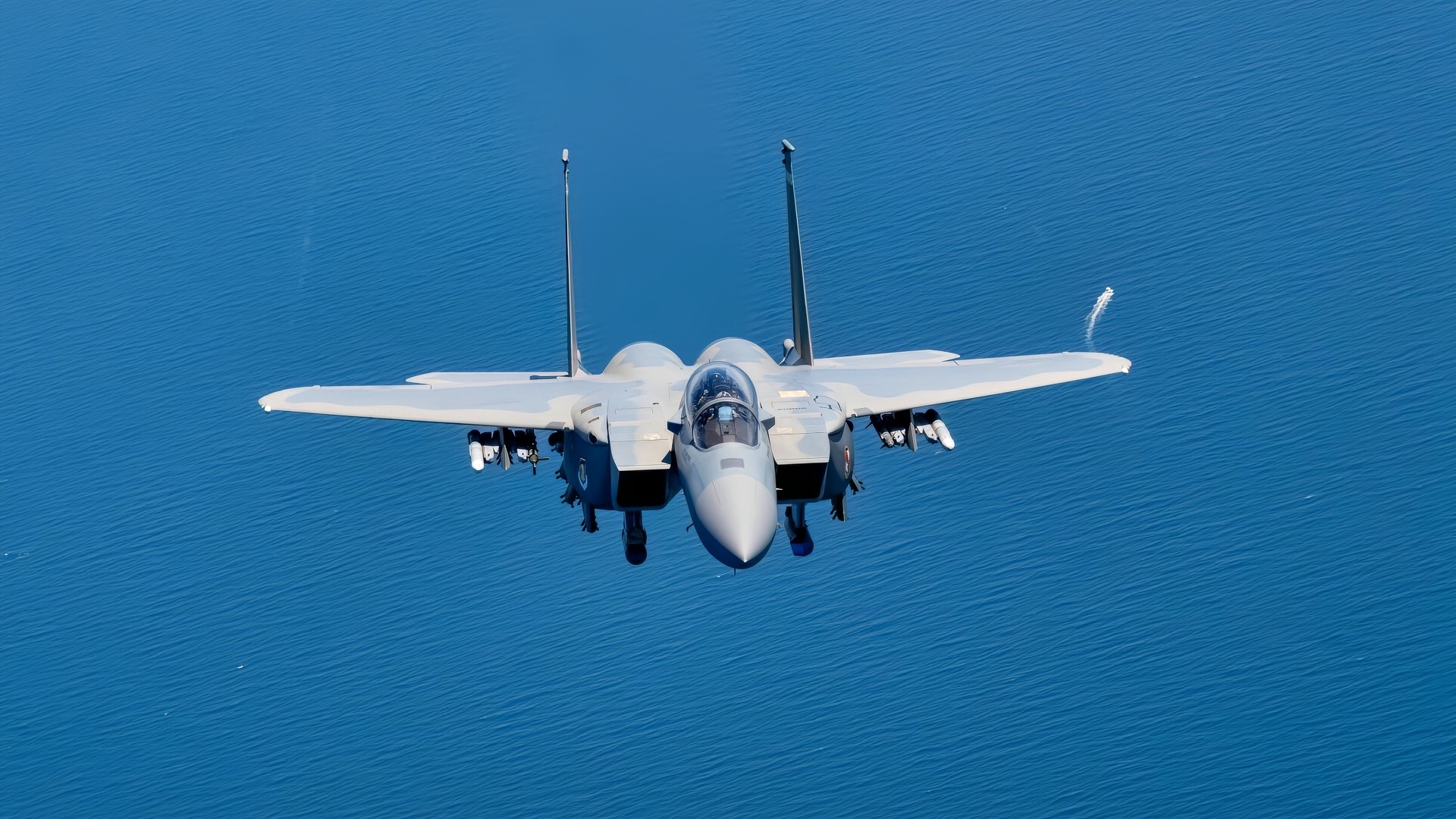
A U.S. Air Force F-15EX Eagle II flies over the Gulf of America, September 16, 2025. The F-15EX, from the 40th Flight Test Squadron at Eglin Air Force Base, Florida, is one of the first F-15EXs in the Air Force, and is going through developmental and operational test series at Eglin to confirm its operational capabilities before it is delivered to the combat Air Force. (U.S. Air Force photo by Staff Sgt. Blake Wiles)
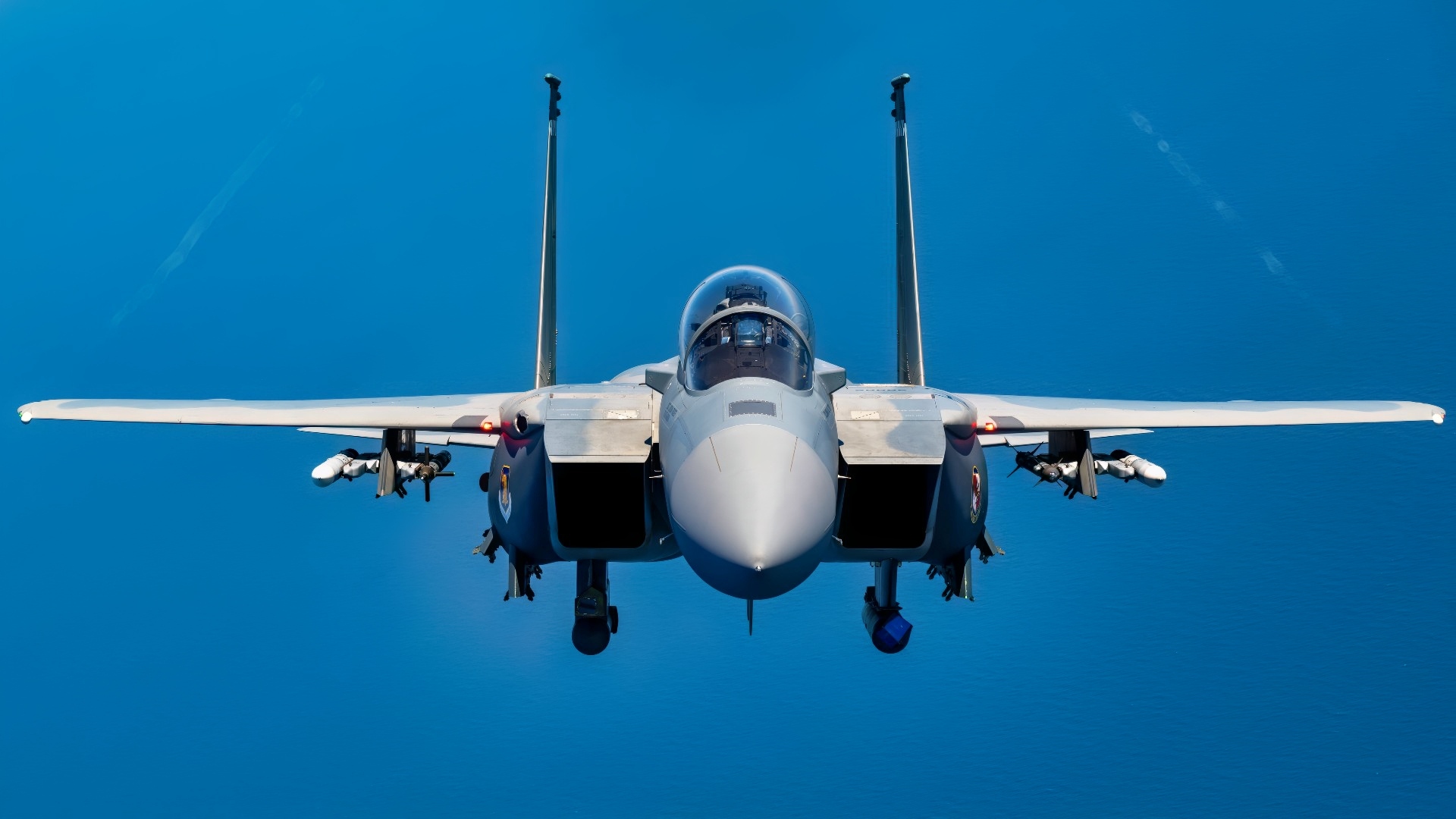
A U.S. Air Force F-15EX Eagle II flies over the Gulf of America, September 16, 2025. The F-15EX, from the 40th Flight Test Squadron at Eglin Air Force Base, Florida, is one of the first F-15EXs in the Air Force, and is going through developmental and operational test series at Eglin to confirm its operational capabilities before it is delivered to the combat Air Force. (U.S. Air Force photo by Staff Sgt. Blake Wiles)
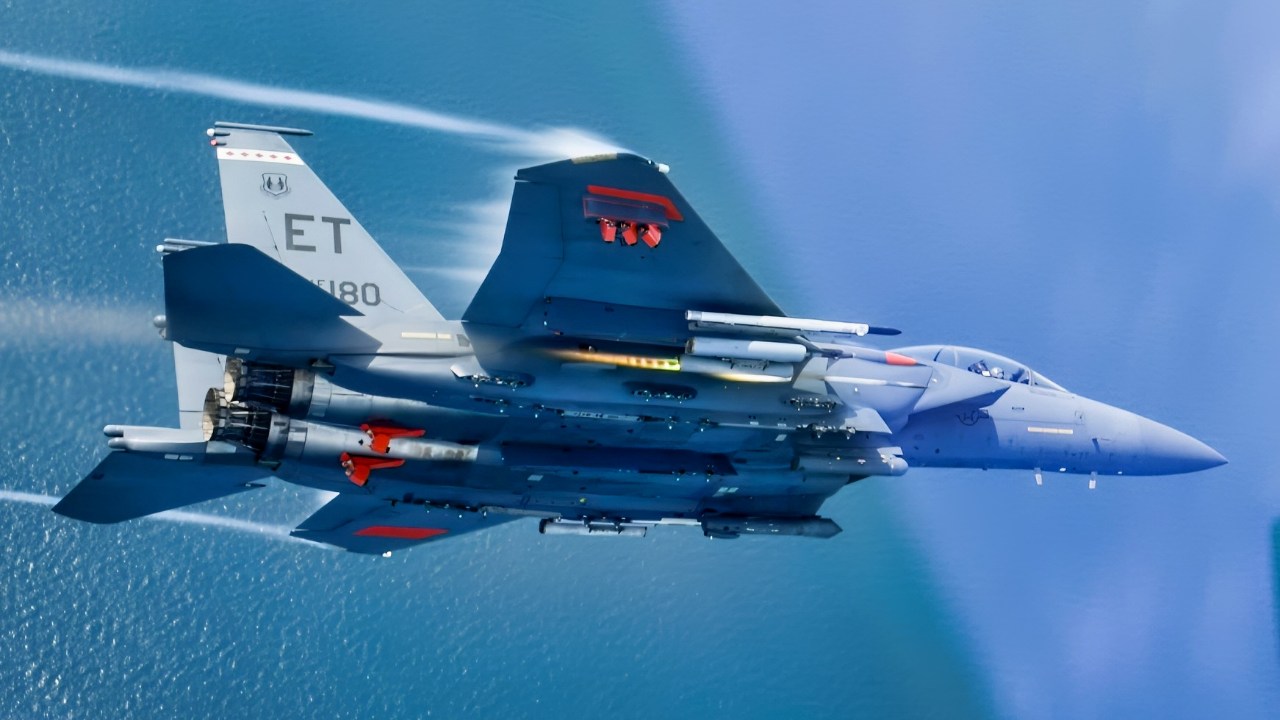
A 96th Test Wing F-15E Strike Eagle flies during a test mission May 22, 2025 over Eglin Air Force Base, Florida. The 96 TW and the 53rd Wing teamed up to test AGR-20F Advanced Precision Kill Weapon System II laser-guided rockets on the F-15E in May in an effort to get the capability to the warfighter as quickly as possible. (U.S. Air Force photo by Staff Sgt. Thomas Barley)
-Eastwood notes the U.S. Air Force’s shift to 2,000-pound “Mini-MOP” JDAMs to target deep infrastructure.
-However, the difficulty of battle damage assessment (BDA) in underground complexes allows Iran to maintain a parsimonious harassment strategy against Strait of Hormuz shipping.
The Attrition Dilemma: Analyzing the 500 Ballistic Missiles Remaining in Iran’s Arsenal
One great aspect of Operation Epic Fury is that the U.S. Air Force and U.S. Navy, along with their allies from Israel, have created air superiority and even air dominance over most of the skies over Iran. They jointly have struck 15,000 targets since the war started. Nuclear infrastructure has been hit hard again. Enemy air defenses have been suppressed. The Islamic Revolutionary Guards have been decimated, and the Iranian navy has been rendered useless.
Give a hat tip to these brave aviators who did not know just how well the Iranian “mosaic” air defense strategy would work.
So far, the Americans and Israelis have been successful. The number of missile and drone launches conducted by the Iranians has been reduced by almost 90-95 percent.
Command-and-control facilities have been degraded. Missile launchers have been eliminated, and the best ballistic missile force personnel have been attritted.
The Iranians Have Not Stopped the Kinetic Missile and Drone Fight
However, Iran still has many missile launchers intact. They are mobile and can shoot and scoot. Many of the missile and drone facilities – both for launching and production – are underground and still intact.
This is a challenge as the United States has already expended many Massive Ordnance Penetrator (MOP) bunker-busting bombs. Long-range missiles like the Tomahawk cruise missile have been greatly reduced. To counteract these losses, the U.S. Air Force has decided to use 2,000-pound “Mini-MOPs.” These are JDAMs with deeply penetrating warheads to destroy underground targets.

Iran’s Drones That Russia Is Using. Image Credit: Creative Commons.

Iran Missiles. Image Credit: Creative Commons.
Where Is All the Fire Coming From?
The problem is the number of missile and drone launchers and production facilities that are difficult to destroy with only MOPs or mini-MOPs. Battle damage assessment is difficult. Since these centers are deep, it is hard to know just how effective the bunker busters are. Satellite imagery helps, but the Iranians have done a good job hiding their arsenal.
This Overall Operation Will Take Time to Execute
The United States and the Israelis need more time to eliminate the missile and drone threat. The Iranians are using this advantage in projectiles to harass shipping in the Strait of Hormuz. It is not clear how many more missions will be needed to severely reduce the number of Iranian projectiles that are being fired.
Mosaic Defense Is Asymmetric In Nature
This “mosaic defense” by Iran is decentralized and allows each unit of factories, missiles, and drone launchers to carry on the fight without direct orders from command-and-control facilities that have already been destroyed or damaged. Thus, Iran is forming an asymmetric fight that could go on as long as it has the supplies of missiles and drones.

B-2 Spirit Stealth Bomber At USAF Museum. Image Credit: Harry J. Kazianis/National Security Journal.
This infrastructure is well hidden in the mountainous terrain of Iran. The Americans and Israelis are running out of above-ground targets, but they may not be able to destroy everything underground. Satellite imagery may not help with the deep targets that need mini-MOPs to destroy.
The United States has a good number of B-2 Spirits, B-1B Lancers, and B-52 Stratofortresses to deliver a punishing blow with tons of ordnance. However, if intelligence cannot provide the underground targets, Iran can still build and launch drones and missiles.
There Could Still Be 500 Missiles Left
“Iran has the largest inventory of ballistic missiles in the region, the U.S. Office of the Director of National Intelligence assessed in 2022. While there are no official accounts on how many missiles it has, Israeli intelligence reports suggest it counted around 3,000 missiles, a figure that dropped to 2,500 following the 12-day war last June,” according to Al Jazeera.
Iran Is Being Parsimonious With Their Missiles
It seems that Iran is holding back some launches to lull the United States and Israel into a state of complacency. There could be a delay as the Americans and the Israelis declare victory while Iran readies attacks from hardened facilities. Time is on the Iranian’s side.
The United States cannot sustain more casualties, and the longer the war lasts, the American people will become restless, and the U.S. government can lose support for the war.
The only other way to eliminate all the missile and drone launchers is to use boots on the ground. The U.S. could deploy special operations forces to find and destroy the launch facilities, but doing so would be difficult. The United States would not complete combat search and rescue aircraft at all times to exfiltrate casualties. This operation would also take much time – time that President Trump and his national security team do not have.
At Least One Expert Is Skeptical All Launchers Can Be Destroyed
“It is not obvious to identify launchers,” David Des Roches, an associate professor at the National Defense University in Washington, DC, told Al Jazeera. “What we see are missiles that were put in hidden places or places not associated with the military before the war, when there was less observation.”
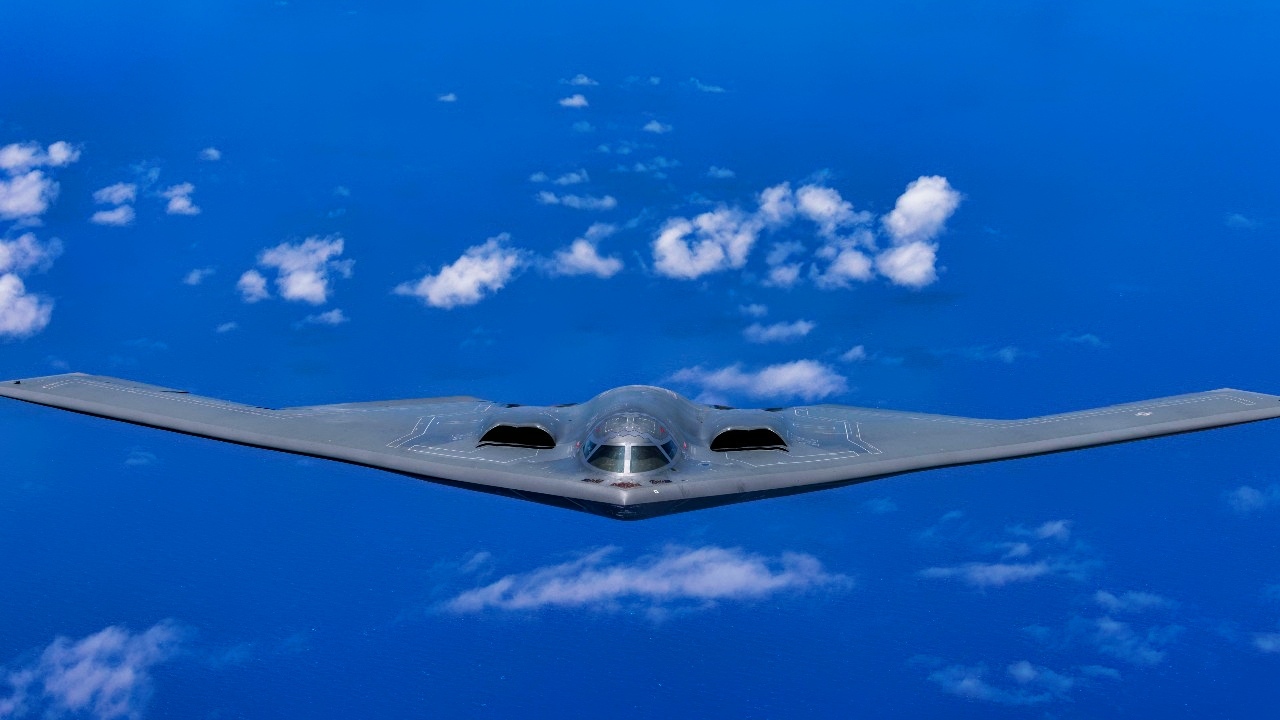
A U.S. Air Force B-2 Spirit bomber flies over the North Pacific Ocean, June 13, 2024. The speed, flexibility, and readiness of the Air Force’s strategic bombers plays a critical role in deterring potential adversaries and signaling unwavering support to allies and partners. Counter-maritime missions provide valuable training opportunities to improve interoperability and demonstrate that Air Force forces are capable of operating anywhere, anytime, to meet any challenge decisively. (U.S. Marine Corps photo by Sgt. Jose Angeles)
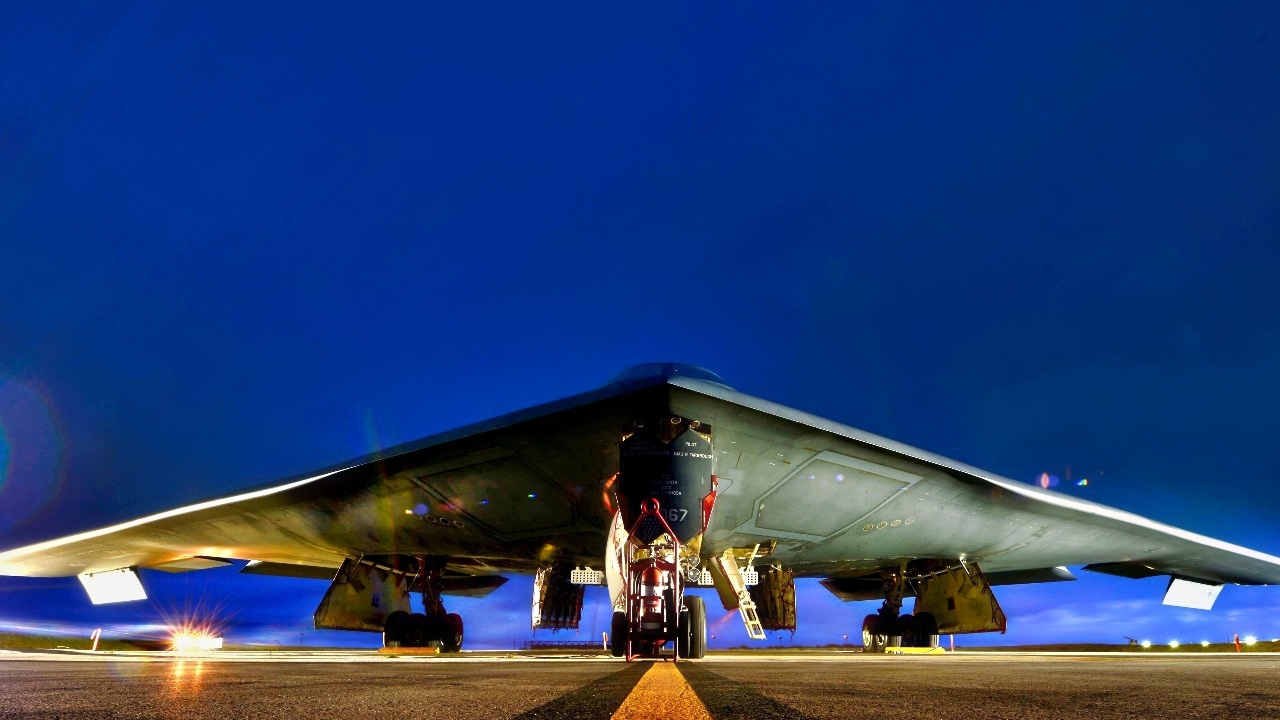
A U.S. Air Force B-2 Spirit aircrafts deployed from Whiteman Air Force Base, Mo., sits on the parkway after landing from a local training flight at Andersen Air Force Base, Guam, Jan. 17, 2017. Close to 200 Airmen and three B-2s deployed from Whiteman Air Force Base, Mo., and Barksdale Air Force Base, La., in support of U.S. Strategic Command Bomber Assurance and Deterrence missions. USSTRATCOM units regularly conduct training with and in support of the Geographic Combatant Commands. USSTRATCOM, through its global strike assets, helps maintain global stability and security while enabling units to become familiar with operations in different regions. (U.S. Air Force photo by Tech. Sgt. Andy M. Kin)
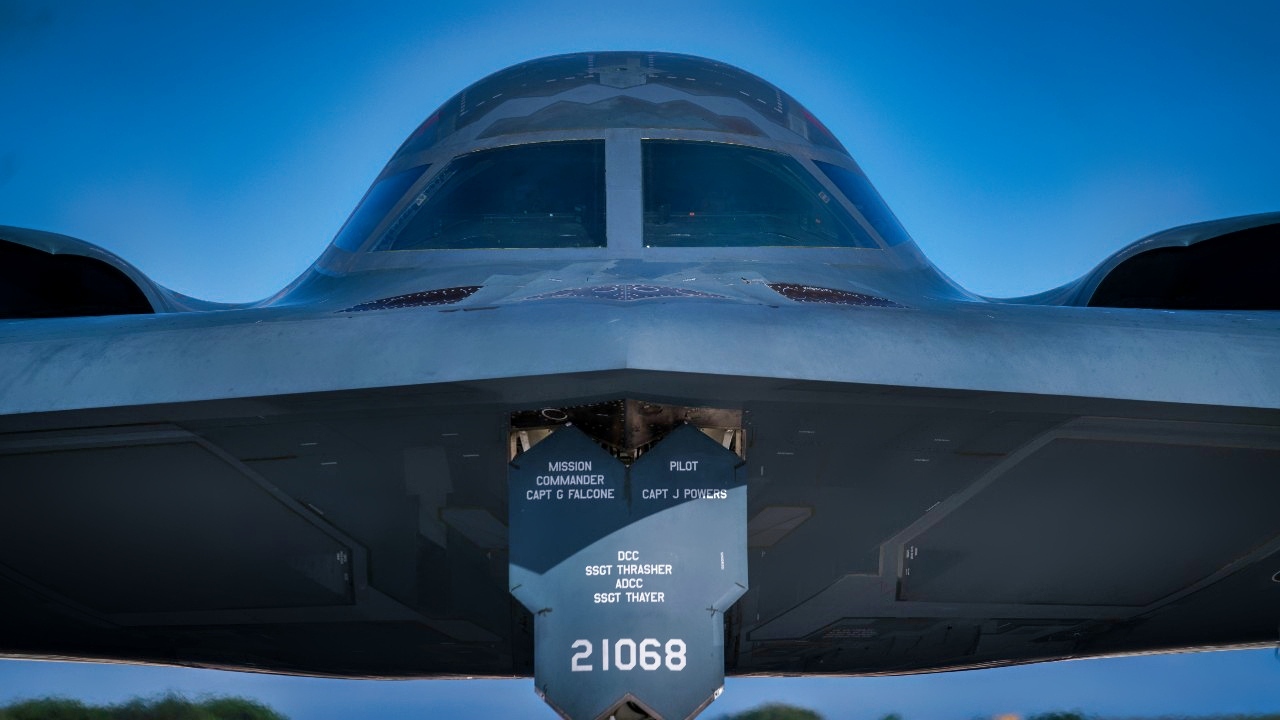
A B-2 Spirit, assigned to the 509th Bomb Wing, Whiteman Air Force Base, taxis on the flightline Jan. 8, 2018, at Andersen Air Force Base, Guam. Approximately 200 Airmen and three B-2 Spirits from Whiteman Air Force Base (AFB), Missouri, deployed to Andersen AFB in support of U.S. Pacific Command’s (PACOM) Bomber Assurance and Deterrence mission. U.S. Strategic Command bombers regularly rotate through the Indo-Pacific region to conduct U.S. PACOM-led air operations, providing leaders with deterrent options to maintain regional stability. During this short-term deployment, the B-2s will conduct local and regional training sorties and will integrate capabilities with key regional partners, ensuring bomber crews maintain a high state of readiness and crew proficiency (Air Force photo by Staff Sgt. Joshua Smoot) .
“Militarily speaking [Iran’s action] is not significant – this is what is called harassment fire to exhaust alert systems in nearby countries and scare people off,” Des Roches said.
Iran Can Fire A Few to Harass the Friendly Forces
So, Iran could prosecute the war piecemeal. Fire a low number of missiles and drones to harass shipping and then refrain from further use instead of saturation attacks that would run supplies low. Even one or two launches per day toward the Strait of Hormuz would be enough to curtail maritime trade and make the price of oil go up.
The core of the Iranian defense lies in the Khatam al-Anbiya construction works, which have spent decades burying the nation’s missile infrastructure under hundreds of feet of granite. While the B-2 Spirit and B-52 Stratofortress can deliver devastating ordnance, the strategic “fog of war” remains high because these targets are functionally “blind” to standard satellite verification.
Thus, Iran has an advantage with their hidden launchers. Time is on their side. The underground facilities are difficult to find and destroy. U.S. special operations forces would not have enough manpower and transportation capabilities to find all of these missile forces that have been taken out well by the Americans and Israelis, but they are still a factor, even in this reduced state.
Trump may have to stop and declare victory before all of the Iranian missile supplies can be destroyed, and that gives Iran a chance to fight another day with the missiles and drones they have left.
About the Author: Dr. Brent M. Eastwood
Author of now over 3,000 articles on defense issues, Brent M. Eastwood, PhD is the author of Don’t Turn Your Back On the World: a Conservative Foreign Policy and Humans, Machines, and Data: Future Trends in Warfare plus two other books. Brent was the founder and CEO of a tech firm that predicted world events using artificial intelligence. He served as a legislative fellow for US Senator Tim Scott and advised the senator on defense and foreign policy issues. He has taught at American University, George Washington University, and George Mason University. Brent is a former US Army Infantry officer. He can be followed on X @BMEastwood.


yeye
March 17, 2026 at 12:52 am
One reason could be that the current ‘operation epstein fury’ is costing the military $1.5 bil a day.
With that massive amount of money getting burned each day, you can’t do all that you wished.
But another reason could be that Iran is a very large country, larger than France and Italy combined.
Another reason is that due to bitter lessons learned from past wars, Iran has built vast underground facilities to manufacture drones and missiles.
Iran has shown great ingenuity in manufacturing important weapons and urgent military items, despite crushing sanctions and blockades.
What’s an operation or two against Iran. Just water on a duck’s back.
Trump says everything in Iran demolished. Military has run out of targets.
Trump is just boasting without checking himself.
GPG
March 18, 2026 at 7:39 am
Gulf of America? Really? Why? Will you suddenly start calling it by its name, Gulf of Mexico, in January 20, 2029? Will you go back and edit essays like this one? Or leave it for posterity for all to see an unserious attempt at appeasing the one who appeases Putin. Great magazine. Terrible choice of words.
xi-xi-xi
March 18, 2026 at 9:35 am
The Iran war of 2026, or the great Iran excursion, shows the massive need for drones with AI control systems which can help the drones to evade interception.
For example, the penetrating drone upon detecting incoming fire, releases floating flares and other pyrotechnic stuff that zips round and round creating a very large ball of heated air toward the oncoming interceptors.
The flares and related stuff are coated with iron filings that burn with massive heat, thus confusing the interceptors.
That will obsolete all the pac-3 & THAAD systems, and allow the drones to smash at will the airports and oil terminals.
After the battle or excursion is over, nobody will dare to allow uncle Sam to squat in their land, and throw his weight around.
FRED T ADAMS
March 18, 2026 at 1:59 pm
You don’t need to destroy a car with a missile or a bomb to stop it running. Make it run out of gas. The “gas” for these hidden missiles and production facilities is the money and morale of the people operating them. By choking Iran’s oil flow and trade structure, the money is reduced and will eventually be stopped. Meanwhile, the bombs keep falling. Unpaid and at risk, most Iranian operators will see the futility of fighting on. A multi-dimensional attack strategy will defeat them.
One remembers from the 70’s the story of a Japanese soldier still at war on a Pacific island. He did ultimately come in. He didn’t control missiles, but he still had a rifle and ammunition. He didn’t hurt many in his last 30 years of WWII.
A total win is a long time coming in any war. But, c’est la guerre.