

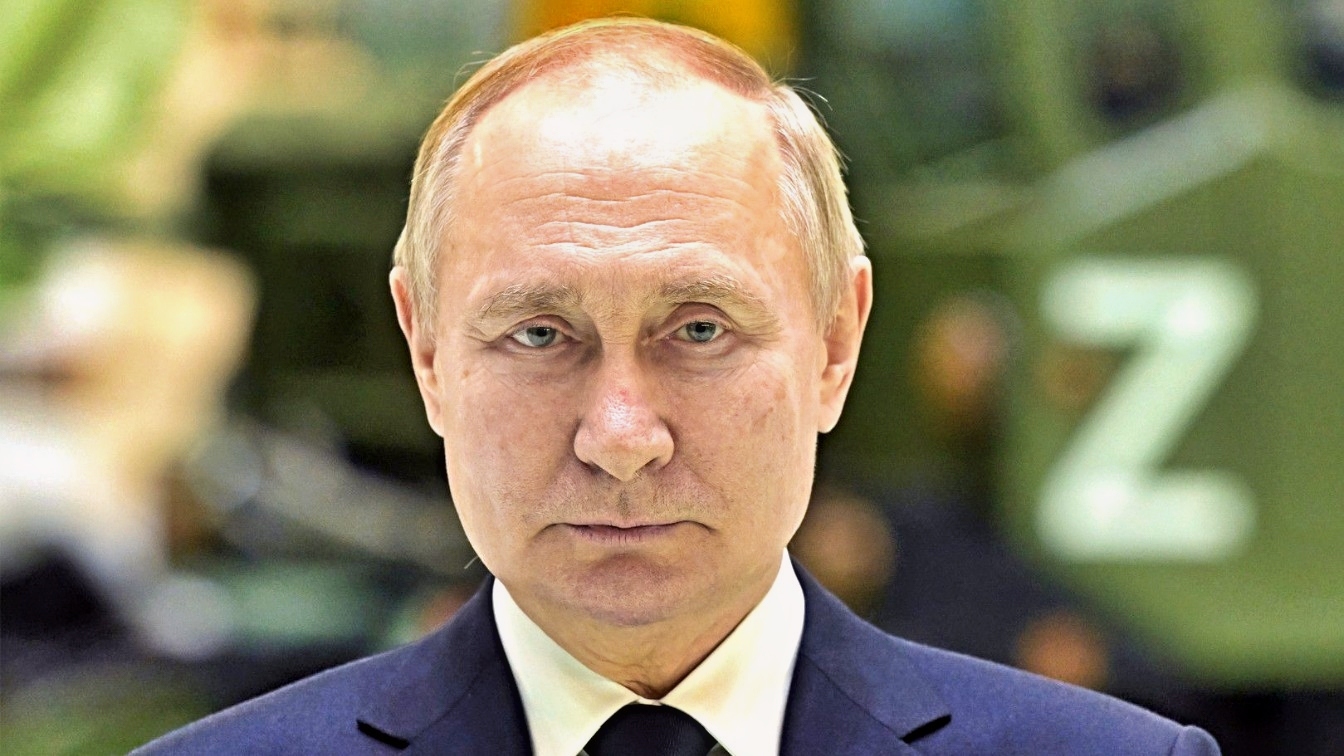
The peace talks in Abu Dhabi to end the war in Ukraine have concluded, but the negotiations have seemingly failed to forge an agreement between Kyiv and Moscow. Instead, the war drags on, without an end in sight.
While European interlocutors were invited to the meeting in the capital city of the United Arab Emirates, representatives from the continent expressed skepticism that a deal could be struck—instead voicing fears that Washington and Moscow could try to strike a deal above the heads of Ukrainians or other European countries.
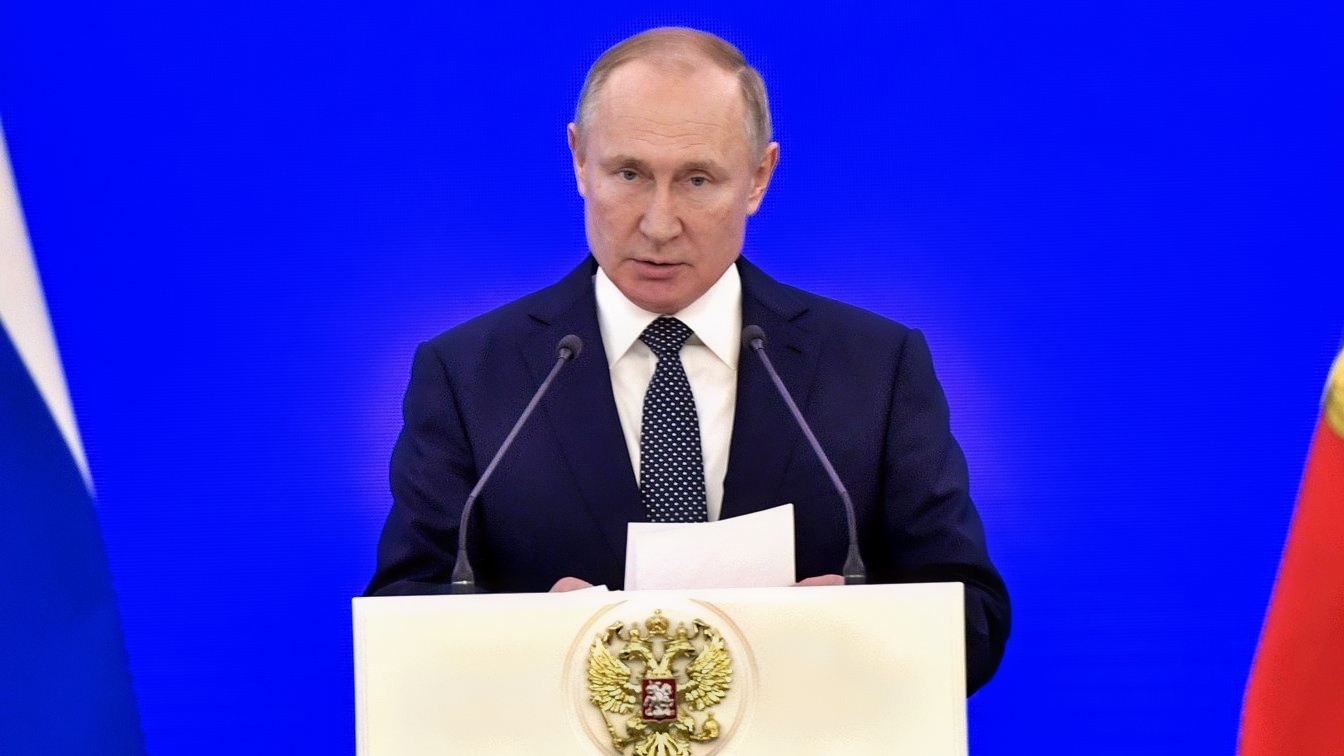
Putin Back in 2019 Russia Federation Photo
Putin Speaking to Large Crowd in 2019 Russian Federation Photo
Posting to X, French President Emmanuel Macron expressed his skepticism of Russia’s willingness to compromise on the ongoing war in Ukraine. “The first is to help Ukraine get through the winter. Ukrainians continue to resist with courage that commands admiration,” the French President wrote.
“The latest discussions with the American envoys made it clear: Vladimir Putin does not want to negotiate. His army is not advancing. It is even retreating and suffering considerable losses. But it is clear that he is betting on forcing Ukraine to its knees by stepping up strikes against civilians and trying to plunge the country into darkness this winter,” President Macron added, saying that Europe’s “responsibility is to thwart that bet.”
Talking in China
The leaders of multiple countries met at the opening of the annual Asia-Pacific Economic Cooperation forum, known as APEC, held this year in China.
But the most momentous meeting, according to observers, is the scheduled tripartite meeting between Trump, Putin, and Xi. Though what exactly the three will discuss is an open question, the talks could well mention concurrent wars in Iran and Ukraine, trade friction, curbs on artificial intelligence, and potentially nuclear proliferation questions.
Additionally, Trump and Putin are expected to hold a bilateral meeting and will likely discuss the war in Ukraine.
The last time Trump and Putin met was in Anchorage in 2025, but those talks then about forging a peace deal failed to yield any actionable results.
But during that meeting, European heads of state also expressed alarm about the possibility of Russia and the United States reaching an understanding about Ukraine without input from Ukraine or America’s allies in Europe.
War Ongoing
Ukrainian forces struck the Kerch Strait Bridge, the longest bridge in Europe and a pet project of Russia’s Vladimir Putin that connects Russia with Crimea, the Ukrainian peninsula annexed by Moscow’s forces in 2014.
Ukrainian forces reportedly targeted the bridge with multiple munitions, including their home-grown Flamingo cruise missiles.
Damage to the bridge, which has been targeted by Ukrainian forces before, was substantial, though part of the bridge may still be open to traffic.
Russia recently struck Ukrainian bridges in Kyiv spanning the Dnipro River, one facet of the Russian campaign against Ukrainian civilian infrastructure.
Stymied on the battlefield, the Kremlin’s forces have pivoted toward inflicting harm on Ukrainian civilians and targeting of power substations, wastewater treatment facilities, heating infrastructure, and residential buildings.
New light was shed on the scope of Russia’s battlefield losses recently, thanks to a hack of Rosstat, the Russian state’s official statistical service, by Silent Crow and Cyber Partisans BY, two hacker groups. Their efforts were notable for the quality of the data, essentially a register of Russian deaths that includes vital information, including the place of death.
Evaluations of the data suggest that over 400,000 Russian men have died in Ukraine, a figure that is considered an undercount and does not include those missing in action nor those who have been wounded.
Nonetheless, it is a shockingly transparent window into Russia’s enormous battlefield losses.
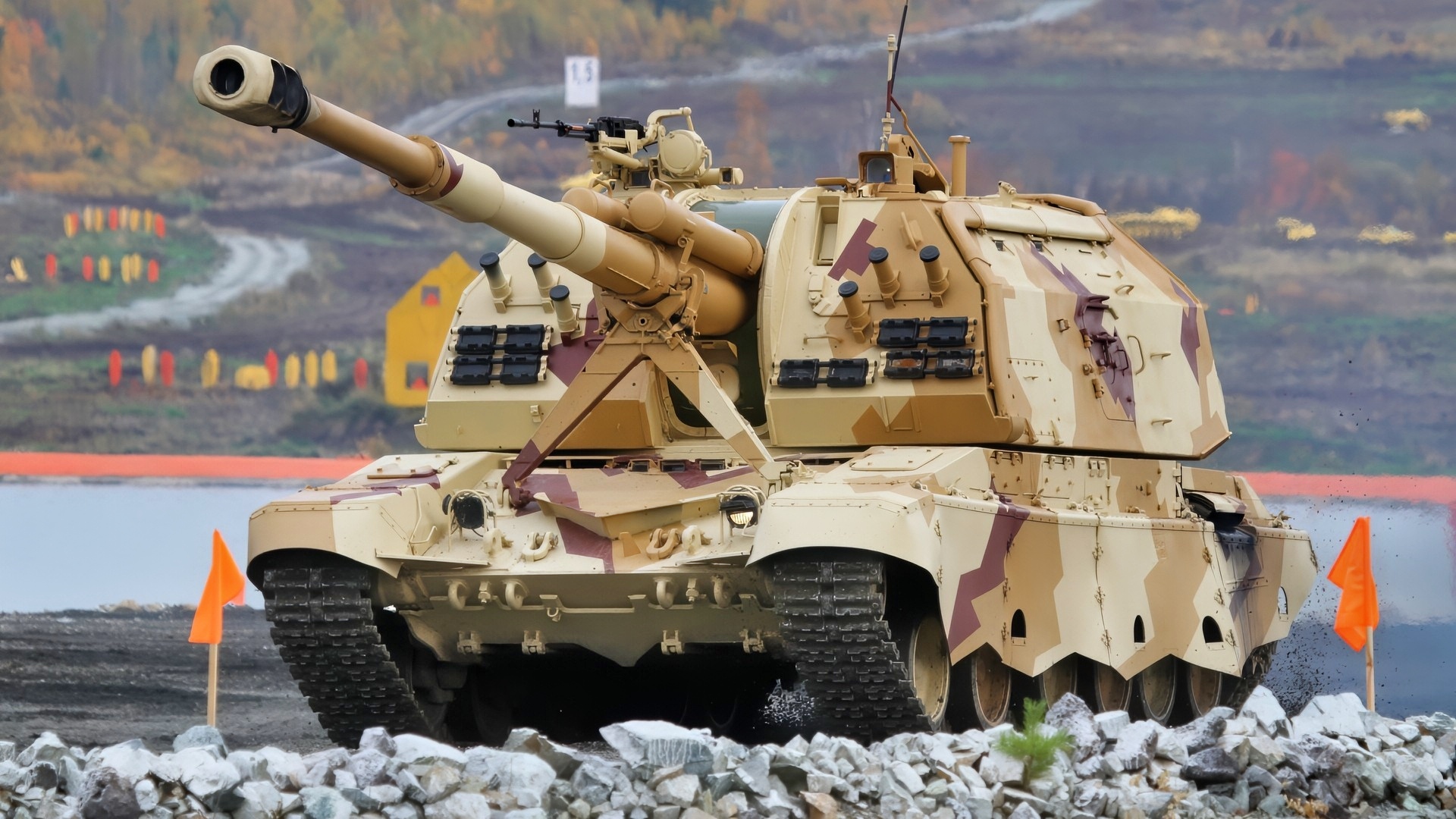
Russian Artillery. Image Credit: Creative Commons.

MSTA-S Russian Army. Image Credit: Creative Commons.
It amounts to more battlefield casualties in the nearly five years of fighting than all the wars involving the Kremlin since the end of the Second World War combined.
Ukraine & Europe
Disunity of Ukraine is a great boon to Russia and Putin, who would enjoy seeing a wedge driven between Washington and the other capitals in Europe.
But it is also a scenario that Europe’s leaders are loath to witness and eager to prevent.
Given Ukraine’s expertise in drone warfare and fighting the continent’s biggest, most belligerent member, there is an argument to be made that Europe can benefit from supporting the Ukrainian fight, and that the country could be a valuable addition to the NATO alliance — a fact acknowledged by the French leader.
“In any case, I want to state here my conviction that Ukraine, which has Europe’s largest conventional army, has a key role to play alongside NATO—a place where it fully belongs,” the French President wrote in his post on X.
“Our objective is clear: to secure a just and solid peace for Ukraine, then continue to work with everyone to strengthen a common security framework for Europe,” he added. “This is how we will protect Ukrainians, the French and all Europeans over the long term.”
About the Author: Caleb Larson
Caleb Larson is an American multiformat journalist based in Berlin, Germany. His work covers the intersection of conflict and society, focusing on American foreign policy and European security. He has reported from Germany, Russia, and the United States. Most recently, he covered the war in Ukraine, reporting extensively on shifting battle lines in Donbas and writing about the war’s civilian and humanitarian toll. Previously, he worked as a Defense Reporter for POLITICO Europe. You can follow his latest work on X.


