

Russia fired a ballistic missile at a privately operated training site in the Kyiv region on July 24 while Ukrainian defense companies were holding an exhibition there. At least 10 people were killed, and nearly 100 were injured, according to a Washington Post report from Kyiv.
Russia’s Defense Ministry later claimed that the exhibition was the intended target and said unmanned systems used against Russian territory were being displayed. Ukrainian officials confirmed that defense-industry representatives were present, although the full list of attendees, exhibits and companies had not been released publicly.

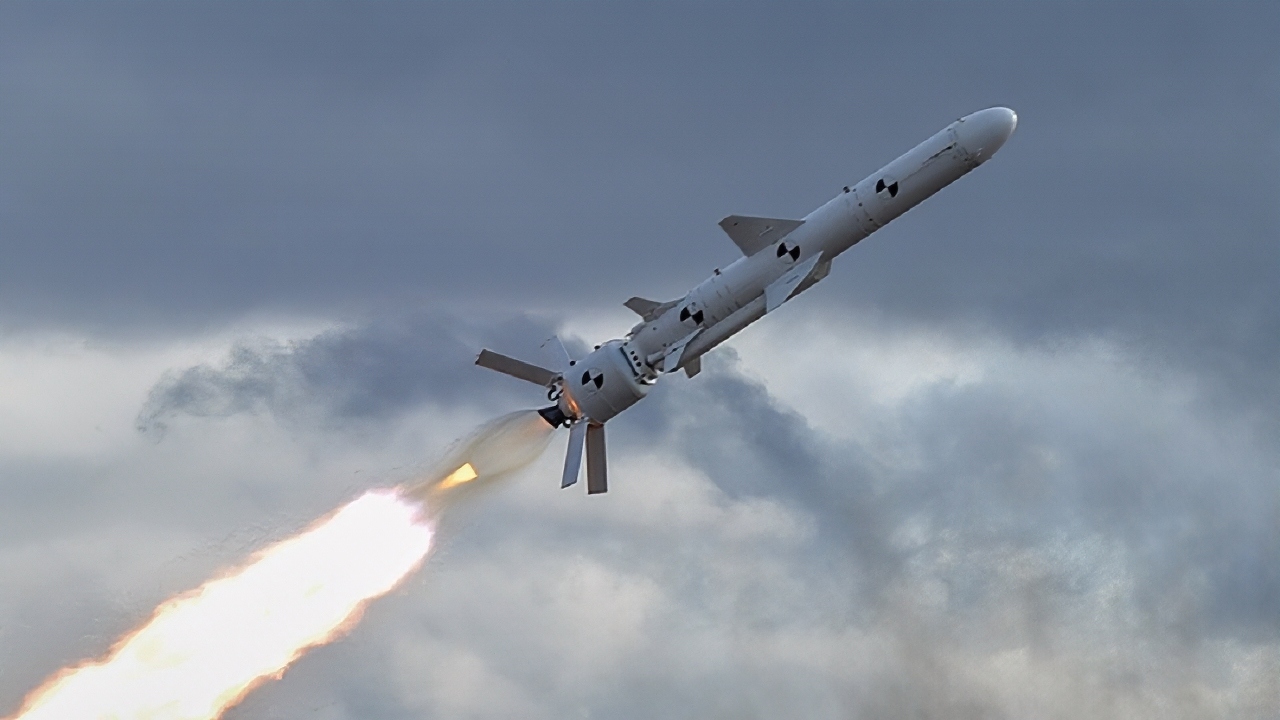
Image Credit: Creative Commons. Image is of a Russian missile being tested.
The strike hit a site in the Bucha district north of the capital and also damaged nearby homes and vehicles. Rescue crews completed their search of the rubble later Friday. The Associated Press reported that the facility was privately operated rather than controlled directly by Ukraine’s armed forces.
Ukrainian prosecutors opened two investigations. One examines Russia’s attack and possible violations of the laws of war. The other will determine whether negligence or improper planning placed workers, visitors and nearby residents at avoidable risk. Reuters reported that President Volodymyr Zelensky called the decision to hold the gathering under those conditions unacceptable.
Russia Targeted Ukraine’s Expanding Defense Industry
Ukraine’s arms sector has become central to its ability to continue fighting. The National Security and Defense Council estimates that domestic production capacity could reach $55 billion in 2026, with Ukrainian companies supplying drones, electronic-warfare equipment, armored vehicles, missiles and battlefield software.
That growth has also made engineers, manufacturers and testing facilities important Russian targets. Moscow has repeatedly struck industrial areas around Kyiv, while Europe has tried to support safer and more dispersed Ukrainian drone production. Ukraine’s ability to build millions of unmanned aircraft each year has changed the war and increased the value of the people who design and manufacture them.
Ukraine’s Security Decisions Are Under Scrutiny
The event had been promoted online, while the Ukrainian Council of Defense Industry said it had not organized the gathering. Investigators will need to determine who approved the site, what threat assessment was conducted, whether suitable shelter was available, and why a concentration of specialists was permitted near residential property during a period of frequent ballistic attacks.
The General Staff said the grounds were outside its jurisdiction but added that defense events require the highest security standards. The domestic negligence investigation will have to establish responsibility rather than assign it through public speculation.
Ukraine has faced a similar failure before. In August 2023, a Russian missile struck central Chernihiv while a drone-technology event was being held in a theater. Seven people were killed and 144 were wounded, according to Reuters’ account of that attack. The July 24 strike raises the question of whether the security lessons from Chernihiv were fully applied.
Russian Ballistic Missiles Leave Almost No Warning
Ballistic missiles can reach the Kyiv area within minutes, leaving little time to move a large group after an alarm begins. Ukraine’s warning window can be as short as two to four minutes. Event planning therefore has to assume that evacuation after launch may be impossible.
One day before the strike, Zelensky met Raytheon representatives to discuss joint production of Patriot interceptors. The proposed partnership could improve Ukraine’s future supply, but it cannot protect every factory, test site, and industry gathering during the current campaign.
Ukraine is seeking more Patriot interceptors and developing domestic ballistic-missile defenses. Russia has also altered some missile flight profiles to make terminal interception more difficult. Air defense reduces risk, but it cannot substitute for dispersal, secrecy and hardened facilities.
The Kyiv Strike Created Two Separate Questions
The two inquiries address different responsibilities. Moscow ordered the attack and publicly claimed the exhibition as its target. Ukrainian officials must determine whether organizers failed to protect participants and nearby residents from a threat that was already well understood.
Kyiv region declared July 25 a day of mourning. The next findings will come from the criminal investigation, casualty identification and any official account of how the exhibition was approved. Ten people are dead, nearly 100 are injured, and Ukraine is again examining why a defense gathering remained vulnerable to a ballistic missile.
About the Author: Harry J. Kazianis
Harry J. Kazianis (@Grecianformula) is the former Senior Director of National Security Affairs at the Center for the National Interest (CFTNI), a foreign policy think tank founded by Richard Nixon based in Washington, DC. Harry has over a decade of experience in think tanks and national security publishing. His ideas have been published in the NY Times, The Washington Post, The Wall Street Journal, CNN, and many other outlets worldwide. He has held positions at CSIS, the Heritage Foundation, the University of Nottingham, and several other institutions related to national security research and studies. He is the former Executive Editor of the National Interest and the Diplomat. He holds a Master’s degree focusing on international affairs from Harvard University.


