


Key Points and Summary – Italian Air Force Eurofighter Typhoons, flying NATO’s Baltic Air Policing mission from Ämari Air Base in Estonia, recently intercepted a rare Russian Tu-134UBL “Black Pearl” training aircraft flying without a filed flight plan or radio contact.
-The Black Pearl, a militarized Tu-134 with a bomber-style nose and strategic bomber avionics, trains crews for Tu-22M3 and Tu-160 missions and doubles as an intelligence platform.
-Escorted by Su-30SM fighters and a Su-24 reconnaissance jet, it was shepherded out of the area. The episode underscores Russia’s frequent Baltic probing flights and the growing hybrid pressure on NATO’s eastern flank.
Why NATO Scrambled on a Rare Russian Tu-134 ‘Black Pearl’ Flight
NATO fighter jets patrolling the Baltic region recently intercepted a rarely seen Russian Tupolev Tu-134 training aircraft. The incident was reported on Nov. 24, but the exact date of the intercept has not been revealed.
The aircraft, which specialists nickname “Black Pearl,” was intercepted over the Baltics by Italian Air Force Eurofighters. A statement from NATO’s Allied Air Command explained the Eurofighter Typhoons were stationed at Ämari Air Base in Estonia. They intercepted a flight of several Russian military aircraft and escorted them out of the immediate area.
Accompanied by these Russian fighter aircraft was the Black Pearl, which is specifically a Tupolev Tu-134UBL (also designated Tu-134BKM).
This is a heavily specialized military variant of an old Tu-134 passenger aircraft.
The special equipment on board includes avionics that are nearly identical to those installed on Russian Aerospace Forces (VKS) strategic bombers.
This hardware is installed in the aircraft to train VKS crews before they transition to flying missions on the Tu-22M3 and Tu-160 strategic bombers.

Russia Tu-160 Bomber on Tarmac. Image Credit: Creative Commons.
In addition to all the onboard systems and sensors, the aircraft’s forward fuselage is structurally modified with a sharp, elongated nose to match that of a Tupolev bomber.
Combined Formation
In the same group of aircraft were two Sukhoi Su-30SM fighters—two-seat Su-30s of a variant introduced in the 1990s.
Flying alongside them was a reconnaissance variant of the Su-24 fighter-bomber.
According to NATO Air Command, the Russian aircraft did not file a flight plan or maintain radio contact, prompting the standard NATO response: a controlled intercept by the Eurofighters.
“NATO air policing in the Baltic region ensures security of NATO airspace under Eastern Sentry,” NATO Allied Air Command stated, referring to standard operations on the alliance’s eastern flank.
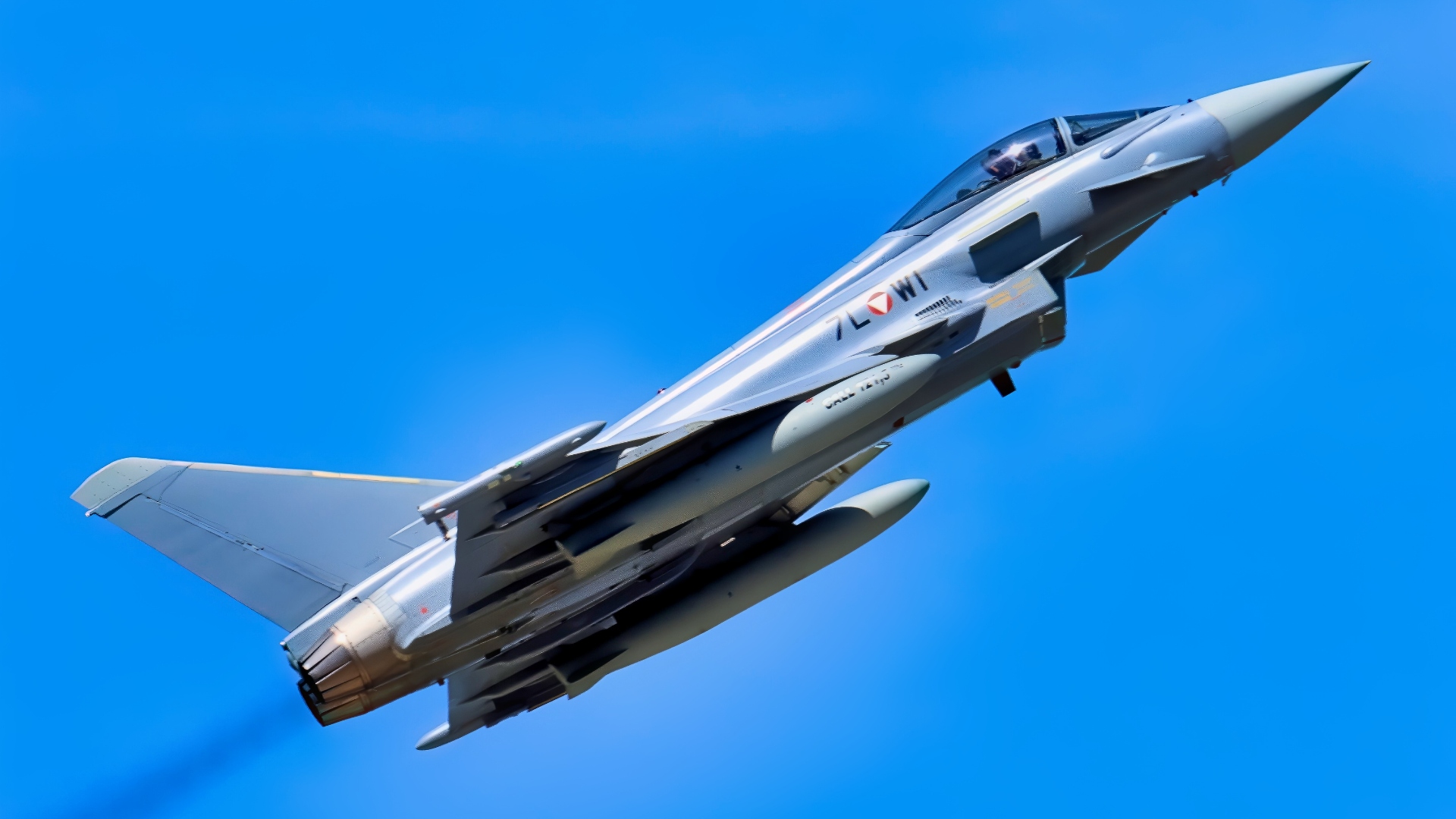
Eurofighter Typhoon. Image Credit: Creative Commons.
The Black Pearl was last seen in 2020, when it was intercepted by Belgian fighter jets over Lithuania. That incident also occurred during a NATO air policing mission.
The Baltic Sea has been a traditional hotspot for encounters between NATO and Russian forces. This interception of the Black Pearl is not an isolated event.
“This is not a coincidence either,” said a retired Russian aerospace designer familiar with the aircraft.
Russian incursions into NATO-protected airspace have become common—sometimes occurring weekly, if not even more frequently—and they have increased markedly since Russia’s invasion of Ukraine in February 2022.
“These are the kind of actions that the Russian military is going to continue carrying out in the region,” he explained. “This is another example of the hybrid warfare that Russia is known for.”
The Black Pearl platform is also used for intelligence collection, as it is equipped with surveillance and communication capabilities.
Black Pearl Details
The Black Pearl is painted almost entirely black—hence the nickname—with red-and-white stripes along its sides and the Russian flag on its tail.
It appears to have another role as well: acting as a VIP transport.
The jet involved in the most recent intercept was reportedly marked with the registration RF-1204, which is described as the Tu-134A-4 version of this aircraft.
This designation is often used interchangeably with the -UBL variants.
The VKS reportedly has approximately 17 of the Tu-134UBL aircraft still in active service. Supposedly another 25 fuselages are in storage.
Ukraine previously operated seven of these type at its air bases in Mykolaiv and Pryluky.
Russia indicated plans to retire the Tu-134 fleet following a fatal civilian crash in 2011.
However, also according to the Ukrainian Defense Express, Russian defense officials deferred that decision in 2013, citing the need for a training platform to support long-range aviation.
About the Author: Reuben F. Johnson
Reuben F. Johnson has thirty-six years of experience analyzing and reporting on foreign weapons systems, defense technologies, and international arms export policy. Johnson is the Director of Research at the Casimir Pulaski Foundation. He is also a survivor of the Russian invasion of Ukraine in February 2022. He worked for years in the American defense industry as a foreign technology analyst and later as a consultant for the U.S. Department of Defense, the Departments of the Navy and Air Force, and the governments of the United Kingdom and Australia. In 2022-2023, he won two awards in a row for his defense reporting. He holds a bachelor’s degree from DePauw University and a master’s degree from Miami University in Ohio, specializing in Soviet and Russian studies. He lives in Warsaw.


