

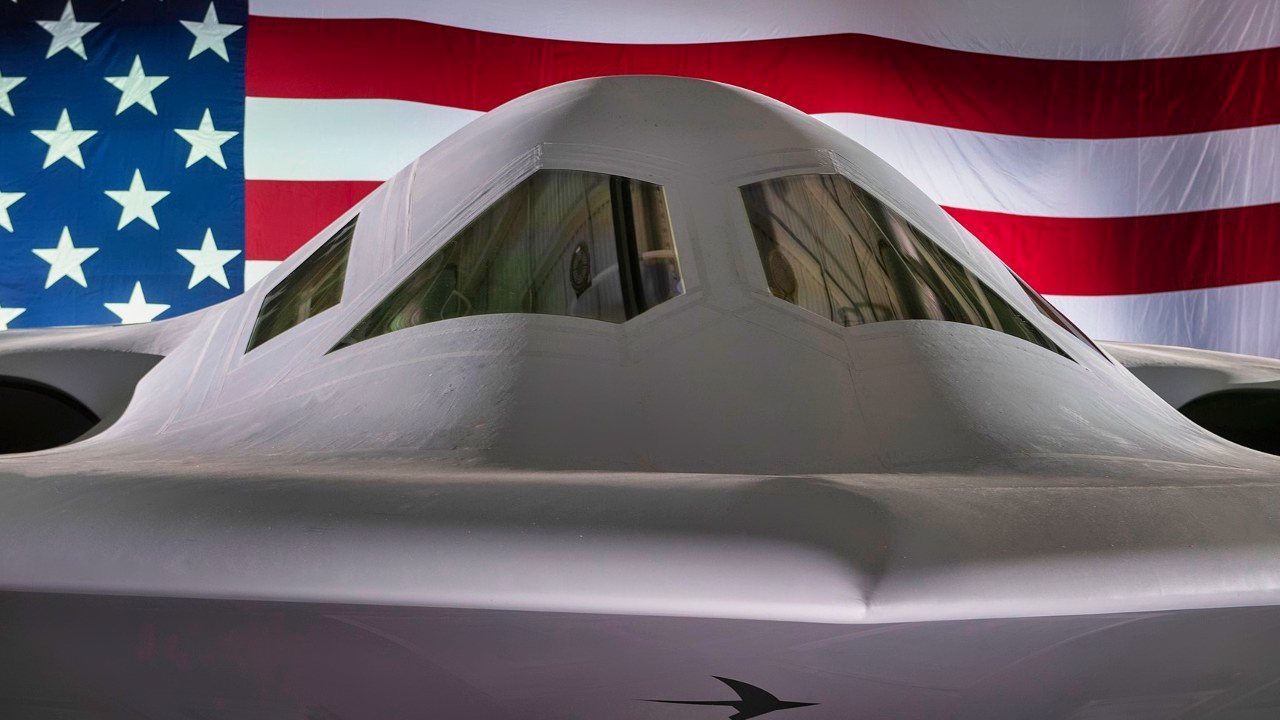
PUBLISHED on August 14, 2025, 10:24 AM EDT – Key Points and Summary – Northrop Grumman is engineering the B-21 Raider to be the stealthiest aircraft ever created and the world’s first operational sixth-generation bomber.
-Designed as a successor to the B-2 Spirit, the smaller B-21 incorporates more advanced, all-aspect stealth, including a reduced radar cross-section.
-It will also serve as a networked command and control asset. The B-21 is a critical modernization program for the U.S. Air Force, which is currently facing a “bomber deficit” with its oldest and smallest fleet in history.
Is The B-21 Raider The Stealthiest Aircraft Ever?
The B-21 Raider is designed to be a highly stealthy bomber. Northrop Grumman claims it will be the stealthiest ever built.
The Raider incorporates advanced stealth technologies, including radar absorbing materials and stealthy design features, to evade detection by radar and other sensors. The B-21’s stealth capabilities are intended to allow it to penetrate advanced air defense systems.
The B-21 Raider will operate as more than a stealth bomber. It will also serve as a network command asset, controlling drones and acting as an airborne sensor node. It will perform command and control, collecting and distributing intel to serve as a stealthy spy platform.
It is a sort of ironic twist that the B-21 Raider is named after the famed Doolittle Raiders of World War II. Those Raiders flew from U.S. carriers to bomb Japan in the dark early days of the war. After their bombing runs, they flew on to China. Now Raiders are being built with the possibility in mind of a future war with Beijing – they might bomb China itself.
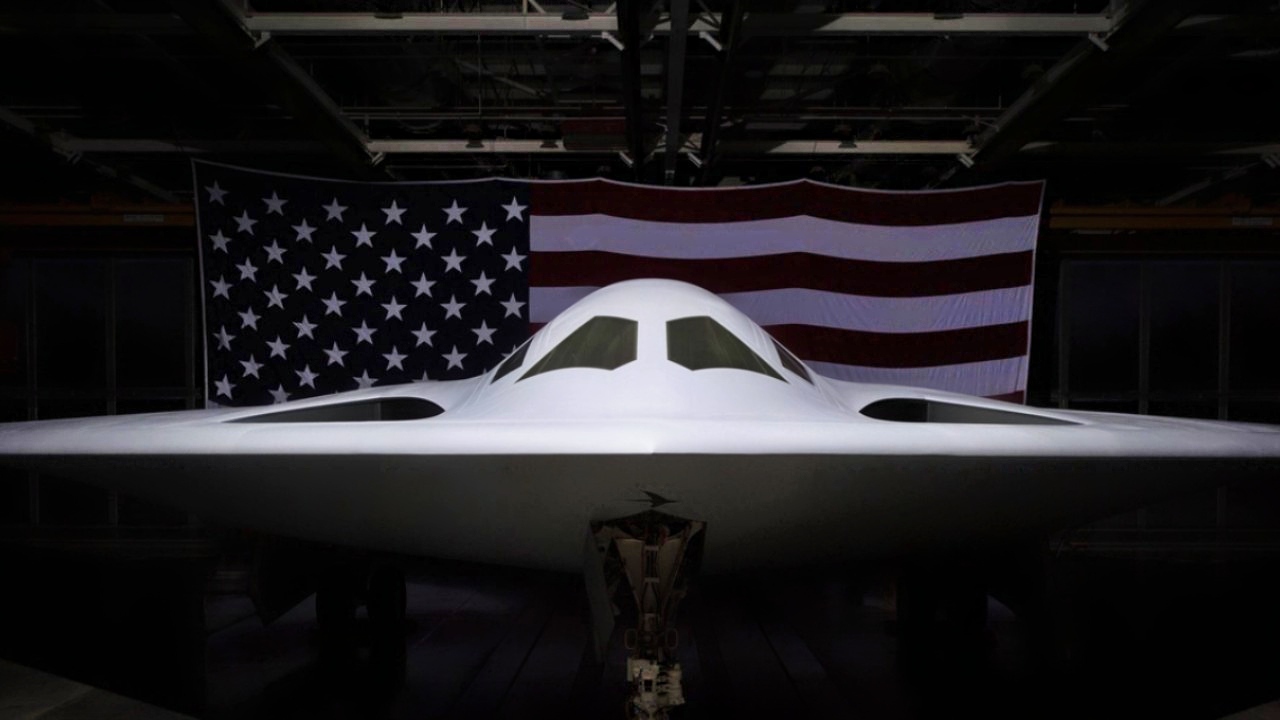
B-21 Raider Bomber. Image Credit: Creative Commons.
Sixth-Generation Stealth
The B-21 will be the first operational sixth-generation stealth aircraft. The Air Force has ramped up production of the bomber, which means that the testing phase for the aircraft has gone better and faster than expected. The first B-21s could be operational by 2026.
The B-21 Raider retains the B-2’s horizontal flying wing design, blending wing and body to elude enemy ground radar like the Spirit does. However, the B-21 appears even stealthier, sleeker, and more elusive than the larger B-2.
The inlets of the B-21 blend smoothly into the fuselage. They join the rounded fuselage and wing in a flatter, more horizontal configuration than the B-2.
A combination of features seeks to minimize the aircraft’s radar cross-section, making it difficult to detect. Such attributes include a flying wing shape with a smooth, horizontal exterior; internally buried engines; and special radar-absorbing materials.

The B-21 Raider program is on track and continues flight testing at Northrop Grumman’s manufacturing facility on Edwards Air Force Base, California. The B-21 will have an open architecture to integrate new technologies and respond to future threats across the spectrum of operations. The B-21 Long Range Strike Family of Systems will greatly enhance mission effectiveness and Joint interoperability in advanced threat environments, strengthening U.S. deterrence and strategic advantage. (U.S. Air Force photo)

The B-21 Raider was unveiled to the public at a ceremony December 2, 2022 in
Palmdale, Calif. Designed to operate in tomorrow’s high-end threat environment, the B-21 will play a critical role in ensuring America’s enduring airpower capability. (U.S. Air Force photo)
The B-21 may appear like a small bird to enemy radar, as electromagnetic pings cannot bounce off in a way that enables a return image showing the shape, size, and speed of the aircraft.
The B-21 manages its thermal signature by ensuring that its exhaust and the aircraft itself closely mimic the surrounding atmosphere. This makes it harder for thermal sensors to detect.
Unlike the B-2 Spirit that came before it, the B-21 is designed for stealth optimization from all angles. There is no direction from which it becomes easier to detect.
The B-21 Raider’s stealth allows it to operate in contested environments in which air superiority is not guaranteed. The aircraft should be able to penetrate areas covered by advanced enemy air defenses.
Bringing The Air Force Modernization To The Front
The U.S. government has allowed the strength of the Air Force to decline since the collapse of the Soviet Union. In 1987, the Air Force had 4,468 fighter jets and 331 bombers. That fleet was not only large, but also rather new, and its readiness was excellent.
On any given day, more than 80 percent of the Air Force’s fighters and B-52 bombers were mission-capable.
Following the end of the Cold War, decisions related to the war on terror, and general mismanagement of the air fleet, left the Air Force with just 2,038 fighters and 140 bombers. Today’s air fleet is the oldest, smallest, and least ready in Air Force history.
Only 60 percent of the Air Force’s combat aircraft are mission-capable on any given day, and the age of aircraft has increased. Indeed, the average fighter jet is 29 years old, while the average bomber is 49 years old. The B-21 is needed – and the 100 that the Air Force has projected to order will not suffice. The service really needs about twice that number.
The B-21 Raider will soon act as a new sixth-generation nuclear deterrent, with the capability to strike deep into the heart of contested environments anywhere.
About the Author: Steve Balestrieri
Steve Balestrieri is a National Security Columnist. He served as a US Army Special Forces NCO and Warrant Officer. In addition to writing on defense, he covers the NFL for PatsFans.com and is a member of the Pro Football Writers of America (PFWA). His work was regularly featured in many military publications.
Military Matters
The F-22 Raptor Just Keeps Getting Better


David
August 17, 2025 at 4:26 pm
Good article. Very interesting. I offer two comments about Doolittle’s raid:
1). The 16 planes (B-25s) ALL took of from one carrier, the U.S. Hornet, and
2). not all of the planes made it to China, one went to Russia, and one or more may have ditched in the Sea of Japan.
Dylan
August 19, 2025 at 6:38 pm
hi