


PUBLISHED ON August 11, 2025, 1:57 PM EDT – Key Points and Summary – The B-52 Stratofortress, now its latest B-52H variant, a Cold War-era bomber, remains a cornerstone of U.S. airpower due to its massive 70,000-pound payload and incredible versatility.
-With a distinguished combat record stretching from Vietnam to the fight against ISIS, the venerable “BUFF” is now undergoing a major modernization.
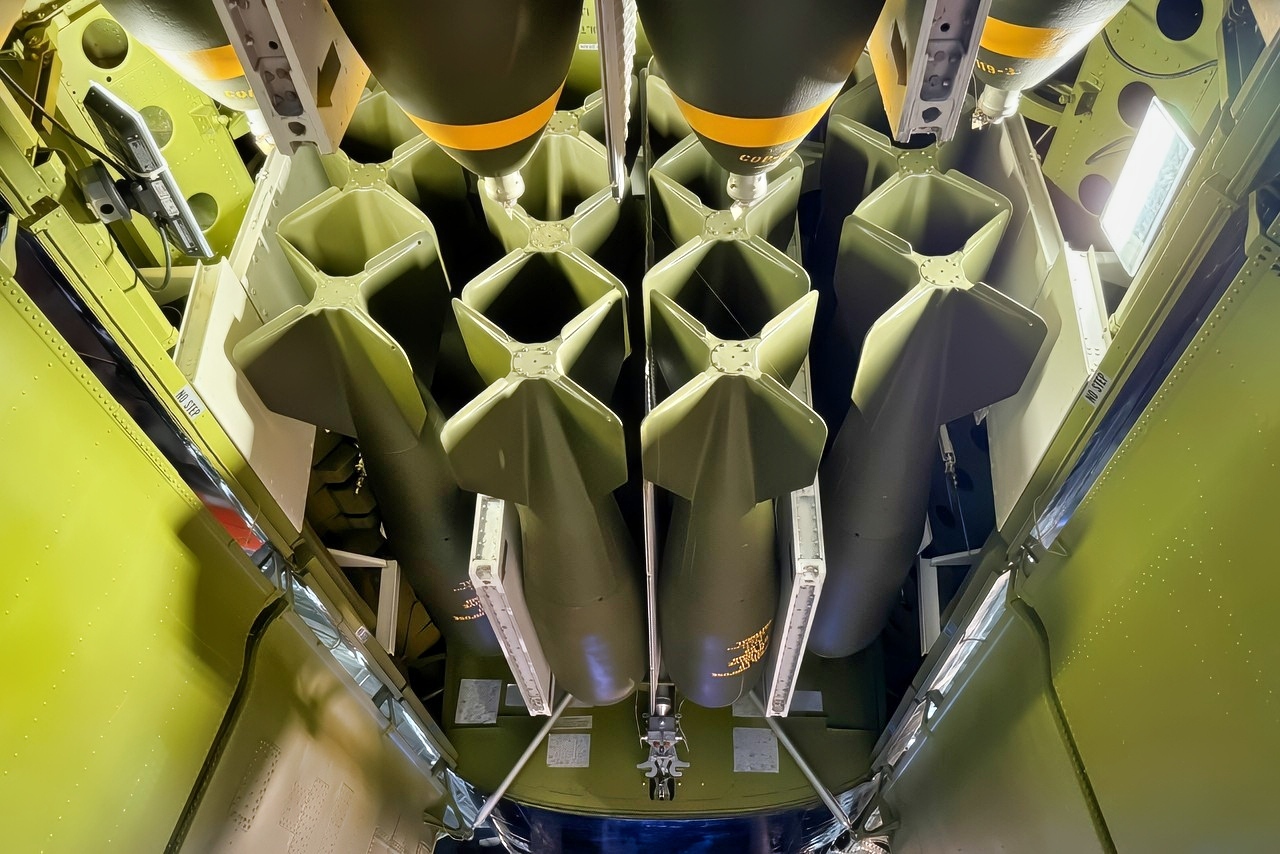
Bombs Inside the B-52 Bomber. Photo taken by Harry J. Kazianis/National Security Journal.
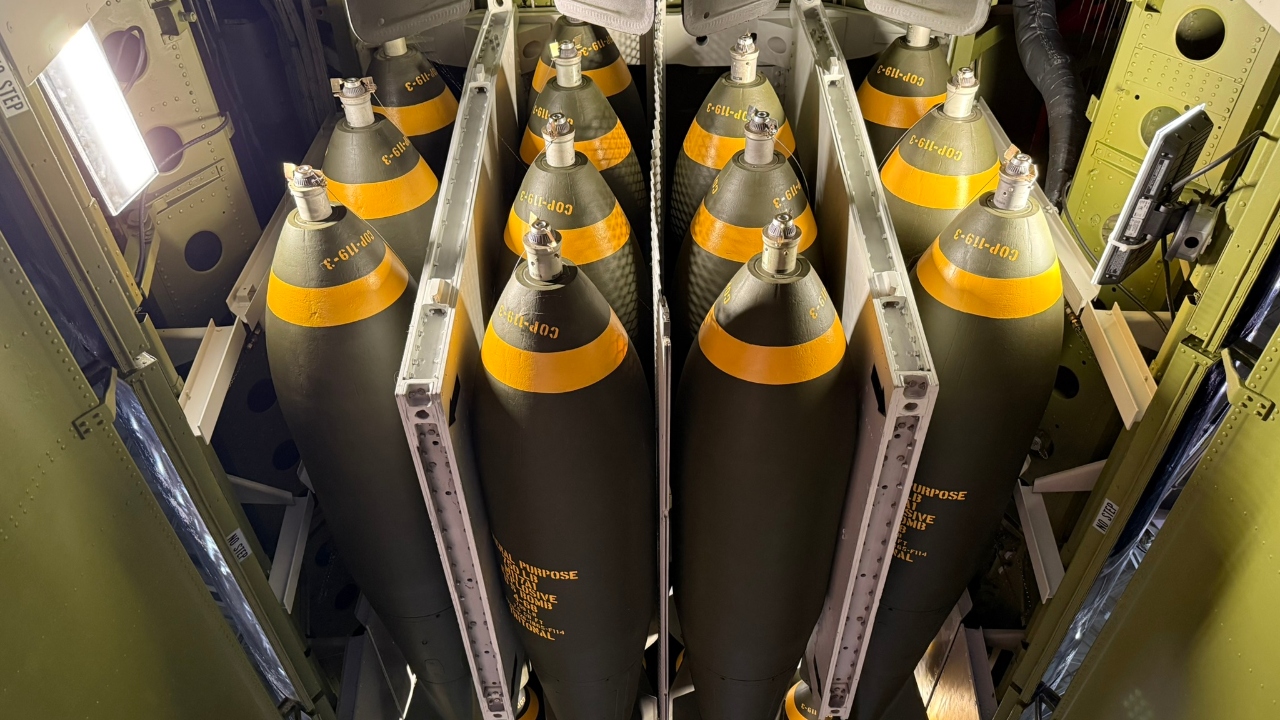
B-52 Bomber Bombs. Image Credit: National Security Journal.
-Upgrades include new Rolls-Royce engines, advanced radar, and the ability to carry hypersonic missiles.
-These enhancements will redesignate the bomber as the B-52J and are expected to keep the legendary aircraft in service through 2050, a nearly 100-year lifespan.
B-52, The Bomb Truck That Still Packs A Wallop
The B-52 Stratofortress bomber has been in the American inventory since 1955, when the B-52B became operational with the Air Force. The only B-52s still in service are the B-52H models. The last one was built in 1962.
The B-52H can carry and launch the widest variety of weapons in the United States’ inventory, including nuclear weapons, gravity bombs, cluster bombs, precision guided missiles, and joint direct attack munitions. It carries a massive payload.
The Air Force currently expects to operate B-52s through 2050.
B-52H’s Incredible Payload
The B-52H variant was introduced in 1961 and featured significant improvements over earlier models, including more efficient turbofan engines, upgraded avionics, and enhanced weapons capabilities.
A total of 102 B-52H aircraft were built, and all were delivered to the Strategic Air Command, which later became part of the Air Force Global Strike Command.
The B-52H is a large, subsonic, long-range bomber with a high-wing design and eight engines mounted in four twin pods beneath the wings. Its spacious airframe allows it to carry a massive payload over intercontinental distances with a range of 8,800 miles without the need for aerial refueling.
The B-52H can carry approximately 70,000 lbs (35 tons) mixed ordnance—unguided bombs, laser-guided bombs, Joint Direct Attack Munitions (JDAMs), and standoff weapons such as the AGM-158 Joint Air-to-Surface Standoff Missile (JASSM). It is also capable of launching air-launched cruise missiles (ALCMs), including nuclear-capable variants, and the Miniature Air Launched Decoy.
According to Airforce Technology, the B-52H’s conventional weapons payload includes eight AGM-84 Harpoon missiles, four AGM-142 Raptor missiles, 51,500 lb bombs, 301,000 lb bombs, 20 AGM-86C conventional air-launched cruise missiles, 12 joint standoff weapons (JSOW), 12 joint direct-attack munitions, and 16 wind-corrected munitions dispensers (WCMD).
Additionally, the B-52H can deliver 51,500 lb, 301,000 lb, and 202,000 lb Navy mines.
The B-52 will also carry the Hypersonic Attack Cruise Missile (HACM). The HACM is a US Air Force project focused on developing a scramjet-powered hypersonic weapon. It’s designed to be an air-launched cruise missile capable of speeds exceeding Mach 5, making it a strategically important weapon for the military.
The high speed and maneuverability of HACM are intended to make it more difficult for adversaries to intercept.
The B-52 Has A Long, Distinguished Combat Record
During the Cold War, the B-52 served as a nuclear deterrent against the Soviet Union. The Vietnam War saw extensive use of the B-52 as both a strategic and tactical support bomber.
The bomber conducted its first Arc Light mission in June 1965, where 27 bombers flattened a wide swath of territory that Viet Cong guerrillas were reported to be massing.
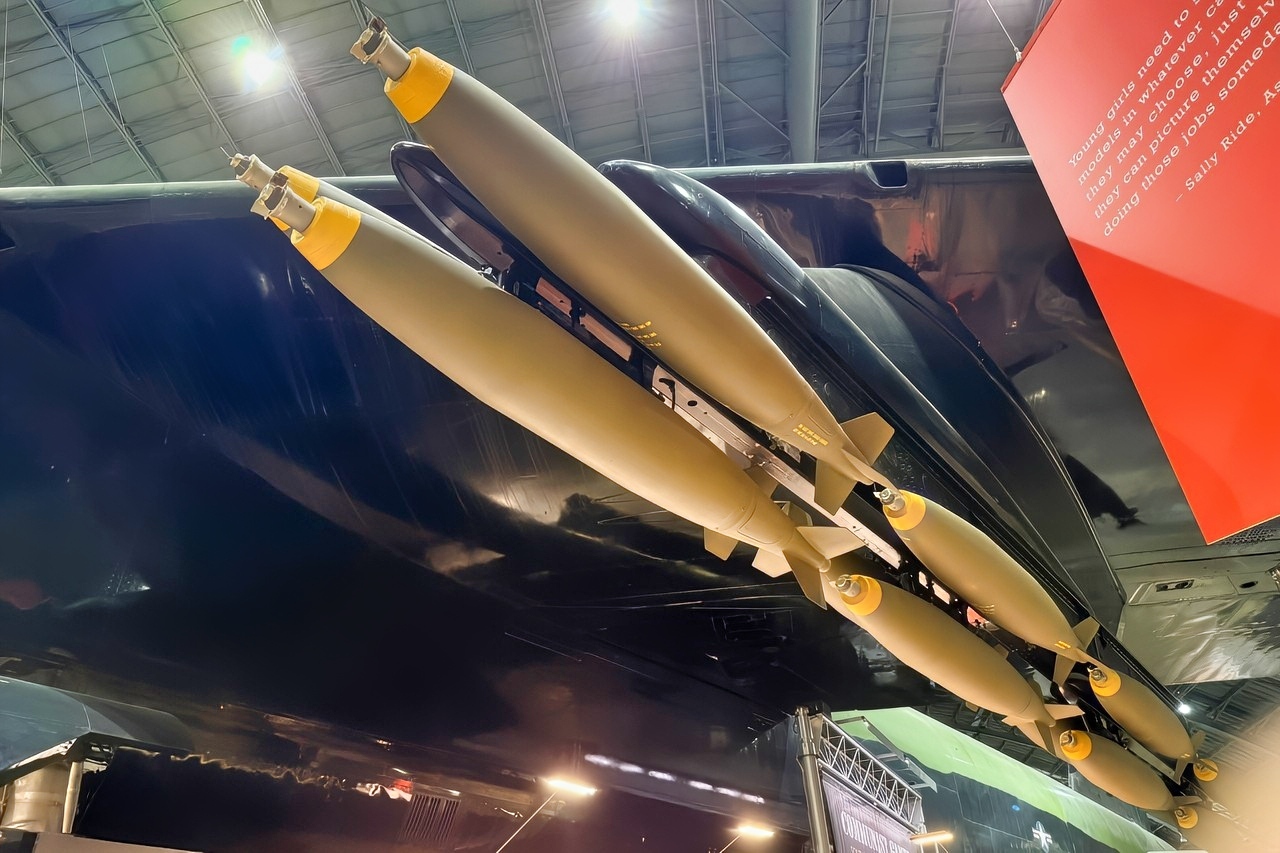
B-52 Bomber Bombs Ready to Go. Image Credit: National Security Journal.
Later that year, in November 1965, B-52s supported the 7th Cavalry during the Battle of Ia Drang Valley, in its first use as a tactical support weapon. In the late stages of the war, Operation Linebacker II, B-52s bombed Hanoi and mined Haiphong Harbor. Losses were heavy, but it was soon after the operation that North Vietnam signed the peace treaty that ended American involvement.
B-52 airstrikes were a large part of Operation Desert Storm. Starting on January 16, 1991, a flight of B-52Gs flew from Barksdale Air Force Base, Louisiana, airrefueled en route, struck targets in Iraq, and returned home – a journey of 35 hours and 14,000 miles (23,000 km) round trip.
It set a record for the longest-distance combat mission, breaking the record previously held by an RAF Vulcan bomber in 1982; however, this was achieved using forward refueling.
During Operation Desert Storm, B-52s flew about 1,620 sorties and delivered 40 percent of the weapons dropped by coalition forces. The “BUFF” served in the wars in Afghanistan, Iraq, Yugoslavia, and Syria during operations against ISIS.
B-52H Upgrades Coming
The B-52H is being modernized with new Rolls-Royce F130 engines, state-of-the-art radar systems, engine pylons, digital engine controls, and other upgrades to the venerable bomber, extending its service life into the 2050s. The planned Initial Operational Capability for the new radar is 2027.
The upgrade, led by US defense contractor Raytheon in collaboration with aerospace giant Boeing, replaces the aging AN/APQ-166 with a new active electronically scanned array (AESA) radar, designated AN/APQ-188. This hybrid system is based on radars used in the F-15 and F/A-18.
Once complete, the aircraft will be redesignated as the B-52J, a name befitting a bomber expected to remain in service until at least 2050, when the youngest of these airframes will be approaching their 100th birthday.
About the Author:
Steve Balestrieri is a National Security Columnist. He served as a US Army Special Forces NCO and Warrant Officer. In addition to writing on defense, he covers the NFL for PatsFans.com and is a member of the Pro Football Writers of America (PFWA). His work was regularly featured in many military publications.
Defense Watch
F/A-XX Is the YF-23 on a Carrier?


