

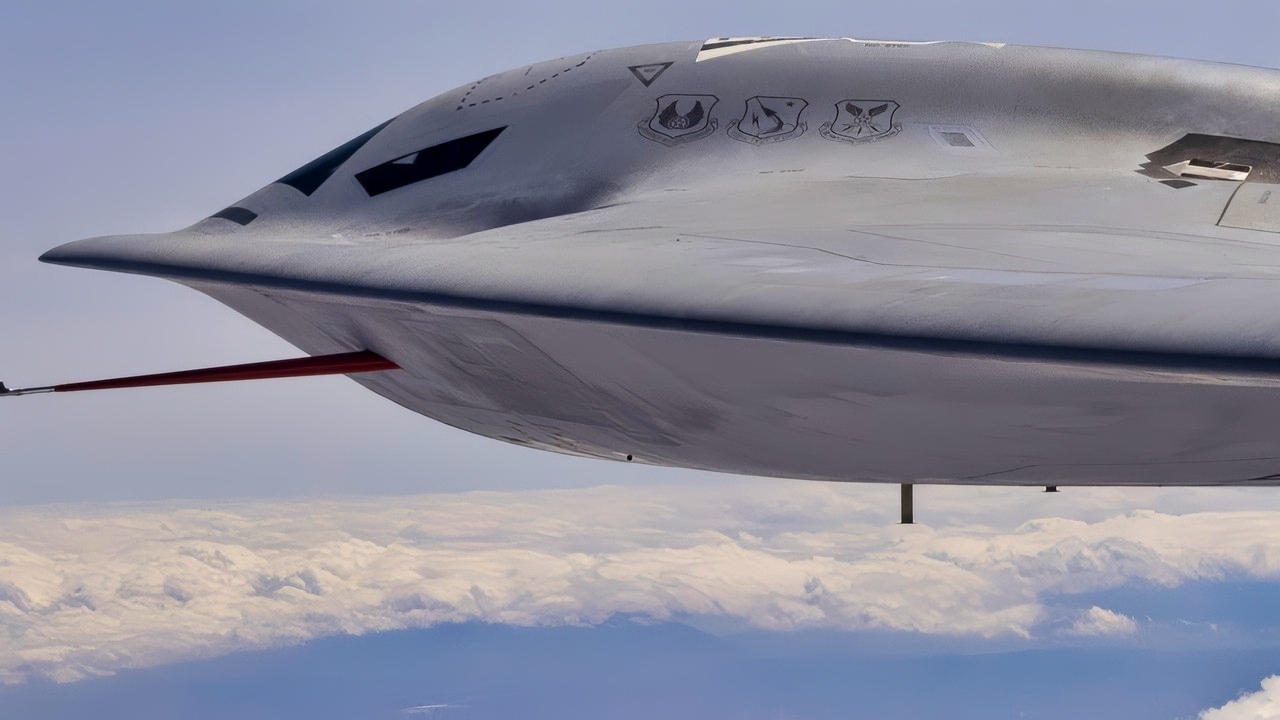
PUBLISHED on August 8, 2025, 10:17 AM EDT – Key Points and Summary – The U.S. Air Force’s plan to procure “at least 100” B-21 Raider stealth bombers is dangerously insufficient for an era of simultaneous great-power competition with Russia and China.
-Credible deterrent and the ability to fight a protracted, two-theater war requires a much larger fleet, in the range of 200 to 400 aircraft.
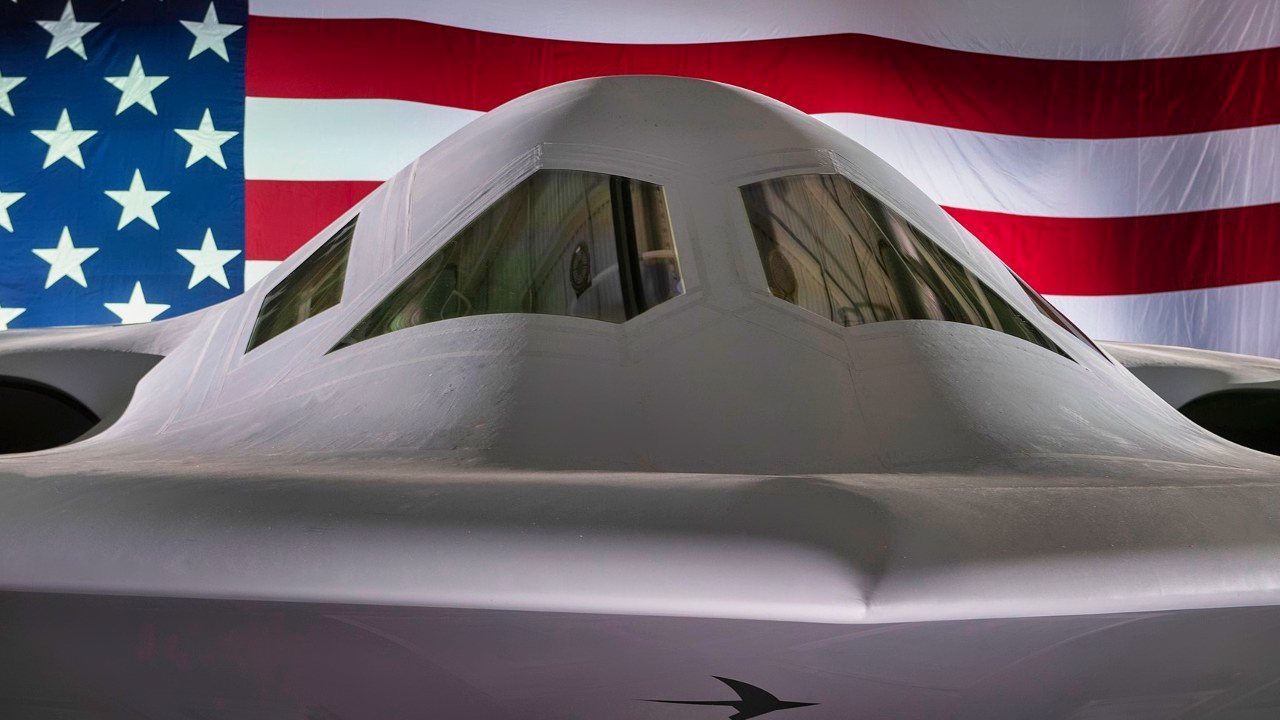
The B-21 Raider was unveiled to the public at a ceremony December 2, 2022 in..Palmdale, Calif. Designed to operate in tomorrow’s high-end threat environment, the B-21 will play a critical role in ensuring America’s enduring airpower capability. (U.S. Air Force photo)
-A force of only 100 bombers is described as “too small to deter, too brittle to fight.”
-A significantly larger investment is not a luxury but a strategic necessity to prevent a future conflict.
300 or 400 B-21 Raider Bombers?
The need to adapt to the long-term trends of great power competition against both China and Russia has left the existing U.S. bomber force obsolescent.
Although the B‑21 Raider is a generational improvement in the long-range strike domain, the publicly known procurement plan of 100 airframes would be inadequate to support both a credible deterrent and the ability to fight a protracted combat campaign in two theaters of operation.
Suppose the United States wants to achieve a strategic force capable of suppressing advanced air defenses, penetrating to strike hardened and mobile targets, hedging against attrition, and maintaining a continuous rotational presence. In that case, some argue that it will need between 200 and 400 B-21s by the early 2030s.
Fewer aircraft would cheapen the deterrent that the B-21 Raider was intended to revitalize.
It’s now been more than a year and a half since the B‑21’s first flight in November 2023, and test operations have been ongoing, with at least three airframes flying multiple times and a fourth expected to join the program shortly.
Low-rate initial production began in early 2024 and has since accelerated, with the first production units expected to be delivered to operational squadrons by the end of 2025.
How Many B-21 Raider Bombers Do We Need?
The Air Force is still officially committed to “at least 100” B‑21 Raider bombers, but that was before we were contemplating the reality of simultaneous great-power threats from both China and Russia.
Defense experts and think tanks have long argued that 100 B‑21s is a starting point, and that increasing to 288 aircraft is a prudent way to hedge risk against the simultaneous two-peer competitor deterrence challenge.
Others have set the floor higher, with recommendations in the 300- to 400-aircraft range as required to wage a credible sustained campaign.
USSTRATCOM’s current commander has pressed Congress to adjust acquisition goals from 100 to approximately 145 to hedge against risk and mitigate the worst-case scenario.
Some retiring national security veterans are making similar recommendations to the incoming administration.
A Deep Think on the Numbers
How do those numbers stack up?
Let’s run through the basics of a worst-case scenario: hard-target kill missions followed by day-after battles, crew rotations and maintenance attrition, high sortie rates under contested logistics, threats to sustainment and airfield survivability.
A baker’s dozen airframes to clear hardened targets early on, dozens more to create overlapping rotational cycles, plus spares held at multiple forward operating bases in ready status.
Throw in the need to cover the full range of combatant commander demands and adjacent mission sets, including nuclear deterrent patrols, lob-shaping strike packages, electronic attack or battle management, and continuous global presence.
A U.S. force structure with only 100 bombers will fold under those mission sets: too small to deter, too brittle to fight.
Reaching 145 provides some margin—you can cover attrition, surge requirements, and extended readiness. 200 is a good number: high enough to maintain routine posture in the Pacific and European theaters at once, without mutual interference.
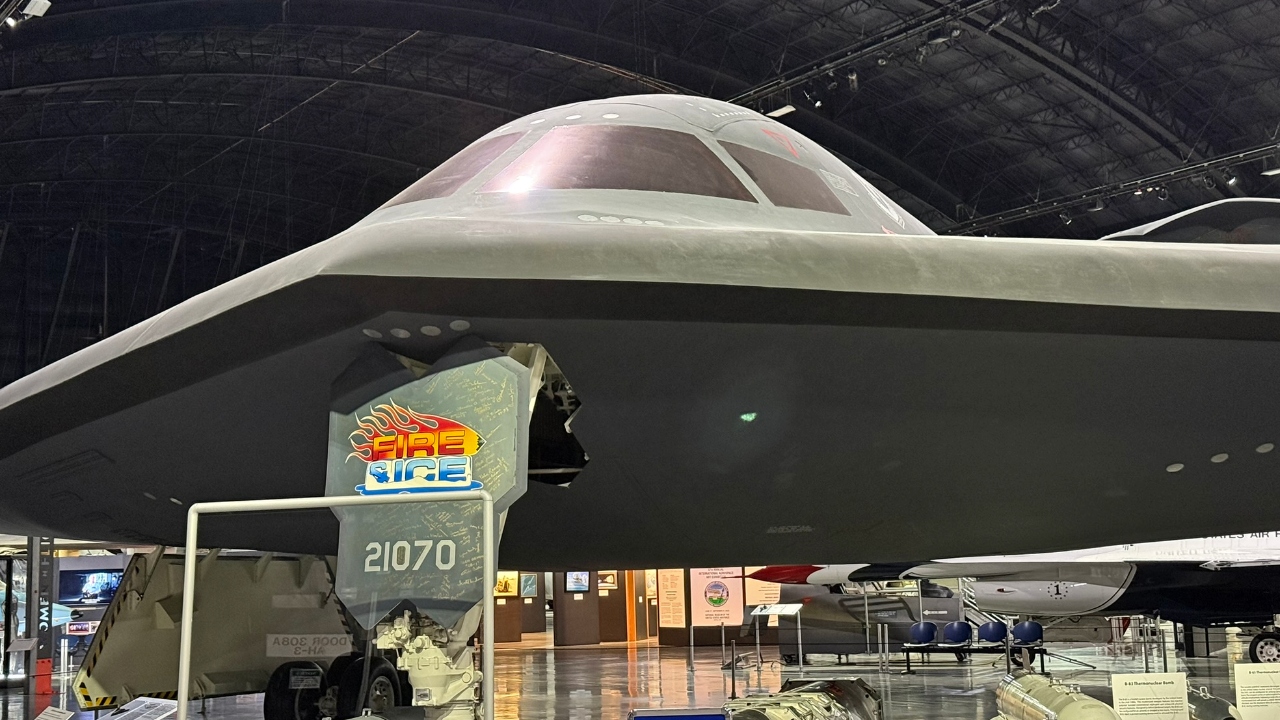
B-2 Bomber @ U.S. Air Force Museum. Image Credit: National Security Journal.
288 allows for sustained tempo over an extended campaign, rotation through multiple overseas detachments, and even considers inevitable loss rates, maintenance backlogs, and dual requirements for deterrent missions.
The 300 to 400 range? That starts to become a full-spectrum strategic force that’s credible, resilient, and able to absorb the inevitable shocks associated with warfighting.
The Math and Economics of the B-21 Raider
There’s also a simple economic calculus at work. Cost projections for each airframe are around $692 million per unit in 2022 dollars. Inflationary material costs and ramp-up investments to enable higher throughput have steadily increased that number, with current published estimates exceeding $700 million each. Buying only 100 bombers leaves no scale advantages; buying 200 or more could bring economies of scale and amortize fixed overhead on a larger base.
The History Lesson
It’s also a case of not repeating history. The B-2 program was terminated after a relatively small production run of just 21 aircraft, mainly due to the fading of the Cold War threat landscape following the Soviet collapse.
The Air Force has learned that lesson. Washington simply can’t underbuild a vital system and then watch a re-emerging threat find us wanting.
The Big Ask on the B-21 Raider
Bold asks aren’t all that shocking in context. Daring to ask for 200, or 300, or 400 B‑21 Raider bombers? Maybe so. The sticker shock will likely prompt Congress, and there will be widespread hand-wringing in the analytical community about the erosion of defense budgets and investments.

B-2 Bomber from U.S. Air Force Display. Image Credit: Harry J. Kazianis/National Security Journal.
Some will argue that there are other ways to make up the margins: new unmanned systems, advanced NGAD fighter jets, other flavors of future acquisition. All well and good, but those future capabilities remain just that: a promise. As of today, only the B‑21 brings stealth, deep range and a mix of conventional and nuclear mass-deliverable options in a single, certifiable platform. The industrial base is in place, the need is clear, and all that’s missing is the political will.
It’s August 8, 2025, and the B‑21 franchise is off and running. Test flights are happening at rapid clip, low-rate production has begun, the number is hardening on public cost estimates, and military leaders are increasingly outspoken about a disconnect between their actual needs and the official plans for 100. The remaining piece is for policymakers to match strategy with actual capacity. That means funding an industrial ramp, committing to a baseline of 200 or more Raiders, and aiming for 288 or more if and when deterrence truly matters.
B‑21s aren’t some wish list luxury item. They serve as an insurance policy against the most severe possible contingency. If you under-buy, you under-insure. If you under-plan, you empower escalation. Russia and China are fielding layered defenses, hypersonic weapons, and advanced anti-access systems. Those major power rivals today are the most capable peer competitors ever. In their combined shadow, only a force in the high hundreds has the credible muscle to deny access or manage escalation credibly.
Thinking Through the B-21 and Beyond the Numbers
In other words, this is not a procurement question. It is not about supply-chain issues. It is not about the bottom line, the cost per aircraft, or the power of various lobbies. It is about a strategic answer to a strategic question. Will Washington accept a token force that represents a limited aspiration to change the strategic environment? Or will it invest in a fundamental capability that can affect adversary behavior? Is 100 B-21s enough to make deterrence stick? Or do 288 give you deterrence with legs? The question is not “how many?” but “what kind of deterrent?
Because we can have a deterrent that rests on paper-based numbers, it can look nice on paper, but the moment that deterrence fails and we get into a shooting war, we are right back to a place where the United States is grossly overmatched.
Or we can have a deterrent that will endure, that is built for simultaneity, and that can fight for real attrition. It’s not a bluff we can afford to call. Moscow and Beijing are constantly manipulating us.
We are living in an era of intense competition where both Moscow and Beijing are active gamers. America cannot afford to bluff itself into a war it is not prepared to fight. Washington must build a hand that is worth playing—and play that hand with the clarity of strategic purpose. Time to think deely on the B-21 Raider and its future.
About the Author: Dr. Andrew Latham
Andrew Latham is a non-resident fellow at Defense Priorities and a professor of international relations and political theory at Macalester College in Saint Paul, MN. You can follow him on X: @aakatham. He writes a daily column for National Security Journal.
Defense Watch
F/A-XX Is the YF-23 on a Carrier?


Dave Smith
August 10, 2025 at 2:37 pm
Never happen… probably no more than 30 at best. If they were intent on that volume, then why spend money on extending the B52 and B1 programs, which are going into the 2030s. B2 was 200 program, but only 21 were made. In addition liberal will gain control and kill the program.Development take way to long which will doom the bombe.