


F-47 NGAD U.S. Air Force Fighter Will Be a True Game Changer Like Nothing That Has Ever Flown
An intriguing, mysterious, and reportedly extremely promising cloud of possibility surrounds the visible, yet largely “black” and “unknown” F-47 aircraft, an already airborne stealth platform expected to completely change the paradigm in the realm of speed, AI, sensing, weapons, and overall air supremacy.
A stealthy, supersonic, semi-autonomous F-47 fighter is almost certain to be engineered to maneuver undetected through heavily armed enemy airspace, evade radar detection, and jam the adversary’s command and control systems with electronic warfare (EW) weapons.
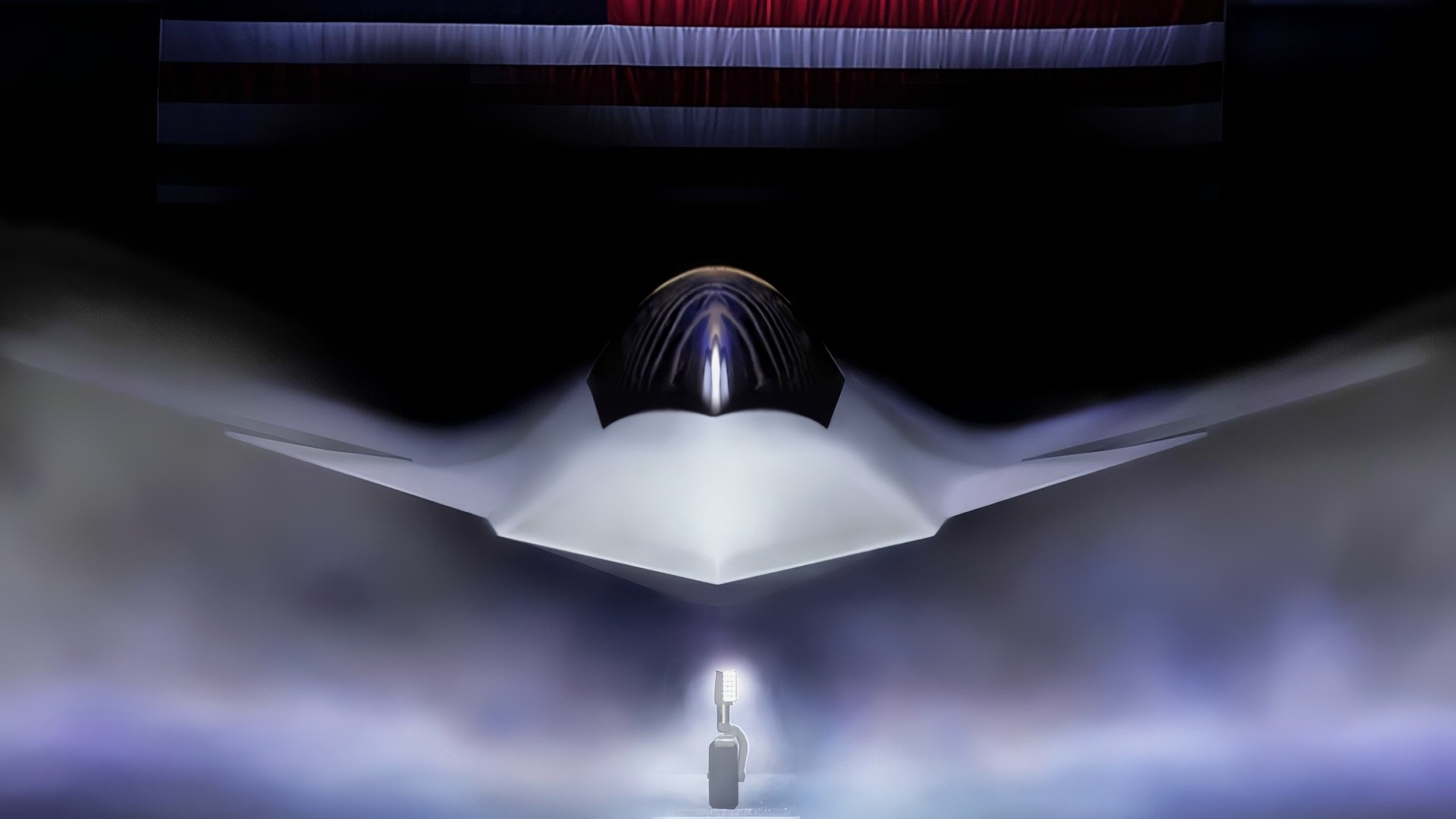
Shown is a graphical artist rendering of the Next Generation Air Dominance (NGAD) Platform. The rendering highlights the Air Force’s sixth generation fighter, the F-47. The NGAD Platform will bring lethal, next-generation technologies to ensure air superiority for the Joint Force in any conflict. (U.S. Air Force graphic)
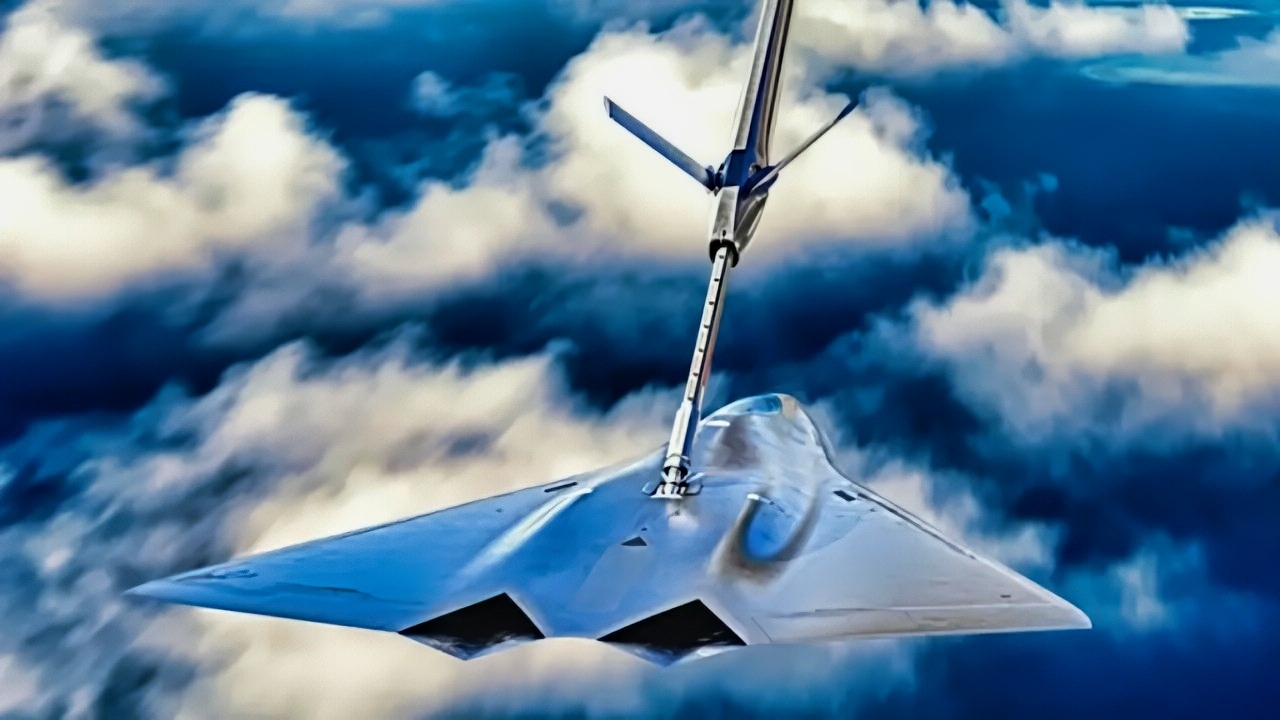
F-47 Lockheed Photo. Image Credit: Lockheed Handout.
In addition to serving as an attack platform, an AI-enabled F-47 will likely gather, analyze, and transmit targeting data across vast areas of terrain in milliseconds.
Using AI-empowered computing, the F-47 will launch and operate groups of nearby minidrones, fire air-launched hypersonic missiles, and then incinerate enemy aircraft with fighter-jet-fired precision laser weapons.
The fighter is expected to accomplish this, all while flying too quickly and too stealthily to be targeted.
Beyond the F-35
It is important to recognize that, through ongoing software upgrades, the F-35 may remain dominant into the 2070s and beyond, as many of the most substantial technological leaps will likely be in computing, AI, mission systems, weapons, and command and control.
Upgrades can modernize fighter airframes in paradigm-changing ways without reconfiguring the main fuselage or the plane’s fundamental architecture.
However, this does not negate the pressing need for the F-47, a platform that is likely to incorporate new generations of stealth technology.
Clearly, the absence of protruding, angled, vertical structures, from a pure aerodynamic perspective, offers fewer contours off of which electromagnetic radar “pings” can bounce off to generate a return rendering.

NGAD. Image Credit. Lockheed Martin.
Much like a fully horizontal, smooth high altitude B-2, early models of 6th-gen aircraft suggest that the F-47 could somehow achieve the seemingly impossible task of simultaneously achieving both optimal stealth and optimal speed and air maneuverability.
Historically, one is inclined to believe that a fighter jet can only vector or maneuver by adjusting air flow with wings, tails, and vertical structures.
However, breakthrough technologies may enable a fully horizontal stealth fighter jet to maneuver, vector, and dogfight better than an F-22.
It’s possible if the available 6th-gen imagery of the F-47 provides an indication.
F-47 & AI
There are far too many of those most-needed attributes for a 6th-generation fighter to cite; however, AI-enabled targeting data analysis, sensor range, and fidelity are likely key areas of focus.
A breakthrough high-speed, ultra-stealthy 6th-generation aircraft will achieve massive overmatch if it has an F-35-like long-range, high-fidelity targeting system to see and destroy enemy targets from standoff ranges before being spotted. The F-47 will need to network with ground command centers, drones, other fighter jets, ground vehicles, Navy ships, and even satellites.
This ability will enable the platform to gather and process time-sensitive data needed to move in, attack, and destroy an enemy. While speed and maneuverability will, of course, be critical, long-range sensors, networking, high-speed, AI-enabled computing, and weapons guidance will likely be what separate the F-47 from competitors.
Even more data, including electronic warfare, space, radar warning receivers, cyber, and as-yet-unknown indicator types, will increasingly be incorporated into onboard AI systems.
Advanced algorithms can quickly analyze a vast array of incoming data, query a seemingly limitless database, and make near-real-time decisions, computations, and analyses. Improving decision-making speed and providing clarity for pilots are often referred to as “easing the cognitive burden.”
More Range for the Pacific
The F-47 could prove essential in any effort to contain or defeat China in the air in the Pacific for several key reasons; it seems conceivable that the Pentagon might engineer a Pacific-specific F-47 variant designed to prevail amid the extensive ranges, or “tyranny of distance,” known to characterize the region.
The F-47 could be configured with larger fuel tanks for a massively expanded range, something potentially of great significance in a large-scale air war with China.
While the growing, multi-service, multinational fleet of F-35s continues to present a formidable deterrent in the Pacific theater, some might wonder whether the current deterrence posture in the air is insufficient to meet a fast-evolving Chinese threat in the years ahead.
Clearly, Pentagon leaders believed the U.S. Air Force needed a new, long-range, stealthy, high-tech 6th-generation fighter to confront the growing array of threats posed by China in the Pacific theater.
This may have been part of the thinking driving President Trump’s decision to build the F-47.
The Pacific, of course, includes vast distances of ocean separating islands and large land masses, and the ocean stretches thousands of miles from Northern Japan and the Korean Peninsula South to Australia.
There are tactically relevant distances within the Pacific that, depending on a given contingency, will need to be considered, as Taiwan is very “reachable” at 100 miles from the Chinese mainland.
This Chinese proximity advantage, however, can be greatly mitigated or offset by forward-operating F-47s, U.S. Navy carriers, and F-35B-armed amphibs within a few hundred miles of Taiwan.
F-35 Limitations in Asia
A map shows that the distance between the Northern-most parts of the Philippines and Southern Taiwan is only 155 miles, a circumstance that enables U.S.-allied 5th-generation aircraft to defend Taiwan from land bases in the Philippines.
An F-35A, for instance, can operate over 1,380 miles and, with a full weapons load, reach airspace over Taiwan and remain for some dwell time without needing to refuel from a risky, highly vulnerable tanker aircraft.
This defensive posture requires the U.S. to base F-35As in the Philippines, a deterrence concept that makes strategic sense.
In early 2025, images of two Chinese 6th-generation fighters went viral on social media, sparking worldwide analysis and speculation about the potential sophistication of the new, never-before-seen aircraft.
The F-47 has also been known for many years as a “family of systems,” meaning it will control groups of unmanned aircraft known as Combat Collaborative Aircraft, or CCAs.
The fighter will operate not only as an attack platform but also as a flying command-and-control “node” or “center” in the air, able to direct drones to test enemy air defenses, blanket areas with surveillance, or even launch attacks when directed by a human.
This technology greatly reduces latency and enables faster decision-making at the “tip of the spear,” putting U.S. forces in a position to shorten the sensor-to-shooter curve.
Target details obtained by forward-operating drones do not need to pass through a ground control center for a human to make critical, time-sensitive decisions.
About the Author: Kris Osborn
Kris Osborn is the President of Warrior Maven – Center for Military Modernization. Osborn previously served at the Pentagon as a highly qualified expert in the Office of the Assistant Secretary of the Army—Acquisition, Logistics & Technology. Osborn has also worked as an anchor and on-air military specialist at national TV networks. He has appeared as a guest military expert on Fox News, MSNBC, The Military Channel, and The History Channel. He also has a Master’s Degree in Comparative Literature from Columbia University.


