

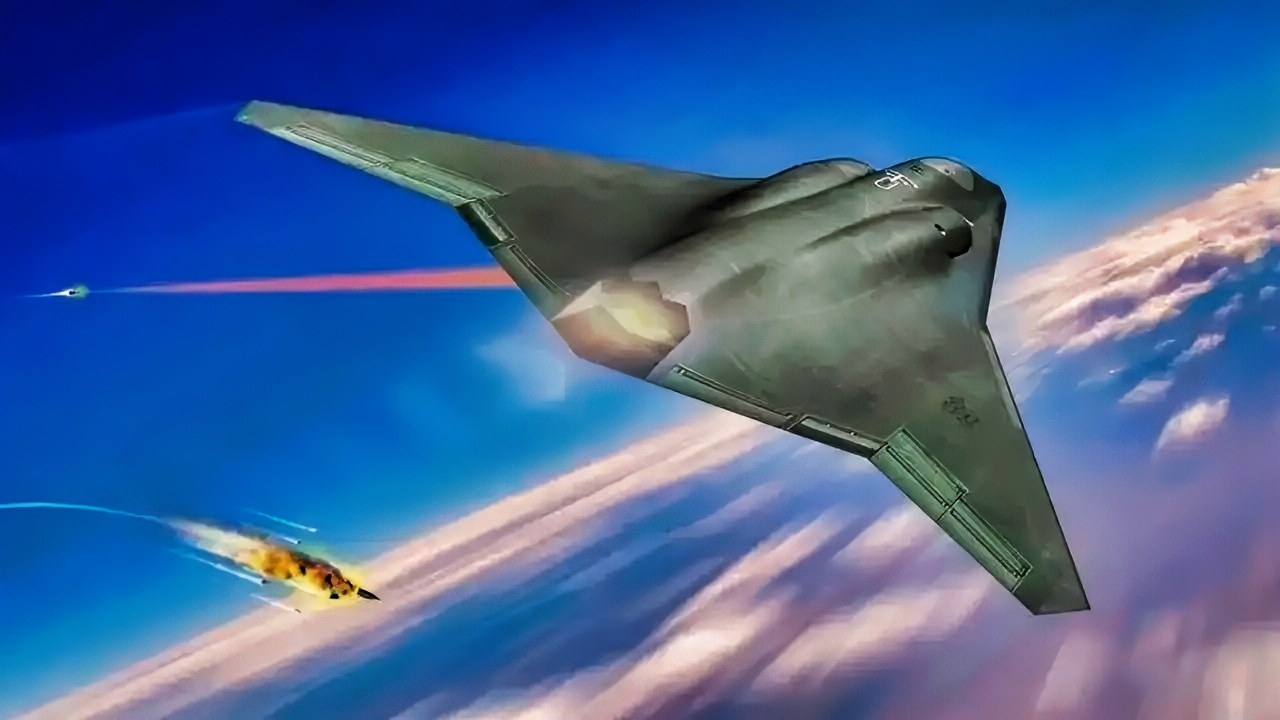
The U.S. Air Force’s F-47, developed by Boeing under the Next Generation Air Dominance (NGAD) initiative to replace the F-22, is on track for a first flight in 2028. As of February 2026, the program is advancing rapidly, with manufacturing underway and aiming for operational fielding by the early 2030s.
The F-47 is currently in early, low-rate, and highly secretive production following a March 2025 contract award. Early manufacturing of the first aircraft is underway in St. Louis, with a fleet goal of 185+ units to replace the F-22.
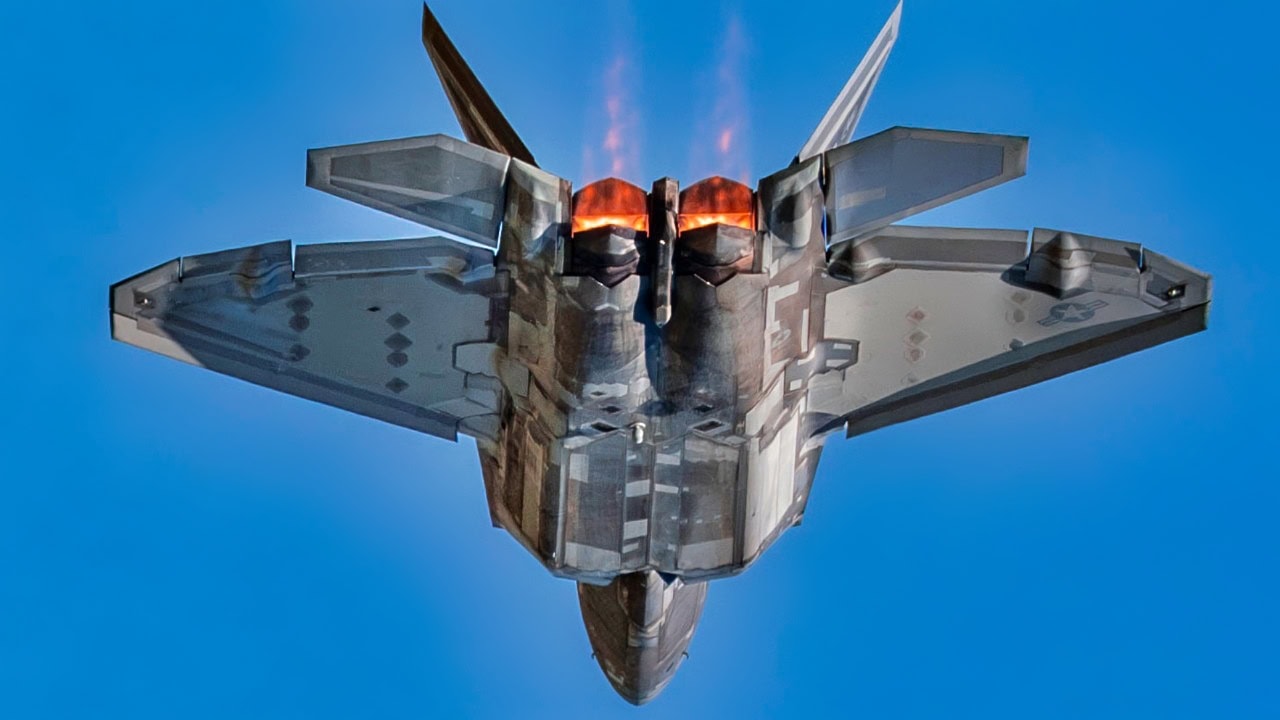
F-22 Raptor Reverse. Image Credit: Creative Commons.
The NGAD effort also includes developing new Collaborative Combat Aircraft (CCA) drones, as well as advanced jet engines, weapons, electronic warfare suites, sensors, networking ecosystems, battle management capabilities, and more.
Sixth-Generation Fighters Entail New Challenges
But since no one has ever flown one, what will that entail? Currently, there isn’t a training syllabus, a simulator, or any combat-experience-based flying of the F-47 under an entirely new doctrine; it will be an entirely new set of rules to fly the aircraft.
Granted, although no pilot has flown the production F-47, Boeing and DARPA have reportedly been flying full-size operational demonstrators and “X-planes” in secret at least since 2019 to mature the technology.
The F-47 Pilot Problem (Or The Lack Of One)
Boeing only began manufacturing the first official production aircraft in late 2025. This aircraft is expected to have its maiden flight in 2028 and reach initial operational capability by 2029, though some lawmakers suggest it may not be fully available until the mid-2030s.
There will be key differences in flight operations. The shift from fifth-generation fighters, which focus on direct engagement, to sixth-generation fighters, the F-47 pilot will act as a “mission commander” or “quarterback,” managing a networked “family of systems” that includes autonomous drone wingmen.
The F-47 pilot will act now as a high-level tactical manager.
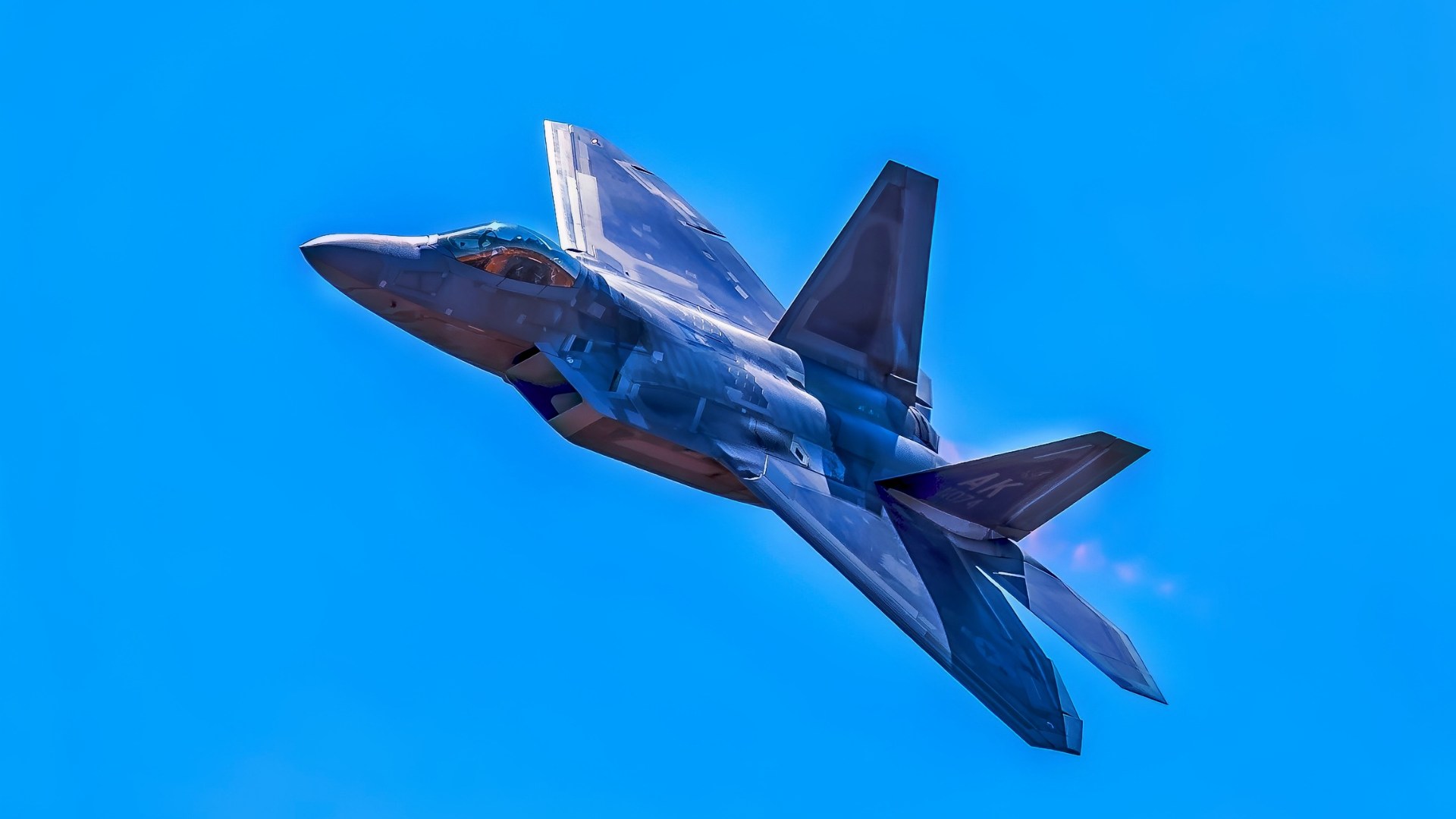
F-22 Raptor Super. Image Credit: U.S. Air Force.

USAF Maj. Samuel “RaZZ” Larson, F-22 Raptor Aerial Demonstration Team pilot and commander, performs at the 75th Annual Toronto Air Show. The F-22 Raptor Demo Team performed alongside the RCAF CF-18 Demo Team, RCAF Snowbirds, and RAF Red Arrows.
The aircraft will be centered around the Manned-Unmanned Teaming (MUM-T). Unlike the F-22 or F-35, the F-47 is built to command a swarm of five or more autonomous Collaborative Combat Aircraft (CCA). These drones handle reconnaissance, electronic warfare, and missile launches, allowing the pilot to direct the battle from a safer distance.
The F-47’s New AI-Enhanced Cockpit:
The cockpit will function as a networked command center. Pilots will use virtual cockpits presented via helmet-mounted displays, providing 360-degree vision and AI-enhanced battlefield awareness that replaces many conventional instrument panels.
AI functions as a co-pilot, often referred to as an “AI copilot” (similar to the Air Force Research Laboratory’s “Artuu” agent), to handle procedural tasks and manage real-time data processing
The cockpit displays a 360-degree, fused picture of the battlespace, integrating data from radar, infrared (IR), and electronic warfare sensors. This allows for near-instantaneous target identification and sensor-to-shooter pairing, designed to get inside an enemy’s decision-making process (OODA loop).
Large multifunction displays and intuitive controls prioritize pilot efficiency, allowing for rapid decision-making in contested environments. AI in the cockpit can run predictive threat modeling to suggest optimal, AI-recommended tactical actions.
Flight Control and Stability In A Tailless Design
The F-47 design is predicted to be tailless to reduce radar signatures. The F-47 is designed for superior stealth and speed, characterized by a tailless delta-wing, blended-wing-body, and no vertical stabilizers.
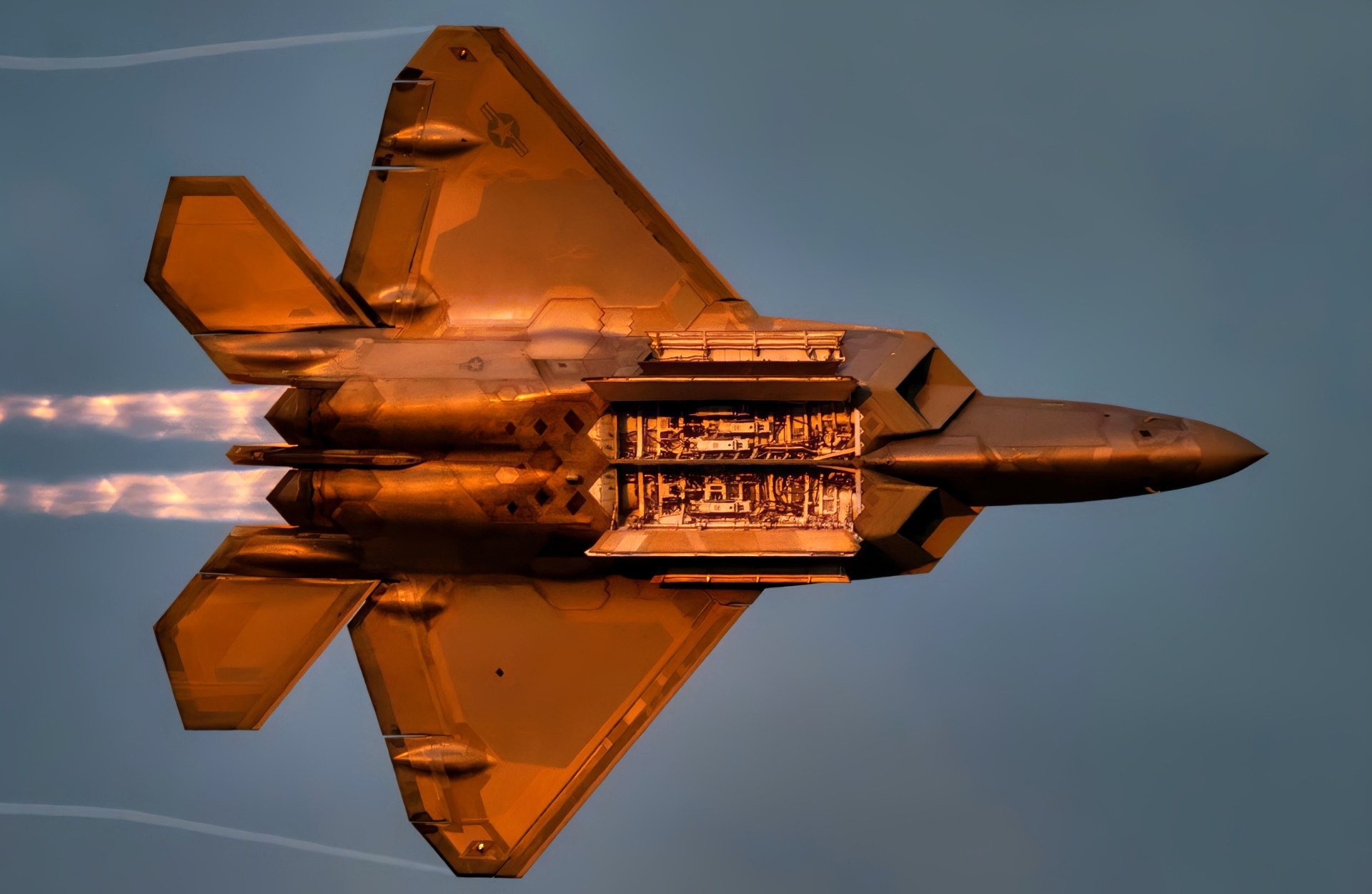
An F-22 Raptor assigned to the U.S. Air Force F-22 Raptor Demonstration Team performs aerial maneuvers at Experimental Aircraft Association (EAA) AirVenture
Oshkosh in Oshkosh, Wis., July 29, 2023. The demonstration team performs aerial maneuvers to showcase its combat capabilities to a public audience. (U.S. Air Force photo by Bill Guilliam)
However, the aircraft’s actual appearance remains highly speculative, as there are currently no pictures or videos of the F-47. The Air Force and Boeing have teased some purposely blurry images of it.A brief, potentially unintentional glimpse of a design fitting this description was noted in a 2026 Pratt & Whitney video featuring the XA103 engine.
Flying such an airframe relies heavily on advanced flight control systems and thrust vectoring to maintain stability, a departure from the traditional aerodynamics of the F-22 and F-35.
The F-47 Will Feature Adaptive Propulsion
Boeing will use Next-Generation Adaptive Propulsion (NGAP) engines with three-stream adaptive cycle designs, such as the Pratt & Whitney XA103. These engines shift between high-thrust for Mach 2+ speeds and fuel-efficient, long-range cruise (1,000+ nm) by modulating airflow.
The “adaptive” engine technologies featured in the NGAP program could herald a leap in military propulsion, Air Force officials have said, because they can change a jet engine’s characteristics in flight to enable features such as more fuel-efficient cruising or increased thrust.
The F-47 uses variable-cycle engines (NGAP) that automatically adjust during flight. In one mode, they act as high-thrust turbojets for speeds exceeding Mach 2; in another, they become fuel-efficient turbofans for long-range loitering.
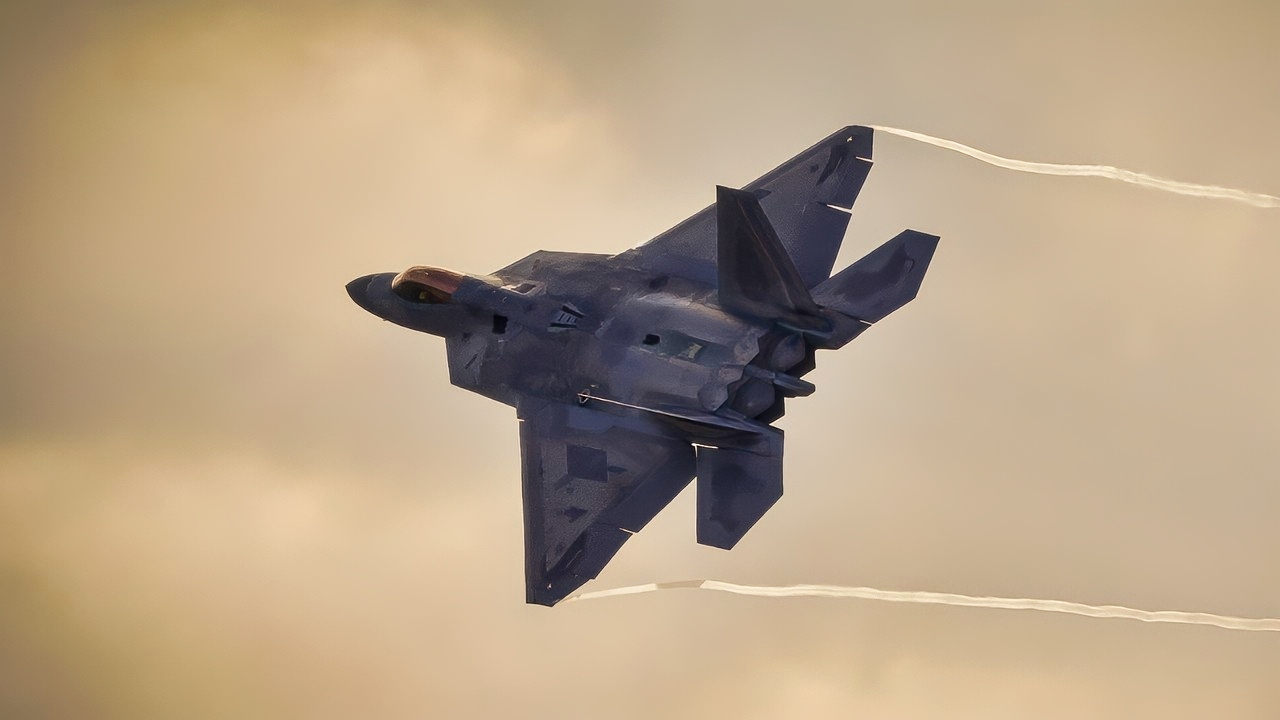
A U.S. Air Force F-22 Raptor assigned to the 90th Fighter Squadron soars over Joint Base Elmendorf-Richardson during ARCTIC EDGE 2025 (AE25), Aug. 18, 2025. AE25 provided Special Operations Command North the opportunity to test a range of capabilities and response options to deter, disrupt, degrade, and deny competitor activity in the Arctic in support of globally integrated layered defense of the homeland. AE25 is a NORAD and U.S. Northern Command-led homeland defense exercise designed to improve readiness, demonstrate capabilities, and enhance Joint and Allied Force interoperability in the Arctic. (U.S. Air Force photo by Airman 1st Class Gracelyn Hess)
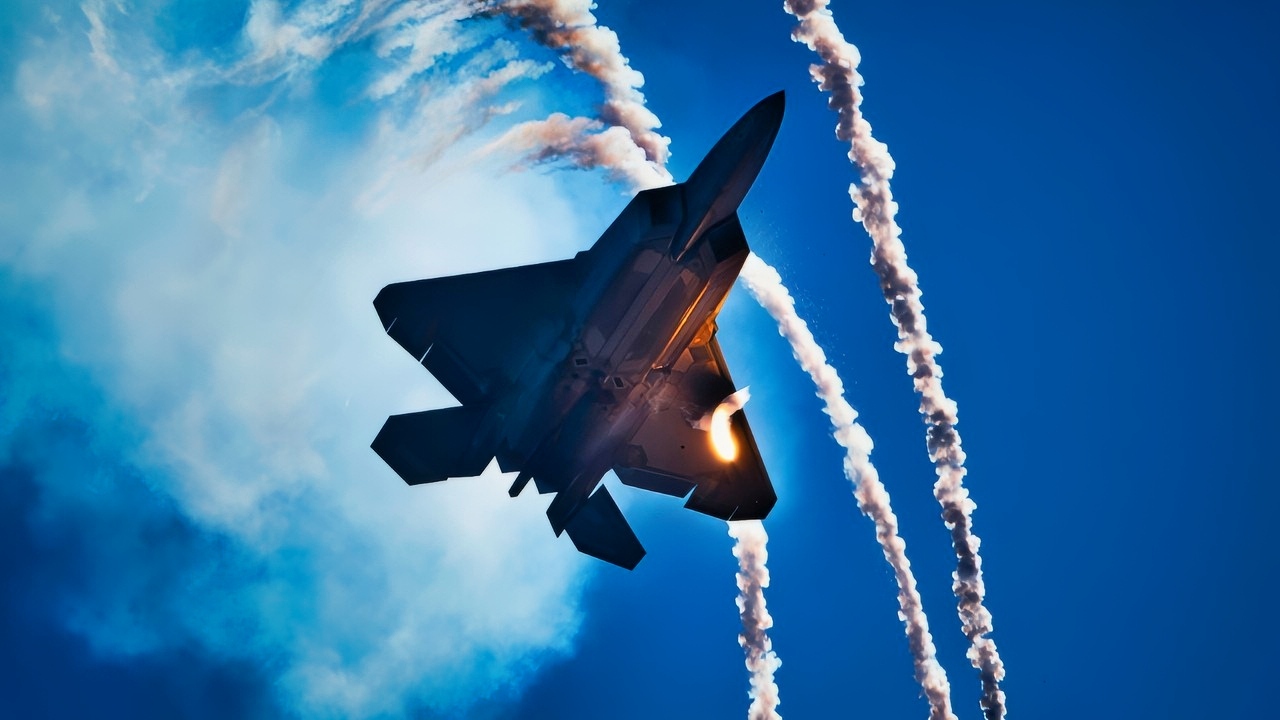
A U.S. Air Force F-22 Raptor, flown by Capt. Samuel “Razz” Larson, F-22 Raptor Demonstration Team pilot, deploys flares over the Gulf of Mexico during the 2024 Gulf Coast Salute Air Show at Panama City Beach, Florida, May 4. The F-22’s unique combination of stealth, speed, agility and situational awareness, combined with lethal long-range air-to-air and air-to-ground weaponry, makes it one of the most advanced fighters in the world. (U.S. Air Force photo by Staff Sgt. Stefan Alvarez)

An F-22 Raptor creates vapor trails during a high-speed maneuver during a training flight at Joint Base Langley-Eustis, Virginia, June 13, 2025. The aircraft’s design allows it to remain highly maneuverable while maintaining low observability. (U.S. Air Force photo by Senior Airman Adisen Smith)
In a compelling article, noted British defense researcher Jack Buckby wrote that the F-47 is rewriting how US aircraft will fight against modern air defense systems.
“The Stand-in Attack Weapon (SiAW) is expected to form the basis of the NGAD fighter’s new capabilities. It’s a high-speed munition designed to work inside heavily defended airspace rather than outside it,” Buckby wrote in 19FortyFive.
“For decades, U.S. airpower has relied heavily on long-range ‘stand-off’ weapons to avoid the reach of systems like Russia’s S-400. The emerging NGAD solution is expected to completely flip that model, combining stealth penetration with weapons designed for close-in strikes.”
While traditional stand-off weapons like the Tomahawk cruise missile or JASSM are launched from a distance, SiAW weapons are designed to be carried internally by stealth aircraft and launched after penetrating those defenses.
That allows for more rapid engagement and a much higher probability of hitting the target. Surface-to-air missile launchers or other mobile electronic warfare nodes can move quickly or shut down radars to avoid detection. By reducing the distance between the launch point and target, SiAW increases the likelihood of hitting those time-sensitive targets before they can move.
The F-47 and the CCA “loyal wingman” represent a tremendous leap in aircraft technology. But it isn’t going to be easy, as they are writing an entirely new set of flying rules.
About the Author: Steve Balestrieri
Steve Balestrieri is a National Security Columnist. He served as a US Army Special Forces NCO and Warrant Officer. In addition to writing on defense, he covers the NFL for PatsFans.com and is a member of the Pro Football Writers of America (PFWA). His work was regularly featured in many military publications.


