

Washington has maintained an intense policy of opposing nuclear proliferation around the world for more than 8 decades.
Not only have U.S. officials sought to prevent countries from building deployable arsenals of nuclear weapons, but those officials also try to discourage technologically sophisticated countries from developing even the capability to build such weapons at a later date if a subsequent government there abandons the existing commitment to a nonnuclear status.

Fat Boy Nuclear Bomb At U.S. Air Force Museum. Photo Credit: Harry J. Kazianis/National Security Journal Original Photo.
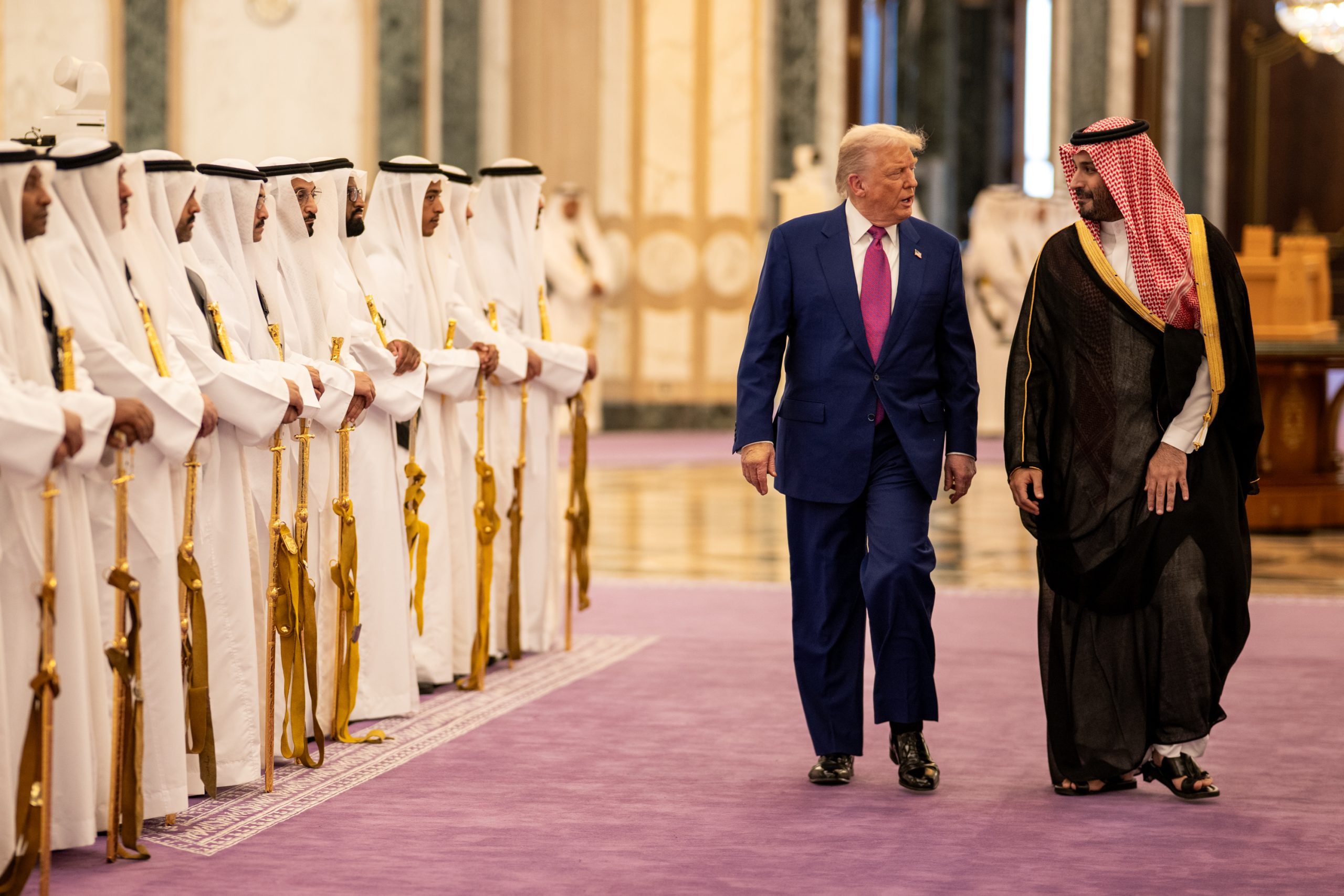
However, the Trump administration has now cast doubts on the enduring nature of that policy. A new agreement that Washington concluded with Saudi Arabia would enable Riyadh to pursue some nuclear fuel enrichment.
That concession is raising questions and concerns in numerous foreign capitals. South Korea’s reaction was especially pointed.
Granted, U.S. leaders already made two notable exceptions to their usual hostility to nuclear proliferation.
The Truman administration exhibited little reluctance to welcome Britain as a sister nuclear weapons power.
Likewise, officials in multiple U.S. administrations continued to pretend that Israel does not possess nuclear weapons, despite compelling evidence to the contrary.
However, London and Tel Aviv are the rare exceptions to Washington’s overall hostility to nuclear proliferation.
India, Pakistan, and even NATO ally France did not receive friendly receptions to their achievement. The U.S. response to the successes of the Soviet Union, the People’s Republic of China (PRC), and North Korea was vehemently hostile.
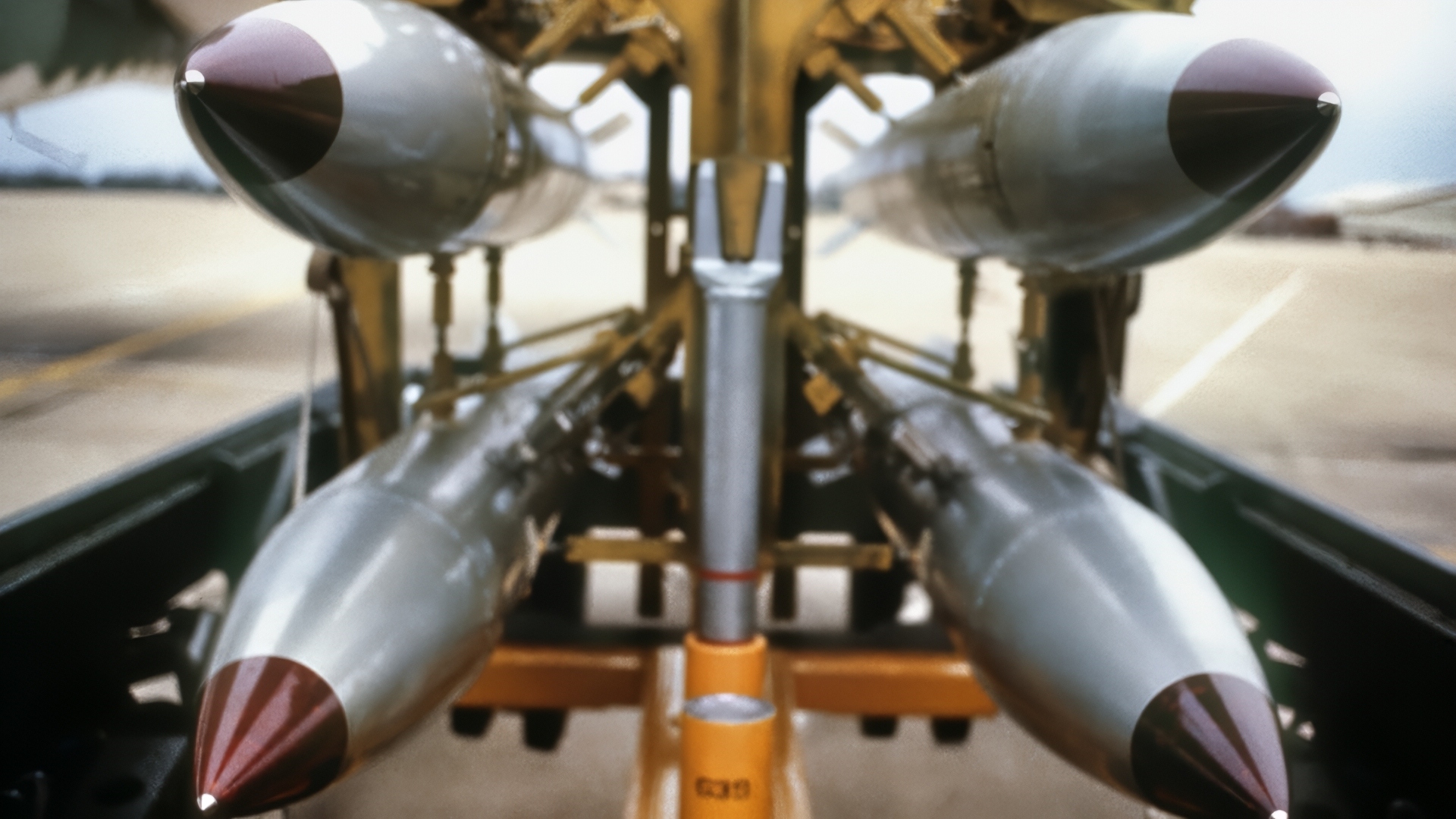
A front view of four nuclear free-fall bombs on a bomb cart. Image Credit: Creative Commons.
Even extremely close U.S. allies, such as Japan, Germany, South Korea, and Taiwan, have received a frosty reception to any hints of nuclear ambitions—much less the desire for independent deterrents.
New York Times correspondent Choe Sang Hun recalls that for decades, South Korea was an example of the United States’ unyielding stance on nuclear nonproliferation. “In the 1970s, the United States pressured South Korea, a steadfast ally, to give up a clandestine nuclear weapons program. Then, it barred the country from enriching its own reactor fuel.” The restriction held firm “even after Seoul joined the nonproliferation treaty, accepted rigorous safeguards, and built one of the world’s largest nuclear power industries. Nor did the policy waver as North Korea built a nuclear arsenal on the South’s doorstep.”
He also noted that in sharp contrast, “President Trump has put Saudi Arabia on the path to enriching uranium on its own soil, a demand South Korea has been making for years.”
As I have suggested elsewhere, it might be wise for South Korea, Japan, and other U.S. democratic allies to reconsider their decades-old policy of relying solely on the United States for nuclear deterrence.
Unfortunately, Washington’s democratic allies and clients continue to fiercely embrace that hoary strategy.
For example, South Korea’s president, Lee Jae-myung, has repeatedly promised that Seoul will not pursue nuclear weapons.
Instead, he emphasizes that his country will continue to rely entirely on U.S. security guarantees in Seoul’s bilateral alliance with Washington for deterrence.
The wisdom of such pervasive dependence on any foreign country is increasingly dubious, especially as North Korea expands its already significant nuclear arsenal of an estimated 50-60 warheads.
As prominent international relations scholars such as Christopher Layne, Robert M. Gates Chair in National Security at Texas A&M University, and the late Kenneth Waltz, former Ford Professor of Political Science at the University of California, Berkeley, have argued for decades, under some circumstances, the proliferation of nuclear weapons might actually have stabilizing rather than destabilizing effects.
Mutual assured destruction was arguably a factor in preventing direct great-power military confrontations during the Cold War.
The risk of catastrophe was simply too great for either side to behave recklessly. Instead of direct great power wars, both the United States and the Soviet Union resorted to limited proxy wars in places such as Vietnam, Afghanistan, and other Third World arenas.
We appear to be experiencing something similar more recently in South Asia between India and Pakistan.
Since acquiring small nuclear arsenals, both governments seem more aware of the potential risks of engaging in jingoistic behavior—even when such posturing might generate short-term domestic political benefits.
In addition to the possibility of strengthening overall stabilizing factors in a region, it is important to emphasize that not all forms of nuclear proliferation are created equal.
It matters if a small democratic power has a modest nuclear arsenal transparently deployed for deterrence, or if such an arsenal is possessed by a ruthless, secretive dictatorship that routinely abuses even the most basic human rights whenever it has the opportunity.
In other words, it should make a qualitative difference to the United States if nuclear weapons are possessed by North Korea or South Korea.
Unfortunately, the Trump administration’s latest moves seem to worsen the already foolish U.S. policy of keeping stable democratic countries free of nuclear weapons even when their principal opponents are already armed to the teeth with such weapons.
Giving an indulgent wink to Saudi Arabia as Riyadh enriches uranium while denying that option to nations such as South Korea constitutes policy incompetence on Washington’s part.
About the Author: Ted Galen Carpenter
Ted Galen Carpenter is a senior fellow at the Randolph Bourne Institute and a contributing editor at The National Security Journal and The American Conservative. He is the author of 13 books and more than 1,500 articles on national security, international affairs, and civil liberties. His latest book is Unreliable Watchdog: The News Media and U.S. Foreign Policy (2022).


