
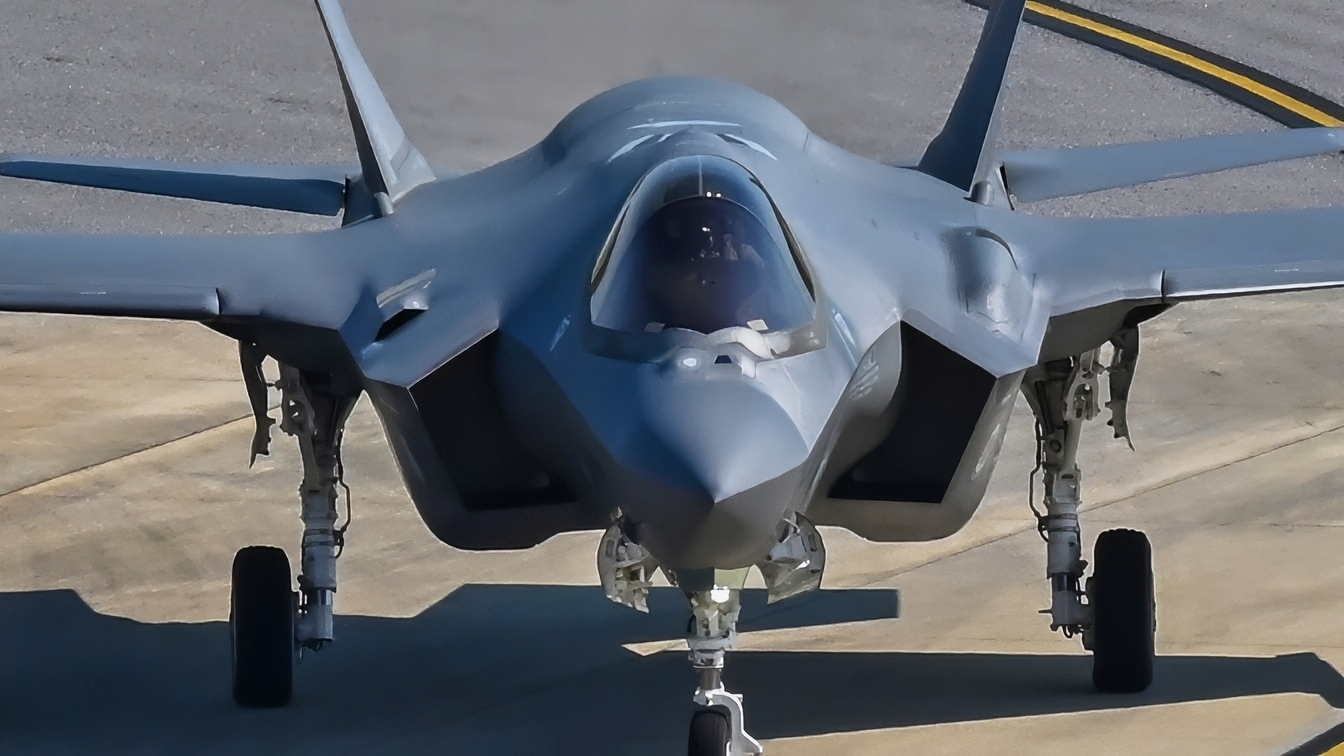
The Simple Reason Taiwan Won’t Get the F-35: American support for Taiwan has steadily increased as China has expanded its military presence around the island, with billions of dollars in weapons sales approved, including F-16V fighter jets and HIMARS rocket systems, among other high-value military assets.
But one is still absent from the list: the F-35 Lightning II.
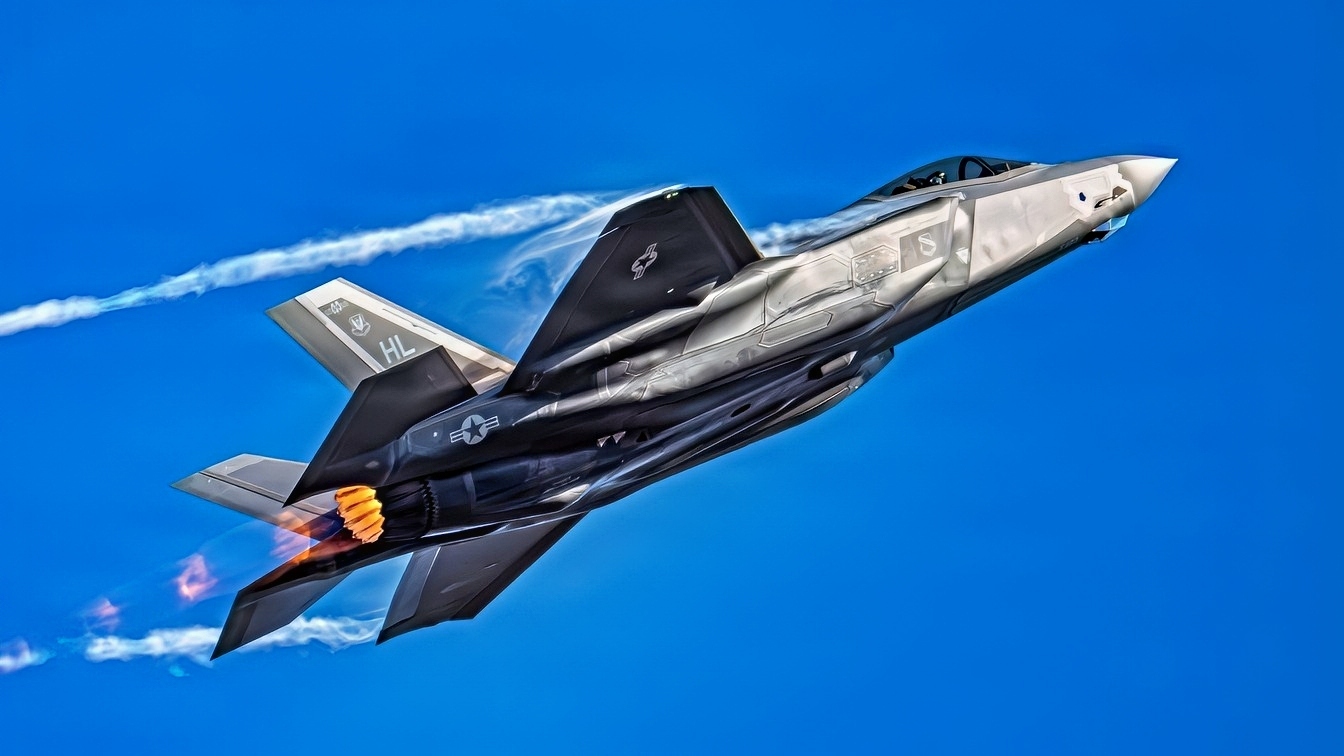
U.S. Air Force Maj. Sean “Rambo” Loughlin, pilot for the F-35A Lightning II Demonstration Team, performs aerial maneuvers during a practice flight at Hill Air Force Base, Utah, Jan. 6, 2026. The flight supported Loughlin’s training as the team’s new demonstration pilot as he prepares for the upcoming air show season. (U.S. Air Force photo by Staff Sgt. Nicholas Rupiper)
That omission is not an oversight. Taiwan has repeatedly sought access to America’s fifth-generation stealth fighter, and some U.S. lawmakers have even argued that sending the aircraft would significantly strengthen deterrence there against Beijing.
But administration after administration has declined to approve a sale, concluding each time that the risks outweigh the benefits. And that risk is quite large indeed.
Taiwan’s Long Pursuit
Taiwan has been pushing for the F-35 for decades. In 2002, Taipei expressed interest in acquiring up to 100 F-35B short takeoff and vertical landing (STOVL) variants. The logic was that the American fifth-generation fighter jet could help the island overcome its air base problem.
The issue for Taiwan is this: a Chinese invasion would likely begin with large-scale ballistic missile and cruise missile strikes against Taiwan’s runways and aircraft shelters, knocking out Taiwanese airpower in the early stages and immediately putting the island on the back foot.

Capt. Andrew “Dojo” Olson, F-35 Demonstration Team pilot and commander performs aerial maneuvers during the Wings Over Houston Airshow Oct. 18, 2019, in Houston, Texas. The show featured performances from the U.S. Air Force Thunderbirds, Tora, Tora, Tora, and Oracle. (U.S. Air Force photo by Senior Airman Alexander Cook)
The F-35B would help prevent that scenario from becoming catastrophic by providing Taiwan with airpower that does not require long runways.
The F-35B is designed to work on improvised runways and stretches of road. In 2018, then-Taiwanese Defense Minister Yen Teh-fa publicly expressed interest in acquiring the aircraft, calling it a “fine fighter” that Taiwan was “seeking.”
But despite the comments, Washington did not conclude that exporting the F-35 to Taiwan was the right move.
Why Washington Chose F-16s Instead
In 2019, Taiwan formally requested new fighter aircraft from the United States, but refrained from specifying a particular model. Rather than pushing directly for the F-35, Taipei deliberately left the decision to Washington and asked U.S. officials to determine which aircraft and how many they believed would best strengthen Taiwan’s air defenses.
Maj. Gen. Tang Hung-an of the Taiwanese Air Force Command Headquarters Planning Division confirmed that the letter sent to Washington left all options on the table.
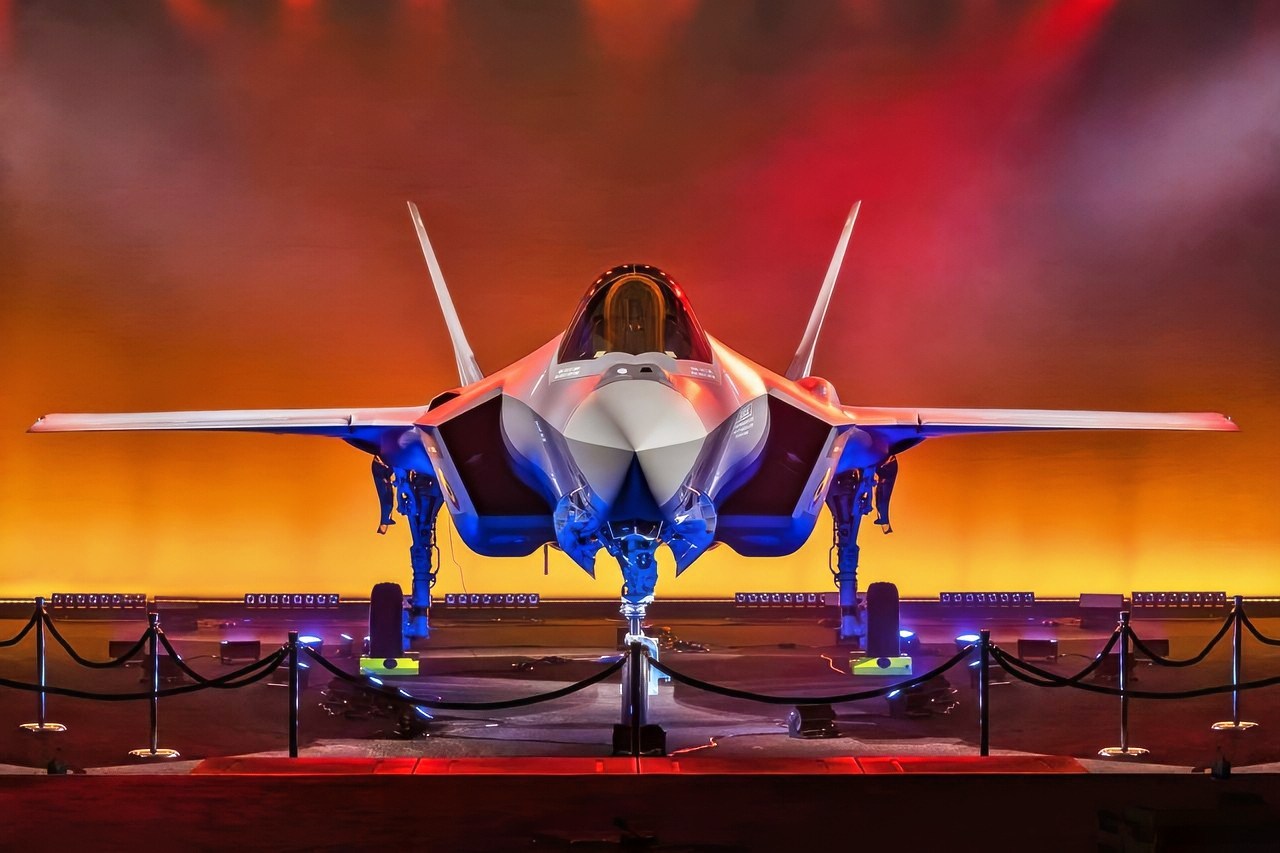
F-35 Fighter in Belgium. Image Credit: Creative Commons.
“The F-15, F-18, F-16 and even the F-35 are all among our options, as long as the jets help to strengthen our air defense capabilities,” Hung-an said.
The first Trump administration eventually approved the sale of 66 F-16C Block 70 fighters that were valued at around $8 billion.
The aircraft are equipped with Link-16 networking, APG-83 AESA radars, and upgraded avionics and mission computers, making them a major leap in Taiwanese airpower.
The decision allowed the U.S. to support Taiwan, signaling its support as China watched, while also providing the island with powerful, upgraded fighter jets. But Washington chose the F-16, not the F-35.
Why the U.S. Keeps Saying No
The reasons behind Washington’s reluctance to hand over the F-35 are technical and political. The F-35 is the most advanced fifth-generation fighter jet on the planet, combining the best radar-evading design with modern electronic warfare systems and sensor fusion, secure communications, and classified mission software.
Those technologies make it enormously beneficial for the U.S. and all of its allies currently operating the aircraft – but they also make it a liability.
Protecting those technologies from getting into the wrong hands is a major priority for Washington, and China knows it. In fact, analysts have warned for years that Chinese intelligence operations targeting Taiwan create a unique security concern that has not been seen anywhere else in the world.
Unlike Britain, Japan, or Australia – all of whom operate the F-35 – Taiwan faces the very real possibility of being invaded by China. And when an invasion occurs, American technology could end up in the hands of arguably its biggest adversary.
Chinese forces could gain access to damaged or working aircraft, their maintenance facilities, mission systems, or spare parts. It would give China an incredible opportunity to inspect America’s most advanced fighter jets up close.
A Different Strategy for Defending Taiwan
Just because the U.S. isn’t sending the F-35 doesn’t mean Taiwan is defenseless. Instead of attempting to match China’s significantly larger air force aircraft-for-aircraft, the Pentagon supports Taiwan with what’s known as the “porcupine strategy.” The idea is that Taiwan is equipped with a large number of mobile, survivable weapons that can make an invasion prohibitively expensive.
Should China attempt to invade, Taiwan can use its large arsenal of HIMARS rocket launchers, Harpoon anti-ship missiles, coastal defense systems, sea mines, drones, and mobile air defenses to make an invasion as difficult as it possibly can be. And, instead of relying on a small fleet of expensive stealth fighters, Taiwan can use dispersed command networks.
Washington’s refusal to sell the F-35 does not reflect a lack of support for Taiwan, nor does it suggest there are doubts about its effectiveness. The decision is political and technical and reflects the high likelihood of a Chinese invasion.
About the Author: Jack Buckby
Jack Buckby is a British researcher and analyst specializing in defense and national security, based in New York. His work focuses on military capability, procurement, and strategic competition, producing and editing analysis for policy and defense audiences. He brings extensive editorial experience, with a career output spanning over 1,000 articles at 19FortyFive and National Security Journal, and has previously authored books and papers on extremism and deradicalization.


Michael Eiford
June 30, 2026 at 1:40 pm
Maybe Taiwan should talk to Sweden, which has defeloped an exceptional fighter.
Scott
June 30, 2026 at 6:32 pm
Are we defending Taiwan or not? This stuff stinks.