

Summary and Key Points: Sweden’s Gotland-class submarines are among the quietest conventional boats afloat, using Stirling air-independent propulsion to stay submerged for weeks.
-That stealth helped HSwMS Gotland score repeated simulated carrier “sinks,” including against USS Ronald Reagan in 2004, prompting the U.S. Navy to lease the boat as an opposing force from 2005 to 2007 for anti-submarine warfare training.

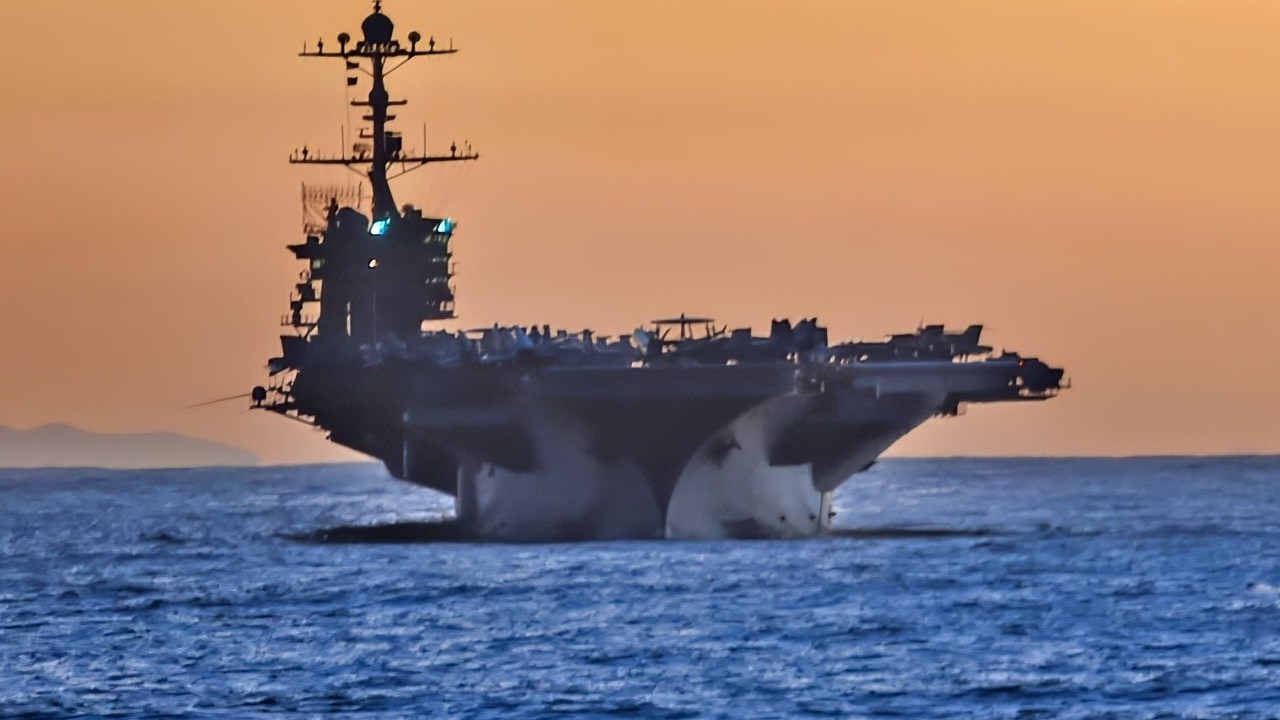
BALTIC SEA (March 13, 2016) Swedish submarine HSWMS Halland surfaces in preparations for a small-boat transfer during exercise BALTOPS, June 7, 2016. BALTOPS is an annual recurring multinational exercise designed to improve interoperability, enhance flexibility and demonstrate the resolve of allied and partner nations to defend the Baltic region. (U.S. Navy photo by Lt. Daniel Foose/Released)
-Sweden later modernized the class with improved sensors, an optronics mast, and powerplant upgrades suited for warmer waters.
-Now a NATO member, Sweden fields three Gotland-class subs while China deploys AIP Yuan-class boats, keeping the carrier threat debate alive.
Sweden’s Gotland-Class Sub ‘Sank’ USS Ronald Reagan—And the U.S. Navy Leased It After
Sweden’s Gotland-class submarines are widely regarded as exceptional and among the world’s most advanced non-nuclear conventional submarines.
Known for operating extremely quietly, they use Stirling Air-Independent Propulsion (AIP) to remain submerged for weeks, allowing them to evade and even “sink” U.S. aircraft carriers during war games.
The Gotland-class is renowned for its low acoustic signature, featuring rubber acoustic-deadening buffers and, in recent upgrades, improved sonar-absorbing coatings.
Sweden’s submarines are integral to its national defense. While originally assigned to the Baltic Sea region to counter the threat of Soviet invasion, Sweden’s submarines have recently expanded their area of operation.
The small but potent flotilla of submarines has been participating in multinational rapid-reaction exercises in the North Sea, the Atlantic, the Pacific, the Bay of Biscay, and the Mediterranean.
The USS Ronald Reagan Aircraft Carrier Was “Sunk” During an Exercise
The US Navy has used aircraft carriers for power projection for over 80 years. With aircraft on board, they can sweep enemy forces from the sea or bomb enemy troops and facilities on land.
But as fearsome and capable as carriers are, they are also the primary targets of our adversaries. That’s why the carrier groups have so many support ships surrounding the carriers in a protective cocoon.
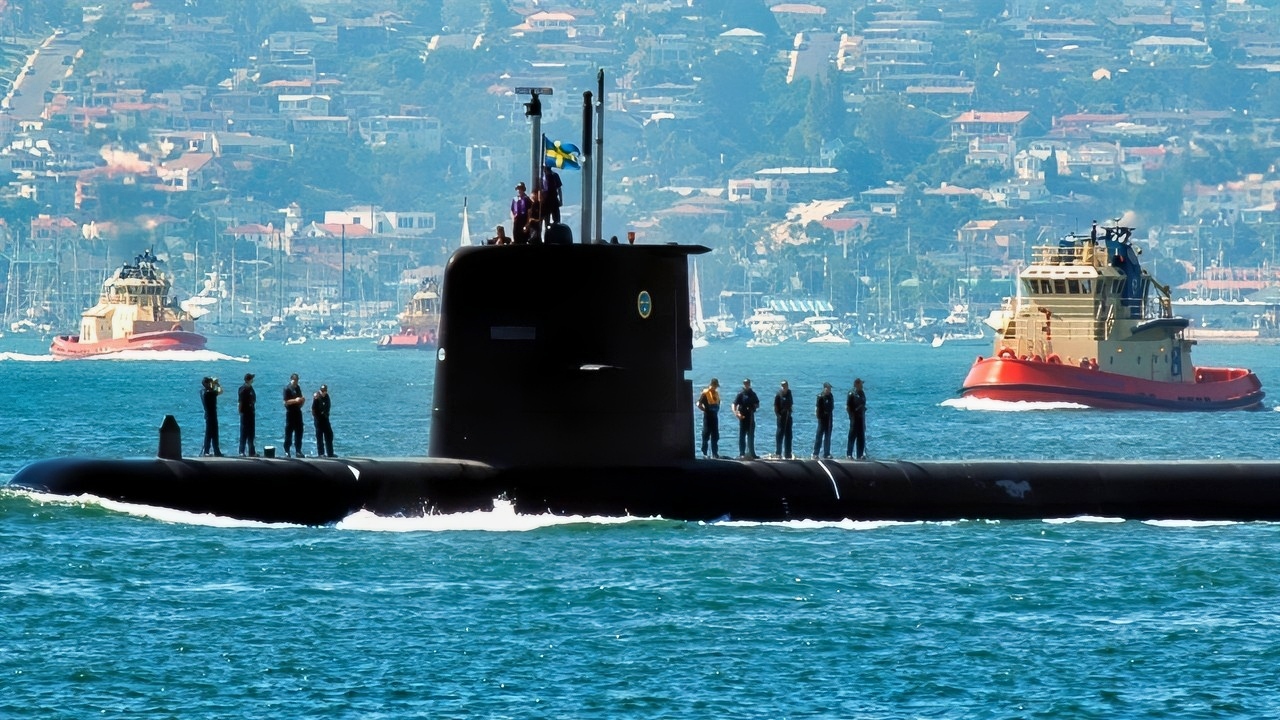
(Oct. 1, 2005) – The Swedish diesel-powered attack submarine HMS Gotland transits through San Diego Harbor during the “Sea and Air Parade” held as part of Fleet Week San Diego 2005. Fleet Week San Diego is a three-week tribute to Southern California-area military members and their families. U.S. Navy photo by Photographer’s Mate 2nd Class Patricia R. Totemeier (RELEASED)
However, in 2004, during an exercise, Sweden demonstrated that a diesel-electric submarine equipped with air-independent propulsion (AIP) systems could sink one of America’s aircraft carriers.
The Swedish submarine HSwMS Gotland, using AIP, “sank” the USS Ronald Reagan during the exercise, showcasing the stealth and endurance of these submarines.
And it wasn’t just once. During continuing exercises, the small Swedish sub could dart in and out of Reagan’s carrier group every time. And the excellent crew won every encounter. This was a huge wake-up call for the Navy’s carriers.
Meet Sweden’s Gotland-class Submarines
The Gotland-class boats are small, crewed by only 32 officers and sailors. They are just 200 feet long and displace only 1,380 tons. Sweden possesses three Gotland-class diesel-electric attack submarines. These submarines can travel up to 20 knots when submerged.
These Gotland-class subs were the first to feature a Stirling engine air-independent propulsion (AIP) system. Their weapons systems can fire torpedoes using four 533mm and two 400mm torpedo tubes. The Gotland was commissioned in 1996, and her sister boats, Uppland and Halland, joined the fleet in 1997.
The subs were designed to emphasize holistic stealth for operations in Swedish waters. The submarines are built to conduct antisurface and antisubmarine warfare, forward surveillance, special operations, and minelaying. The subs are very maneuverable due to the X-rudder system.
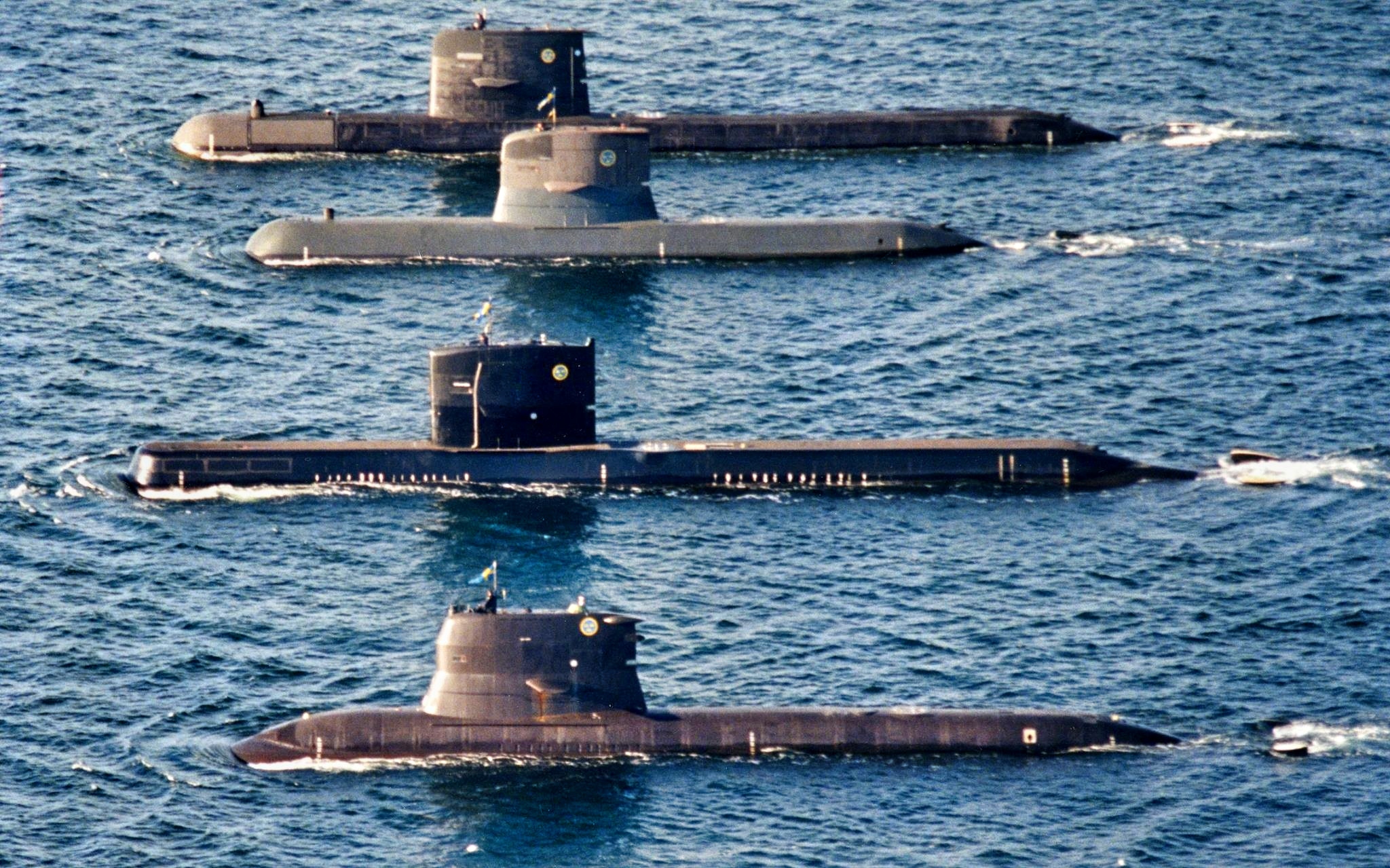
Gotland-Class Submarines. Image Credit: Creative Commons.
The Stirling Engine Is The Powerplant Of The Submarine
The innovative Stirling engines can burn either liquid oxygen stored in tanks or standard diesel fuel. The subs are virtually silent and vibration-free, permitting weeks of undetectable underwater endurance.
This capability to operate for long periods underwater was once reserved only for nuclear-powered submarines. The Gotland-class missions are limited primarily by the quantity of liquid oxygen stored on board.
AIP allows a piston to move in a cylinder by rapidly heating and cooling the gas inside. The engine cools with seawater and heats with liquid oxygen and diesel fuel. This efficient cold and heat system is unique to Gotland-class boats. It creates a quiet and fuel-efficient power plant.
The submarines also have two standard diesel engines that are typically used only for long-distance surface transits or while snorkeling. The submarines’ hydrodynamic hull minimizes noise and active sonar response, making it more difficult for enemy ships to locate.
The subs’ capabilities proved so innovative that the U.S. Navy coordinated to lease the Gotland after the “Reagan sinking” between 2005 and 2007. During that time, the HSwMS Gotland and her crew were based in San Diego, California, and operated as an opposing force in U.S. antisubmarine warfare training.
In 2018, the Gotland-class submarines were modernized by extending the bow by six feet. They included improvements to the sensor suite, an optronics mast, and upgrades to combat and data-management systems. The sensors were the same ones that will be outfitted in the upcoming Blekinge-class of submarines.

At sea (Mar. 1, 2007) – Capt. Craig “Animal” Williams (front) in a F/A 18C Hornet (front) and Capt. Richard “Rhett” Butler (back) in an F/A 18C Hornet look up for a photo as they fly over USS Ronald Reagan (CVN 76). Capt. Williams, a 22-year Naval Aviator who graduated from the United States Naval Academy, was relieved as Commander, Carrier Air Wing Fourteen (CVW-14) by 21-year Naval Aviator, Capt. Butler, a graduate of the University of Kentucky during an aerial change of command ceremony. The Ronald Reagan Carrier Strike Group is currently underway in the Pacific Ocean on a surge deployment in support of U.S. military operations in the Western Pacific. Official U.S. Navy photo by Lt. Cmdr. Tam Pham
(RELEASED)

Pacific Ocean, July 25, 2005 – USS Ronald Reagan (CVN 76) performs a high speed run during operations in the Pacifc Ocean. Ronald Reagan and Carrier Air Wing One Four (CVW-14) are currently underway conducting Tailored Ships Training Availability (TSTA). Official US Navy Photo by Photographers Mate 1st Class James Thierry. (RELEASED)
The outstanding Stirling engines were upgraded, and the boat was modified to work in warmer waters.
The Gotland-Class Is Small But Packs A Powerful Punch
Gotland-class submarines displace 1,580 tons surfaced and measure 203 feet with a 20-foot beam. Crew size ranges from 25 to 32 personnel. The armament consists of four 21-inch bow tubes for heavyweight Type 62 torpedoes and two 15.7-inch tubes for lighter-weight Type 45 or Type 47 torpedoes.
The smaller 15.7-inch tubes can be loaded with two torpedoes per tube. A total of 12 heavyweight and six lightweight torpedoes can be carried. Up to 48 mines can be transported using an external belt.
Sweden has traditionally been a neutral country and never had a need for a large blue-water navy. Currently, Sweden has only five submarines: three in the Gotland class and two in the Södermanland class. These were located in the Baltic to protect her shores in the event of a Russian invasion.
Putin’s belligerent Russia forced the Swedes’ hands. Sweden became a full member of NATO in 2024.
China Also Has AIP Submarines
The Swedes aren’t the only ones with AIP submarines. China has built a Yuan-class submarine that operates on an AIP. China has built 20 submarines, which carry torpedoes and anti-ship missiles.

An F/A-18C Hornet, assigned to the “Stingers” of Strike Fighter Squadron 113, transits over the haze of southern Afghanistan. VFA 113, part of Carrier Air Wing 14 aboard the aircraft carrier USS Ronald Reagan is supporting Operation Enduring Freedom. The mission of CVW 14 is to protect the people of Afghanistan and to support coalition forces. Ronald Reagan is currently deployed to the U.S. 5th Fleet area of operations. Operations in the U.S. 5th Fleet area of operations are focused on reassuring regional partners of the United States’ commitment to security, which promotes stability and global prosperity.
These submarines will be another worthy adversary if the US and China ever come to conventional war. Our carriers will have to use the lessons learned from the Gotland sinking of the USS Ronald Reagan if they wish to avoid that from happening again.
Beyond traditional combat, they are highly effective for intelligence gathering, surveillance, and specialized missions in shallow, confined, and complex waters like the Baltic Sea.
While not designed for blue-water, long-range operations, the Swedish Navy’s Gotland-class remains a benchmark for cost-effective, high-performance, non-nuclear, conventional, diesel-electric, AIP-powered, stealth submarines in modern, shallow-water, coastal warfare. It is ideally suited for operations in the Baltic.
About the Author: Steve Balestrieri
Steve Balestrieri is a National Security Columnist. He served as a US Army Special Forces NCO and Warrant Officer. In addition to writing on defense, he covers the NFL for PatsFans.com and is a member of the Pro Football Writers of America (PFWA). His work was regularly featured in many military publications.


