

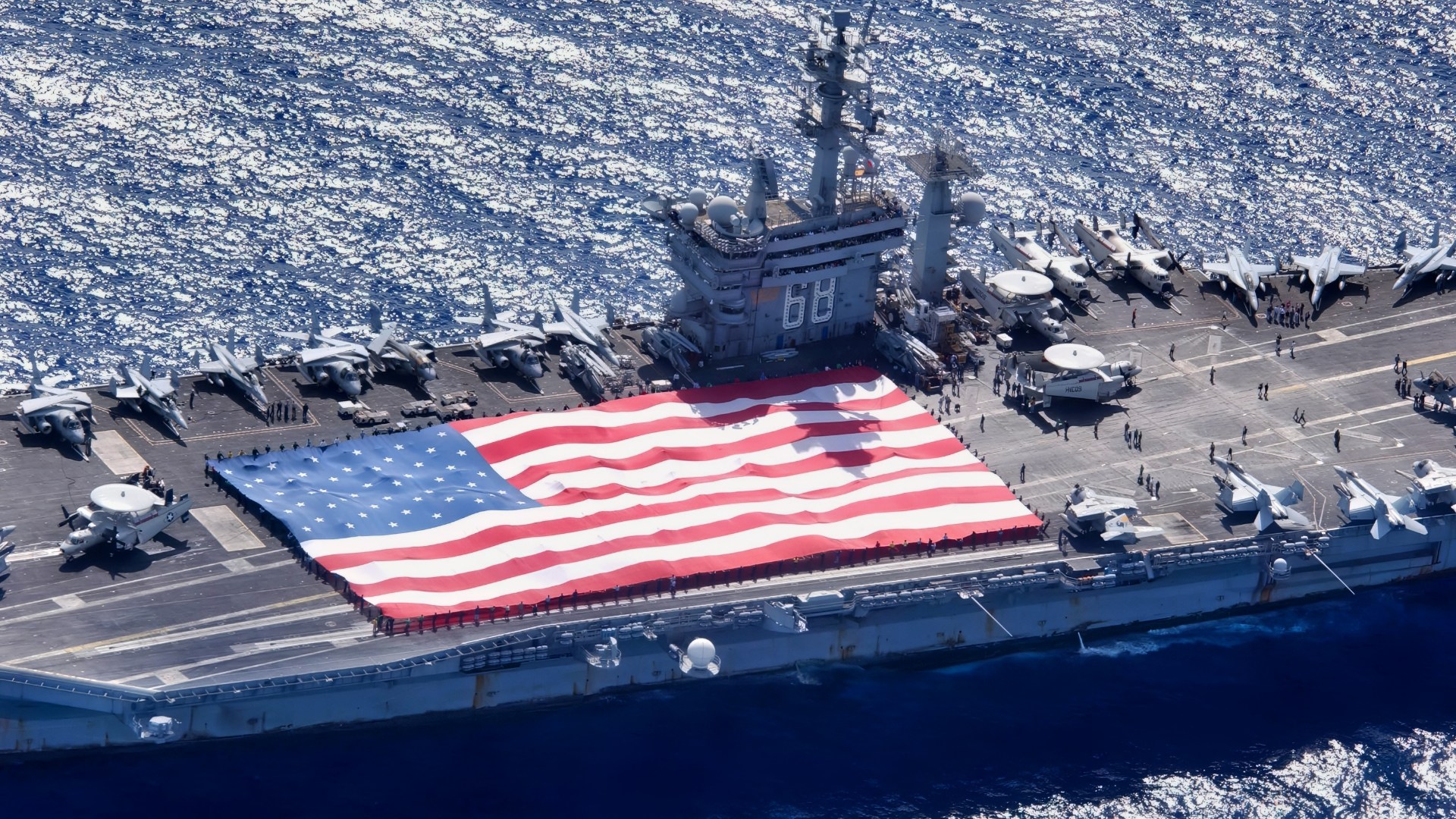
Synopsis: The U.S. Navy faces a high-stakes decision as the USS Nimitz approaches its scheduled 2026 retirement.
-After 50 years of service, the Navy’s oldest carrier is returning to Bremerton, Washington, but a two-year delay for the USS John F. Kennedy (CVN-79) threatens to drop the fleet to just 10 active carriers.
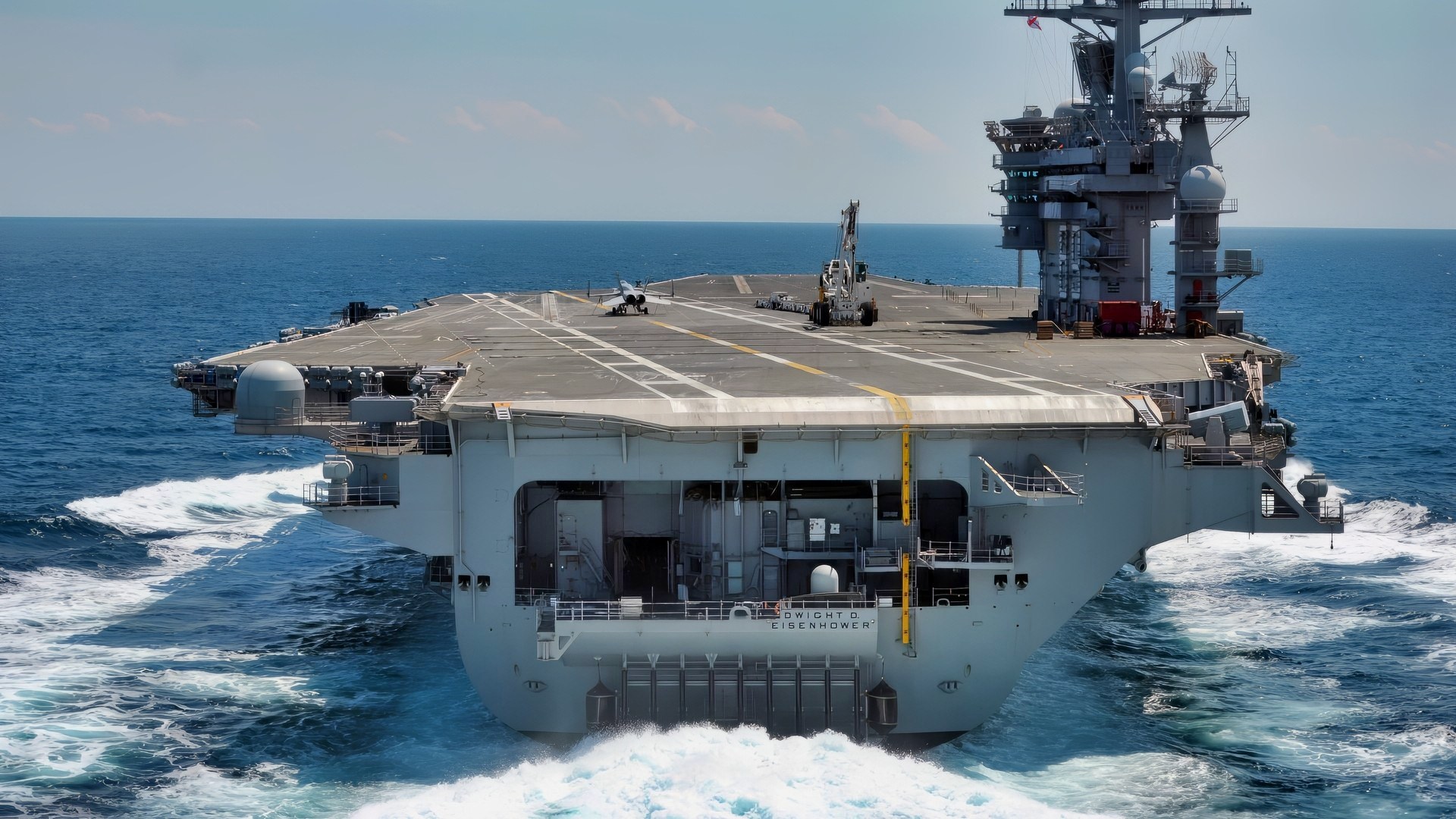
ATLANTIC OCEAN (June 14, 2011) The Nimitz-class aircraft carrier USS Dwight D. Eisenhower (CVN 69) conducts rudder turns during sea trials. Dwight D. Eisenhower completed a nine-month planned incremental availability at Norfolk Naval Ship Yard on June 10 and is scheduled to resume underway operations this summer. (U.S. Navy photo by Mass Communication Specialist 1st Class Christopher Stoltz/Released)
-As the Trump administration intensifies maritime operations against Venezuelan narco-terrorists and the Houthis, author Dr. Brent M. Eastwood argues that a life extension is vital.
-With China expanding its own nuclear carrier fleet, retiring the Nimitz now could compromise critical American power projection in the Indo-Pacific and Mediterranean.
Why the U.S. Navy Might Not Retire the USS Nimitz in 2026 After All
It is the end of an era for the USS Nimitz.
The aircraft carrier is expected to be decommissioned in 2026 after completing its last cruise.
On December 16, the Nimitz will return to its homeport at Naval Base Kitsap in Bremerton, Washington, where it faces retirement.
It is the Navy’s oldest carrier and has served for over 50 years.
The Nimitz is returning from a nine-month deployment in the Indo-Pacific and the Arabian Sea.
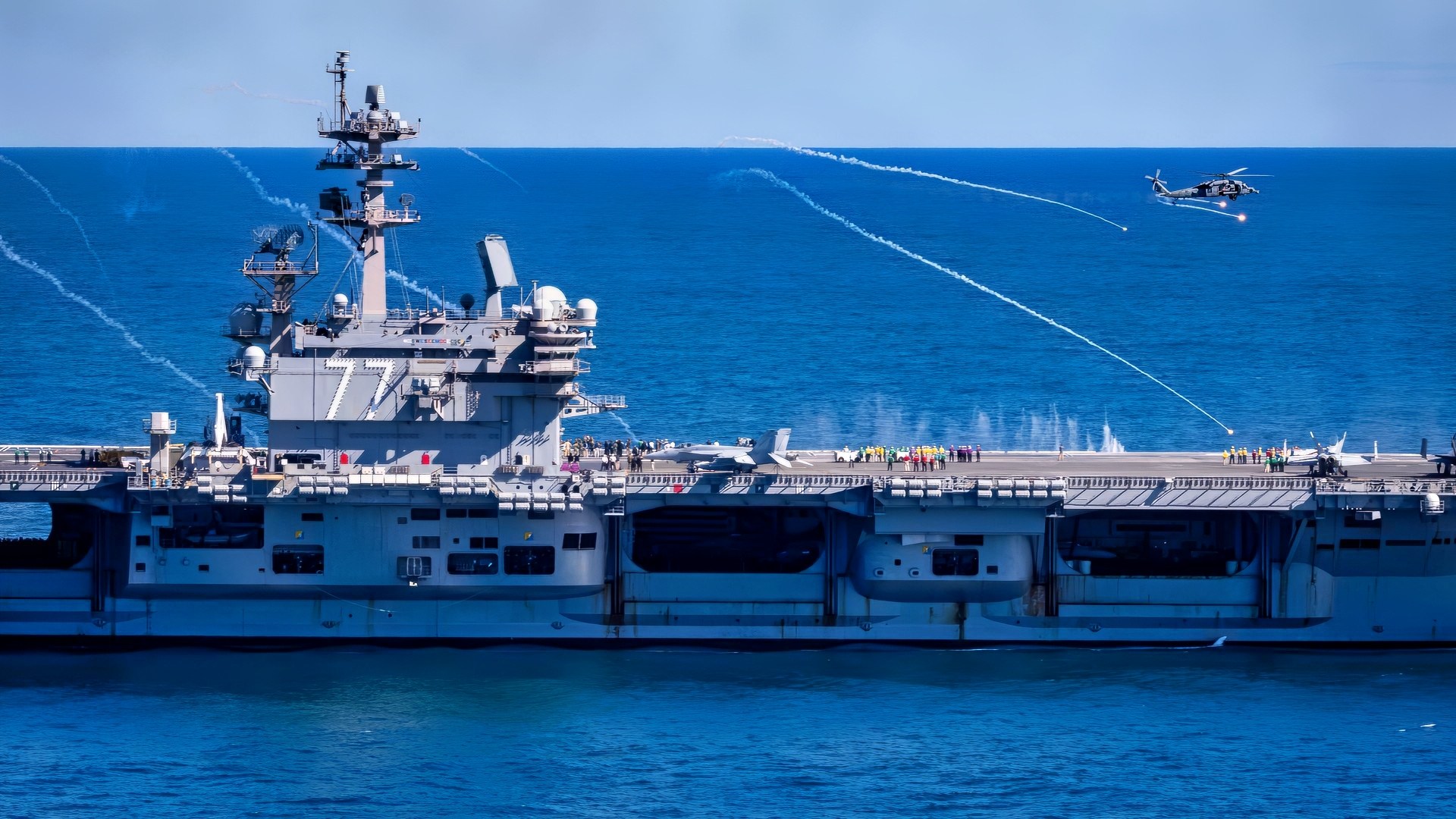
(Oct. 5, 2025) An MH-60S Sea Hawk attached to the “Dusty Dogs” of the Helicopter Sea Combat Squadron (HSC) 7 fires flares above the Nimitz-class aircraft carrier USS George H.W. Bush (CVN 77) in support of the Titans at Sea Presidential Review. The Titans of the Sea Presidential Review is one of many events taking place throughout the country to showcase maritime capabilities as part of the U.S Navy’s 250th birthday. America is a maritime nation. For 250 years, America’s Warfighting Navy has sailed the globe in defense of freedom. (U.S. Navy photo by Mass Communication Specialist 2nd Class Mitchell Mason)
Once in Bremerton, it will transit to Naval Station Norfolk, Virginia, to begin the decommissioning service in May 2026.
That won’t be the end of aircraft carriers basing in Bremerton. The new USS John F. Kennedy, a Gerald R. Ford-class flat-top, will come to Washington for its commissioning in 2027.
The John F. Kennedy will eventually join the USS Ronald Reagan, another Nimitz-class carrier in Washington state.
The Need for Aircraft Carriers Despite Maintenance Requirements
The Nimitz, due to its advanced age, is expensive to sustain and requires extensive maintenance for continued service.
However, aircraft carriers are needed more than ever, and the Navy may need to reconsider its decision to retire the Nimitz.
Having 11 aircraft carriers in service gives the maritime branch more options for projecting power around the world.
The Battle Against Houthi Terrorists
Aircraft carriers are a presidential-level asset and must often steam to hot spots to respond to brushfire wars.
For example, the Iranian-backed Houthis terrorists caused all kinds of problems with civilian and military shipping in the Red Sea and the Gulf of Aden.
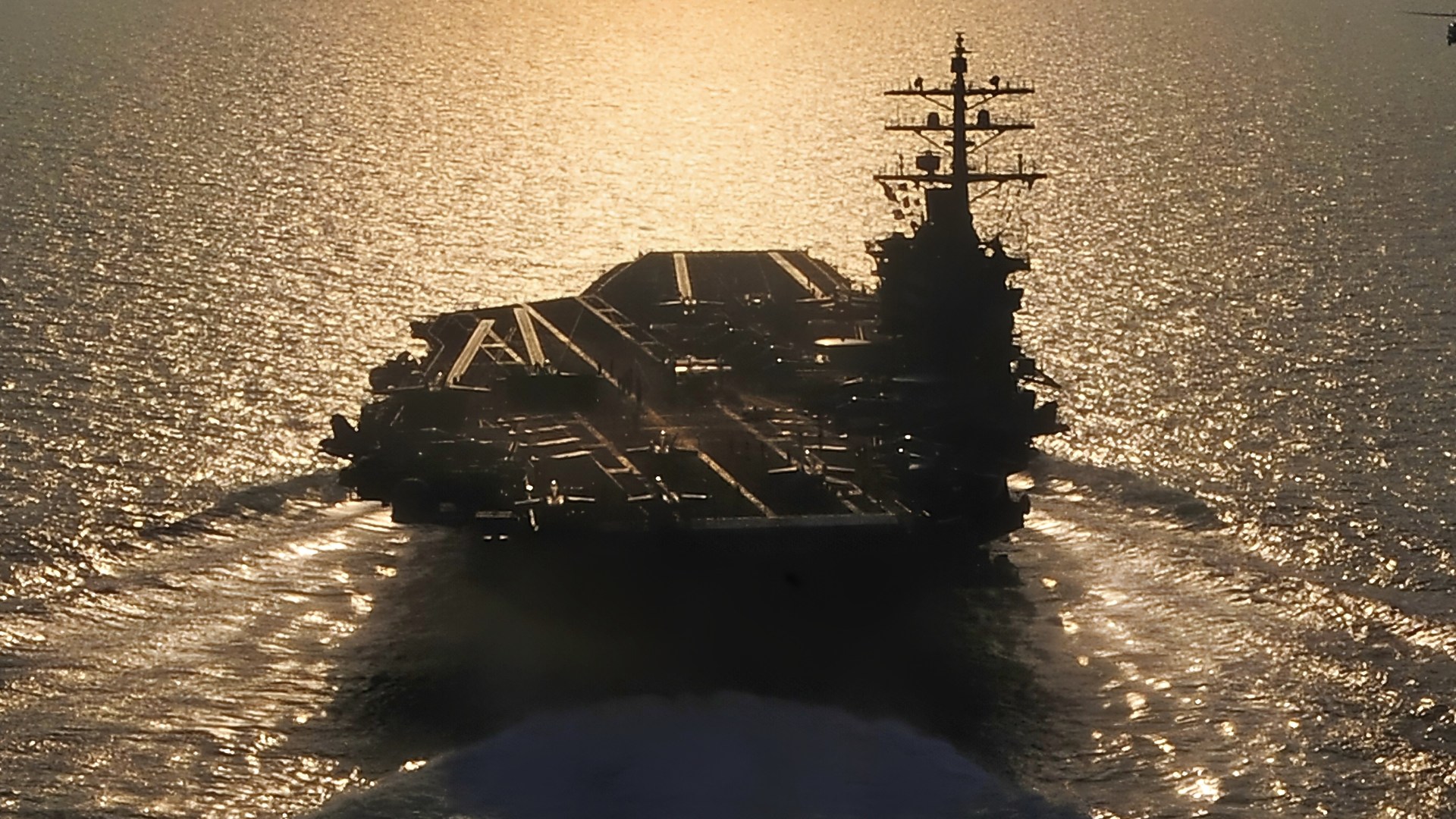
120710-N-RY232-571 MEDITERRANEAN SEA (July 10, 2012) – An SH-60F Seahawk from the Nightdippers of Helicopter Anti-Submarine Squadron (HS) 5 flies alongside Nimitz-class aircraft carrier USS Dwight D. Eisenhower (CVN 69), July 10. Dwight D. Eisenhower is on a regularly scheduled deployment in support of Maritime Security Operations (MSO) and Theater Security Cooperation (TSC) efforts in the U.S. 5th and 6th Fleet areas of responsibility. IKE deployed as part of Eisenhower Carrier Strike Group (CSG), which includes CSG 8, IKE, guided-missile cruiser USS Hue City (CG 66), guided-missile destroyer USS Farragut (DDG 99), guided-missile destroyer USS Winston S. Churchill (DDG 81), USS Jason Dunham (DDG 109), the seven squadrons of Carrier Air Wing (CVW) 7, and Destroyer Squadron 28. (U.S. Navy photo by Mass Communication Specialist 2nd Class Julia A. Casper/Released)
The United States had to dispatch two carrier strike groups to the region and make sure the Houthis did not sink a ship with drones and anti-ship missiles.
The Navy Is Fighting A Drug War in the Caribbean
Now the USS Gerald R. Ford is in the Western Hemisphere with its battle flotilla to intimidate Venezuela. The United States is making protection of the Homeland a priority and ordering strikes against boats carrying illegal narcotics launched from Venezuela and other South American states.
The Donald Trump administration is electing to destroy the drug vessels outright and eliminate narco-terrorists rather than arresting suspects using Coast Guard personnel.
It is a wartime footing that many Democrats have questioned due to its alleged lack of legality and a recent accusation of a “double tap” strike that saw a second missile sink a boat and kill two survivors.
The Trump administration contends that no laws were broken during the action against the narco-terrorists.
USS Nimitz Aircraft Carrier and The Need to Stymie China
Obviously, China is a concern as the People’s Liberation Army Navy has three of its own carriers in service, with a fourth on the way that could be nuclear-powered.
It is plausible that the U.S. Navy could lose an aircraft carrier in battle against China.
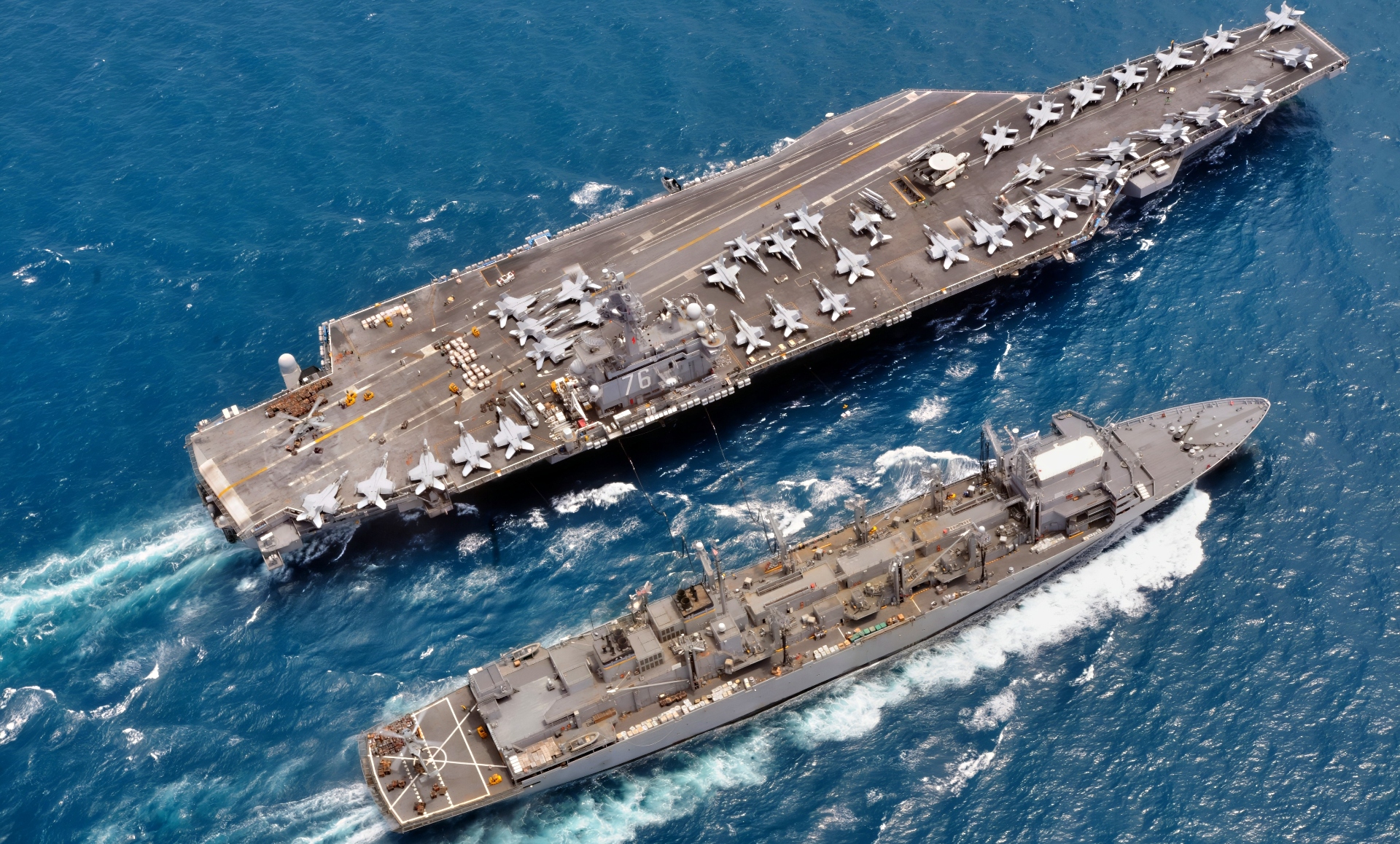
(August 15, 2008) With SH-60 helicopters moving pallets of supplies both USS Ronald Reagan (CVN 76) and USNS Bridge (T-AOE 10) work together during a replenishment at sea or RAS. With Reagan’s six galleys and approximately 4,100 Sailors it takes a lot of produce to feed that many folks and the Nimitz-class aircraft carrier got what it needed from USNS Bridge to do so.
The Ronald Reagan Carrier Strike Group is on a routine deployment in the 7th Fleet area of responsibility. Operating in the Western Pacific and Indian Ocean, the U.S. 7th Fleet is the largest of the forward-deployed U.S. fleets covering 52 million square miles, with approximately 50 ships, 120 aircraft and 20,000 Sailors and Marines assigned at any given time.
U.S. Navy photo by Senior Chief Mass Communication Specialist (SW/NAC) Spike Call
That would be a shot heard round the world and a major focal point, shocking the American people.
Europe must be dealt with as Russia still refuses to end the war against Ukraine. American carriers are an asset that must lead NATO training to make certain the various navies from alliance members can project power in a way that intimidates Russia and deters its navy from conducting malign activity against Western countries
The USS John F. Kennedy Is Running Late
However, even though the U.S. Navy promises to maintain 11 active carriers at all times, there may be a year when only 10 are available.
The John F. Kennedy may be delayed for another two years before it is ready for active duty.
The Kennedy will now be delivered in March 2027.
If the Nimitz retired in 2026, that means the Navy will be one short in the carrier fleet.
The reason for the delay is similar to Gerald R. Ford’s tardiness.
The Advanced Arresting Gear and the Advanced Weapons Elevator need more work. These are brand new systems for the Ford-class that critics, including Trump, have pointed to as the culprits for the Navy’s carrier woes.
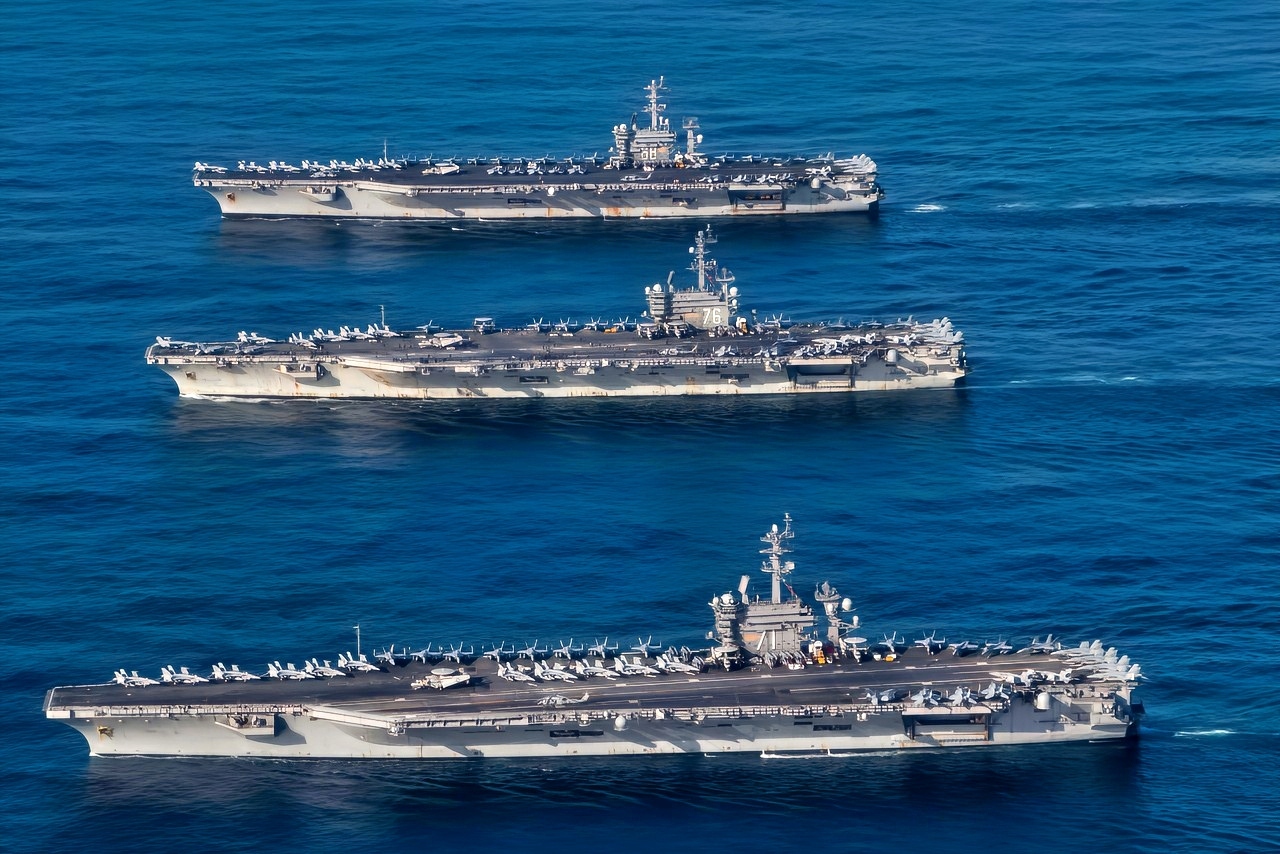
The U.S. Navy aircraft carriers USS Nimitz (CVN-68), USS Theodore Roosevelt (CVN-71) and USS Ronald Reagan (CVN-76) underway in the Western Pacific on 12 November 2017. The strike groups were underway and conducting operations in international waters as part of a three-carrier strike force exercise. This was the first time since August 2007 that three U.S. Navy carriers operated together. In 2007, USS Kitty Hawk (CV-63), USS Nimitz (CVN-68) and USS John C. Stennis (CVN-74) participated in exercise “Valiant Shield”.
For these reasons, the Department of Defense could change Nimitz’s retirement date to 2027, get it ready, and send it on one more cruise to the Mediterranean or the Indo-Pacific.
It will likely not have a service life beyond 2027, but an extension could be necessary until the Kennedy has fixed its problems.
Five decades is a long time to serve, though. It is not clear how long the carrier will be in maintenance after this last deployment, and if the Nimitz could manage another cruise. The Navy thus faces a difficult decision with the Nimitz. Retire it and go down to ten carriers for a year, or keep it in business for another bite at the apple.
I incline to support a life extension for the Nimitz for another one to two years. The threat environment is too extensive to retire in 2026. If the United States is going to keep a carrier in the Western Hemisphere for long periods, and it looks like it will, then that leaves other regions short one flat-top to patrol the world’s oceans.
There are just too many geopolitical risks to go down to ten carriers until the Kennedy is ready. America’s ability to project power and deter enemies hangs in the balance, and the Nimitz could squeeze just one more deployment to allow the Navy some more coverage and control in various regions.
The USS Nimitz may not be retired just yet, and that would be a shot in the arm to those who believe that carrier strength is one of the most critical aspects of the Navy.
About the Author: Brent M. Eastwood
Author of now over 3,000 articles on defense issues, Brent M. Eastwood, PhD is the author of Don’t Turn Your Back On the World: a Conservative Foreign Policy and Humans, Machines, and Data: Future Trends in Warfare plus two other books. Brent was the founder and CEO of a tech firm that predicted world events using artificial intelligence. He served as a legislative fellow for US Senator Tim Scott and advised the senator on defense and foreign policy issues. He has taught at American University, George Washington University, and George Mason University. Brent is a former US Army Infantry officer. He can be followed on X @BMEastwood.


Zazu
February 12, 2026 at 10:41 am
Before we try building more ships, perhaps the Navy should take a long, hard look at our shipyards. Having retired from the industry after a long career as a tradesperson, a salaried project manager, and finally a manager, I can safely say that there are several reasons that the John F. Kennedy and follow-on carriers will be delayed, to say nothing about the current and future submarine programs.
While the material shortage reason has some merit, our shipyards shouldn’t have to compete with the rest of the market. Suppliers need to hold a portion of their production for Naval demands, whether voluntary or mandated.
However, the larger problem is the way shipyards are run. Aging, experienced trades (and salaried) personnel are often eliminated (laid off) towards the end of their careers to save costs (salary, PTO, benefits, retirement costs, etc.), while younger, lower-earning (much lower), and less-experienced people receive little if any training and are rushed into construction/production positions. There, they are managed with an iron fist, and labor unions protect those who can’t/won’t measure up. This, combined with the low pay, long hours, working outside in most weather conditions for many positions, and dangerous working conditions (the very nature of the job), results in the yard(s) having a very difficult time recruiting and retaining workers.
The salaried positions are the same, except things like cronyism, graft, racism (especially against white men), and ageism run rampant. The worst part is that senior and executive management actively look the other way or encourage these actions, thus ensuring any and all audits are easily passed; not to mention that ethics violations are very carefully filtered and enforced to ensure there is no disruption of the current system.
The cost of most current Naval construction projects could easily be cut by a quarter by simply addressing the problems that I mentioned. Deeper dives (no pun intended) into the industry would reveal an antiquated, top-heavy system that heavily depends on labor-intensive methods and manages its employees as if it were 1896.
So yes, we need more ships and in a hurry. Unfortunately, the current shipbuilding is broken beyond repair and needs to be rebuilt from the ground up with safety, quality, and efficiency in mind instead of just profit.