


It doesn’t often fall to the Secretary of the Treasury to make belligerent threats to the nation’s foreign adversaries, but Treasury Secretary Scott Bessent did just that this week.
Appearing on Fox Business’ “Sunday Morning Futures” program over the weekend, as the New York Post reported, Bessent said Iran will likely run out of things to trade within two weeks, forcing the Islamic Republic into a favorable deal.
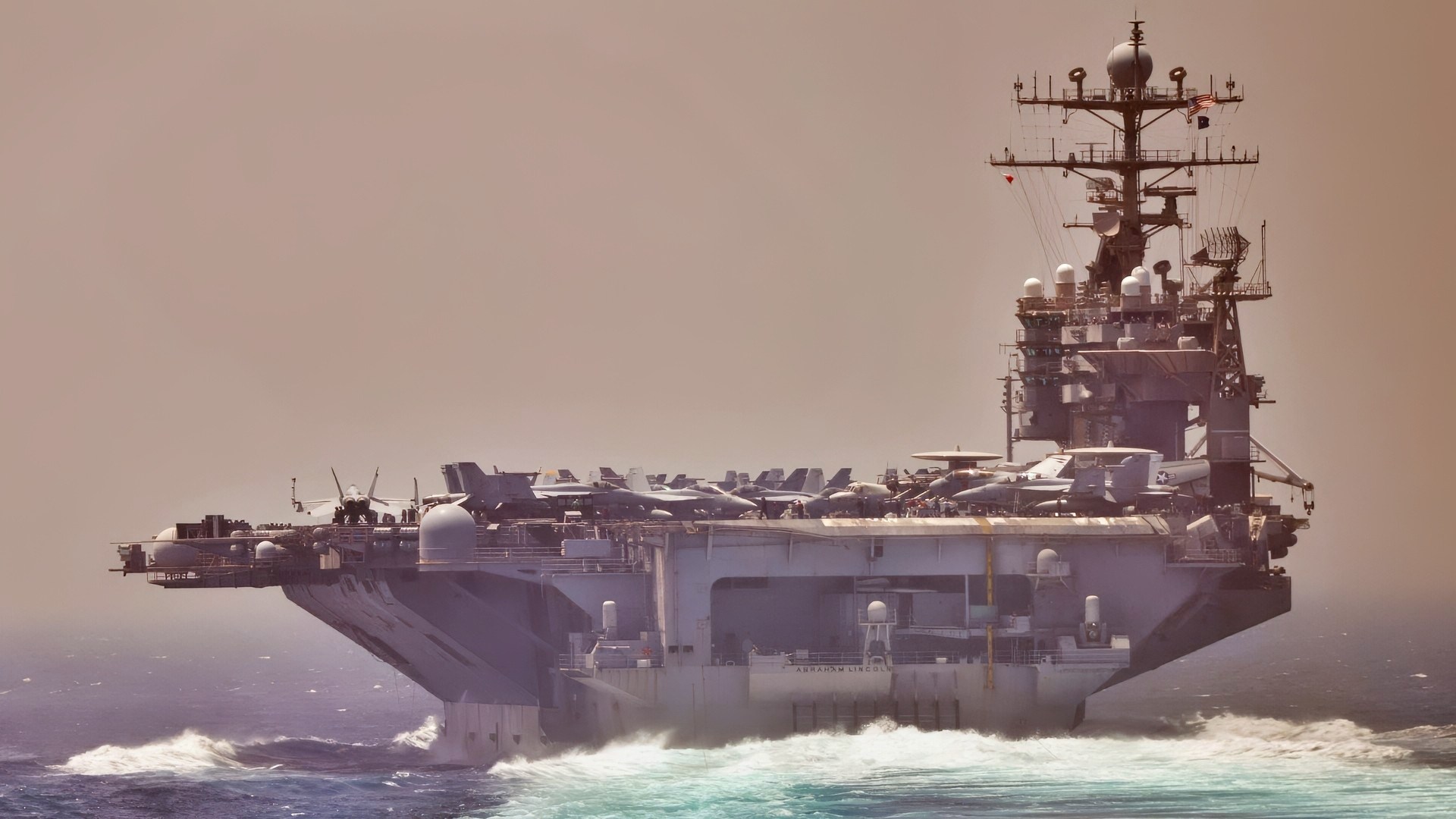
STRAIT OF HORMUZ (May 1, 2012) The aircraft carrier USS Abraham Lincoln (CVN 72), left, and the guided-missile cruiser USS Cape St. George (CG 71) transit the Strait of Hormuz. Abraham Lincoln and Cape St. George are deployed to the U.S. 5th Fleet area of responsibility conducting maritime security operations, theater security cooperation efforts and support missions as part of Operation Enduring Freedom. (U.S. Navy photo by Mass Communication Specialist 3rd Class Alex R. Forster/Released)
The Secretary claimed Iran has only 15 million more barrels of oil on the water, and after that, it will have nothing left to trade. He predicted that once Iran makes that final delivery to China, it will be left with nothing.
The administration said this is due to the U.S. naval blockade on Iranian shipments, as well as Operation Economic Outcast, a Treasury-led initiative to threaten sanctions on other countries that do business with Iran, focusing on aviation, digital assets, gold, shipping, and technology.
In the Fox interview, Bessent also said average oil shipments per day through the Strait of Hormuz have reached 15 to 22 million barrels a day, higher than before the war, although most estimates showing shipments rebounding haven’t reached that level.
Bessent went on to say that Iran is “on their knees,” and that he wanted to make sure that any deal made to end the war will “stick.”
It remains to be seen whether Iran’s position is as dire as Bessent says, although it does seem that Iran is moving toward offering a diplomatic solution, amid this ugly situation in which both sides are trying to get the other to blink first.
The Latest on the Talks
The Associated Press reported Tuesday that mediators from Qatar are continuing to pursue a ceasefire agreement between the United States and Iran, but that “major hurdles” remain before any agreement can be reached.
Last week, on the sidelines of the UN General Assembly in New York, Iran reportedly offered a ceasefire deal resembling an accelerated version of the Memorandum of Understanding agreement from June that collapsed the following month: Iran would agree to reopen the Strait of Hormuz in exchange for the U.S. removing its naval blockade, easing sanctions, and releasing frozen assets. Discussion of such issues as Iran’s nuclear program would follow after that.
President Donald Trump, however, has rejected the proposal, with the Wall Street Journal reporting that he has told aides that he expects to resume military action after the midterm elections, which are just over a month away.
Iranian Foreign Minister Abbas Araghchi, according to various media reports, met with the mediators on Monday, and they are planning to meet with U.S. negotiators on Tuesday.
Per the AP, one U.S. official said that the U.S. will not reach a deal with Iran until “nuclear issues are addressed.” That official also told the news service that Trump is willing to grant some sanctions relief and unfreeze assets for Iran in exchange for “concrete progress on nuclear issues.”
And while the report said Iran is flexible on nuclear issues, the problem is that the sides are “far apart on timing and [on] which side makes the first moves.”
What does it mean to be flexible on nuclear issues? According to the report, the U.S. would like for Iran to allow nuclear inspectors to be let into the country. The Memorandum of Understanding left the nuclear question for later discussion, with a provision to discuss it within 60 days of the agreement.
A Draft Text
The mediators prepared a draft text, the report said. The mediators, the AP said, are working on a proposal in which the Strait would open, and the blockade would be lifted first, with sanctions relief coming after that.
It would work along the lines of the deal discussed in recent weeks between Iran and Oman, in which Oman would control the Southern part of the Strait of Hormuz.
That deal was reported at various points as being close or nearly complete, but no such final agreement was ever announced.
That agreement would not include tolls on the Strait, which Iran had sought in the talks.
About the Author: Stephen Silver
Stephen Silver is an award-winning journalist, essayist, and film critic, and contributor to the Philadelphia Inquirer, the Jewish Telegraphic Agency, Broad Street Review, and Splice Today. The co-founder of the Philadelphia Film Critics Circle, Stephen lives in suburban Philadelphia with his wife and two sons. For over a decade, Stephen has authored thousands of articles that focus on politics, national security, technology, and the economy. Follow him on X (formerly Twitter) at @StephenSilver, and subscribe to his Substack newsletter.


