
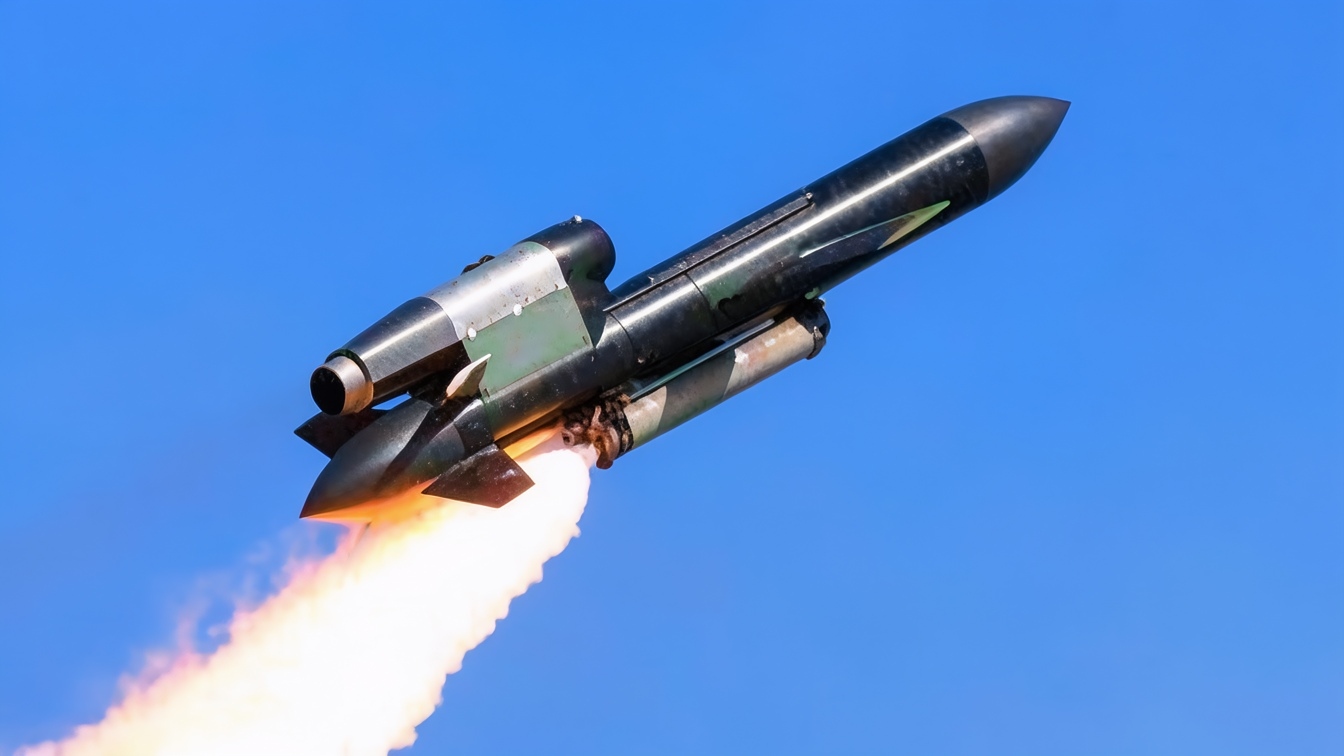
Ukraine Uses New Ballistic Missile for the First Time – Ukraine just used its new and domestically produced FP-7 ballistic missile against Russia for the first time, marking a major milestone for Kyiv as it works to reduce its reliance on long-range weapons from Western allies. It also comes as both Russia and Ukraine seek to inflict increasing damage on their respective energy infrastructure ahead of the coming winter heating season.
Ukrainian President Volodymyr Zelenskyy confirmed the first combat use of the ballistic missile in a statement published on Telegram on October 1. The statement contained video footage showing the launch, but he did not reveal any additional details or what Ukraine claims to have hit with the missile. The Wall Street Journal then reported that the missile had been used against a Russian position inside Ukrainian territory, citing a source familiar with the strike.

Ukraine President Zelensky 2026 Creative Commons Photo

Zelensky Speaking in UK Ukraine Government Photo
While one strike doesn’t change the war yet, it’s good news for Ukraine and a sign that, given enough time, it could replace the Western-supplied missiles it currently depends on. The FP-7 is a powerful weapon designed to hit targets as far as 250 kilometers away and can carry a warhead weighing up to 200 kilograms. Crucially, though, it is designed for rapid, mass production.
Ukraine Won’t Say What It Hit
Inn a short statement on October , Zelenskyy announced1 that the FP-7 was used in combat for the first time.
“Ukrainian tactical ballistics. FP-7. First combat deployment. Thank you for the result. Next up: production. Glory to Ukraine!” he wrote in Ukrainian.
The footage shared alongside the statement appeared to show the missile being launched at night, though he did not reveal exactly when the strike occurred or what the missile hit. Ukraine is deliberately keeping those details secret.
The Kyiv Independent asked Zelenskyy’s communications adviser about the strike, and was explicitly told, “we’re not telling.”
According to the Wall Street Journal, however, the target was a Russian position located somewhere in Russian-occupied Ukraine, but the precise location or even the nature of the target has still not been publicly confirmed and may not be for some time, particularly if Russia would prefer to avoid publicizing any damage.
What We Know About the FP-7
The FP-7 is the brainchild of Fire Point, a Ukrainian defense company founded in response to the Russian invasion. It is a tactical ballistic missile that comes from the same people who developed the now-famous FP-5 Flamingo cruise missile, which has caused extensive damage to Russian energy infrastructure, as well as a range of Ukrainian long-range attack drones.
Fire Point says the FP-7 has a range of around 250 kilometers—about 155 miles—and can carry a warhead weighing up to 200 kilograms. The missile can also allegedly reach speeds of up to 1,500 meters per second, or roughly 3,355 miles per hour. The missile’s specifications have changed throughout its development, though. Earlier information described a weapon with a range of roughly 200 kilometers and a 150-kilogram warhead. That suggests the weapon’s capabilities exceed what its developers originally envisioned.
Fire Point chief designer and co-founder Denys Shtilerman previously said that the weapon is similar to the American ATACMS ballistic missile, but said that the new Ukrainian weapon will carry a larger warhead and cost substantially less to make and procure.
And, unlike Ukraine’s long-range drones, the FP-7 gives Kyiv a much faster weapon that is designed specifically for attacking valuable military targets behind Russian lines.
Based On A Soviet Missile
Ukraine didn’t build the FP-7 completely from scratch — but it wasn’t based on American technology. In fact, it is based partly on the Soviet-designed 48N6 interceptor used by both the S-300 and S-400 air defense systems. But Fire Point adapted the design into a ballistic missile that’s intended to strike ground-based targets. The Ukrainian weapon also uses more modern components and manufacturing techniques, with a composite body and solid-fuel propulsion.
Development has moved rapidly, too, with Fire Point revealing the FP-7 at the MSPO defense exhibition in Poland in September 2025. Footage released in February 2026 then showed the missile undergoing flight testing.
Then, on September 10, Fire Point CEO Iryna Terekh said that the missile had completed two rounds of testing and was undergoing military trials. She predicted that the FP-7 would enter service within “weeks.”
The ballistic missile is in use, but Ukraine must continue to build them — and in large numbers.
Russia Launches More Than 100 Drones
The announcement also came as Russia launched another major overnight attack against Ukraine. Overnight into October 2, Russia launched over 100 attack drones at targets throughout the country, according to Zelenskyy, including almost 50 jet-powered drones. Ukrainian forces intercepted or neutralized most, but some still reached their targets.
In Kyiv, Russian Shahed drones struck the Pivdennyi Bridge several times, and another drone hit a residential high-rise apartment building in the morning, killing one person. Zelenskyy said
Russia also reportedly struck a kindergarten in Kherson and a grocery store in Kharkiv.
About the Author: Jack Buckby
Jack Buckby is a British researcher and analyst specializing in defense and national security, based in New York. His work focuses on military capability, procurement, and strategic competition, and he produces and edits analysis for policy and defense audiences. He brings extensive editorial experience, with a career output spanning over 1,000 articles at National Security Journal, and has previously authored books and papers on extremism and deradicalization.


