

Ukraine, in recent weeks, has been struck by some devastating ballistic missile attacks from Russia, some of which have included missiles from Russia’s allies in North Korea.
Ukraine has also run dangerously low on interceptors and has been asking its Western allies for more, even as the United States and countries in Europe face their own stockpile concerns.

Putin in August of 2022 Image Credit Russian Federation
In the meantime, a report this week looked at Ukraine’s efforts to build its own ballistic missiles.
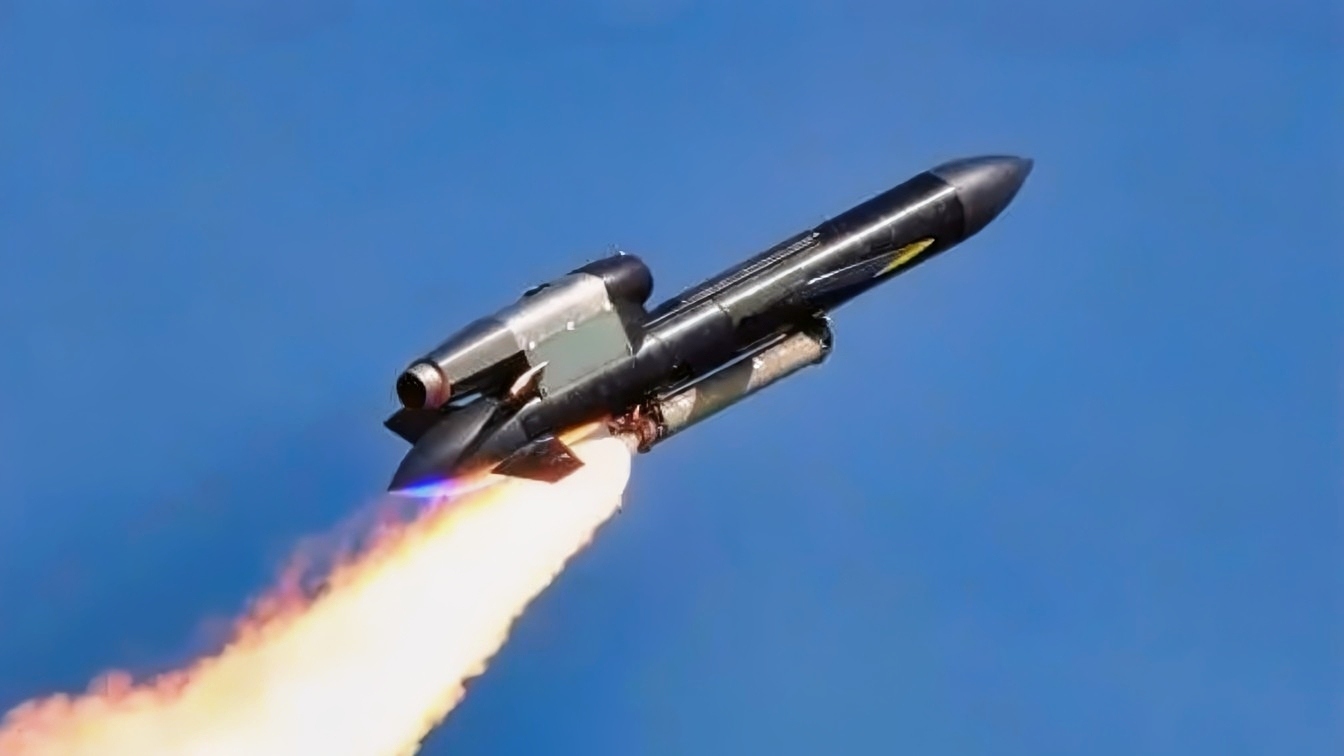
According to Politico, the Ukrainian defense manufacturer Fire Point says it will have its first ballistic missile “ready” this fall.
Iryna Terekh, who is both the company’s CEO and chief tech officer, told the outlet that it is currently working on its FP-7 ballistic missile, which boasts a “200-kilometer range” and a 150-kilogram warhead.
The company is also developing the FP-9, which features an 855-kilometer range and an 800-kilogram warhead. The latter missile, the Politico story said, could reach Moscow.
Also potentially crucial for Kyiv? The FP-7 is “being reworked to be used in air defense systems.”
How Far Along Is It?
“Our FP-7 is already in a certification process. That requires a certain number of battle-testing launches performed under a special procedure,” the company’s CEO said this week.
“We’re going to do those launches, prove its effectiveness in real combat against our enemy, and after that it will be ready for contracting.”
Terekh added that if those launches go well, “it is completely realistic to get it ready by this fall,” although it’s not entirely clear what “ready” means in that context.

Putin in August 2021 Russian Federation Photo
Fire Point is also the company behind the Freyja interceptor system, and the Politico story described the FP-7 as a “key part” of that system, in which Ukraine is expected to provide the missiles and launchers, while its allies provide radars, surveillance and other components.
The overall Freyja is also in development, with one company director stating in a recent social media post that the hope is for a mid-2027 launch, although Zelensky, in recent comments about that weapon, said the timetable looked more like “12 months to several years.”
“I can’t share the details because it’s a matter for the partners whether they want to talk about it. But everything is going quite quickly. All the partners work in the rhythm of Ukrainian defense companies,” the CEO said of that system in the Politico story.
About Fire Point
According to a CNBC profile published last week, Fire Point is a homegrown Ukrainian startup, founded after Russia’s 2022 invasion, and its drones have been a major part of Ukraine’s recent strategy in the war. The company claims that it is responsible for about 60 percent of Ukraine’s “long-range sanctions.”
The company is aiming to produce 100,000 drones by the end of 2026.
“This year, we attacked Russia with twice as many drones as it attacked us,” Terekh told Politico in this week’s profile. “This is something we could not dream of back in 2022. And we all did it together, the Ukrainian army, politicians, and producers. And it’s our ability, independent of others, no more asking permission to hit targets.”
Politico also reported that Russia has been doing “reconnaissance” on the company’s production process and trying to disrupt mass production of the new weapons.
“No one but our partners want Ukraine to be armed with its own ballistics. That is why we work under such tremendous pressure,” Terekh added.
Those efforts are all part of Ukraine becoming, as The Atlantic described it in an analysis earlier this month, a “military powerhouse,” and that nearly five years into the war, “the Ukrainian military position is stronger than it has been in years.”
Ukraine Still Wants the Patriot License
Even with that project showing promise, Politico noted, Ukraine is still pushing for a license to produce Patriot PAC-3 missiles.
President Donald Trump appeared to promise President Zelensky a Patriot license at the NATO summit last month, although Trump backed off that assertion just over a week later, stating at a public cabinet meeting that “we have to be very careful about letting somebody build our advanced weapons.” Talks on the matter are said to be ongoing.
About the Author: Stephen Silver
Stephen Silver is an award-winning journalist, essayist, and film critic, and contributor to the Philadelphia Inquirer, the Jewish Telegraphic Agency, Broad Street Review, and Splice Today. The co-founder of the Philadelphia Film Critics Circle, Stephen lives in suburban Philadelphia with his wife and two sons. For over a decade, Stephen has authored thousands of articles that focus on politics, national security, technology, and the economy. Follow him on X (formerly Twitter) at @StephenSilver, and subscribe to his Substack newsletter.


