


Russia launched yet another attack on Ukraine overnight, with at least 16 people killed in Ukraine’s Kharkiv region and at least another 69 people injured — figures that include children and other civilian non-combatants.
Posting to social media, Ukrainian President Volodymyr Zelensky decried the attack on civilians. “A horrific Russian attack in the Kharkiv region. A “Shahed” drone struck essentially just civilians—in a park near an ordinary café. Absolute barbarism. Six people were killed, including children. A little girl was killed in her stroller. Her name was Angelina; she was just over a year old, born in August 2025,” the Ukrainian president wrote.

Lancet Drone from Russia. Image Credit: Creative Commons.
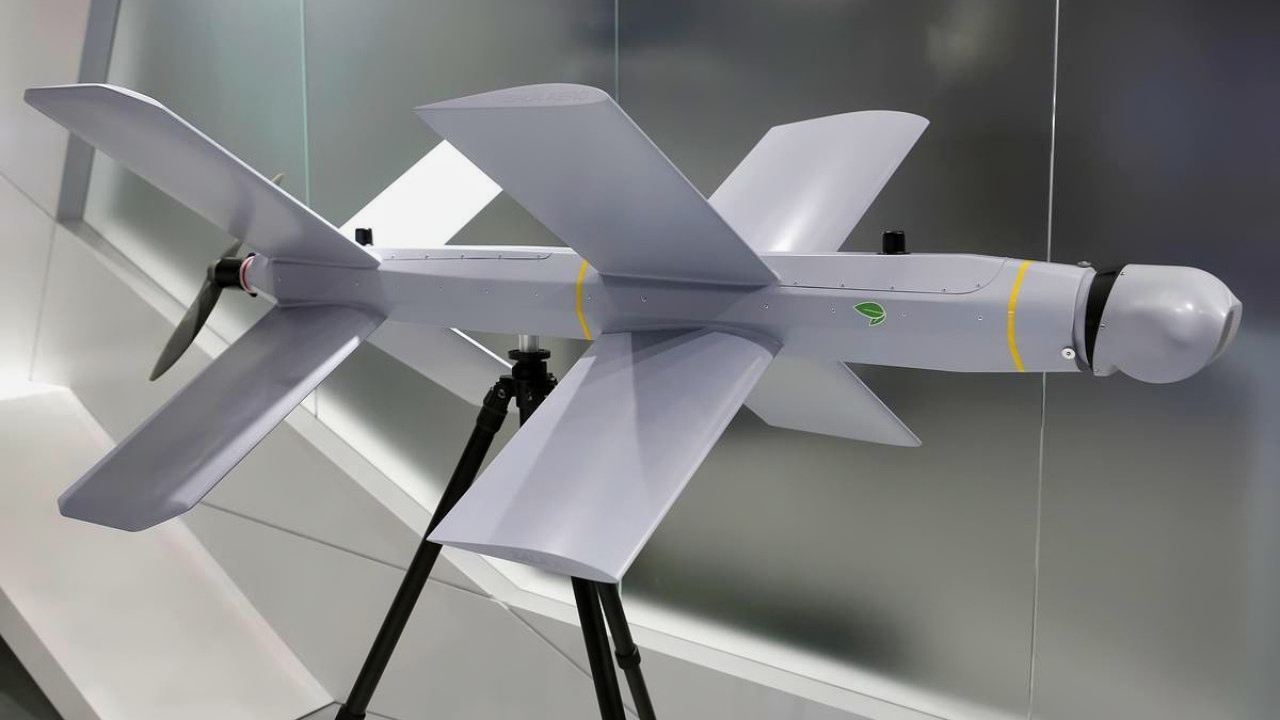
Lancet Drone. Image Credit: Russian State Media.
“Her mother’s name was Inna; she died in the hospital… The other girl killed was 11 years old. My condolences to their families and loved ones. Another 14 people were wounded, including six more children.”
Overnight on October 19th and October 20th, Russia launched another salvo of drones and missiles at targets across Ukraine, many of them civilian in nature.
In a Telegram post, the Ukrainian Air Force said the attack included 165 Shahed drones, 105 of which were part of Russia’s newer crop of faster, jet-powered models that are significantly harder to shoot down.
Still, Ukraine’s air force did manage to shoot down or otherwise disable 115 of the drones, 73 of which were of the faster, jet-powered variety.
An Escalating Air War in Ukraine
While Ukraine’s defenders battle to save the lives of civilians and keep the infrastructure those civilians depend on working, Russia too is trying to defend its own airspace from Ukrainian attack — but attacks that strike at a very different target set.
Rather than striking heating or power facilities in Russia, Ukraine is instead directing its energies toward the lifeblood of the Russian war machine and the single largest source of funding for the Kremlin: Russia’s oil refinery and export infrastructure.
The day before the aforementioned Russian strikes across Ukraine, Ukraine launched over 1,000 drones at targets within Russia, a tally that represents one of the largest Ukrainian salvoes against Russian energy infrastructure of the war.
Fire and explosions were reported at the St. Petersburg oil terminal and at other industrial sites in Russia’s second city.
Flights at Pulkovo Airport, St. Petersburg’s main air hub, were disrupted on account of the Ukrainian drone strikes, although it did not appear that the airport was directly targeted.
Some of Russia’s leading websites — including Ozon, an e-commerce site, and VK, a social media site — were disrupted at several data centers.
The Ukrainian strikes against Russia’s online giants are evidence of an expanding target list used by Ukrainian forces, but one that, Kyiv seemingly hopes, can add to the economic pain that has already been inflicted on Russia by disrupting important online businesses within the country.
An Intelligence-sharing Pause?
Ukraine has accused Washington of pausing its intelligence sharing with Ukrainian forces, in particular the intelligence Ukraine depends upon to track incoming Russian ballistic missiles.
While Ukraine can take responsibility for tracking slower-moving drones, American intelligence assets are needed for faster, more sophisticated weaponry.
But the United States has denied cutting off intelligence-sharing with Ukraine.
Speaking to reporters on Monday, American Secretary of State Marco Rubio flatly denied that Washington has ended intelligence sharing with its Ukrainian counterparts.
“I don’t know where [Zelenskyy’s] getting these things or why he’s saying these things to the press. You should go back and ask him. There’s been no pause,” Rubio explained to reporters. “What he should focus on, and what we want to be focused on, is bringing an end to this war. That’s what he should be focused on,” he emphasized.
However, recent reporting suggests Washington may be partially freezing intelligence-sharing, though perhaps not completely.
The Financial Times reports that Ukraine did receive warning about a Russian ballistic missile attack on Monday — but that there were two attacks, and one was not mentioned.
It was not immediately clear why one seemed to be ignored.
Also concerning for Ukraine is the throttling of the Starlink satellite communications system that Ukraine uses to direct many of its drones.
Ukrainian forces have reported that once drones relying on the related Starshield system exceed 130 kilometers per hour (about 80 miles per hour), they lose connectivity.
While the slowdown in Starshield data transfer does not completely hamstring Ukrainian forces, it significantly limits Ukraine’s ability to push back against Russian forces within Ukraine.
It also interferes with its ability to effectively engage targets within Russia itself.
About the Author: Caleb Larson
Caleb Larson is an American multiformat journalist based in Berlin, Germany. His work covers the intersection of conflict and society, focusing on American foreign policy and European security. He has reported from Germany, Russia, and the United States. Most recently, he covered the war in Ukraine, reporting extensively on the shifting battle lines in Donbas and the war’s civilian and humanitarian toll. Previously, he worked as a Defense Reporter for POLITICO Europe. You can follow his latest work on X.


