

Two sets of recently revealed statistics have more to say about the Russo-Ukrainian War than the hoopla emanating from the Kremlin and the White House, both of which claim, openly or implicitly, that Russia is defeating, and will defeat, Ukraine.
Putin Can’t Bomb His Way to Victory
The relentless Russian bombing of Ukrainian civilians and Kyiv’s admitted inability to protect them from ballistic missiles and certain types of drones is usually adduced as evidence for such dark prognoses. And, to be sure, Ukrainians are falling victim to Vladimir Putin’s genocidal assaults in unprecedentedly large numbers, usually in the order of 20-30 per day.
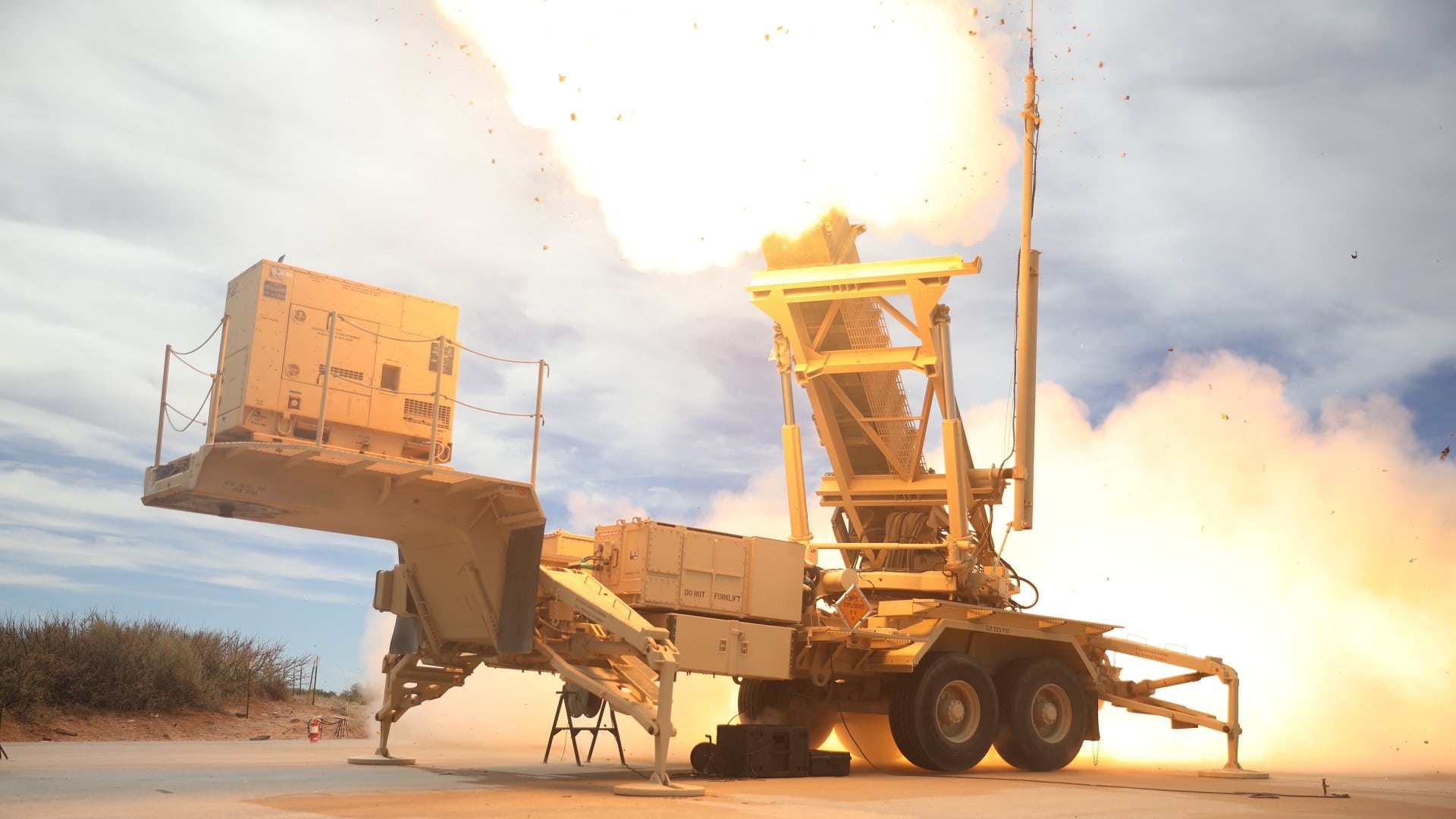
Patriot Missile. Image Credit: Creative Commons.

Exercise Artemis Strike is a German-led tactical live fire exercise with live Patriot and Stinger missiles at the NATO Missile Firing Installation in Chania, Greece from Oct. 31-Nov. 09. Over 200 U.S. soldiers and approximately 650 German airmen will be participating in the realistic training within a combined construct, exercise the rigors associated with force projection and educate operators on their air missile defense systems. The 10th Army Air Missile Defense Command will deploy, operate and fire live missiles within a tactical scenario, under Supreme Headquarters Allied Powers Europe operational readiness evaluation criteria.
According to the Kremlin’s and White House’s logic, Ukrainians should be desperate for peace at any price. Bizarrely, they’re not.
Instead, life goes on in Ukraine. One Ukrainian friend just replaced all her light bulbs with LED bulbs. Another friend had two hip replacement operations. A third was taking chemotherapy for cancer. This is not the behavior of people who expect Ukraine, and their lives, to collapse tomorrow. Are Ukrainians crazy?
Of course not. Rather, they, like nations all over the world, are adapting for a very simple reason: they have to.
No Surrender
But Ukrainians aren’t just adapting and thereby manifesting their ballyhooed resilience. Ukrainians are saying NO to Putin and Donald Trump.
They are resisting.
A just-published public opinion survey conducted October 8-16 by the Kyiv International Institute of Sociology shows that Ukrainians are in no mood to surrender: “Thus, 61% of respondents consider it categorically unacceptable to transfer the entire Donbas under Russian control in exchange for security guarantees. At the same time, 35% are ready for such a concession (though most admit this is a difficult condition). Another 4% could not express an opinion.”
Back in June, before Russia’s genocidal bombing took off, that number was 52 percent. If anything, the incessant bombardment has made Ukrainians more intransigent, not less.
And with good reason.
Ukrainians know that Putin’s missiles are a harbinger of worse to come if Ukraine capitulates. Since surrender means slaughter, resistance, even against seemingly hopeless odds, becomes the only rational strategy. Ask the Jews of the Warsaw Ghetto Uprising.
But Warsaw’s Jews did face hopeless odds. Not so Ukrainians. They defeated Russia on the Black Sea. They kill or wound some 2,000 Russian soldiers every day and have stopped Russia’s incremental land grabs. And, although Russia can fire ballistic missiles pretty much at will, Ukrainians can do the same to Russia’s petroleum processing plants.
Russia’s Weakness
Russia’s weakness is evident in the fact that it has signed up 46,000 foreigners from 151 countries for its armed forces. (The number does not include the thousands of North Koreans serving in the armed forces or working in Russian plants.)
The top 10 countries of origin are Indonesia, Peru, Sierra Leone, Burundi, Chad, the Philippines, Congo, Panama, Ecuador, and Zimbabwe.
Some foreigners were no doubt motivated by ideology. Most, it may be safely assumed, were lured by promises of large wages and safe civilian jobs. According to Amnesty International, for instance, African nationals from several African countries, including Somalia, South Africa, Sierra Leone, Egypt, and a Central African country, were misled into coming to Russia.
No self-confident military power lies to foreigners to get them to serve as cannon fodder. One does so only because one is desperate, with home-grown casualties far outweighing home-grown recruits. Note also that, aside from Peru, the other top scorers are all from warm climes. How these poor soldiers manage to deal with brutal Ukrainian winters is anybody’s guess.
What requires no guessing is the fact that Russia is very far from defeating Ukraine. Indeed, add Russian desperation to Ukrainian resistance and a Ukrainian victory looks perfectly possible.
About the Author: Dr. Alexander Motyl, Rutgers University
Dr. Alexander Motyl is a professor of political science at Rutgers-Newark. A specialist on Ukraine, Russia, and the USSR, and on nationalism, revolutions, empires, and theory, he is the author of 10 books of nonfiction, including Pidsumky imperii (2009); Puti imperii (2004); Imperial Ends: The Decay, Collapse, and Revival of Empires (2001); Revolutions, Nations, Empires: Conceptual Limits and Theoretical Possibilities (1999); Dilemmas of Independence: Ukraine after Totalitarianism (1993); and The Turn to the Right: The Ideological Origins and Development of Ukrainian Nationalism, 1919–1929 (1980); the editor of 15 volumes, including The Encyclopedia of Nationalism (2000) and The Holodomor Reader (2012); and a contributor of dozens of articles to academic and policy journals, newspaper op-ed pages, and magazines. He also has a weekly blog, “Ukraine’s Orange Blues.”


