

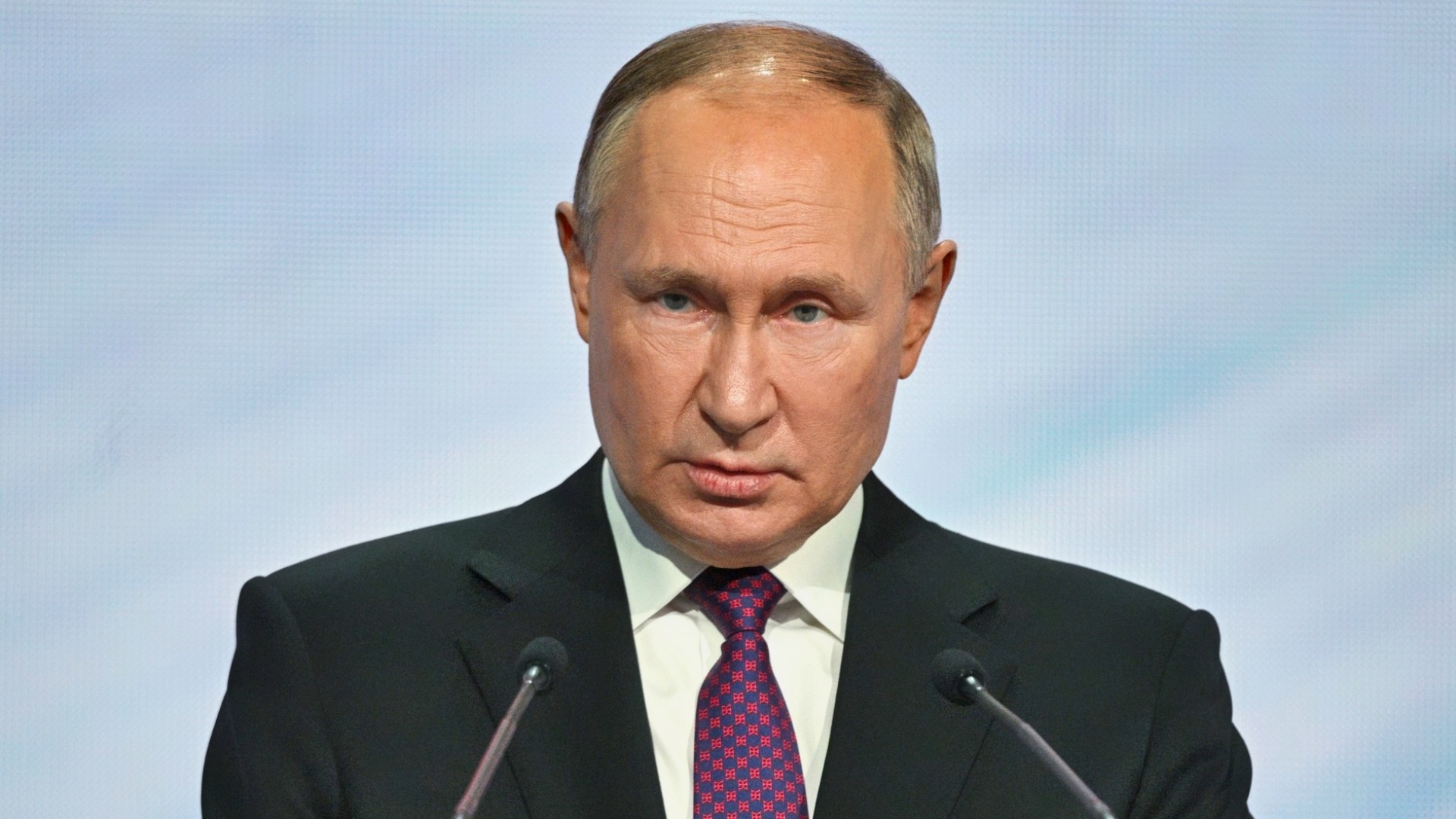
WARSAW, POLAND – As conversations with sources in Washington and Moscow have now revealed, CIA Director John Ratcliffe’s undercover visit to Moscow was planned to include interactions with several senior Russian figures. Those interactions were also to include a meeting with the most senior individual of all – Russian President Vladimir Putin.
But due to specific points in the messages Ratcliffe was to deliver to Putin, the former KGB Lt. Col., who has ruled Russia for 27 years, canceled the meeting.
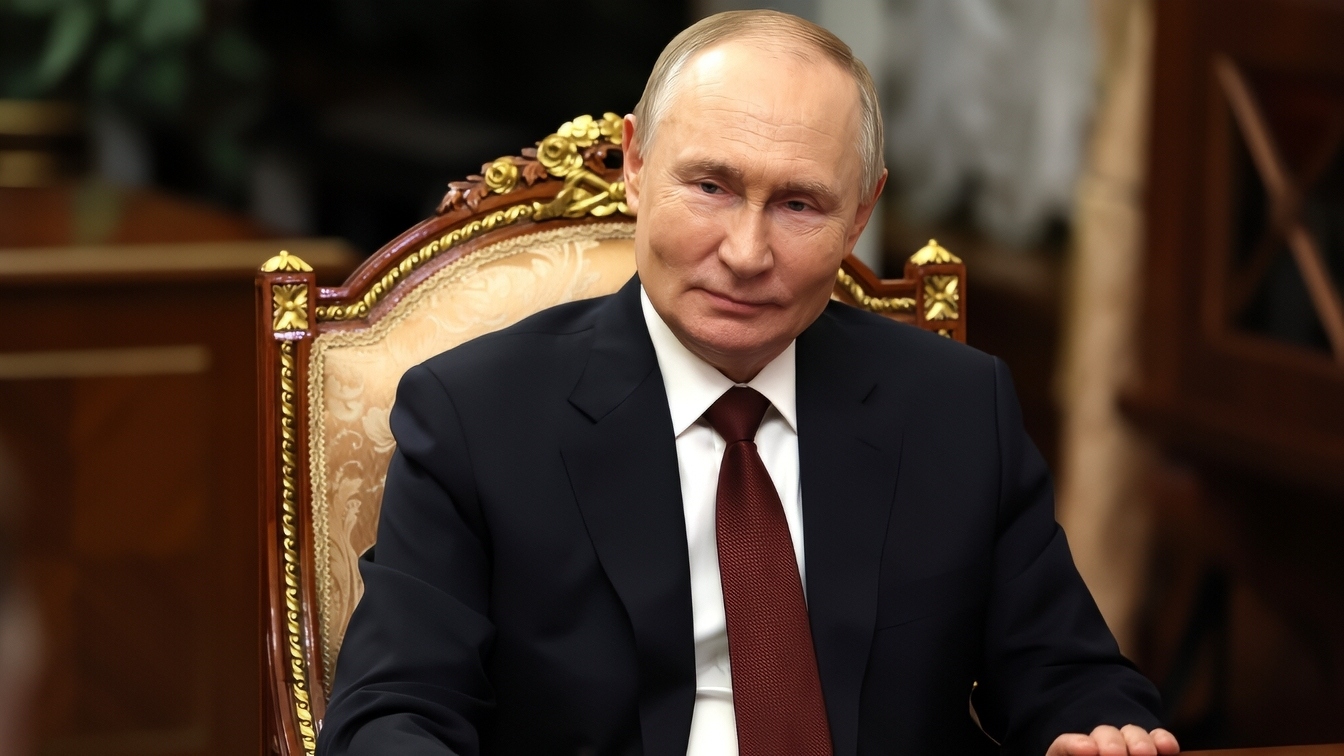
Putin in a Meeting. Russian Federation Photo.
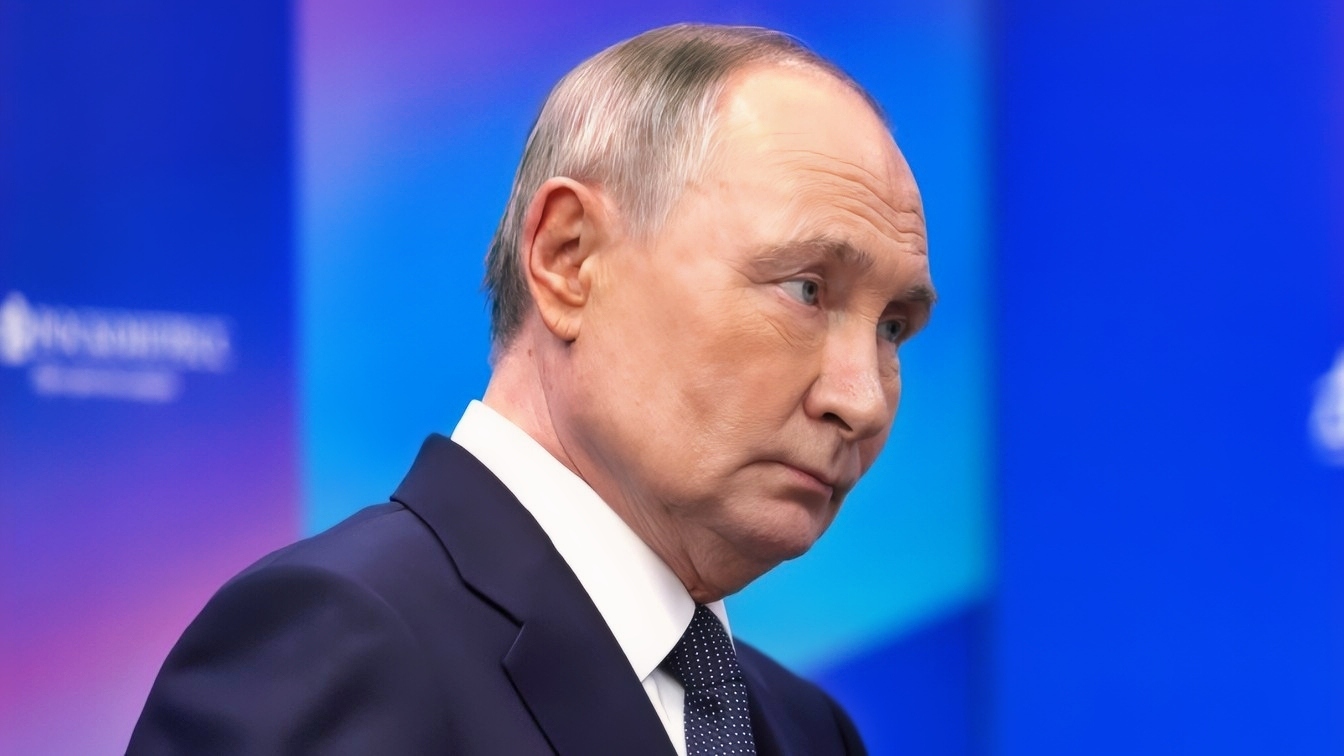
Putin in March of 2025 Russian Federation Photo
When Ratcliffe’s arrival in Moscow became known, speculation immediately focused on more than just the message he had brought with him.
The other question was whether he would be received by Putin during his brief visit.
Since the CIA Director was acting as Trump’s personal envoy, protocol would normally have dictated that such an encounter should take place.
The odds that he would meet with Putin seemed like a safe bet when smartphone video footage was posted online that morning.
The short clip appeared to show the motorcade traveling down the Novy Arbat Street through the center of the Russian capital. The voice of an unseen individual in the background was heard saying in Russian, “those are Americans who have flown in for some negotiations.”
Ratcliffe’s direct counterpart is the Russian Foreign Intelligence Service (SVR) Director Sergei Naryshkin. Meeting with him requires traveling only about 20 minutes from the Vnukovo-2 Airport VIP terminal — where his C-17 aircraft landed — to the SVR headquarters in the suburb of Yasenovo in south-southwestern Moscow.
Two Identical Briefings
It is now reported that Ratcliffe saw Naryshin and also met with Aleksandr Bortnikov, the Director of the Federal Security Service (FSB).
This agency is Putin’s alma mater, so to speak, as he headed it up under former President Boris Yeltsin before ascending to the Prime Ministership and then becoming President in 2000.
The FSB headquarters are at Lubyanka Square, near the Kremlin. A meeting with Bortnikov, followed by a visit to Putin in the Kremlin, explains the police-escorted convoy en route to the city center.
Except for the second meeting, which was to take place in the Kremlin, never took place.
Sources in Moscow now say that Ratcliffe had carried two identical copies of the same briefing — one to Naryshkin and one to Bortnikov.
According to one former intelligence official who spoke to National Security Journal, “the US had decided to pass this material to the heads of both of the major Russian security services.”
“In this manner, if one of them tried to ‘bury’ the material and only provide Putin with a sanitized version of the briefing, the other one would be likely to give the Lt. Col. the complete package,” said one source. “This was in order to make sure that Putin got the full impact of the message from the American intelligence chief.”
Don’t Want to Know
The essence of Ratcliffe’s brief was that the situation for Russia on the battlefield front, as well as internally, is far worse than Putin might suspect, said another source.
It is not much of a surprise, this source said, “but US intelligence and much of Washington, it is said, do not believe Putin is given the full story by those who deliver reports to him. They believe he instead receives a ‘sugar-coated’ version.”
Several US intelligence estimates have previously drawn this conclusion.
One of the several dismal pieces of information supposedly not being reported to Putin is that the average life expectancy of a Russian soldier arriving on the front lines is as short as 35 minutes.
Indications are that the “don’t give Putin any bad news” may be exactly how his intelligence chiefs operate.
After meeting with the CIA chief, according to Russian and Ukrainian news reports, Bortnikov then relayed the substance of the conversations and the briefing materials to Putin. Immediately afterward, the Kremlin declined the proposal for a personal meeting with Ratcliffe.
The CIA director’s overall message was that Russia’s position — “both militarily and economically — is deteriorating, making it more advantageous for the Kremlin to reach a deal now,” according to the latest reports. This parallels reporting from the NY Times and other US media.
What a Former US Intel Official Told Us
Putin canceling his meeting “appears to be a true case of ‘don’t want to know,’” said a retired US intelligence official. “His intelligence agency heads also do not appear to be able to convince him to hear this very unwelcome message.”
The Axios news service reported, citing its own sources, that another Ratcliffe talking point was a proposal to hold a trilateral meeting between Ukrainian President Volodymyr Zelenskyy, US President Donald Trump, and the Russian dictator. As of today, the news is that this proposal was also turned down.
According to the outlet, one goal of Ratcliffe’s trip was to assess if the heads of Russia’s intelligence services would be inclined to persuade Putin to resume US-mediated negotiations with Ukraine.
Indications are that, as with several of the other potential desired outcomes from his visit, the hope that this might be the case also appears to have been in vain.
MORE – Putin Could Start a War with NATO
MORE – Trump Won’t Stop Thinking About Kharg Island
About the Author: Reuben F. Johnson
Reuben F. Johnson has thirty-six years of experience analyzing and reporting on foreign weapons systems, defense technologies, and international arms export policy. Johnson is the Director of Research at the Casimir Pulaski Foundation. He is also a survivor of the Russian invasion of Ukraine in February 2022. He worked for years in the American defense industry as a foreign technology analyst and later as a consultant for the U.S. Department of Defense, the Departments of the Navy and Air Force, and the governments of the United Kingdom and Australia. In 2022-2023, he won two awards in a row for his defense reporting. He holds a bachelor’s degree from DePauw University and a master’s degree from Miami University in Ohio, specializing in Soviet and Russian studies. He lives in Warsaw.


